
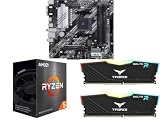
- Top Pick: MICRO CENTER AMD 5500 Processor with ASUS TUF Gaming A520M Plus Motherboard
- Best Value: MSI PRO B850M-P WIFI Motherboard,ATX-Supports AMD Ryzen 9000-7000 Processors,AM5-DDR5 Memory Boost (8200+ MT/s OC),PCIe 5.0 x16&4.0×16,M.2 Gen5,Wi-Fi 7,5G LAN+HIGH-SPEED DDR5 RAM 16GB (1x 16GB) Bundle
- Premium Choice: NEWEGG Motherboard CPU Memory Combo -B550M-A Motherboard Bundle with Ryzen 5 5500 6-Core 3.6GHz CPU and 16GB (2 x 8GB) 288-Pin PC RAM DDR4 3200 Desktop Memory
Best Processor Motherboard Combo planning is where most build budgets go wrong, usually by pairing a strong chip with a board that cannot feed it or an expensive board with a processor that will never use it. These pairings keep both sides balanced.
As an Amazon Associate we earn from qualifying purchases at no extra cost to you. Product prices and availability are accurate as of the date shown and are subject to change.




As an Amazon Associate we earn from qualifying purchases at no extra cost to you. Product prices and availability are accurate as of the date shown and are subject to change.
By Ryan Cole, hardware writer at NVIDIAReview.
How to Match the Best Processor Motherboard Combo
A processor and a board are bought together but rarely chosen together. The best processor motherboard combo balances power delivery, connectivity and memory cost rather than maximising any one of them. Four checks keep the pairing sensible.
Match Board Tier to Package Power
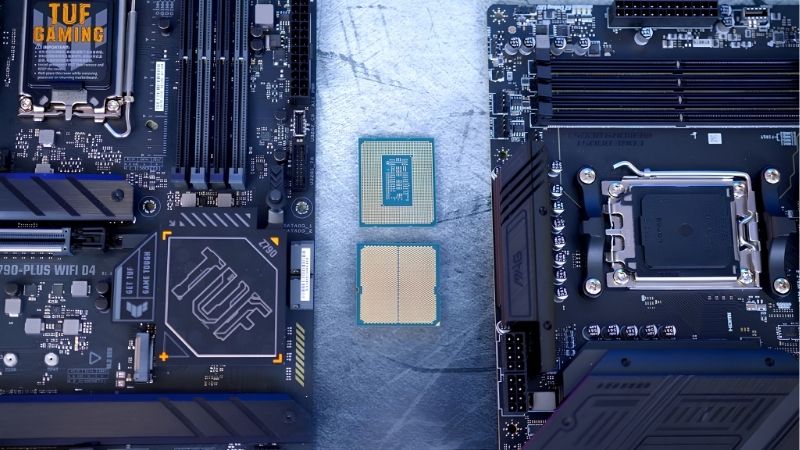
Start with what the chip actually draws. A six-core sits near 88 W package power, an eight-core with stacked cache lands around 162 W, and a sixteen-core part can hold well over 200 W during a sustained all-core load.
Entry boards handle the first tier comfortably. The middle tier covers everything up to a Ryzen 9, and the premium tier exists for overclocking and heavy sustained workloads rather than gaming performance.
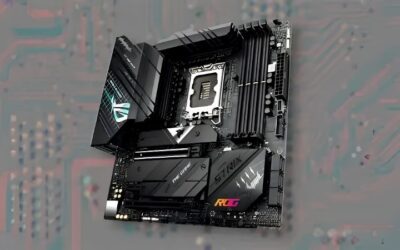
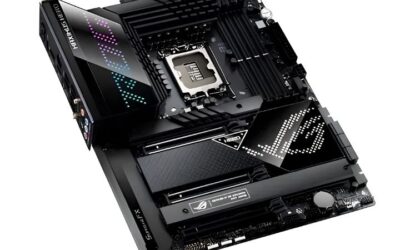
Heatsink mass is the practical indicator. Two thick blocks joined by a heatpipe, sitting where case airflow reaches them, tell you more about sustained behaviour than the phase count printed on the box.
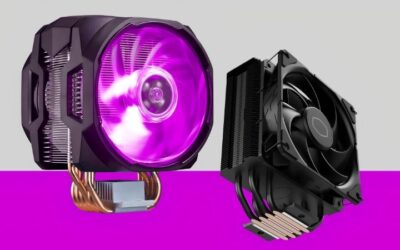
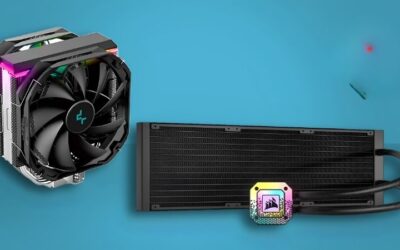
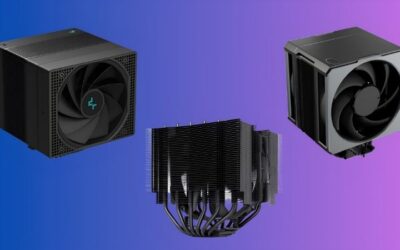
Cooler choice completes the pairing. A board with strong power delivery still throttles if the processor cooler cannot keep up, so budget the three parts together rather than treating cooling as a later decision.
Buy the Chipset Features You Will Actually Use
Count the M.2 slots you need, check which run at Gen5, and confirm what gets disabled when they are populated. Many boards drop SATA ports or halve graphics slot lanes once every slot is filled.
Overclocking support, high-speed networking and rear USB count are the other differentiators. If none of them apply to your build, the mid-range board on the same chipset delivers identical performance for less.
Fan and pump headers deserve a look before ordering. A build with several case fans and a liquid cooler needs more headers than entry boards provide, and a powered hub is easier to buy at the start than to add later.
Memory Is Part of the Combo, Not an Afterthought
AM5 requires DDR5, so an AM5 pairing includes a new kit. Intel’s older platform still offers DDR4 boards, which lets you carry memory across from an existing machine and cut real cost from a budget build.
With memory pricing climbing through 2026, that difference is larger than it used to be. Decide the capacity you need up front rather than planning to add modules later at unknown prices.
Speed matters alongside capacity on AM5, where memory frequency affects performance more than on earlier platforms. A kit on the board’s qualification list saves time that manual tuning would otherwise consume.
Socket Longevity and Firmware Recovery
AM5 will keep receiving new processors through the end of 2029, so a mid-range board bought now can host a second chip. Intel’s next generation requires a new socket, which makes current Intel pairings one-time builds.
If you are combining a newer processor with an older board, confirm it supports firmware flashing without a CPU installed. Without it, an out-of-date board simply will not post with a chip it does not recognise.
Top Picks for the Best Processor Motherboard Combo in 2026
Each best processor motherboard combo below runs from a value build up to a workstation-class system. Specifications are manufacturer-listed, and retail pricing at the time of writing in August 2026 changes weekly, so treat tiers as your guide.
| Processor | Motherboard | Memory | Cooler class | Best for |
|---|---|---|---|---|
| Ryzen 5 7600 | ASRock B650M Pro RS | DDR5, 32 GB | Single tower | Value AM5 gaming |
| Ryzen 7 9800X3D | MSI MAG B650 Tomahawk WiFi | DDR5, 32 GB | Dual tower | High-refresh gaming |
| Ryzen 7 9700X | Gigabyte B850M AORUS Elite WiFi7 | DDR5, 32 GB | Single or dual tower | Efficient compact builds |
| Ryzen 9 9950X3D | ASUS ROG Strix X870E-E Gaming WiFi | DDR5, 64 GB | 360 mm AIO | Gaming plus content work |
| Core Ultra 5 245K | ASUS TUF Gaming B860-Plus WiFi | DDR5, 32 GB | Dual tower | Current Intel mid-range |
| Core i5-12400F | ASRock B760M Pro RS DDR4 | Reuse DDR4, 16-32 GB | Single tower | Lowest total cost |
Ryzen 5 7600 with ASRock B650M Pro RS
This is the cheapest way onto a platform supported through 2029. Six fast cores handle any current title, and the micro-ATX board provides four DIMM slots and two M.2 slots at an entry price.
Rear connectivity is thin and wireless is absent on the base board, so budget for an adapter if you need it. The bundled cooler works but a cheap tower makes the system quieter immediately.
Ryzen 7 9800X3D with MSI MAG B650 Tomahawk WiFi
The gaming sweet spot. Stacked cache delivers the highest frame rates available, and the Tomahawk has power delivery and heatsinks well beyond what the chip requires, so nothing throttles under sustained load.
Both parts sit above budget pricing, and the processor needs a serious cooler to hold its clocks. At 4K with a mid-range graphics card, much of the processor advantage will not appear on screen.
Ryzen 7 9700X with Gigabyte B850M AORUS Elite WiFi7
A 65 W eight-core paired with a well-cooled micro-ATX board makes an efficient, quiet system that fits smaller cases. Gen5 storage and current wireless come as standard on the board.
It lacks the stacked cache that separates the X3D parts in gaming, and the board’s firmware interface takes longer to learn than its rivals. Enabling the higher power mode narrows the performance gap at the cost of heat.
Ryzen 9 9950X3D with ASUS ROG Strix X870E-E Gaming WiFi
Sixteen cores with stacked cache paired with a premium board covers gaming and heavy content work in one machine, with extensive rear connectivity, multiple Gen5 slots and USB4 support.
The combined cost is several times the value pairing, and the processor demands a 360 mm loop under sustained all-core load. For gaming alone, most of this pairing is wasted.
Core Ultra 5 245K with ASUS TUF Gaming B860-Plus WiFi
On current Intel hardware this is the balanced choice, with performance cores for gaming, efficiency cores for background work and a board that installs easily thanks to tool-free storage latches.
The socket has no announced future processors, so treat this as a build you keep rather than upgrade. Memory tuning affects results more here than on the AMD platform.
Core i5-12400F with ASRock B760M Pro RS DDR4
The cheapest complete pairing here, largely because the DDR4 board lets you reuse existing memory. Six cores and twelve threads handle 1080p and 1440p gaming comfortably alongside an entry or mid-range card.
The platform is at its end with no future chips, and the board’s connectivity reflects its price. As a value build today rather than a foundation, it remains difficult to beat on total cost.
What 2026 Conditions Mean for Pairing Decisions
Three market factors change how the budget around a best processor motherboard combo should be split this year, and all three point the same way.
Nothing New Arrives Before CES 2027
The next generation of processors and chipsets from both makers has moved to CES in January 2027. Waiting means several months followed by launch pricing and early firmware issues on a new platform.
Current combinations are mature, with settled firmware and memory compatibility lists. For a machine you need now, that stability is worth more than a newer model number.
AM5 Longevity Changes Where to Spend
AMD has committed to new processors on AM5 through the end of 2029, so the board outlives the chip. Spending a little more on the board and a little less on the processor is a rational split on that platform.
On Intel’s current socket the opposite applies, since there is no upgrade path. Buy the processor you want to keep and match the board to it rather than paying for future headroom.
Memory Costs Are Reshaping Budgets
DRAM pricing has kept climbing through 2026, with new capacity not expected before late 2027. On mid-range builds, memory can now cost as much as the motherboard.
That makes DDR4 pairings genuinely attractive at the budget end, and it argues for buying your full capacity in one kit rather than expanding later at unpredictable prices.
Frequently Asked Questions
These come up most often once someone has a best processor motherboard combo in mind and starts checking compatibility.
Are bundled CPU and board deals actually cheaper?
Sometimes, particularly at the budget end. Check the exact board model in the bundle, since the savings often come from pairing a good processor with an entry board you would not have chosen.
Can I use DDR4 memory on an AM5 board?
No. AM5 is DDR5 only, so an AM5 build always includes new memory. Reusing DDR4 means staying on an older Intel or AM4 platform.
Will a cheap board slow down a fast processor?
Not in games, but under sustained all-core load a weak power delivery section can throttle. The risk is real with twelve and sixteen-core chips and negligible with six-core parts.
Do I need firmware flashing without a CPU?
It matters when pairing a new processor with a board manufactured earlier. If the board supports it, an out-of-date unit can be updated on the bench; without it, you may need a loaner chip.
See More:
- What Is the Best Thermal Paste
- Best PC Case Fans 120mm
- Thermal Paste Best Brand
- Best Thermal Paste Brands
- Best CPU Cooler Reddit
Final Thoughts
The best processor motherboard combo is the one where neither part is waiting on the other. Match board tier to package power, buy only the chipset features you will use, and count memory as part of the pairing. On AM5, favour the board slightly since it can host a second processor through 2029; on current Intel, buy the chip you intend to keep.

Write Your Review
No reviews yet. Be the first to share your experience!