
- Top Pick: GIGABYTE GeForce RTX 4070 WINDFORCE OC 12G Graphics Card, 3X WINDFORCE Fans, 12GB 192-bit GDDR6X, GV-N4070WF3OC-12GD Video Card
- Best Value: ASUS Prime GeForce RTX 5070 12GB GDDR7 OC Edition Gaming Graphics Card
- Premium Choice: ASUS TUF Gaming GeForce RTX 5060 Ti 8GB GDDR7 OC Edition Graphics Card
Top Nvidia Rtx 4070 Still Smart Picks for 2026
Here are our current top nvidia rtx 4070 still smart picks, compared on real Amazon owner reviews, price, and features. Live prices update below.


As an Amazon Associate we earn from qualifying purchases at no extra cost to you. Check Amazon for current prices, availability and delivery options before purchasing.


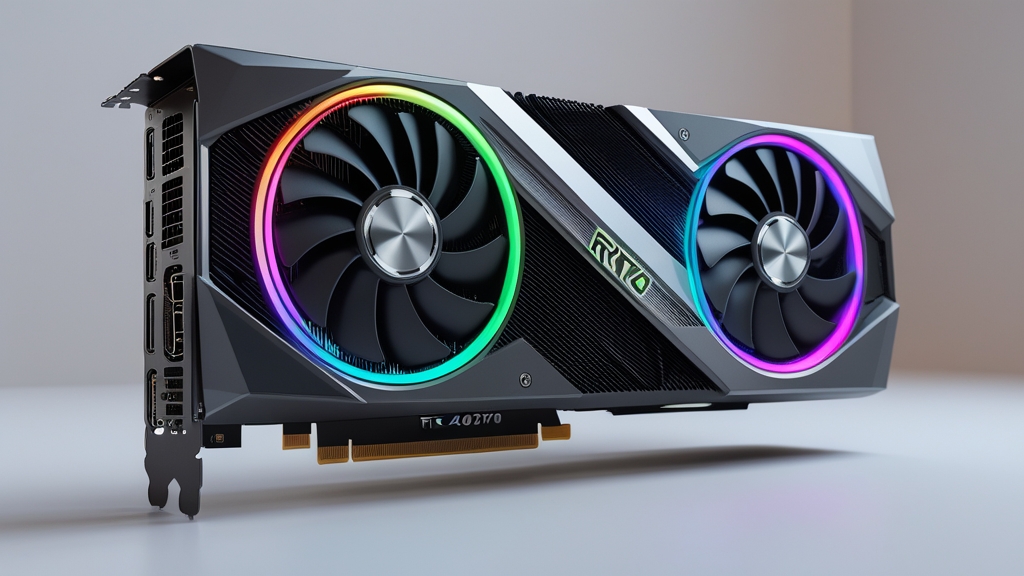
NVIDIA RTX 4070 remains one of the most sensible 1440p graphics cards you can own in 2026, even as a newer generation sits above it. Launched in 2023 at $599, this Ada Lovelace card pairs efficient power draw with DLSS 3 frame generation, and it has matured into a known quantity for mainstream gamers. This review takes an objective, expert look at where the RTX 4070 stands today: the specifications that define it, how it performs in real 1440p and 4K games, the ongoing debate over its 12GB of VRAM, what you should pay new versus used, and how 2026’s turbulent pricing affects the decision. If you are choosing a mid-range GPU this year, this analysis lays out exactly where the RTX 4070 still earns its place.
What the NVIDIA RTX 4070 Brings to the Table
Understanding the RTX 4070 starts with its hardware and the real performance that hardware produces. This is an efficient, feature-rich mid-range card rather than a brute-force flagship, and its design choices explain both its strengths at 1440p and the questions that follow it. The specifications set realistic expectations before any value judgment.
The Specs That Define It
The RTX 4070 is built on NVIDIA’s Ada Lovelace architecture using the AD104 die, with 5,888 CUDA cores and 12GB of GDDR6X memory on a 192-bit bus. It launched in April 2023 at a $599 MSRP as a mainstream 1440p card.
Its defining trait is efficiency. The card draws only around 200 watts, far less than the previous-generation high-end parts it rivals, which keeps heat, noise, and power bills low.
It also carries the full Ada feature set, including fourth-generation Tensor cores and third-generation RT cores. That unlocks DLSS 3 with frame generation, a technology that becomes central to its real-world value.
Real 1440p and 4K Performance
At 1440p the RTX 4070 is in its element. It runs demanding AAA titles at high settings comfortably, and with DLSS enabled it routinely clears 100 frames per second in many games, delivering the high-refresh experience most 1440p gamers want.
DLSS 3 frame generation extends that lead further in supported titles, multiplying frame rates and making ray tracing far more playable than the raw silicon alone would allow. It is the feature that most separates the 4070 from older cards at similar performance levels.
Entry-level 4K is achievable with DLSS, though the card is happiest at 1440p. Native 4K at maximum settings in the heaviest games is beyond its comfort zone, which is reasonable for a mid-range part.
Efficiency and Competitive Positioning
The 4070’s low 200-watt draw is a genuine practical advantage. It fits comfortably in smaller builds, runs cool and quiet, and pairs with modest power supplies, which matters for buyers upgrading an older system.
Against newer hardware, the value picture is mixed. A current Radeon RX 9070 XT offers a large rasterization lead for similar new-card money, so the 4070’s appeal depends heavily on its price rather than its raw position.
For owners of an RTX 3070 or older, the 4070 is a clear, efficient step up with modern features. Against this year’s newest cards it competes on efficiency and price rather than outright speed.
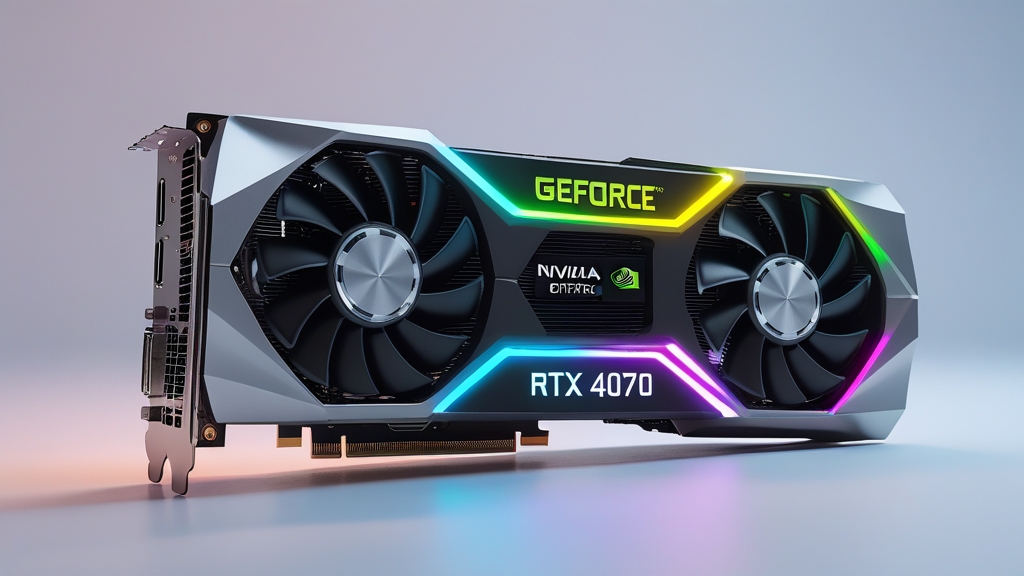
RTX 4070 in Daily Use: Value and Verdict
Specifications matter less than what you pay and how the card holds up over time. This section weighs the RTX 4070’s pricing, its most debated limitation, and the balance of strengths and weaknesses that decides whether it belongs in your build. The verdict hinges on getting the price right.
Pricing: New Versus Used
Against its $599 launch MSRP, the RTX 4070 now trades around $479 used, which is where most of its value lives. New stock, where available, has drifted upward to roughly $700 or more amid tight supply, undermining its value at retail.
That gap matters. A used 4070 near $479 is a strong mid-range buy, while a new one at $700 competes poorly against faster current-generation options at similar money.
The practical guidance is to target the used market or a genuine sale. The card’s efficiency and feature set justify a fair price, not the inflated new pricing that the current market has produced.
The 12GB VRAM Question
The 4070’s 12GB of memory is the most debated aspect of the card. For 1440p gaming today it is sufficient, comfortably handling high-resolution textures in the vast majority of current titles.
The concern is longevity. As games grow more demanding, 12GB may become a tighter fit beyond 2027 and 2028, particularly at 4K or with heavy ray tracing and ultra textures.
In practice this is a medium-term caution rather than a present-day problem. For the foreseeable life of games built around current consoles, 12GB at 1440p remains a comfortable, sensible target.
Pros and Cons of the NVIDIA RTX 4070
On the positive side, the NVIDIA RTX 4070 offers excellent 1440p performance, outstanding efficiency at around 200 watts, the full DLSS 3 frame-generation feature set, capable ray tracing, and easy compatibility with modest power supplies and smaller cases.
On the negative side, the 12GB VRAM is adequate rather than generous, native 4K is not its strength, and newer cards beat it in raw rasterization for similar new-card prices, so its value collapses if you overpay.
The verdict is positive at the right price. The NVIDIA RTX 4070 is a smart, efficient 1440p choice for a buyer who finds it used or on sale, and a weaker pick for anyone paying inflated new pricing.
Market Forces and Who Should Buy
No GPU decision in 2026 is complete without the wider market, which has pushed prices up across the board. Understanding why, and what it means specifically for an RTX 4070 buyer, clarifies the timing of a purchase. Compatibility and fit then confirm whether the card suits your system.
Why GPU Prices Climbed in 2026
The 2026 market is defined by a severe structural memory shortage. DRAM contract prices have risen more than 170 percent year over year, and because video memory can account for up to 80 percent of a graphics card’s bill of materials, that shortage has pushed new GPU prices up sharply, with current-generation cards rising an estimated 15 to 23 percent and some models jumping 16 to 17 percent almost overnight.
AI demand is the driving force. With the United States approving sales of NVIDIA’s powerful H200 accelerators to major Chinese firms, memory and fabrication capacity is being pulled toward data-center silicon, and reports indicate NVIDIA has trimmed mid-range consumer output by a significant margin. Memory suppliers have warned the shortage could persist into 2027.
The result is higher prices and patchier stock across the new-card market. Even genuinely faster newer GPUs arrive with inflated stickers and longer lead times, which blunts the value advantage they would normally hold. AMD raised prices around ten percent early in the year and NVIDIA followed, so the inflation is broad rather than limited to a single brand or tier.
What This Means for an RTX 4070 Buyer
For a 4070 shopper, the squeeze cuts in a useful direction. When newer cards are inflated and harder to find, a used RTX 4070 near $479 looks more attractive, offering proven 1440p performance and DLSS 3 without paying 2026’s new-card premium.
It also argues against buying the 4070 new. At roughly $700 the card carries the same inflation as everything else while delivering less raw speed than current rivals, so the smart play is firmly the used market or a verified clearance sale.
The timing logic is simple. While the shortage keeps new prices high, a fairly priced used 4070 is a sensible hedge, but it only wins if you buy it cheaply rather than overpaying because the whole market is expensive. Watch the spread between used 4070 listings and inflated new stock, and pounce when a clean card sits well below current-generation pricing.
Compatibility and Who Should Buy
The 4070 is easy to accommodate. NVIDIA recommends a 650-watt power supply, and the card’s modest size and low heat output make it a comfortable fit even in compact builds, which is part of its practical appeal.
Pair it with a capable CPU to avoid bottlenecks at 1440p, and a mid-range modern processor is more than enough. No exotic cooling or oversized PSU is required.
The ideal buyer is a 1440p gamer who values efficiency and DLSS 3, especially someone upgrading from an RTX 3070 or older card, and who can buy used or on sale. Native-4K enthusiasts and bargain hunters facing only inflated new stock should look elsewhere.
Frequently Asked Questions
A few questions recur from buyers evaluating the NVIDIA RTX 4070 in 2026. The concise answers below address performance, memory, and power needs.
Is the NVIDIA RTX 4070 good for 1440p gaming?
Yes. It runs demanding titles at high settings and frequently exceeds 100 fps with DLSS, making it one of the more sensible dedicated 1440p cards available.
Is 12GB of VRAM enough on the RTX 4070?
For 1440p today, yes. It handles current games comfortably, though 12GB may feel tighter beyond 2027 at 4K or with heavy ray tracing and ultra textures.
What power supply does the RTX 4070 need?
NVIDIA recommends a 650-watt PSU. The card draws only around 200 watts, so it pairs easily with modest power supplies and compact cases.
See more:
Recommended Products

ASUS Dual NVIDIA GeForce RTX 5060 8GB GDDR7 OC Edition (PCIe 5.0, 8GB GDDR7, DLSS 4, HDMI 2.1b, DisplayPort 2.1b, 2.5-Slot Design, Axial-tech Fan Design, 0dB Technology), 3 Year Warranty
msi
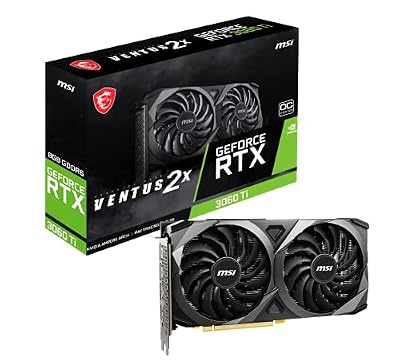
MSI Gaming GeForce RTX 3060 Ti LHR 8GB GDRR6 256-Bit HDMI/DP Nvlink Torx Fan 3 Ampere Architecture OC Graphics Card (RTX 3060 Ti Ventus 2X 8G OCV1 LHR) (Renewed)

Gigabyte GeForce RTX 3060 Ti Eagle OC 8G (REV2.0) Graphics Card, 2X WINDFORCE Fans, LHR, 8GB 256-bit GDDR6, GV-N306TEAGLE OC-8GD REV2.0 Video Card
As an Amazon Associate we earn from qualifying purchases. Product prices and availability are accurate as of the date/time indicated.
Conclusion
The NVIDIA RTX 4070 remains a smart 1440p graphics card in 2026, defined by efficiency, DLSS 3 frame generation, and a feature set that keeps it relevant well into the future. Its 12GB of VRAM is comfortable for high-refresh 1440p today, and its roughly 200-watt draw makes it one of the easiest mid-range cards to fit into any build. The catch is price: at a fair used figure near $479 it is an excellent value, but at inflated new pricing around $700 it loses ground to faster current-generation rivals. With 2026’s memory shortage keeping new cards expensive, a well-priced used RTX 4070 is a genuinely sensible buy for efficient, feature-rich 1440p gaming, provided you secure it at the right price.

Write Your Review
No reviews yet. Be the first to share your experience!