
- Top Pick: High-Performance Gaming Desktop PC – Ryzen 7 5700X, GeForce RTX 3050 8GB
- Best Value: iBUYPOWER Slate MESH Gaming PC Desktop Computer Intel Core i7 14700F CPU, NVIDIA GeForce RTX 5070 12GB GPU, 32GB DDR5 RGB 5200MHz RAM, 1TB NVMe SSD, Windows 11 Home, Keyboard and Mouse – SMI7N5701
- Premium Choice: Corsair Vengeance i7500 Gaming PC – Liquid Cooled Intel Core i9-14900KF CPU – NVIDIA GeForce RTX 5080 GPU – 32GB Vengeance RGB DDR5 Memory – 2TB M.2 SSD – Black
Best CPU for gaming and productivity means accepting a trade-off, because the features that win games and the features that win render times are not the same. Games reward cache and clock speed; production work rewards core count. Here are six chips that balance both, ranked by which side they lean toward.
As an Amazon Associate we earn from qualifying purchases at no extra cost to you. Product prices and availability are accurate as of the date shown and are subject to change.


As an Amazon Associate we earn from qualifying purchases at no extra cost to you. Product prices and availability are accurate as of the date shown and are subject to change.
By Ryan Cole
How to Choose the Best CPU for Gaming and Productivity
A dual-purpose machine forces a decision a pure gaming build avoids entirely. These four checks establish where your workload actually sits, which is the only honest way to identify the best CPU for gaming and productivity in your case.
Cache Wins Games, Cores Win Renders
AMD’s 3D V-Cache parts stack additional L3 onto the die, and in games that produces bigger gains than any frequency increase. A Ryzen 7 9800X3D carries far more cache than a standard eight-core chip and leads it clearly in CPU-limited titles.
Rendering, compiling, encoding and simulation barely respond to cache and scale almost linearly with cores. A sixteen-core chip roughly halves render times against an eight-core one, which is a difference no gaming benchmark will ever show you.
Measure Your Actual Workload Split
Be honest about the hours. A machine that games for twenty hours a week and exports video for two is a gaming PC with a side job, and should be specified as one. The reverse deserves the opposite treatment.
The genuinely balanced case, where both workloads matter equally, is the only situation that justifies a chip like the Ryzen 9 9950X3D. It is also the least common, and most builders discover they sit clearly on one side.
Hybrid Cores Change the Comparison
Intel’s Core Ultra parts split cores into performance and efficiency types, so a 24-core chip is not equivalent to a 24-core AMD design. Games use the performance cores while efficiency cores absorb background load and encoding tasks.
That structure is genuinely effective for streaming while playing, where the efficiency cores handle the encoder without touching gaming performance. In raw rendering it also scales well, though AMD’s cache advantage keeps the frame rate lead.
Plan Cooling and Power Before Buying
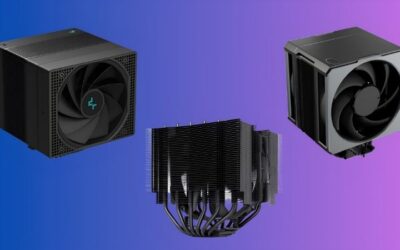
Sixteen-core chips at 170W and Intel’s top Core Ultra parts both need serious cooling to sustain all-core clocks. A 360mm AIO or a large dual-tower air cooler is the realistic requirement, not an optional upgrade.
The board matters too. Sustained all-core workloads expose weak power delivery in a way that gaming never does, so pair these processors with a board carrying 80A power stages and a substantial VRM heatsink.
What the 2026 Market Means for Dual-Purpose Builds
Three market realities affect how much of a dual-workload budget belongs on the processor, and they shift what the best CPU for gaming and productivity looks like at any given price.
No New Silicon Before CES 2027
Zen 6 and Intel’s Nova Lake have both slipped to CES in January 2027, alongside the RTX 50 Super refresh. Waiting for a higher core count at the same price means waiting at least six months, then longer for stable supply.
For a machine that earns its keep, that argues for buying now. Current parts have mature firmware, and the productivity time lost waiting is usually worth more than the eventual generational gain.
Memory Pricing Hits Dual-Purpose Builds Hardest
DRAM prices rose again through 2026 with no new capacity before late 2027. Productivity workloads want 64GB rather than 32GB, and that doubling is now a significant line item rather than an easy upgrade.
Plan the memory capacity before the processor. Dropping from a sixteen-core chip to a twelve-core one to afford the larger kit is usually the better call, because running out of memory stalls a render far more than two fewer cores does.
AM5 Keeps Its Upgrade Path to 2029
AMD confirmed at Computex 2026 that AM5 accepts new processors through 2029, while Intel’s Nova Lake moves to the new LGA 1954 socket. For a working machine, that means an AM5 build can gain cores later without a rebuild.
The practical version is to buy a board with strong power delivery even if the initial chip is modest. A B850 or X870 board with 80A stages will still be feeding a much larger processor in 2028.
Top Picks: Best CPU for Gaming and Productivity Ranked
These run from the most production-focused to the most gaming-focused, so the best CPU for gaming and productivity for you depends on where your hours land. Pricing shifts constantly, so verify cost and availability before committing to a platform.
| Processor | Cores / Threads | Boost Clock | TDP | L3 Cache | Leans Toward |
|---|---|---|---|---|---|
| Ryzen 9 9950X3D | 16 / 32 | 5.7 GHz | 170W | 128MB | Both equally |
| Intel Core Ultra 9 285K | 24 / 24 | 5.7 GHz | 125W base | 36MB | Productivity |
| Ryzen 9 9900X | 12 / 24 | 5.6 GHz | 120W | 64MB | Productivity |
| Intel Core Ultra 7 265K | 20 / 20 | 5.5 GHz | 125W base | 30MB | Productivity |
| Ryzen 7 9700X | 8 / 16 | 5.5 GHz | 65W | 32MB | Balanced |
| Ryzen 7 9800X3D | 8 / 16 | 5.2 GHz | 120W | 96MB | Gaming |
Ryzen 9 9950X3D
This is the only chip here that genuinely refuses to compromise. Sixteen Zen 5 cores handle rendering and compilation at the top of the consumer range, while the stacked 3D V-Cache keeps gaming performance within touching distance of the dedicated gaming parts.
It is expensive, draws 170W and demands serious cooling and a strong board. For anyone whose gaming and production hours are genuinely balanced it is the right answer; for anyone leaning clearly one way it is money spent on capability that sits idle.
Intel Core Ultra 9 285K
Twenty-four hybrid cores make the 285K a productivity powerhouse, and its efficiency is far better than the previous Intel flagship generation. Paired with Thunderbolt connectivity on Z890 boards, it suits a video workflow particularly well.
In games it trails AMD’s X3D parts by a clear margin, and LGA 1851 receives no future processors. Buy it for the render and encode performance and the platform I/O, accepting that gaming is where it gives ground.
Ryzen 9 9900X
The 9900X is the sensible middle of AMD’s range for mixed use. Twelve cores and 64MB of L3 within a 120W envelope give it most of the multithreaded capability of the 9950X without the flagship price or the cooling demands.
It lacks 3D V-Cache, so it sits behind the X3D chips in games despite its higher clocks. If gaming is more than half of what the machine does, a 9800X3D will feel faster where it matters most.
Intel Core Ultra 7 265K
Twenty cores at a lower price than the 285K make the 265K the value pick on the Intel side. It handles editing timelines and compile jobs well, and the efficiency cores absorb streaming encoders without disturbing gaming performance.
Gaming remains mid-tier by 2026 standards, and the Z890 or B860 board plus DDR5 raises the platform floor above an equivalent AM5 build. The dead-end socket applies here as much as to the 285K.
Ryzen 7 9700X
The 9700X is the efficiency choice. Eight Zen 5 cores boosting to 5.5 GHz within just 65W run cool and quiet, and sixteen threads cover photo work, light video editing and streaming alongside strong 1440p gaming.
Eight cores is the ceiling, so heavy rendering or long compile jobs will take noticeably longer than on a twelve or sixteen-core chip. It is the right pick when the productivity side is real but not dominant.
Ryzen 7 9800X3D
With 96MB of L3 cache the 9800X3D is the fastest gaming processor on this list by a wide margin, and its eight cores are still perfectly capable of handling editing, streaming and everyday production work.
Against a twelve or sixteen-core chip it loses clearly in sustained multithreaded workloads, and its 120W TDP needs a proper cooler. Choose it when gaming leads and productivity follows, which describes most so-called balanced builds.
Frequently Asked Questions
These questions come up constantly once builders try to name a single best CPU for gaming and productivity rather than optimising for one workload.
Do more cores help gaming performance?
Only up to a point. Most games use eight cores or fewer effectively, so moving from eight to sixteen produces little or no frame rate gain. Cache and clock speed matter far more, which is why X3D parts beat higher core-count chips in games.
Is the Ryzen 9 9950X3D worth the premium?
Only if both workloads are genuinely heavy. It combines sixteen cores with 3D V-Cache, so it avoids the usual compromise, but it costs substantially more than a 9800X3D that games just as well or a 9900X that renders nearly as fast.
Is the best CPU for gaming and productivity Intel or AMD?
That is a reasonable simplification. Intel’s hybrid core counts deliver strong render and encode throughput plus Thunderbolt connectivity, while AMD’s cache design leads in games. AMD’s socket longevity to 2029 is the tiebreaker for machines you plan to upgrade.
How much RAM does a dual-purpose build need?
32GB is the floor and 64GB is worth planning for if you edit video or run virtual machines. Given current DDR5 pricing, budget the memory capacity first and adjust the processor tier around it rather than the other way round.
See More:
- Who makes the best motherboard
- Best budget AM5 CPU for gaming
- What is the best thermal paste pattern
- Best mini ITX computer case
- Best desktop RAM for gaming
Final Thoughts
The best CPU for gaming and productivity depends on which workload actually dominates your week. The 9950X3D is the only chip that refuses to compromise, and it charges accordingly. For most people the honest answer is a 9800X3D when gaming leads, a 9900X or Core Ultra 7 265K when production leads, and a 9700X when both are moderate. Budget the memory capacity before the core count. Figures reflect August 2026 and should be verified before purchase.


Write Your Review
No reviews yet. Be the first to share your experience!