
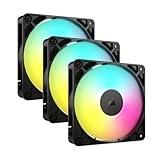
- Top Pick: CORSAIR RS120 ARGB 120mm PWM Fans – Daisy-Chain Connection – Low-Noise – Magnetic Dome Bearing – Triple Pack – Black
- Best Value: ARCTIC P12 Pro PST – Powerful Premium Fan, 120 mm PWM Fan, 600-3000 RPM
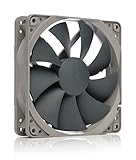
- Premium Choice: Thermalright TL-C12C X5 CPU Fan,Black Cooling, Fan in The unlit Version,Establish Ties or Contact PC Fan with 1550RPM Speed, 120mm Computer Case Cooler,PWM Control for Case and Liquid Cooler
Best PC Case Fans 120mm shopping comes down to matching a fan to the job in front of it. A fan pulling air through an open mesh panel and a fan pushing through a dense radiator need different pressure curves, and the spec sheet tells you which is which if you read the right numbers.
As an Amazon Associate we earn from qualifying purchases at no extra cost to you. Product prices and availability are accurate as of the date shown and are subject to change.




As an Amazon Associate we earn from qualifying purchases at no extra cost to you. Product prices and availability are accurate as of the date shown and are subject to change.
By Ryan Cole, hardware writer at NVIDIAReview.
How to Choose the Best PC Case Fans 120mm for Your Build
Fan marketing leans on a single airflow number, which tells you almost nothing on its own. The best pc case fans 120mm are chosen from four specifications together, because that is what describes real behaviour once filters and obstructions are in the way.
Airflow and Static Pressure Describe Two Different Jobs
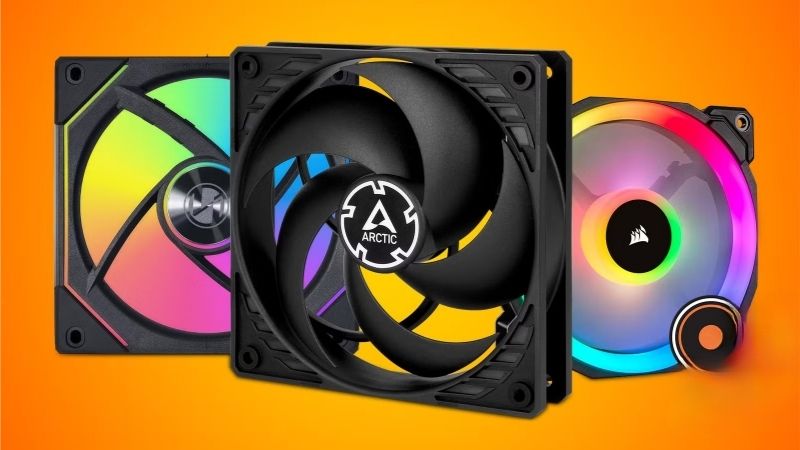
Airflow in CFM or cubic metres per hour measures how much air a fan moves with nothing in the way. Static pressure in millimetres of water measures how well it pushes against resistance, which is what a radiator or a dust filter creates.
An open case panel needs airflow. A 360 mm radiator, a dense heatsink or a filtered front panel needs pressure. Modern designs balance both, but the published figures still tell you which side a given fan leans toward.
Ignore any comparison that quotes only one figure. Two fans with identical CFM ratings can perform very differently once a filter sits in front of them, and the pressure number is what predicts that gap.
RPM Range Matters at Both Ends
The maximum speed sets how much cooling is available when the system is working hard. The minimum speed sets how quiet the machine is the rest of the time, and that is where most people actually live.
A fan that idles near 200 RPM disappears into the background. One that will not run below 800 RPM is always faintly present in a quiet room, no matter how good the top-end numbers look.
PWM control gives the motherboard the full range. Three-pin voltage control works, but the usable band is narrower and low-speed behaviour is less predictable across different boards.
Bearings, Warranty and Long-Term Noise
Fluid dynamic and rifle bearings hold their acoustic character for years. Cheaper sleeve bearings often start quiet and develop a rattle after a couple of thousand hours, particularly when mounted horizontally.
Warranty length is the practical proxy. Six-year coverage signals a manufacturer expects the motor and bearing to survive that long, and the brands offering it tend to publish full airflow and pressure curves rather than one headline figure.
Mounting orientation affects bearing life as well. Fans running horizontally, such as roof exhausts and bottom intakes, load the bearing differently from vertical mounts, which is where cheaper sleeve designs tend to fail first.
Thickness, Mounting and Cable Management
Standard fans are 25 mm thick. Thicker 30 mm designs move noticeably more air through a radiator at the same speed, but they eat clearance you may need for memory, a top-mounted rad or a compact chassis.
Daisy-chain systems reduce cabling to a single run back to a hub, which is tidy but locks you into one brand. Traditional PWM splitters cost almost nothing and let you mix fans freely.
Check screw types too. Standard fan screws work in most positions, while radiator mounting needs longer screws sized for the fan and rad thickness together, and using the wrong length can pierce a fin stack.
Top Picks for the Best PC Case Fans 120mm in 2026
These six span a value five-pack to a 30 mm thick radiator specialist. Figures are manufacturer-rated, and retail pricing at the time of writing in August 2026 shifts weekly, so treat tiers as your guide.
| Fan | RPM range | Thickness | Strength | Notes |
|---|---|---|---|---|
| Noctua NF-A12x25 PWM | 450-2000 | 25 mm | Balanced airflow and pressure | Six-year warranty |
| Arctic P12 PRO PWM PST | 200-2000 | 25 mm | Static pressure | Very low cost per fan |
| be quiet! Silent Wings 4 | Up to 2500 or 3000 | 25 mm | Acoustics | Speed variants sold separately |
| Phanteks T30-120 | Up to 3000 | 30 mm | Radiator duty | Three-speed hardware switch |
| Thermalright TL-C12C | Up to about 1550 | 25 mm | Budget airflow | Sold in multi-packs |
| Lian Li UNI Fan SL-Infinity 120 | Up to about 1900 | 25 mm | Lighting and cabling | Daisy-chain system |
Noctua NF-A12x25 PWM
On most lists of the best pc case fans 120mm this one sits at the top, because it performs near the peak in both airflow and pressure roles. The tight blade-to-frame tolerance is the reason, and the six-year warranty reflects how the bearing is expected to age.
Price is the obvious problem, since a single fan costs what a multi-pack of value fans does. The standard version also uses the beige and brown colour scheme, though a black variant exists at a further premium.
Arctic P12 PRO PWM PST
Arctic built the P12 for pressure, and it shows on radiators and filtered front panels. The 200 to 2,000 RPM range means it can idle almost silently, and the daisy-chain PST connector simplifies wiring across several fans.
At full speed it is audible, with a harder tone than the premium options. As unrestricted case airflow fans they are slightly outclassed by airflow-optimised designs, but the price makes that easy to accept.
be quiet! Silent Wings 4
These are aimed squarely at people who care about noise character rather than peak numbers. Fluid dynamic bearings, decoupled rubber corners and a smooth acoustic profile define them, with different speed variants for case and radiator duty.
You pay a premium close to Noctua territory, and choosing between the standard and Pro high-speed versions adds a decision most fans do not require. Check which variant a review is testing before drawing conclusions.
Phanteks T30-120
At 30 mm thick with a hardware speed switch and a ceiling around 3,000 RPM, the T30 is built for radiators and dense heatsinks. In its lowest setting it stays quiet while still moving more air than a standard 25 mm fan.
The thickness is the catch. It consumes clearance in the roof or front of a case that many mid-towers cannot spare, and at full speed it is genuinely loud rather than merely audible.
Thermalright TL-C12C
Sold in multi-packs at a fraction of the premium fans, these cover basic intake and exhaust duty perfectly well. For filling out a case with six fans on a tight budget, nothing else comes close on cost.
Bearing quality and long-term noise are the trade-offs, and the motors are less consistent between units. Treat them as a way to get airflow into a build cheaply rather than as radiator fans.
Lian Li UNI Fan SL-Infinity 120
The appeal here is the interlocking daisy-chain system, which reduces a bank of fans to one cable back to the controller, plus dual-sided lighting that looks coherent in a glass-panel build.
Thermal performance is mid-pack rather than class-leading, and the controller occupies a USB header. You are also committing to the ecosystem, since the connectors do not work with standard PWM splitters.
What 2026 Pricing Means for Fan Buyers
Fans have escaped the disruption hitting memory and graphics cards, but the wider market still affects when to buy the best pc case fans 120mm for your build. Three points are relevant.
Airflow Upgrades Still Deliver Real Gains
With graphics card pricing elevated and no new processor generation arriving before CES in January 2027, the upgrades that still change something are the cheap ones. Adding two intake fans to a starved case is one of the clearest.
Better case airflow lowers the air temperature your cooler and graphics card are working with, which raises sustained clocks and reduces how hard every other fan has to work.
Component Pricing Has Drifted Upward
Manufacturers concentrated on mid and upper tiers as budget demand shrank, and cooling and power supply pricing has moved up roughly six to eight percent. Promotional pricing that supported entry-level products ended in early 2026.
Multi-packs have therefore become the value play. Buying five fans in one box costs far less per unit than three separate premium fans, and the difference in a case with good airflow is small.
November Discounts Are Genuine Here
Memory, drives and prebuilt systems are unlikely to see real Black Friday reductions this year, because stock was built against high contract pricing. Fans, coolers, cases and paste remain honest deal categories.
If your machine runs warm but stable, waiting for that window is reasonable. If your graphics card is throttling in a sealed case, fix the airflow now and buy the lighting upgrade later.
Frequently Asked Questions
These come up most often once someone has picked the best pc case fans 120mm for their chassis and moves on to installing them.
How many intake and exhaust fans should I run?
Three intakes at the front and one exhaust at the rear covers most mid-towers well. Slight positive pressure keeps dust entering through filtered intakes rather than through every seam in the case.
Are 140 mm fans always better than 120 mm?
They move more air at a given speed, so they are usually quieter for the same cooling. Many cases and most radiators are built around 120 mm mounts, which is why the smaller size remains the default.
Do I need pressure-optimised fans for a radiator?
It helps. Radiator fins create real resistance, and a pressure-focused fan holds its airflow better against that. On an open case panel the difference between fan types is much smaller.
Is it worth replacing the fans that came with my case?
Only if they are loud or clearly underperforming. Many current cases ship with competent fans, and adding an extra intake often helps more than replacing what is already there.
See More:
- What Is the Best Thermal Paste
- Thermal Paste Best Brand
- Best Thermal Paste Brands
- Best CPU Cooler Reddit
Final Thoughts
The best pc case fans 120mm for your build depend on where they sit. Pressure-focused fans for radiators and filtered panels, airflow-focused fans for open mesh, and a value multi-pack for the positions nobody hears. Match the fan to the resistance in front of it and set a gentle curve, and the difference between good fans becomes small.



Write Your Review
No reviews yet. Be the first to share your experience!