
- Top Pick: ARCTIC Liquid Freezer III Pro 360 A-RGB – AIO CPU Cooler, Water Cooling
- Best Value: ARCTIC Liquid Freezer III Pro 360 – AIO CPU Cooler,3 x 120 mm Water Cooling
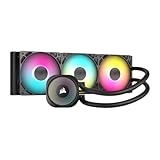
- Premium Choice: CORSAIR Nautilus 360 RS Liquid CPU Cooler – 360mm AIO – Low-Noise – Direct Motherboard Connection – Daisy-Chain – Intel LGA 1851/1700, AMD AM5/AM4 – 3X RS120 Fans Included – Black
Best CPU liquid cooler decisions begin with a tape measure, because radiator size and thickness rule out more options than performance ever does. A 420mm unit that will not clear your motherboard is worse than a 240mm one that fits. This guide ranks six AIOs across all three common sizes.
As an Amazon Associate we earn from qualifying purchases at no extra cost to you. Product prices and availability are accurate as of the date shown and are subject to change.




As an Amazon Associate we earn from qualifying purchases at no extra cost to you. Product prices and availability are accurate as of the date shown and are subject to change.
By Ryan Cole
How to Choose the Best CPU Liquid Cooler by Radiator Size
Radiator area sets the ceiling on how much heat the loop can shed, and case compatibility sets the ceiling on radiator area. These four checks establish which sizes the best CPU liquid cooler for your build could realistically come in.
240mm Is Enough for Most Processors
A 240mm radiator handles a Ryzen 7 at 120W or a mid-range Core Ultra part comfortably, and fits the top or front of almost every mid tower. For a gaming build with an eight-core processor it is rarely the limiting factor.
Where it struggles is sustained all-core load on a 170W chip, and noise, since less radiator area means the fans work harder for the same temperature. If quiet operation matters more than absolute temperature, step up a size rather than adding faster fans.
360mm Is the Sensible Default
Three 120mm fans on a longer radiator give enough surface area to run slower and quieter at the same temperature, which is the real benefit rather than a large temperature drop. Most modern mid towers accept one in the front or top.
Check top clearance specifically. A 360mm radiator plus fans typically needs 55mm or more above the motherboard, and thicker radiators can foul memory slots or VRM heatsinks in tighter cases.
420mm Fits Very Few Cases
A 420mm radiator using three 140mm fans is the best-performing consumer format, worth several degrees over a comparable 360. The catch is that only select cases accept one, and mounting is meaningfully more awkward.
Confirm the case explicitly lists 420mm support rather than assuming from its size. Even where it fits, the extra length frequently conflicts with front panel connectors or drive cages, and removing a cage is not always possible.
Radiator Thickness Matters as Much as Length
A 38mm thick radiator sheds noticeably more heat than a standard 27mm one of the same length, which is how some 360mm units match larger rivals. It also needs more clearance and can block the top memory slot in tight builds.
Measure the total stack of radiator plus fan against your case’s stated clearance. This is the single most common cause of an AIO being returned, and it is entirely avoidable with two minutes of checking a specification page.
What the 2026 Market Means for AIO Buyers
Three market conditions affect how much of a build budget belongs on cooling this year, and two of them favour spending here, which shifts what the best CPU liquid cooler is worth paying for.
Cooling Is Where Cheap Upgrades Still Pay
Graphics card pricing remains elevated, so improving hardware you already own is the practical route to better performance. A better cooler, fresh compound, extra case fans and a decent power supply all produce measurable results.
Moving from a stock or budget cooler to a capable AIO frequently restores boost behaviour that had been throttling under sustained load. That shows up as steadier frame rates rather than a higher benchmark peak.
Cooling Parts Still See Real Seasonal Discounts
Memory and pre-built systems will not fall meaningfully this November, because that stock uses components bought at this year’s elevated contract prices. Coolers, fans, cases and power supplies are a different category.
Buying the cooler alongside compound and any case fans during a sale is sensible. The absolute savings are modest, so do not postpone a build that needs the parts now.
The Budget Tier Has Moved Up a Step
Component vendors shifted their ranges upward through 2026 and promotional pricing ended in February. Cooler pricing has risen modestly, which changes what the entry point to liquid cooling costs.
The practical effect is that the cheapest credible AIO now sits slightly higher than it did, and a good air tower is a stronger alternative at the bottom of the market than it was two years ago, with no pump to fail.
Top Picks: Best CPU Liquid Cooler Options by Radiator Size
These cover 240mm, 360mm and 420mm formats with both thick and standard radiators, so the best CPU liquid cooler for you depends on which row your case can accept. Confirm the stated clearance for that size before ordering.
| Cooler | Radiator | Thickness | Fans | Best For |
|---|---|---|---|---|
| Arctic Liquid Freezer III Pro 360 | 360mm | 38mm | 3x 120mm | Best overall |
| Arctic Liquid Freezer III 420 | 420mm | 38mm | 3x 140mm | Maximum cooling |
| Arctic Liquid Freezer III 240 | 240mm | 38mm | 2x 120mm | Compact builds |
| Cooler Master MasterLiquid Atmos 360 | 360mm | 27mm | 3x 120mm | Tight top clearance |
| Thermalright Frozen Notte 360 | 360mm | 27mm | 3x 120mm | Budget 360 |
| ID-COOLING FX360 PRO | 360mm | 27mm | 3x 120mm | Lowest cost |
Arctic Liquid Freezer III Pro 360
The Pro 360 is the consensus pick across independent testing, combining a 38mm radiator with an integrated VRM fan that genuinely lowers board temperatures rather than serving as marketing. Arctic backs it with a six-year warranty, which is the longest coverage in the category by a clear margin.
The thick radiator is the catch. It needs more top clearance than a standard unit and can foul memory slots in tighter mid towers, so measure before ordering rather than after.
Arctic Liquid Freezer III 420
With three 140mm fans on a 38mm radiator, this is about the best-performing consumer AIO available, worth several degrees over a comparable 360mm unit under sustained load.
Very few cases accept a 420mm radiator, and mounting is meaningfully more involved than a 360. Confirm your case explicitly lists support, because the extra length often conflicts with front panel wiring or drive cages.
Arctic Liquid Freezer III 240
The 240mm version brings the same thick radiator and VRM fan to compact builds. For a Ryzen 7 or a mid-range Core Ultra part it provides more capacity than the format usually offers.
Less radiator area means the fans work harder for the same temperature, so it is audibly louder than the 360 under sustained load. Under a 170W processor it will hold temperature, but it will not do so quietly.
Cooler Master MasterLiquid Atmos 360
The Atmos is the sensible fallback when a 38mm radiator will not fit. A standard 27mm stack clears low-profile cases and memory slots that the thicker Arctic units cannot, at a small thermal cost.
It sits behind the Arctic models in raw performance and costs slightly more for the privilege of fitting. It earns its place purely on clearance, which for a lot of compact mid towers is the deciding factor anyway.
Thermalright Frozen Notte 360
The Frozen Notte is the value pick of the 360mm class, delivering competent performance with ARGB lighting for far less than the premium units cost. For a build where the cooler is not meant to be the centrepiece, it does everything asked of it.
Pump acoustics and long-term reliability are less well documented than the established brands, and warranty coverage is shorter. That matters, since AIO failures cluster around years two and three.
ID-COOLING FX360 PRO
This is the cheapest 360mm unit worth considering, and independent testing has repeatedly placed it ahead of several coolers costing considerably more. For a budget build it removes the usual compromise between price and thermal capacity entirely.
Warranty length and support reputation are the weak points against Arctic’s six years of coverage. Software and lighting control are also basic, so treat it as a functional cooler rather than as a showcase component in a glass-panel build.
Frequently Asked Questions
These questions come up whenever builders start choosing the best CPU liquid cooler by radiator size rather than by brand name.
Is a 360mm radiator better than 240mm?
Mainly for noise. The extra area lets fans run slower at the same temperature, which is more noticeable day to day than the few degrees of difference. A 240mm unit still handles an eight-core processor comfortably.
Should I mount the radiator on top or in front?
Top mounting suits natural convection and keeps air bubbles away from the pump. Front mounting usually improves graphics card temperatures because the radiator draws in cooler outside air, at the cost of slightly warmer case air.
Do thicker radiators actually help?
Yes, measurably. A 38mm radiator sheds more heat than a 27mm one of the same length, which is how some 360mm units match larger rivals. It also needs more clearance and can block the nearest memory slot.
Is an AIO better than a good air cooler?
Not automatically. A top air tower matches a 240mm AIO and beats a poor one outright, with no pump that can fail and no coolant to lose. Liquid cooling wins on 360mm and larger radiators, on tight clearance around the socket, and on appearance in a glass-panel build.
See More:
- Who makes the best motherboard
- Best budget AM5 CPU for gaming
- What is the best thermal paste pattern
- Best mini ITX computer case
- Best desktop RAM for gaming
Final Thoughts
The best CPU liquid cooler is the largest radiator your case genuinely accepts, and the Arctic Liquid Freezer III Pro 360 is the right answer for most builds. Step to the 420 only if your case explicitly supports it, drop to the 240 for compact builds, and take the Atmos or a standard 27mm unit when the thick radiator will not clear. Measure the full radiator and fan stack against your case first, because fitment decides this purchase far more often than raw thermal performance ever does. Figures reflect August 2026 and should be verified before purchase.



Write Your Review
No reviews yet. Be the first to share your experience!