

Prime
Best Seller
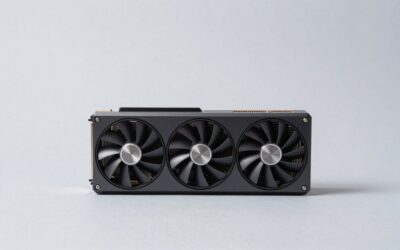
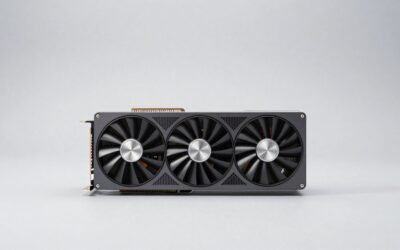
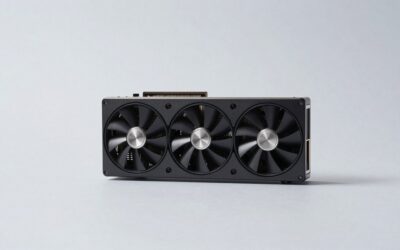
Gigabyte GeForce RTX 4060 AERO OC 8G Graphics Card, 3X WINDFORCE Fans, 8GB 128-bit GDDR6, GV-N4060AERO OC-8GD Video Card


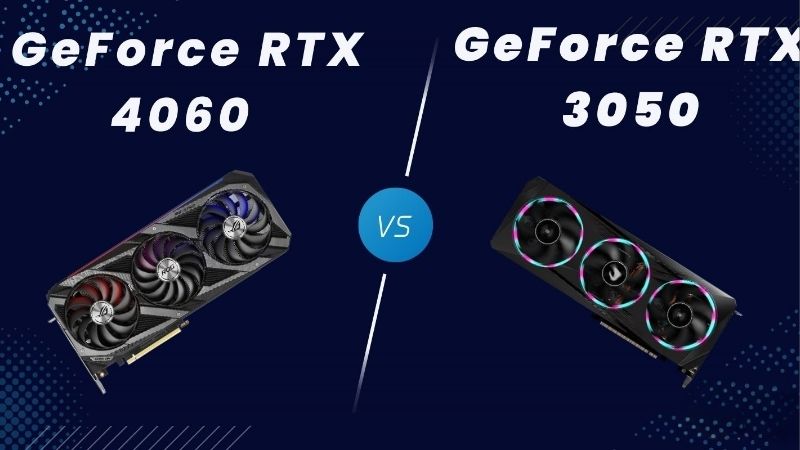
3050 vs 4060 — you typed it short because you want the answer short. Fair enough. Here it is before anything else: the 4060 is roughly 50-60% faster, it has Frame Generation which the 3050 can never have, and it draws less power while doing it. The $100 gap is one of the few upgrades in the budget GPU market that is genuinely worth taking. If that settles it, you can stop reading. If you want the numbers behind that claim — the per-game table, the power figures, the reason the 3050 still exists at all — everything below is organised so you can scan it in two minutes rather than sit through a benchmark video.
The Quick Verdict: 3050 vs 4060 in 60 Seconds
The RTX 4060 wins comprehensively and it is not a close decision. It is faster in every title, draws 115W against the 3050’s 130W, runs cooler, produces less noise, and unlocks DLSS Frame Generation — a feature locked to Ada and newer, which the Ampere-based 3050 is architecturally excluded from forever. Both carry 8GB of VRAM, so neither has an advantage there. The 3050 retains exactly one argument: absolute lowest price, and even that argument weakens once you account for what you get. If the gap in your region is $100 or less, take the 4060 and do not think about it further.
The Short Answer for People Who Hate Long Reviews
You are getting roughly 55% more performance for roughly 40% more money. That ratio is rare in this segment — normally you pay more per frame as you climb, not less. Here the maths runs the other way, which is what makes this specific upgrade unusual.
Put it in the terms that matter: on the 3050, a demanding 2026 title runs at around 45 FPS at 1080p Medium. On the 4060, the same scene runs at around 70 FPS — and with Frame Generation enabled, the counter reads well past 100. That is the difference between tolerating a game and playing it.
If $100 is genuinely not available, the 3050 works and nobody should feel bad about it. But if the money exists, this is not a marginal call.
When the RTX 3050 Still Makes Sense
Two scenarios, and they are narrow. The first is a hard budget ceiling — if your total build has no room and the 3050 is what fits, a working card beats a theoretical one. It plays every esports title at 1080p above 100 FPS and handles older AAA games at Medium perfectly well.
The second is the low-profile and 75W variants. Some 3050 6GB models draw power entirely from the PCIe slot and need no supplementary connector, which makes them viable in sealed OEM prebuilts where the 4060’s 8-pin requirement is a non-starter. Note carefully that this applies to the 6GB variant — a different, slower card than the 3050 8GB — so read the box.
Outside those two cases, the 3050 is a card whose reason for existing has largely expired.
The VRAM Trap Both Cards Share
Here is the thing neither card’s marketing mentions and most comparison videos skip: both are 8GB cards, and 8GB is the pressure point of this segment in 2026.
At 1080p Medium, 8GB is adequate in nearly everything. At 1080p Ultra with high-resolution texture packs, several current titles will exceed it, and when they do, performance does not degrade gracefully — it produces stutter and texture pop-in that no average frame rate reveals. The 4060’s 128-bit bus makes this slightly worse, since spilling to system memory across a narrow bus is more painful.
The practical translation: buy either card for 1080p Medium-High and both are fine. Buy either card expecting 1080p Ultra with texture packs, or 1440p, and you will meet the ceiling. That ceiling is the same height for both.
Specs and 1080p Frame Rates Compared
The specification table below explains why a card with fewer CUDA cores wins by 55%. Architecture is doing the work here, not core count — and this is the single most counter-intuitive thing about this matchup.
Core Specifications Side by Side
| Specification | RTX 3050 (8GB) | RTX 4060 |
|---|---|---|
| Architecture | Ampere (GA106) | Ada Lovelace (AD107) |
| Process node | Samsung 8nm | TSMC 4N |
| CUDA cores | 2,560 | 3,072 |
| Boost clock | ~1.78 GHz | ~2.46 GHz |
| VRAM | 8GB GDDR6 | 8GB GDDR6 |
| Memory bus | 128-bit | 128-bit |
| L2 cache | 2MB | 24MB |
| Frame Generation | Not supported | Supported |
| TGP | 130W | 115W |
| Power connector | 1x 8-pin | 1x 8-pin |
Look at the L2 cache row. 24MB against 2MB is a twelve-fold increase, and it is the reason the 4060 survives a narrow 128-bit bus. Ada’s large cache keeps data close to the cores instead of fetching it across the memory bus, which converts a bandwidth disadvantage into a non-issue at 1080p.
The clock speed row does the rest. 2.46 GHz against 1.78 GHz is a 38% increase, delivered by TSMC’s 4N node against Samsung’s older 8nm. Between cache and clocks, the 4060 wins despite only having 20% more cores — and it does so while drawing 15W less.
1080p Frame Rates in 2026 Games
1080p, High preset, no upscaling, mid-range CPU. Find your title and move on.
| Game (1080p High) | RTX 3050 | RTX 4060 | Gap |
|---|---|---|---|
| Counter-Strike 2 | ~205 FPS | ~295 FPS | +44% |
| Valorant | ~240 FPS | ~330 FPS | +38% |
| Fortnite (Performance) | ~140 FPS | ~215 FPS | +54% |
| Elden Ring | ~48 FPS | ~60 FPS (capped) | +25%* |
| Cyberpunk 2077 | ~42 FPS | ~68 FPS | +62% |
| Hogwarts Legacy | ~40 FPS | ~64 FPS | +60% |
| Black Myth: Wukong | ~31 FPS | ~50 FPS | +61% |
| Call of Duty (recent) | ~72 FPS | ~112 FPS | +56% |
The Elden Ring row is marked because that game caps at 60 FPS — the 4060 hits the cap and the gap is artificial. Ignore it.
The pattern worth noticing: the gap is smallest in CPU-limited esports titles and largest in modern shader-heavy engines. If your library is entirely CS2 and Valorant on a 144Hz monitor, both cards saturate your display and the 3050 argument survives. If it contains anything from the last three years, the 4060 is a different class of experience.
Power Draw, PSU and Physical Fit
An unusual situation: the faster card uses less power. The 4060’s 115W against the 3050’s 130W means a quality 550W supply is sufficient, where the 3050 wants 550-600W. Both need a single 8-pin connector.
This matters more than it sounds in two places. In a small form factor build, 15W less heat in a cramped chassis is real. And in regions where electricity is expensive, a card that is faster and cheaper to run compounds the value argument over three years.
Physically both are compact — most models run 200-245mm dual-fan, and 4060 single-fan ITX versions exist for small cases. Neither presents a clearance problem in any normal build, which is a pleasant change from the rest of this market.
Deep Dive Face-Off: Where the $100 Actually Goes
The raw numbers only tell part of it. The two cards separate along three lines, and one of them is not a performance gap at all — it is a capability gap that no future driver will close.
Raw Performance Gap
Setting every AI feature aside and comparing pure traditional rendering, the 4060 leads by roughly 50-60% in modern titles and 38-44% in esports. That is a full performance tier — the difference between compromising on settings and not thinking about them.
In practical terms it converts a 42 FPS experience into a 68 FPS one. Below roughly 50 FPS, mouse input starts feeling disconnected from the screen. Above roughly 60, it does not. The 4060 puts most 2026 titles on the right side of that line at 1080p High; the 3050 puts several on the wrong side.
DLSS Frame Generation: The Real Divider
This is the part that makes the comparison one-sided, and it is worth being precise about because the terminology confuses people. Both cards can use Nvidia’s transformer upscaling models, but not equally. DLSS 4.5’s newer Model M and Model L rely on native FP8, which Ampere does not have – so on the 3050 they cost more performance than the image quality gain justifies, and Nvidia’s own guidance is that RTX 30 owners should stay on the older Model K. The 4060 is Ada and has FP8, so it gets the newer models at full benefit. Even the shared feature is not really shared.
What is not shared is Frame Generation. It requires Ada’s Optical Flow Accelerator, hardware the 3050 does not physically contain. This is not a driver limitation or an artificial segmentation decision — it is silicon that is either present or absent. The 3050 will never have Frame Generation, at any settings, in any game, ever.
The effect is large. In a supported title, the 4060 running DLSS Quality plus Frame Generation frequently reports frame rates two to two-and-a-half times its native output. Latency does not improve proportionally and fast motion can show artefacts, so treat the counter with some scepticism — but the experience at 100+ generated frames on a 144Hz panel is real, and the 3050 has no path to it. On a card in this class, where native frame rates hover near the uncomfortable threshold, that headroom is exactly where it is needed most.
Pros and Cons at a Glance
| RTX 3050 | RTX 4060 | |
|---|---|---|
| Pros | Lowest entry price; 6GB variant runs at 75W with no power connector for OEM prebuilts; fine for esports at 1080p; DLSS 4 upscaling still supported | 50-60% faster in modern titles; Frame Generation exclusive; 115W means less heat and lower running cost; better resale; 24MB L2 cache masks the narrow bus |
| Cons | No Frame Generation, ever; 130W for less performance; Samsung 8nm runs warmer; several 2026 titles land below 45 FPS; resale value near zero | Costs ~$100 more; 8GB and 128-bit still cap it at 1080p; not a 1440p card despite what listings imply |
Notice the asymmetry. The 3050’s pros are all about constraints you already have — a sealed PSU, an empty wallet. The 4060’s pros are about the games you will actually play. That is the whole comparison in one table.
The 2026 Price Question
Everything above assumes the $100 gap holds. In this market, that is not a safe assumption, and for budget buyers the price trajectory has become as important as the benchmark charts.
Why the 4060 Has a Price Floor
Component and laptop prices have kept trending upward instead of settling, and entry-level graphics cards feel it more sharply than any other tier. The mechanism is simple: on a $299 card, memory is a much larger fraction of the bill of materials than it is on a $1,999 flagship. When GDDR6 contracts reprice, a flagship absorbs it in margin. A budget card cannot — it goes straight onto the price tag.
This is why the 4060 has stubbornly refused to drift below its launch price the way previous generations did by their third year. There is no margin left to give. And it is why the 3050 has not become the bargain its age suggests it should be — the same memory cost sits underneath it, on a card with far less performance to justify it.
The consequence for this decision is direct: the $100 gap is unlikely to widen in your favour by waiting, and the 3050 is unlikely to become dramatically cheaper. Buyers who spent 2025 waiting for the 4060 to hit $220 mostly ended up paying more than if they had bought on day one.
Prices Stopped Rising, But They Are Not Falling
There is real good news and it should be stated exactly rather than hopefully. The steep climb of late 2025 has eased. Framework, which publishes unusually candid component pricing notes, has described a period of relative stability — while still warning that volatility has not ended. Flat is not the same as cheaper.
New supply is genuinely arriving. OEMs can now source DDR5 from Chinese suppliers such as CXMT, and Micron is building two fabs in Idaho. Both add real capacity to a tight market. Neither affects this purchase, because those plants do not run until 2027-2028 — by which point you will be shopping for a different card entirely.
The honest summary: prices have flattened, not fallen, and relief is years out rather than months. Do not build this decision around a discount that is not scheduled to arrive.
The Alternative If Both Feel Overpriced
If the 4060 is beyond reach but the 3050 feels like poor value — and it is — two options sit in between. The Intel Arc B580 offers 12GB of VRAM at roughly 4060 money, which sidesteps the 8GB ceiling entirely, with driver maturity as the trade-off. A used RX 6600 or 6650 XT often lands at 3050 prices with meaningfully better raster performance, though you lose DLSS and Nvidia’s encoder.
Whichever direction you go, check live listings rather than trusting MSRP — in this segment the price ordering shifts month to month and the card that looks cheapest on a spec sheet frequently is not the cheapest on the shelf. Compare current pricing on the RTX 3050, RTX 4060 and their closest alternatives before you commit.
See More:
- GTX 1650 vs RTX 3050
- Nvidia DIGITS
- Nvidia cuDNN
- Radeon RX 9070 XT vs RTX 5090
- PNY GeForce RTX 5080 review
Final Verdict: 3050 vs 4060
The 3050 vs 4060 question resolves more cleanly than most comparisons in this price bracket. Buy the RTX 4060. It is 50-60% faster in the games that stress a GPU, it draws 15W less while doing it, it runs cooler and quieter, and it has Frame Generation — a feature the 3050 is architecturally locked out of permanently. Roughly 40% more money for roughly 55% more performance is the best ratio available anywhere in the budget segment right now.
Buy the RTX 3050 in exactly two situations: your budget genuinely has no room for the difference, or you need the 75W 6GB variant for a sealed OEM prebuilt with no spare power connector. Both are real, and for those buyers it remains the right call. Everyone else should find the $100. With component costs holding firm and no correction expected before 2027, waiting for the gap to close is a plan with no evidence behind it — check current stock on both and buy whichever is available at a sane price today.
Frequently Asked Questions
How much faster is the RTX 4060?
The RTX 4060 is roughly 45 to 60 percent faster than the RTX 3050 8GB at 1080p, and the gap grows in ray traced titles where Ada third generation RT cores pull further ahead. Both have 8GB, so the difference is entirely shader throughput, cache and architecture rather than memory capacity.
Is Frame Generation worth the price difference?
It can be. DLSS 3 Frame Generation is exclusive to RTX 40 series and above, and in supported single player titles it can nearly double reported frame rates. It adds a little latency and needs a decent base frame rate to feel right, so treat it as a bonus rather than the deciding factor.
Which uses less power?
The RTX 4060 at 115W is actually more efficient than the 130W RTX 3050 8GB despite being much faster, which is the clearest illustration of the Ada efficiency jump. Both run on a quality 500W to 550W supply with a single 8-pin, so neither should force a PSU upgrade.
Does the 4060 narrow PCIe bus cause problems?
The RTX 4060 runs at PCIe 4.0 x8. On a PCIe 4.0 or 5.0 motherboard that is a non-issue. On an older PCIe 3.0 board the effective bandwidth halves to 3.0 x8, which costs a few percent in most games and more in titles that exceed the 8GB buffer and start streaming over the bus.
Is the upgrade worth 100 dollars more?
Yes if you play modern AAA games at 1080p high or want to push to 1440p with DLSS. The 4060 is the better card in essentially every metric including efficiency. Only pick the 3050 if the budget is absolutely fixed or you need the 6GB low profile variant for a small prebuilt with no spare power connector.

Write Your Review
No reviews yet. Be the first to share your experience!