


Best Seller
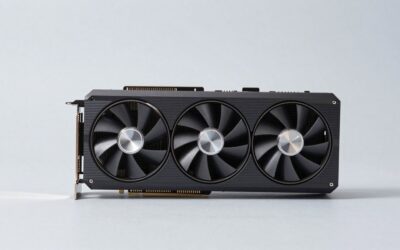
XFX Swift AMD Radeon RX 9070XT Triple Fan Gaming Edition with 16GB GDDR6 HDMI 3xDP, AMD RDNA 4 RX-97TSWF3BA
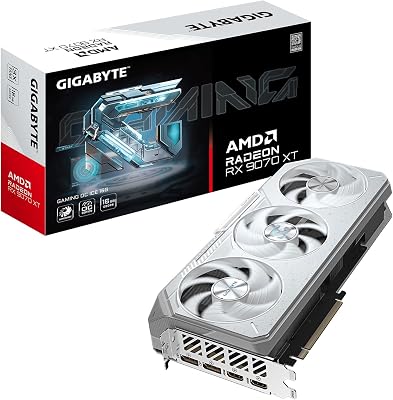
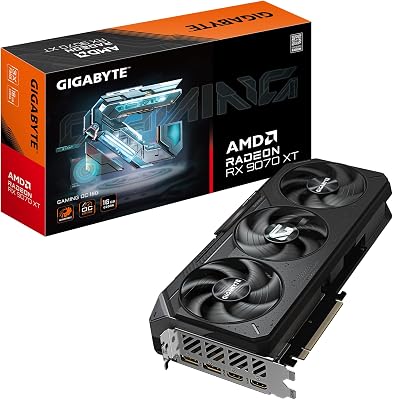
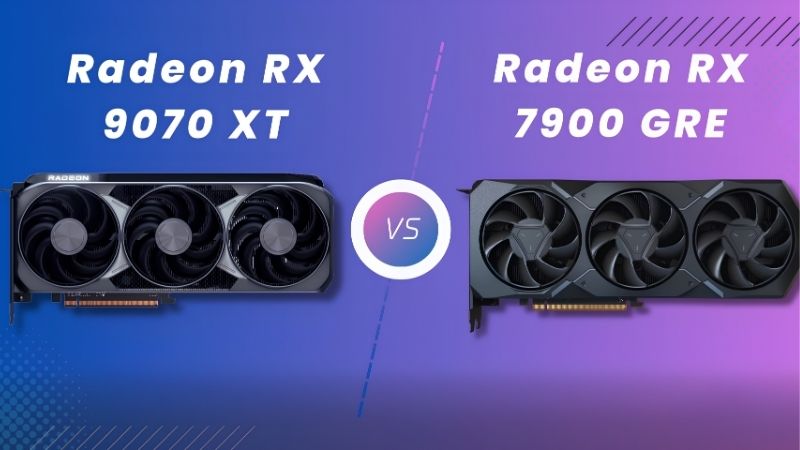
rx 7900 xt vs rx 9070 xt is a comparison almost nobody makes as a fresh purchase – you are here because you own the 7900 XT and you are wondering whether the newer card is an upgrade or a lateral move with a marketing budget. It is a genuinely interesting question, because the answer contains something most upgrade articles never have to say: moving to the newer card means giving up 4GB of VRAM. That single fact reshapes the whole decision. Verdict below, numbers in a table, and an honest resale calculation rather than a shopping list.
Quick answer: Our top pick in 2026 is the VRAM — our #1 rated choice. See the full ranked comparison, alternatives and buying advice below.
Quick Verdict: Is the RX 9070 XT an Upgrade From a 7900 XT?
For most 7900 XT owners, no. In rasterised games the two land close enough that you will not feel the difference – the 9070 XT is marginally ahead in some titles and marginally behind in others. What you actually gain is meaningfully better ray tracing and FSR 4. What you lose is 4GB of VRAM, dropping from 20GB to 16GB. Unless ray tracing is a genuine priority in your library, this is not an upgrade. It is a sidegrade that costs you memory and roughly $250-350 net after selling.
The Raster Performance Is Basically a Tie
Start with the number people assume decides this, because it does not.
In rasterised games at 1440p, these two trade within a few percent depending on the title. The 9070 XT’s newer architecture is more efficient per compute unit; the 7900 XT compensates with a wider memory configuration and more raw silicon. Net result: a wash. At 4K the 7900 XT occasionally edges ahead in memory-heavy titles precisely because of its larger buffer and wider bus.
The threshold where a GPU upgrade feels transformative is roughly 40-50% – that is where a game moves between perceptual tiers. Below 25%, most people cannot reliably tell in a blind test. A wash is not near that threshold. It is not on the same continent as that threshold.
So if you are upgrading for frames in the games you currently play at the settings you currently use, stop reading. You will spend $300 and notice nothing, which is a genuinely expensive way to learn something you could have learned here.
What You Actually Gain: RT and FSR 4
The 9070 XT’s case is real, and it is entirely about the two things AMD spent this generation fixing.
Ray tracing first. RDNA 4 substantially improved AMD’s RT hardware, and the gap over the 7900 XT is meaningful rather than cosmetic – expect roughly 30-45% better RT performance depending on how heavily a title leans on it. If you have been leaving ray tracing off because it was not worth the frames on your 7900 XT, the 9070 XT is the card that changes that calculation.
FSR 4 second, and this is the underrated one. It is a genuine generational leap over FSR 3 in image stability – fine detail in motion, foliage, fences, hair, the things that made earlier FSR versions a compromise rather than a feature. On a card where upscaling extends your useful life by years, that quality difference compounds over time rather than showing up once in a benchmark.
Efficiency is the third, minor one: roughly 304W against the 7900 XT’s 315W for similar raster, which is a real but small improvement that mostly shows up as slightly less heat rather than a smaller electricity bill.
What You Lose: 4GB of VRAM
Here is the part that makes this comparison unusual, and it is the reason most 7900 XT owners should stay put.
The 7900 XT carries 20GB on a 320-bit bus. The 9070 XT carries 16GB on a 256-bit bus. Moving to the newer card means moving down – both in capacity and in bus width. That is not a normal upgrade path and it deserves more attention than the marketing gives it.
Why it matters comes down to the failure mode. A card short on shader power runs slower – predictable, tunable, you drop a setting. A card short on VRAM hitches, streams textures in late, and its 1% lows collapse while the average frame rate stays deceptively healthy. At 4K with maxed textures plus ray tracing, current titles already push toward and past 16GB. Your 20GB card does not care. A 16GB card starts to.
The awkward summary: the 9070 XT lets you turn ray tracing on, and then partially spends the VRAM headroom you would need to run ray tracing at high textures. That is not a contradiction that shows up in a benchmark average, but it is a real tension in the exact use case the upgrade is sold on.
Full Comparison Table for 7900 XT Owners
Framed as what changes, rather than as two products.
| Specification | Your RX 7900 XT | RX 9070 XT | What changes |
|---|---|---|---|
| VRAM | 20GB | 16GB | You lose 4GB |
| Memory bus | 320-bit | 256-bit | Narrower |
| Raster 1440p | Baseline | ~Same | No felt difference |
| Raster 4K | Baseline | ~Same or slightly behind | No reason to move |
| Ray tracing | Baseline | ~130-145% | The real gain |
| Upscaling | FSR 3 | FSR 4 | Genuinely better |
| Board power | ~315W | ~304W | Marginal |
| PSU | 750W | 750W | No change |
| Connector | 2x 8-pin | 2x 8-pin | No change |
| Net upgrade cost | – | ~$250-350 after selling | The question |
Read the “what changes” column top to bottom. Two rows say something meaningful and both are about ray tracing and upscaling. One row says you lose memory. Everything else says no change. You are paying roughly $300 for two rows and being charged 4GB for the privilege.
Deep Dive: When This Upgrade Is Actually Correct
There is a version of this buyer for whom the 9070 XT is genuinely the right move, and it is worth defining precisely rather than dismissing the upgrade outright. If you recognise yourself in this section, the maths changes.
The Ray Tracing Buyer
If you play the heavier RT titles and you have been running them with ray tracing off because your 7900 XT made it a bad trade, the 9070 XT genuinely changes what settings are available to you. A 30-45% RT improvement moves path-traced and heavy-RT titles from unplayable-with-compromises into actually-usable territory at 1440p.
That is a real change in capability rather than a change in a number, and capability changes are the only ones worth $300. The test is honest and simple: look at what you actually played in the last three months. If ray tracing was off in all of it and you did not miss it, this argument does not apply to you no matter how appealing it sounds.
The forward-looking version has some weight too. AMD’s upscaling and RT trajectory through RDNA 4 has been steeper than RDNA 3’s, and FSR 4 will keep improving on the newer hardware in ways the 7900 XT will not receive. Whether that is worth paying for now or waiting out is a judgement call, not a calculation.
Pros and Cons of Upgrading From a 7900 XT
| Upgrade to the RX 9070 XT | Keep your RX 7900 XT | |
|---|---|---|
| Pros | 30-45% better ray tracing – a genuine capability change; FSR 4 is a real generational leap in image quality; newer architecture with a longer support runway; slightly lower power draw; strong resale on the 7900 XT offsets much of the cost | Costs nothing; you keep 20GB and a 320-bit bus that ages better at 4K; raster performance is already equivalent; the money stays available for a jump that actually matters; no risk, no reinstall, no RMA window |
| Cons | You lose 4GB of VRAM and a narrower bus; no felt raster gain at all; roughly $250-350 net for two features; the VRAM you give up is needed by the RT you gained | FSR 3 rather than FSR 4; ray tracing stays impractical in heavy titles; you are on the older architecture as driver attention shifts forward |
The shape here is genuinely unusual for an upgrade comparison. Normally the newer card wins everything and the question is price. Here the newer card wins two things, loses one, and ties the rest – which means the honest answer depends entirely on whether those two things are the two things you care about.
The Alternative: Skip a Generation Instead
If the 9070 XT feels like a lot of money for a sidegrade – it is – the better strategy for most 7900 XT owners is to skip it entirely.
Your card is a 20GB, 315W part that handles 1440p and 4K raster comfortably. It is not close to obsolete. Waiting one more generation gets you a card that beats it on raster, RT, and VRAM simultaneously, rather than trading one for another. That is what an upgrade is supposed to look like.
In the meantime, spend $25 instead of $300. A card two to three years old has thermal paste well past its pump-out point, and a 315W part in a case with weak intake is throttling – which means you are losing performance you already own. A repaste, a proper fan curve, and two intake fans routinely recover 8-12C and 60-90 MHz of sustained boost clock. You can check current pricing and buyer ratings for the RX 9070 XT, thermal paste kits, thermal pads and case fans on Amazon here – and on a card of this class, the $25 option is the one more owners should exhaust before considering the $300 one.
Why the Resale Maths Is Better Than You Think
Everything above assumes today’s prices, and the pricing situation is the one genuine piece of good news in this decision – not because the new card is cheap, but because your old one is not.
Flat Prices Mean Your 7900 XT Held Its Value
The memory-driven surge through late 2025 lifted component and laptop pricing broadly, and used GPUs followed with a lag – the used market prices against the cheapest new alternative rather than against age. That is why a 7900 XT still commands real money.
The genuinely positive development is narrow but real: the steep climb seen at the end of 2025 has stopped, and manufacturers including Framework have reported a period of relative stability, while still warning openly that volatility has not ended.
Flat is not falling – and here that cuts in your favour. Your 7900 XT is not depreciating the way a three-year-old GPU normally would, which means selling it recovers more than it would in a normal market and the net cost of moving is lower than the sticker suggests. It also means there is no penalty for waiting, because your card will still be worth roughly this much next quarter.
The Nvidia H200 Decision and Why the Whole Market Stays Firm
The US has cleared Nvidia to sell the H200 – among its most capable AI accelerators – to China. That sounds irrelevant to an AMD-versus-AMD decision, and the connection is indirect but real enough to explain the pricing you are seeing.
Nvidia has finite advanced packaging and high-bandwidth memory allocation, and every unit gets assigned somewhere. AI silicon carries margins gaming cards cannot approach. Opening a large additional market for H200 increases the pull on the same upstream memory and packaging supply that both vendors draw from – which keeps the entire GPU market tight rather than just Nvidia’s half of it.
What that means for you: neither the 9070 XT’s price nor your 7900 XT’s resale value is likely to move much this year. There is no crash coming to make this upgrade cheap, and no collapse coming to punish you for waiting. The decision rests entirely on whether you want ray tracing – not on timing.
See More:
- A fan curve msi afterburner
- amd radeon rx 9070 vs rtx 5070
- 5060 ti vs 5070 benchmark
- rx 6600 vs rtx 3050
- 2060 vs 3060
Final Verdict and Recommendation
On rx 7900 xt vs rx 9070 xt, the honest recommendation is that most owners should keep what they have, and the ones who should move already know why.
Upgrade if ray tracing is a genuine priority in the games you actually play, and if FSR 4’s image quality matters to you enough to pay for. Those are real gains – 30-45% in RT is a capability change, not a percentage. Just go in knowing you are handing back 4GB of VRAM and a wider bus to get them.
Keep your 7900 XT if you are a rasteriser, if you play at 4K, or if ray tracing has been off in everything you played this year. Your card matches the newer one on frames and beats it on memory. There is no version of that where spending $300 makes sense.
And if the card feels slower than it did, spend $25 before $300. Repaste it, build a fan curve, fix the intake airflow. A 315W card at 82C is giving back clocks you paid for – and in a market where prices are flat and your resale value is holding, recovering that costs an afternoon rather than a paycheque.
Frequently Asked Questions
Does the RX 9070 XT beat the RX 7900 XT in raw performance?
In rasterization the two are close, with the 9070 XT typically matching or slightly leading depending on resolution and title. In ray tracing the RDNA 4 card pulls clearly ahead thanks to redesigned ray accelerators, and it also gains machine-learning upscaling that the older card handles less gracefully.
Is 16GB of VRAM a downgrade from 20GB?
On paper yes, in practice rarely. The 7900 XT carries 20GB on a 320-bit bus, the 9070 XT carries 16GB on 256-bit. At 1440p and most 4K settings 16GB is still comfortable. If you run 4K texture mods, heavy local AI models, or professional rendering scenes, the extra capacity on the older card genuinely matters.
What power supply does each card need?
The 7900 XT pulls roughly 315W and wants a solid 750W unit with two 8-pin connectors. The 9070 XT sits near 304W with a similar 750W recommendation and two or three 8-pin plugs depending on the partner model. Neither uses the 12V-2×6 connector on most designs, so no adapter drama.
Is FSR 4 worth upgrading for?
FSR 4 uses a machine-learning model that runs on RDNA 4 hardware and delivers noticeably cleaner motion and less shimmering than FSR 3.1. That upgrade does not come to the 7900 XT in the same hardware-accelerated form. If you play at 1440p with upscaling always on, the image quality gain is the strongest single argument for switching.
Should I upgrade if I already own the 7900 XT?
Generally no. The performance delta in rasterization is small, and selling a used 7900 XT rarely recovers enough to make the swap cheap. The upgrade makes sense only if you specifically want much stronger ray tracing, better upscaling image quality, or lower idle and multi-monitor power draw.
Ready to decide? Our #1 pick for 2026 is the VRAM.
Live price & availability on Amazon.




Write Your Review
No reviews yet. Be the first to share your experience!