
Top Rtx 5090 4080 Flagship Worth Picks for 2026
Here are our current top rtx 5090 4080 flagship worth picks, compared on real Amazon owner reviews, price, and features. Live prices update below.


5090 vs 4080 is a comparison about diminishing returns — and about the buyers for whom they never diminish. The RTX 4080 was 2022’s $1,199 near-flagship and now trades used around $700 to $750, a strong 4K card by any sane standard. The RTX 5090 is the $1,999 Blackwell apex with 32GB of GDDR7 and a 575W appetite, routinely selling above MSRP. One costs nearly three times the other. The performance gap is large but not threefold — so the real question is what kind of buyer converts that gap into value. This comparison measures it precisely: games, memory, system demands, and money, ending with a verdict sorted by who you are.
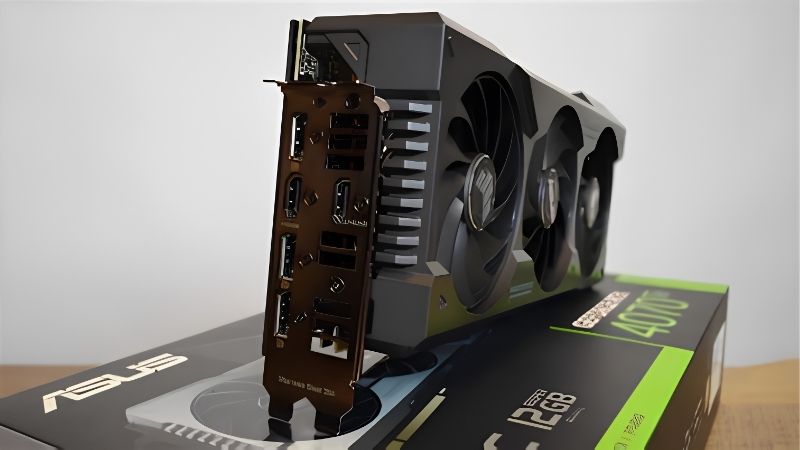
5090 vs 4080: Quick Verdict and the Scale of the Gap
The flagship’s lead is enormous in absolute terms and complicated in economic ones. Start with the direct answer, then the spec sheet that quantifies a one-and-a-half-generation chasm.
The Quick Verdict for Busy Buyers
The RTX 5090 is roughly 70 to 90 percent faster than the RTX 4080 at 4K raster, more than doubles it in path-traced workloads with DLSS 4 Multi Frame Generation, and carries double the memory at far higher bandwidth. It wins every technical category that exists.
Value is the asterisk: at $700-750 used, the 4080 delivers excellent 4K gaming at a third of the flagship’s real-world cost, and pure gamers on 120-144Hz displays capture little of the 5090’s advantage. The flagship’s price makes sense for 4K-240Hz gaming, 24GB-plus AI work, and professional rendering — and for almost no one else. Check both prices on Amazon; the verdict section maps each profile to its card.
Specification Comparison Table
Every line at least gaps significantly, and two of them — memory capacity and bandwidth — roughly double.
| Specification | RTX 4080 | RTX 5090 |
|---|---|---|
| Architecture | Ada Lovelace (2022) | Blackwell (2025) |
| CUDA Cores | 9,728 | 21,760 |
| VRAM | 16GB GDDR6X | 32GB GDDR7 |
| Memory Bandwidth | 717 GB/s | 1,792 GB/s |
| Board Power | 320W | 575W |
| DLSS Support | DLSS 3 (Frame Generation) | DLSS 4 (Multi Frame Generation) |
| Price in 2026 | ~$700-750 used | $1,999+ |
A 2.2x core count and a 2.5x bandwidth multiple are flagship economics in silicon form: the last increments of performance are always the widest and the most expensive.
Pros and Cons of Each Card
A fair 5090 vs 4080 reading respects that one card is a value proposition and the other deliberately is not.
RTX 4080 pros: genuinely strong 4K performance at a fraction of the cost; 16GB covers all gaming and most creative work; overbuilt coolers run cold and quiet; 320W fits an 850W supply most enthusiast builds already own. Cons: single-frame DLSS 3 forever; used-only market means no warranty and unknown history; falls visibly behind in path tracing and 240Hz 4K ambitions; bandwidth is its thinnest line in the newest engines.
RTX 5090 pros: the fastest consumer GPU in existence by a wide margin; 32GB of GDDR7 spans gaming, AI, and production work without compromise; DLSS 4 and the complete Blackwell stack; full warranty and the strongest resale trajectory in the lineup. Cons: $1,999 MSRP with frequent street premiums; 575W demands a 1,000W-plus power supply and serious case planning; physically enormous; wasted below 4K or behind a midrange CPU.
Deep Dive: What Triple the Money Actually Buys
The gap distributes unevenly across workloads — decisive in some, irrelevant in others — and the system costs around the flagship are part of its price. Four sections itemize the purchase honestly.
4K Gaming: From Strong to Saturating
The 4080’s 2026 reality at 4K high settings is genuinely good: 75 to 100 fps in demanding AAA titles, with DLSS 3 Frame Generation lifting supported games comfortably past 120Hz territory. For a 4K 120-144Hz display, it leaves little visibly on the table. Hybrid ray tracing stays comfortable too — only full path tracing pushes it into the assisted territory where the flagship’s lead becomes categorical.
The 5090 moves the same titles to 130 to 180 fps natively and — with Multi Frame Generation — saturates 4K 240Hz panels in supported games, a category of experience the 4080 cannot enter at any settings. Path tracing widens it further: the flagship sustains 200-plus presented fps in showcases where the older card hovers near playable with every assist enabled.
The honest qualifier: below 4K, or behind anything less than a current top-tier CPU, the gap compresses brutally into processor limits. This flagship assumes the rest of the machine matches it.
Memory and Work: 16GB vs 32GB
For gaming alone, 16GB remains sufficient at every resolution — the 4080 concedes nothing here through the card’s realistic lifespan. The doubling matters the moment the GPU becomes a tool: local language models that load whole only above 24GB, video generation pipelines, and production rendering scenes are categories the 4080 cannot enter and the 5090 defines.
Throughput compounds capacity: fifth-generation Tensor Cores with FP4 support deliver inference multiples beyond what the raw core ratio suggests. The clean test for readers: name the workload that needs more than 16GB. If you can, this section justifies the price gap by itself; if you cannot, the flagship is selling you insurance against a need you do not have. Capacity needs also tend to be binary rather than gradual — a model either loads or it does not — which is why this line outranks every benchmark for working buyers.
Power, Size, and the System Bill
The flagship bills the whole build. Its 575W board power makes a quality 1,000W ATX 3.1 supply the realistic floor — 1,200W for loaded systems — against the 850W class that serves the 4080 comfortably. Both use the 16-pin connector family; the 5090’s draw makes perfect seating and bend-free routing genuinely non-negotiable.
Physically, partner 5090s commonly exceed 340mm and 3.5 slots with mass that demands an anti-sag bracket and airflow planned around nearly 600W of exhaust heat. Many cases hosting a 4080 today cannot host its replacement, and that $150 to $300 of system updates belongs in the comparison’s math from the first line.
Electricity is the recurring entry: heavy daily use on the 5090 adds a few hundred kWh per year over the 4080 — small against the purchase price, real against the years. Factor cooling noise too: dissipating that heat quietly requires case volume and fan budgets the 4080’s 320W never demands.
Value per Frame: The Cost Math
The arithmetic states the obvious precisely. A used 4080 at $720 averaging 88 fps across a 4K suite costs $8.18 per frame. The 5090 at $1,999 averaging 155 fps costs $12.90 per frame — the flagship is roughly 58 percent more expensive per unit of gaming performance, before system costs.
That is normal flagship pricing, not a flaw: the top of every stack charges a premium for the frames nothing else can render. The economic question is whether your display, your latency sensitivity, or your workload converts those premium frames into experienced value — the three conversions the verdict below sorts by.
For pure value hunters, this section’s answer was always going to be the older card or the alternative below; for ceiling buyers, per-frame math was never the metric.
The 2026 Market: Two Forces Squeezing Both Ends
Both cards’ prices are currently being held up — the new one above MSRP, the used one above its depreciation curve — by the same pair of industry developments. They shape the timing of either purchase.
The H200 China Approval Hits the Flagship First
The United States has approved Nvidia selling the H200 — among its most powerful AI accelerators — to China, releasing data-center demand that competes directly with flagship GeForce production for memory, packaging, and wafer allocation. The 5090 shares the most production DNA with that silicon and feels the squeeze first: MSRP windows measured in hours and persistent third-party premiums.
For flagship buyers the read is blunt — $1,999 listings are opportunities to execute, not baselines to negotiate against. Previous AI demand waves ran this script at the top of the stack every time.
Rising Component Prices Hold the 4080’s Floor
Simultaneously, laptop and PC component prices are climbing industry-wide, led by memory costs, and the pressure has frozen used-GPU depreciation. The 4080’s $700-plus band — which normal cycles would have eroded toward $600 by now — has traded flat for consecutive quarters, with renewed AI interest in any 16GB card adding a second bid under it.
The consequence for this comparison: the affordable side is not getting more affordable, and waiting taxes both paths simultaneously.
Buy Now or Wait?
If your profile points at either card, act inside current numbers: a 5090 at $1,999 or a 4080 under $730 with returns are both fair 2026 prices with more upside risk than downside.
Set Amazon alerts on both, decide your profile before the alert fires, and execute without renegotiating with yourself — this market has punished hesitation for two straight years.
Final Verdict: Who Should Buy Which Card?
The gap is real, the premium is real, and the decision is a profile match — three lanes, cleanly separated.
Who Should Buy the RTX 4080
Buy a used 4080 if you game at 4K up to 144Hz, your workloads fit inside 16GB, and value per dollar is the metric you actually optimize. At $700 to $730 with a return window it remains one of the used market’s most complete cards.
Apply the full used checklist — stress test, outputs, memory temperatures, connector photos — and let any seller who resists returns disqualify themselves.
Who Should Buy the RTX 5090
Buy the 5090 if you run 4K at 240Hz, your work demonstrably needs more than 16GB, or your GPU earns its keep in rendering and AI throughput. For those profiles the premium converts fully into capability nothing else delivers, and the warranty wraps a four-figure purchase appropriately.
Watch Amazon for MSRP windows and move inside them — the flagship rewards prepared buyers and overcharges patient ones.
The Alternative: RTX 5080
The card quietly resolving most 5090 vs 4080 debates is the RTX 5080 at $999: 15 to 20 percent ahead of the 4080 with DLSS 4, GDDR7, and a warranty, at half the flagship’s price.
For 4K gamers who want new-card certainty without flagship economics, it splits this comparison’s difference almost exactly — price it on Amazon alongside both before deciding.
See More:
- Nvidia Reflex low latency
- RTX 4070 vs 5060 Ti
- Zephyr RTX 4070
- RTX 3080 Ti price
- Nvidia RTX 2060 Super
Conclusion
The 5090 vs 4080 measurement returns honest numbers: the flagship is 70 to 90 percent faster, doubles the memory, and owns DLSS 4 — at nearly triple the real-world cost plus the system upgrades its 575W demands. The used 4080 remains the value answer for 4K-144Hz gamers inside 16GB; the 5090 is the only answer for 240Hz 4K, large-model AI, and professional throughput; and the new 5080 quietly serves everyone caught between them. With the H200 export approval squeezing flagship supply and rising component prices holding used values firm, both paths cost more tomorrow than today. Settle your side of the 5090 vs 4080 question by profile, check live Amazon prices, and buy the card your actual workload — not the spec sheet — selects.
Frequently Asked Questions
What is the best 5090 4080 in 2026?
The best 5090 4080 depends on your budget and how you plan to use it. The options compared above are our top-rated picks based on real customer ratings, build quality, and overall value — start with the highest-rated model that fits your budget.
How much should I expect to spend on a 5090 4080?
Prices vary by brand and features. Budget options cover the essentials, while mid-range and premium models add durability, performance, and extra features. Compare the prices in the list above to find the best value for your needs.
What should I look for when buying a 5090 4080?
Focus on what matters most for your use case — build quality, compatibility, performance, warranty, and verified customer reviews. Every pick above is selected to balance these factors.
Are budget 5090 4080 options worth it?
Yes. For most people a well-reviewed budget or mid-range 5090 4080 delivers excellent value. You only need to spend more if you specifically require premium materials or top-tier performance.
How did we choose these 5090 4080 picks?
We compare current Amazon ratings, review counts, key features, and price to surface the options with the best real-world value. The list is refreshed as ratings and availability change.










Write Your Review
No reviews yet. Be the first to share your experience!