
- Top Pick: ASUS Dual GeForce RTX 4060 Ti EVO OC Edition 8GB GDDR6 (PCIe 4.0, 8GB GDDR6, DLSS 3, HDMI 2.1a, DisplayPort 1.4a, Axial-tech Fan Design, Auto-Extreme Technology), 3 Year Warranty
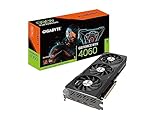
- Best Value: Gigabyte GeForce RTX 4060 WINDFORCE OC 8G Graphics Card, 2X WINDFORCE Fans, 8GB 128-bit GDDR6, GV-N4060WF2OC-8GD Video Card
- Premium Choice: ASUS Dual GeForce RTX 4060 V2 OC Edition (PCIe 4.0, 8GB GDDR6, DLSS 3, HDMI 2.1a, DisplayPort 1.4a, 2-Slot Design, Axial-tech Fan Design, 0dB Technology), 3 Year Warranty
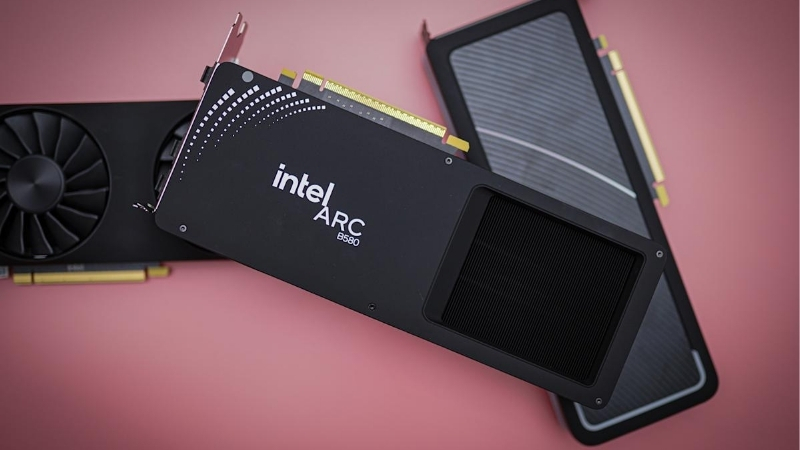
The intel arc b580 vs rtx 4060 matchup has become the most interesting budget GPU battle of 2026, because Intel’s Battlemage card undercuts Nvidia on price while offering more VRAM. Both target 1080p and 1440p gamers, but they take opposite approaches: the Arc B580 leads on raw value and memory, while the RTX 4060 counters with efficiency, mature drivers, and DLSS. This comparison lays out the specs, the real-world performance, and the practical catches, so you can decide which budget card actually deserves your money and your case.
The Quick Verdict: Intel Arc B580 vs RTX 4060
For readers who want the bottom line first: the Arc B580 is the better value and the smarter pick for 1440p thanks to its 12GB of VRAM and lower price, while the RTX 4060 is the safer all-rounder for pure 1080p, low power draw, and Nvidia’s software ecosystem. If you want the most performance and memory per dollar and don’t mind Intel’s younger driver stack, the B580 wins outright. If you prize efficiency, DLSS Frame Generation, and a proven driver history, the RTX 4060 earns its premium. The rest of this guide explains exactly why.
As an Amazon Associate we earn from qualifying purchases at no extra cost to you.




Why the Arc B580 Wins on Value
The Intel Arc B580 launched at $249 with 12GB of GDDR6 on a 192-bit bus, undercutting the RTX 4060 while offering 50% more memory. That extra VRAM is the headline: it keeps textures loaded and prevents the stutter that 8GB cards can hit in modern titles at higher settings.
For a budget buyer eyeing 1440p, that combination of a lower price and a larger frame buffer is genuinely compelling, and it is the main reason the B580 has earned so much attention this generation.
It reframes what “entry-level” means, too. For years budget cards forced you to accept 8GB and the compromises that come with it, so a sub-$250 card arriving with 12GB shifts the baseline expectation upward. That alone has made the B580 a reference point that other budget cards are now measured against.
The wider 192-bit bus also gives it more memory bandwidth than the RTX 4060’s 128-bit interface, which helps in memory-hungry scenes and higher resolutions where bandwidth becomes a bottleneck.
Why the RTX 4060 Wins on Features
The RTX 4060 counters at $299 with remarkable efficiency — roughly 115W board power and a 450W recommended PSU — plus DLSS 3 Frame Generation and years of driver refinement behind it.
That maturity matters: Nvidia’s drivers are broadly stable across a huge game library, and DLSS is supported in a large catalog of titles. For buyers who want a card that simply works everywhere with minimal fuss, the RTX 4060 is the low-risk option.
Its low power draw is also a practical gift for anyone upgrading a pre-built or small-form-factor PC, since it rarely demands a new power supply — a hidden cost that can erase a cheaper card’s savings.
Nvidia’s broader software suite adds further polish, from a mature control panel to features like video super-resolution and a stable capture toolset. None of these is a headline reason to buy, but together they contribute to the sense that the RTX 4060 is a refined, no-surprises product.
Comparison Table
The table below puts the two cards’ core specs side by side so the VRAM and power differences are immediately clear before we dig into performance.
| Spec | Arc B580 | RTX 4060 |
|---|---|---|
| Launch price (MSRP) | $249 | $299 |
| Architecture | Xe2 Battlemage | Ada Lovelace |
| VRAM | 12GB GDDR6 | 8GB GDDR6 |
| Memory bus | 192-bit | 128-bit |
| Board power | ~190W | ~115W |
| Upscaling | XeSS 2 | DLSS 3 + Frame Gen |
| Best resolution | 1080p / 1440p | 1080p |
Deep Dive Face-Off: Performance, Features, and Setup
The specs hint at the outcome, but the real decision lives in how these cards behave in games and inside a real system. This section compares them across three criteria: rasterized performance and the impact of that VRAM gap, the ray-tracing and upscaling stacks, and the practical setup requirements that trip up unwary buyers. Together these determine which card is right for your build and your patience.
1080p and 1440p Performance: 12GB vs 8GB
At 1080p the two cards trade blows, often landing within a handful of frames of each other in rasterized games. The B580’s advantage grows as you climb to 1440p or crank texture settings, where its 12GB buffer keeps performance steady while the 8GB RTX 4060 can start to stumble in the most demanding titles.
The analytical takeaway is that memory capacity, not just raw compute, increasingly decides budget-GPU longevity. If you plan to play at 1440p or keep the card for several years, the B580’s larger buffer is a meaningful edge.
Several recent releases already push past 8GB at high textures even at 1080p, so the VRAM gap is not a theoretical future concern — it affects certain games today, and that list only grows over time.
The way an 8GB card fails is also worth understanding: rather than a gradual slowdown, it tends to produce sudden texture pop-in, frame-time spikes, and stutter once the buffer fills. Those symptoms are more disruptive to the experience than a slightly lower average frame rate, which is exactly why the B580’s headroom feels reassuring in practice.
For a buyer who wants to set textures to High or Ultra and forget about them, the 12GB buffer removes a whole category of worry that 8GB owners increasingly have to manage.
Ray Tracing, XeSS, and DLSS
Intel’s Arc architecture punches above its price in ray tracing, and the B580 handles RT effects respectably for a budget card. Its XeSS 2 upscaler has matured into a strong option, particularly on Arc hardware where it runs on dedicated units for better quality.
The RTX 4060 still holds the software advantage through DLSS 3 Frame Generation and the sheer breadth of DLSS game support. For players who prioritize the widest upscaling coverage and the extra frames from Nvidia’s frame generation, that ecosystem remains a real draw.
The experimental question is trajectory: Intel is iterating on XeSS and Arc drivers aggressively, so the gap is narrowing, but Nvidia’s head start in adoption is substantial and still counts for a lot in day-one game support.
There is a nuance in how the two upscalers run, too. XeSS uses Intel’s dedicated matrix engines on Arc hardware for its highest-quality mode, so on a B580 you get the best version of the technology rather than a fallback path. DLSS likewise runs on Nvidia’s Tensor cores, meaning both cards execute their native upscaler on purpose-built silicon rather than shaders.
For a value buyer, the takeaway is that neither card leaves you without a strong modern upscaler; the deciding factor is which one your favorite games actually support, so it pays to check your library before buying.
Power, Drivers, and the ReBAR Requirement
Practical setup is where the RTX 4060 pulls ahead. It sips power at around 115W, fits small builds and weak PSUs, and rides on a very mature driver stack. The B580 draws closer to 190W and needs a bit more PSU headroom and case airflow.
The most important practical catch is Resizable BAR: Intel Arc cards depend on it to reach full performance, so you must enable ReBAR in your motherboard BIOS. On older systems that don’t support it well, the B580 can lose noticeable ground.
Intel’s drivers have improved enormously since the first Arc launch, and stability today is far better than the early reputation suggests. Still, Nvidia’s longer track record makes the RTX 4060 the more conservative choice for anyone who wants zero surprises.
If you play a lot of older or niche titles, that history is worth weighing carefully. Nvidia’s decades of driver optimization mean obscure and legacy games almost always run correctly, whereas Arc occasionally needs a driver update to fully optimize an older engine. For a library dominated by current, popular releases, this rarely matters; for an eclectic back catalogue, it can.
Value, the Alternative, and 2026 Prices
With performance close and each card owning a different strength, value and timing become the deciding factors. This section weighs the pros and cons, suggests a third option if neither is a perfect fit, and puts the decision in the context of 2026’s GPU pricing so you know whether to buy now or hold out.
Intel Arc B580 vs RTX 4060: Pros and Cons
Here is the head-to-head summary.
Arc B580 — Pros: lower price, 12GB VRAM, strong 1440p value, capable ray tracing for the class, and wider memory bandwidth. Cons: higher power draw, younger drivers, and it requires ReBAR to shine.
RTX 4060 — Pros: very efficient, DLSS 3 Frame Generation, mature drivers, and broad game support. Cons: costs more, only 8GB VRAM, and weaker at 1440p in memory-heavy titles.
The Alternative: Arc B570 or RTX 4060 Ti
If neither card fits perfectly, two alternatives are worth a look. Drop down to the Intel Arc B570 to save more money while keeping most of the B580’s value proposition for lighter 1080p gaming.
Or step up to the RTX 4060 Ti, ideally the 16GB version, if you want more headroom and DLSS together and can stretch the budget. That upgrade buys longevity, though it moves you out of true entry-level pricing.
For most buyers, though, the B580 and RTX 4060 remain the sweet spot, and one of these two alternatives only makes sense at the budget extremes.
2026 GPU Pricing and the Buy-Now Case
Timing matters in this market. The steep price surges seen in late 2025 have eased, and pricing has entered a period of relative calm — but relative calm means prices have stopped climbing, not that they are about to fall.
New memory supply is coming from sources like CXMT, and Micron is constructing two plants in Idaho, yet those facilities won’t be operational until 2027–2028, so meaningful price relief remains years away.
For a budget buyer, that makes waiting a weak strategy. If the B580 or RTX 4060 fits your needs today, check the current price through the link on this page and buy while the market holds steady rather than gambling on a drop the data doesn’t promise.
See More:
Conclusion
The intel arc b580 vs rtx 4060 verdict rewards different priorities. Pick the Arc B580 for the best value, 12GB of VRAM, and stronger 1440p longevity, and pick the RTX 4060 for lower power draw, DLSS Frame Generation, and the reassurance of mature drivers. Both are excellent budget cards in 2026, so the winner is simply the one that matches your resolution and your tolerance for a newer driver stack. Use the link above to compare live pricing and secure the card that fits your build before prices move again.
Top-Rated Picks


| Product | Brand | Rating | Reviews | Price |
|---|---|---|---|---|
| ARCTIC MX-4 (4 g) – Premium Performance Thermal Paste… | ARCTIC | ★ 4.8 | 104k | $4.99 |
| ARCTIC MX-4 (incl. Spatula, 4 g) – Premium Performanc… | ARCTIC | ★ 4.8 | 71.9k | $5.49 |
| Crucial 8GB DDR4 RAM 3200MHz (PC4-25600), Downclockab… | Crucial | ★ 4.8 | 62.8k | $74.99 |
| AMD Ryzen 5 5600X 6-core, 12-thread unlocked desktop … | — | ★ 4.8 | 30.2k | $177.60 |
| NVIDIA Shield Remote; Voice Search, Motion-Activated,… | — | ★ 4.7 | 10.6k | $25.99 |
Frequently Asked Questions
Which one is faster in modern games?
The B580 generally leads the RTX 4060 by roughly 10 percent at 1080p and by a wider margin at 1440p, where its 12GB buffer and 192-bit bus stop it falling off the way the 8GB GeForce card does. That advantage assumes a modern processor, which is an important caveat.
How much does the VRAM difference matter?
A lot in current releases. The RTX 4060 has 8GB on a narrow 128-bit bus, and several 2025 and 2026 titles exceed that at 1440p with high textures or ray tracing, producing frame time spikes rather than a lower average. The B580 12GB simply avoids that failure mode.
What about power draw and PSU requirements?
The RTX 4060 is far more efficient at around 115W total board power, running comfortably on a 450W supply and even in prebuilt systems with weak units. The B580 draws 190W and wants a 550W to 600W supply. Both use a single 8-pin connector on reference designs.
Does the CPU overhead issue change the recommendation?
Yes, significantly. Testing showed the B580 losing much of its lead when paired with older processors such as a Ryzen 5 3600, because Intel drivers do more CPU-side work. On a Ryzen 5 7600 or Core i5-13400 the B580 wins; on an aging quad core the RTX 4060 is safer.
Which has the better feature set?
Nvidia still leads on software. DLSS 4 upscaling, frame generation, Reflex, Broadcast and broad CUDA support form a more complete package than XeSS 2 and Xe Low Latency. Intel counters with better price per frame and more memory, so the choice comes down to whether you value ecosystem or hardware.





Write Your Review
No reviews yet. Be the first to share your experience!