
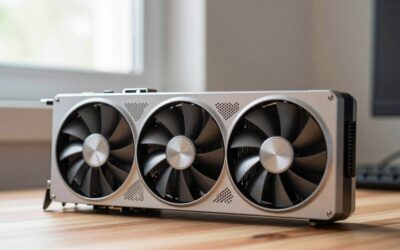
- Top Pick: ASUS Dual GeForce RTX 3050 6GB GDDR6 OC Edition Gaming Graphics Card
- Best Value: msi Gaming RTX 3050 Ventus 2X 6G OC Graphics Card (NVIDIA RTX 3050, 96-Bit, Boost Clock: 1492 MHz, 6GB GDDR6 14 Gbps, HDMI/DP, Ampere Architecture)
- Premium Choice: maxsun GeForce RTX 3050 6GB Graphics Cards GDDR6 Video Graphics Card GPU for Gaming PC Mini Small Form Factor SSF Slim Low Profile Design PCI Express 4.0, HDMI 2.1, DisplayPort 1.4a


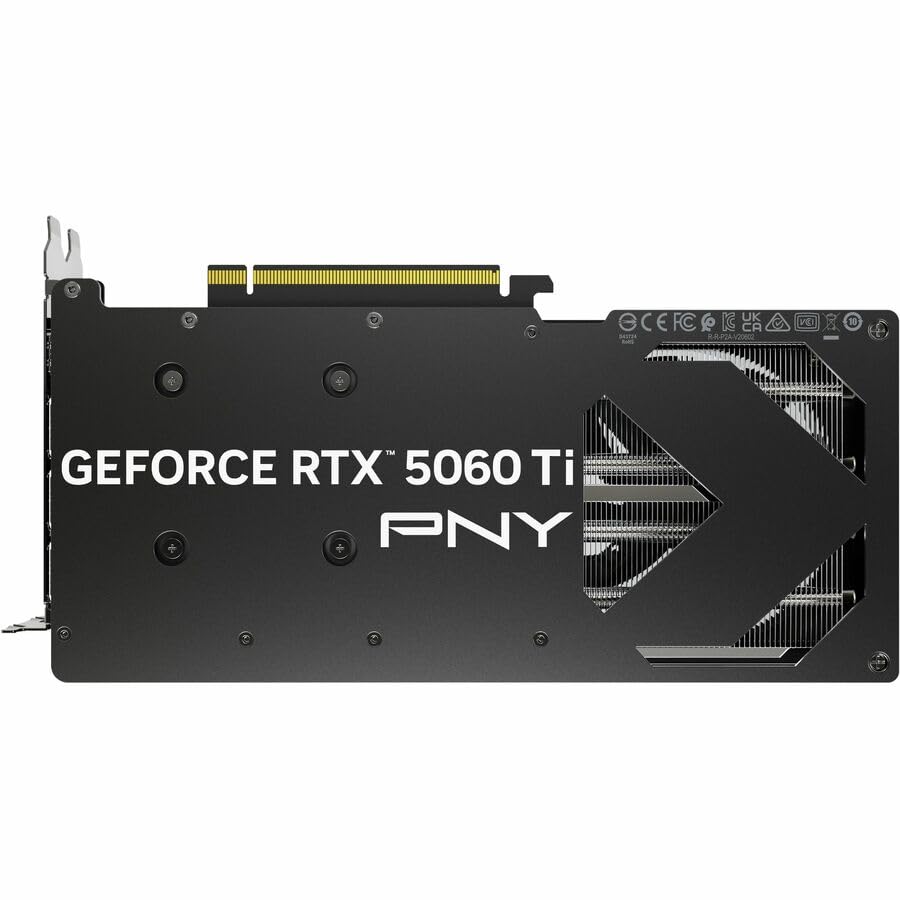


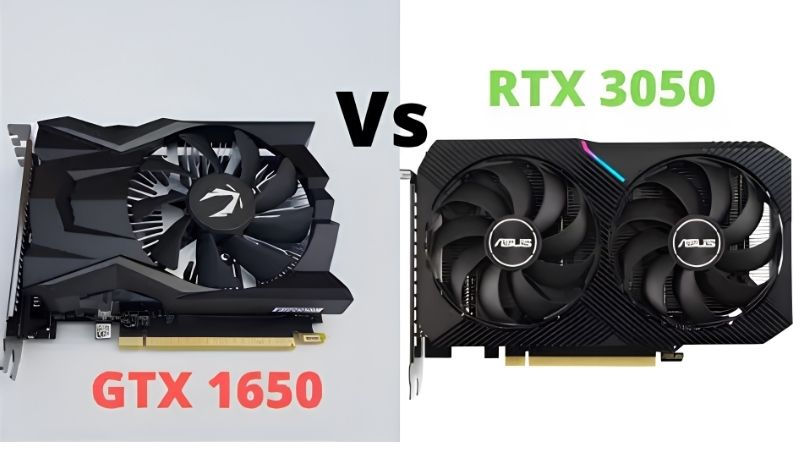
GTX 1650 vs RTX 3050 is still one of the most searched budget GPU questions in 2026 — and almost every video answering it was filmed in 2021, back when 4GB of VRAM was merely tight instead of broken. That gap matters more than most buyers realise. Games shipping today allocate noticeably more memory at 1080p than they did four years ago, DLSS has moved through three major revisions, and the used market has re-priced both cards twice since those reviews went live. This comparison uses current numbers, current prices and current game engines, so you can reach a decision in five minutes instead of scrubbing through a fifty-minute benchmark video looking for the one title you actually play.
The Quick Verdict: GTX 1650 vs RTX 3050 in One Minute
If you want the answer without the analysis: the RTX 3050 is the better card, and on paper it is not close. Expect roughly 35-50% higher frame rates at 1080p depending on the engine, 8GB of VRAM against the GTX 1650’s 4GB, and access to DLSS, ray tracing and the NVENC encoder that the 1650 either lacks entirely or handles poorly. The only argument left is price. If the gap on your local market is under $50, the 3050 wins with no discussion needed. If the gap is $80 or more and you play exclusively esports titles, the 1650 keeps one narrow reason to exist — and that reason has nothing to do with speed.
As an Amazon Associate we earn from qualifying purchases at no extra cost to you.




Who Should Actually Buy the GTX 1650
The GTX 1650’s remaining strength is a single number: 75W. It draws all of its power through the PCIe slot and needs no supplementary connector. That makes it the default answer for anyone dropping a GPU into a Dell, HP or Lenovo office prebuilt with a sealed 240W or 300W power supply and zero spare 6-pin cables. In that specific scenario the 3050 is not slower — it simply will not run without a PSU swap that costs more than the price gap between the two cards.
The second case is the pure esports player. At 1080p in CS2, Valorant, League of Legends, Dota 2 or Rocket League, the 1650 clears 100 FPS comfortably. The 3050 is faster, but if your monitor is a 75Hz panel, that extra headroom converts into nothing you can perceive. Paying $80 more for frames your display physically cannot show is a bad trade.
The third case is a hard budget ceiling. If your total is $130 and the 3050 starts at $220 in your region, the argument is over. A working card beats a theoretical one.
Who Should Buy the RTX 3050 Instead
Anyone who plays modern single-player games should stop reading here and buy the 3050. The 8GB frame buffer is the deciding factor, not the shader count. Once a game’s memory allocation exceeds available VRAM, performance does not degrade gently — it collapses into stutter, texture pop-in and one-second freezes that no frame rate average will show you. The 1650 crosses that line in a growing number of 2026 titles even at Medium settings.
The second reason is DLSS. Turing’s GTX line has no tensor cores, so it is locked out of DLSS entirely and can only use FSR. The 3050 can run DLSS Quality at 1080p and recover 25-35% performance with a minor image cost. In practice this means a 3050 running DLSS often doubles the 1650’s native output in the same scene.
Third, if you stream, record or edit at all, the 3050’s newer NVENC encoder handles H.264 and HEVC with a quality-per-bitrate advantage the 1650’s older block cannot match. For a Discord streamer or a beginner YouTuber, that alone justifies the gap.
The 4GB VRAM Gap That 2026 Reviews Could Not See
This is the single most important thing old comparison videos got wrong, and they got it wrong through no fault of their own. In 2021, a 4GB card at 1080p Medium was cramped but functional. Reviewers noted it as a future concern and moved on. That future arrived.
Texture streaming systems in current engines assume a larger pool. When a 4GB card runs short, the driver spills assets across the PCIe bus into system RAM, and the resulting frame time spikes are far more damaging to how a game feels than a 15% average FPS deficit ever was. This is why a 2021 video showing “1650 gets 45 FPS, 3050 gets 60 FPS” understates the real 2026 gap so badly. The averages hid the stutter, and the stutter is now the story.
GTX 1650 vs RTX 3050 Specs and Real Frame Rates
Numbers first, opinions second. The table below strips out marketing language and lists only what determines performance. Note the memory bandwidth line in particular — the GDDR6 version of the 1650 exists alongside an older GDDR5 model, and if you are buying used you may receive either one without the seller knowing the difference.
Core Specifications Side by Side
| Specification | GTX 1650 | RTX 3050 (8GB) |
|---|---|---|
| Architecture | Turing (TU117) | Ampere (GA106) |
| CUDA cores | 896 | 2560 |
| VRAM | 4GB GDDR5 / GDDR6 | 8GB GDDR6 |
| Memory bus | 128-bit | 128-bit |
| Bandwidth | 128 / 192 GB/s | 224 GB/s |
| Tensor cores (DLSS) | None | 80 (2nd gen) |
| RT cores | None | 20 (2nd gen) |
| TDP | 75W | 130W |
| Power connector | None required | 1x 8-pin |
| NVENC generation | Volta-era block | Turing 7th gen |
The CUDA core count is the headline — the 3050 has nearly three times as many. But architecture matters as much as quantity here. Ampere’s SM design doubles FP32 throughput per clock relative to Turing, which is why the real-world gap lands where it does rather than tripling outright.
Pay attention to the NVENC row if you stream. It is the one specification that produces a visible, immediate quality difference at the same bitrate.
1080p Frame Rates in 2026 Game Engines
These figures reflect 1080p at Medium-High presets on a mid-range CPU, which is what actually pairs with these cards. Use Ctrl+F for your title rather than reading the whole table.
| Game (1080p) | GTX 1650 | RTX 3050 | Gap |
|---|---|---|---|
| CS2 (competitive) | ~145 FPS | ~205 FPS | +41% |
| Valorant | ~180 FPS | ~240 FPS | +33% |
| Fortnite (Performance) | ~95 FPS | ~140 FPS | +47% |
| GTA V Enhanced | ~62 FPS | ~92 FPS | +48% |
| Elden Ring | ~38 FPS | ~57 FPS | +50% |
| Cyberpunk 2077 (Medium) | ~30 FPS* | ~48 FPS | +60% |
| Hogwarts Legacy | ~28 FPS* | ~46 FPS | +64% |
The asterisks mark titles where the 1650 exceeds its 4GB budget and delivers frame times far worse than the average suggests. In Hogwarts Legacy specifically, the 1650’s 1% lows drop below 12 FPS during traversal — the game technically runs, but nobody would call it played.
Notice the pattern: the gap widens as games get newer. That trend line is the most useful thing in this table.
Power Draw, Case Clearance and PSU Requirements
The 3050 needs a single 8-pin PCIe connector and a 450W supply from a reputable brand. If your PSU is a no-name 500W unit that shipped with the case, treat it as a 350W unit and budget for a replacement — this is the hidden cost that catches most first-time upgraders.
Physically, most 1650 models are compact single-fan cards around 145-230mm. The 3050 typically runs 200-250mm with dual fans. Measure from your case’s rear bracket to the front drive cage before ordering, because a card that arrives and does not fit is a return shipping fee you did not plan for.
Deep Dive Face-Off: Where Each Card Actually Wins
Averages flatten the truth. The two cards diverge in three specific areas, and which one matters depends entirely on what is on your screen for the next three years.
Rasterization: The Honest Frame Rate Gap
Ignoring every AI feature and comparing raw traditional rendering, the 3050 leads by roughly 40-50%. That is a full performance tier, not a rounding error. In practical terms it converts a 40 FPS experience into a 58 FPS one — the difference between compromising and playing.
The gap is smallest in CPU-limited esports titles and largest in shader-heavy modern engines. If your library is entirely the former, the 1650 argument survives. If it contains even two AAA titles from the last three years, it does not.
DLSS, Ray Tracing and the NVENC Encoder
Ray tracing on a 3050 is technically present and practically marginal — enabling it at 1080p usually costs more frames than the card can spare. Do not buy a 3050 for ray tracing. Buy it for the other two.
DLSS is the real prize. Because it is a tensor-core feature, this is a capability gap rather than a performance gap: the 1650 cannot access it at any settings, at any resolution, ever. In a title with DLSS Quality enabled, a 3050 frequently delivers double the 1650’s native frame rate. Nvidia continues to ship driver-side improvements to the DLSS model, which means the 3050 has a slow upward trajectory over time while the 1650 is frozen at whatever it does today.
The encoder is the quiet third factor. Recording gameplay at 1080p60 on the 3050 costs a handful of frames and produces clean output. The 1650’s older block introduces visible blocking in motion at the same bitrate.
Pros and Cons: GTX 1650 vs RTX 3050 at a Glance
| GTX 1650 | RTX 3050 | |
|---|---|---|
| Pros | 75W, no power connector needed; fits sealed OEM prebuilts; compact single-fan models; lowest entry price; runs cool and quiet | 8GB VRAM survives 2026 titles; full DLSS support; 40-50% faster raster; modern NVENC; meaningful resale value |
| Cons | 4GB VRAM is the hard wall; no DLSS ever; weak encoder; collapses in new AAA games; near-zero resale value | Needs 8-pin + 450W PSU; larger footprint; ray tracing is nominal; costs $60-90 more |
Read that table honestly and the shape of the decision is clear: the 1650’s advantages are all about constraints you already have, while the 3050’s advantages are about the games you have not bought yet.
Price Reality, Alternatives and What to Do in 2026
Everything above assumes a stable market. That assumption stopped being safe about a year ago, and for budget buyers this is now the most consequential part of the decision — arguably more consequential than the benchmarks.
Why Budget GPU Prices Are Still Climbing
Component and laptop prices have continued to trend upward rather than settling, and entry-level graphics cards absorb that pressure worse than any other segment. The reason is structural: on a $180 card, memory is a far larger share of the bill of materials than it is on a $900 card. When DDR5 and GDDR6 contracts reprice, a flagship absorbs it in margin. A budget card cannot — the cost lands directly on the sticker.
The practical consequence for anyone reading this comparison is uncomfortable. The historical instinct of “wait three months, it will get cheaper” has been consistently wrong for this segment. Buyers who waited through 2025 for the 3050 to hit $180 mostly ended up paying more than if they had bought immediately. If a card at your target price is in stock today, the waiting strategy is not neutral — it has a real cost attached.
The Slowdown Is Real, But Relief Is Years Away
There is genuine good news, and it deserves to be stated accurately rather than optimistically. Prices have stopped climbing at the steep rate seen in late 2025. Framework, which publishes unusually candid component pricing updates, has reported a stretch of relative stability — while still warning that volatility has not ended. Stabilisation is not the same as a decline.
Supply is opening up too, but slowly. OEMs can now source DDR5 from Chinese suppliers such as CXMT, and Micron is building two new fabs in Idaho. Both are real capacity additions. Neither helps you this year: those fabs will not run until 2027-2028. So the honest summary is that prices have flattened, not fallen, and meaningful relief sits several years out.
What that means for this comparison is simple. Do not build your decision around a price drop that is not coming. Compare what the two cards cost today, and if the 3050 is within $50, take it — because the downside risk of waiting is larger than the upside.
The Alternative: If Both Cards Feel Wrong
If the 3050 is out of reach but the 1650’s 4GB genuinely worries you, two options sit between them. A used RX 6600 often lands near 3050 money with 8GB and stronger raster, though you lose DLSS and NVENC quality. An Intel Arc A580 or B580 offers substantially more VRAM per dollar, with driver maturity as the trade-off.
Whichever way you go, check current listings before committing — in this market, the price ordering between these cards changes month to month, and the cheapest card in a spec sheet is frequently not the cheapest card on the shelf. Compare live pricing and availability for the GTX 1650, RTX 3050 and their closest alternatives here before you decide.
See More:
Final Verdict: GTX 1650 vs RTX 3050
The gtx 1650 vs rtx 3050 question has a clearer answer in 2026 than it did in 2021, and the reason is VRAM rather than raw speed. Buy the RTX 3050 if you play anything released in the last three years, if you stream or record, or if you want a card that will still be viable in 2028 — the 8GB buffer and DLSS access are what you are actually paying for. Buy the GTX 1650 only in one specific situation: an OEM prebuilt with a sealed low-wattage PSU and no spare power connector, paired with an esports-only library. That is a real scenario, and for those buyers the 1650 remains the correct choice.
For everyone else, the $60-90 premium is the best money in the budget GPU market right now — and with component pricing flat rather than falling, it will not get cheaper by waiting. Check the current listings for both cards and grab whichever is in stock at a sane price today.
Frequently Asked Questions
How much faster is the RTX 3050?
The 8GB desktop RTX 3050 is roughly 45 to 55 percent faster than a GTX 1650 at 1080p, and the gap is larger still where DLSS is available since the 1650 has no tensor cores. The 3050 also doubles the memory from 4GB to 8GB, which is the more important upgrade in modern titles.
Is 4GB of VRAM still usable in 2026?
Barely, and only at low settings. Many current releases exceed 4GB at 1080p even on medium presets, producing severe stutter and missing textures rather than a modest frame rate drop. The GTX 1650 is now best regarded as an esports and older library card rather than one for new AAA releases.
Do either of them need a power connector?
The GTX 1650 is a 75W card and most models draw everything from the PCIe slot with no external connector, which makes it a favourite for upgrading office prebuilts. The RTX 3050 8GB is 130W and needs a single 8-pin. The RTX 3050 6GB variant is 70W with no connector, filling the same niche as the 1650.
Which is the better prebuilt upgrade?
If the prebuilt has a small proprietary power supply with no spare PCIe cable, the GTX 1650 or the RTX 3050 6GB are the only realistic choices. If it has a 6-pin or 8-pin available and at least a 400W unit, the RTX 3050 8GB is a much better card for very little extra money.
Should I buy either one new?
Generally no. At current pricing an Arc B580, RTX 4060 or a used RTX 3060 12GB offers far more performance per dollar. These two only make sense as cheap used pickups, as low profile or no-connector upgrades, or for a secondary machine where absolute performance is not the goal.
Ready to decide? Our #1 pick for 2026 is the Architecture.
Live price & availability on Amazon.

Write Your Review
No reviews yet. Be the first to share your experience!