
- Top Pick: GIGABYTE GeForce RTX 4070 Ti Super Eagle OC 16G Graphics Card, 3X WINDFORCE Fans, 16GB 256-bit GDDR6X, GV-N407TSEAGLE OC-16GD Video Card
- Best Value: MSI GeForce RTX 4070 Ti Super 16G Ventus 2X OC Gaming Graphics Card – 16 GB GDDR6X (21Gbps / 256 Bits), PCIe 4.0-2 x TORX 4.0 Fans – HDMI 2.1a, DisplayPort 1.4a
- Premium Choice: GIGABYTE GeForce RTX 4070 Ti Super Gaming OC 16G Graphics Card, 3X WINDFORCE Fans, 16GB 256-bit GDDR6X, GV-N407TSGAMING OC-16GD Video Card
Top Rtx 4080 Super Rtx 5070 Picks for 2026
Here are our current top rtx 4080 super rtx 5070 picks, compared on real Amazon owner reviews, price, and features. Live prices update below.
- Top Rtx 4080 Super Rtx 5070 Picks for 2026
- The Quick Verdict: Twins Separated at Checkout
- Deep Dive: Settling a Tie on Everything Else
- 2026 Market Forces: The Spread That Decides Everything
- Final Verdict: Pros, Cons, and the Tiebreaker Above
- Conclusion
- Related Guides
- Frequently Asked Questions
- Related Articles


Dropped $4.44


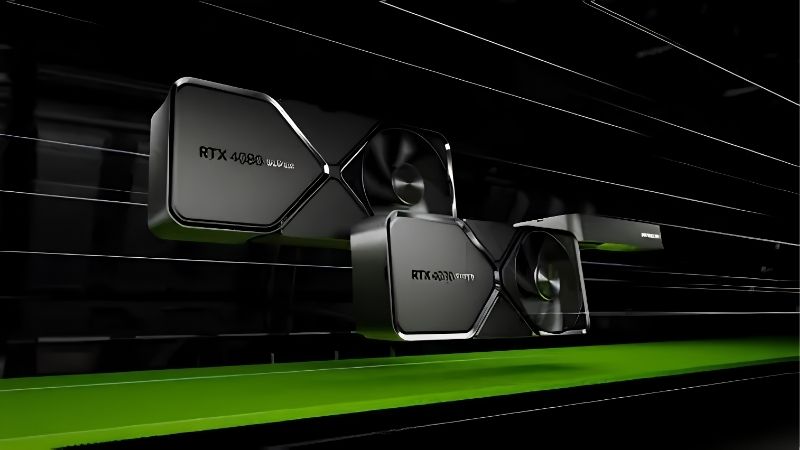
RTX 4080 Super vs RTX 5070 Ti is the rare GPU matchup where the benchmark bars nearly touch: the outgoing Ada refresh and the Blackwell sweet-spot card trade blows within low single digits across most titles, both carry 16GB of VRAM, and both target the same high-refresh 1440p and entry-4K buyer. Performance twins — yet completely different purchases. One launched at $999 and now lives on the used and clearance market; the other sells new at $749 with the DLSS 4 feature set its twin will never receive. When two cards deliver the same frames, everything else decides: acquisition risk, feature trajectory, efficiency, and the 2026 price spread on the day you shop. This comparison settles the twin showdown on exactly those terms.
As an Amazon Associate we earn from qualifying purchases at no extra cost to you. Product prices and availability are accurate as of the date shown and are subject to change.


The Quick Verdict: Twins Separated at Checkout
The fast answer: buy the RTX 5070 Ti. With rasterization performance within 0–5% of the 4080 Super in aggregate testing — the older card occasionally edging native results, the newer card winning bandwidth-bound scenes — the tie on frames hands the verdict to everything surrounding them: the 5070 Ti is $749 new with a full warranty against a discontinued twin trading at $700–$850 used or clearance, it carries DLSS 4 Multi Frame Generation versus a permanent 2x ceiling, and it draws 300W against 320W. The 4080 Super’s case survives only at a steep discount — $650 or below for a verified clean unit. Check the 5070 Ti’s live Amazon price first; at MSRP, the twin showdown is not close.
How Two Generations Produced One Performance Level
The convergence is an engineering story worth the paragraph: the 4080 Super fields 10,240 Ada CUDA cores with 16GB of GDDR6X at 736GB/s; the 5070 Ti answers with just 8,960 Blackwell cores — 12% fewer — but 16GB of GDDR7 at 896GB/s, 22% more bandwidth. Architecture and memory close the core gap almost exactly, landing the two cards on the same benchmark line from opposite directions.
Aggregated 1440p and 4K testing shows the twins within 0–5% of each other across rasterized titles, the older card’s wider die occasionally winning compute-bound scenes, the newer card’s bandwidth winning texture-heavy and high-resolution ones. For buying purposes, treat raw performance as a genuine tie.
Where the Twins Actually Differ
The separation is everything off the benchmark chart. The 5070 Ti carries DLSS 4 Multi Frame Generation — up to four presented frames per render against the 4080 Super’s hardware-capped two — plus newer dual AV1 encoders, FP4 support for local AI tools, and front-of-queue driver optimization for years ahead. The 4080 Super’s column holds its slightly larger compute die and the premium flagship-class coolers its $999 launch price funded.
Acquisition divides them hardest: one twin is a sealed box with a three-year warranty; the other is a discontinued card whose every 2026 purchase is used, open-box, or dwindling clearance — with the risk ledger that status implies.
Specs Comparison Table
The twins, quantified side by side.
| Specification | RTX 4080 Super | RTX 5070 Ti |
|---|---|---|
| Architecture | Ada Lovelace (AD103) | Blackwell (GB203) |
| CUDA Cores | 10,240 | 8,960 |
| VRAM | 16GB GDDR6X | 16GB GDDR7 |
| Memory Bandwidth | 736 GB/s | 896 GB/s |
| TGP / PSU | 320W / 750W | 300W / 750W |
| Frame Generation | DLSS 3 (2x) | DLSS 4 MFG (up to 4x) |
| Raster Performance | ~100% | ~98–103% |
| Launch MSRP | $999 | $749 |
| 2026 Availability | Used/clearance, $700–$850 | New, in retail |
Deep Dive: Settling a Tie on Everything Else
When frames tie, the analysis moves to the surrounding columns — and they do not tie at all. This section runs the twins through the feature trajectory that widens with every driver branch, the benchmark fine print where each twin’s character shows, and the acquisition-risk ledger that converts identical performance into very different ownership.
Benchmark Fine Print: Same Average, Different Character
Inside the tied averages, character emerges: at 1440p ultra both twins deliver 130–170 fps across AAA aggregates, but the 5070 Ti’s 896GB/s subsystem posts flatter 1% lows in dense streaming scenes while the 4080 Super’s larger die edges pure compute workloads by 2–4%. At 4K the bandwidth twin pulls level or slightly ahead exactly where the resolution stresses memory most.
Heavy ray tracing splits by generation: fourth-generation RT cores give the 5070 Ti a 10–15% edge in the densest path-traced showcases despite fewer shaders — the one benchmark category where the tie visibly breaks toward the newer card.
Esports and 1080p dissolve the comparison entirely: both twins exceed any panel sold, and the decision reverts to price, features, and risk — which is to say, to the rest of this article.
Feature Trajectory: A Tie That Widens Into a Gap
Today’s feature gap is MFG, newer encoders, and FP4; the 2028 gap will be larger, and that asymmetry is the twin showdown’s real verdict. Driver optimization now targets Blackwell first — the 5070 Ti has gained measurable performance through 2025–2026 branches while Ada settles into maintenance — and each month’s MFG-supported releases compound a multiplier one twin physically cannot run.
The practical translation: buyers keep cards three to five years, and across that span the tied twins diverge into a clearly newer and clearly older card. The 4080 Super you benchmark today is its final form; its twin is still improving.
Efficiency rounds out the surrounding columns quietly: 300W against 320W is a modest gap, but Blackwell’s lower idle and light-load draw means the desktop hours that dominate any PC’s life cost less on the newer twin, and its mainstream coolers — designed for the wattage rather than inherited from a $999 launch — run the quieter fan curves at matched load.
The Acquisition Ledger: Sealed Box vs Open Question
Every 2026 4080 Super purchase carries the discontinued card’s ledger: warranty status varying from none to fragmentary transfer, unknown thermal and usage history, and clearance listings whose $700–$850 asking prices frequently exceed the new twin’s $749 — an inversion that decides the matchup by itself whenever it appears. The diligence checklist (seller vetting, stress testing inside return windows, thermal refresh budgeting) is the used market’s standard tax.
The 5070 Ti’s ledger is one line: sealed, warrantied, current. At equal-or-lower price for equal performance, the risk asymmetry is the cleanest tiebreaker in GPU buying — which is why the older twin’s case requires a discount deep enough to fund the risk, and $650 is where the math turns.
2026 Market Forces: The Spread That Decides Everything
Two market stories govern the twins’ live spread: the United States approving Nvidia’s H200 AI chip exports to China, and the sustained rise in laptop and component prices. One drifts the new twin upward; the other props the old twin’s floor — and the gap between those motions is the matchup’s daily verdict.
H200 Demand and the New Twin’s Drift
The H200 approval directs enormous demand into Nvidia’s leading-edge wafer and GDDR7 supply — the 5070 Ti’s exact pipeline. The recurring post-surge pattern drifts consumer street prices 5–15% above MSRP within a quarter or two; on a $749 card that is $37–$112, and 2026’s MSRP listings already behave like brief events.
Every dollar of drift narrows the twins’ spread and strengthens whatever discount the old card offers that week — the mechanism keeping this showdown alive at all.
Component Inflation and the Old Twin’s Floor
Memory costs rising for consecutive quarters — laptop retail prices already following — anchor used and clearance pricing to expensive new alternatives, which is why 4080 Super listings hold a $700–$850 band that history says should have collapsed. The deep-discount sightings below $650 appear, clear in days, and grow rarer each quarter as remaining stock drains.
The old twin’s window is structural and closing: its case depends on a discount the market is actively retiring.
Resale completes the ownership math: three years out, a then-mid-generation 5070 Ti resells on the normal curve with its warranty story intact, while a 4080 Super exits as a two-generation-old card bought used — the twins’ identical performance diverges into very different second acts, and cycle upgraders should count that difference as part of today’s price.
The Spread Rules, Stated Plainly
The decision compresses into three rules: at any 4080 Super price above the 5070 Ti’s live number, buy the new twin without deliberation. Between $650 and the live number, the new twin still wins on warranty, MFG, and trajectory. At $650 or below for a verified clean unit, the old twin becomes a defensible value purchase for raster-focused buyers who price the risk honestly.
Run the rules against today’s market: check the RTX 5070 Ti’s current Amazon price, note what 4080 Super listings actually ask, and let the live spread execute the verdict.
Final Verdict: Pros, Cons, and the Tiebreaker Above
The twin showdown ends with a clear winner and an honest ledger — plus one card a tier up that catches buyers whose real hesitation is wanting more than either twin offers.
Pros and Cons of Each Twin
RTX 5070 Ti — Pros: twin-level performance at $749 new with full warranty; DLSS 4 MFG and the widening Blackwell trajectory; 896GB/s GDDR7 with the flatter frame-time character; 300W on a 750W PSU; zero acquisition diligence required. Cons: street drift above MSRP in supply squeezes; slightly trails the larger die in pure compute scenes; no flagship-class cooler heritage at base trims.
RTX 4080 Super — Pros: identical rasterization with occasional compute-bound wins; premium flagship coolers throughout the supply; genuinely rational at $650 or below; 16GB GDDR6X proven across two years of field service. Cons: discontinued — every purchase is used/clearance with the full risk ledger; 2x frame-generation ceiling is permanent; maintenance-mode drivers; clearance pricing frequently inverts above the new twin.
The Tiebreaker Above: RTX 5080
Buyers circling both twins while wishing for more should price the RTX 5080: $999 buys 10–15% over the twins, the same 16GB of GDDR7 at 960GB/s, the full DLSS 4 stack, and headroom that converts entry-4K into comfortable 4K. Against a $750–$850 old-twin listing, the $150–$250 step to a new, warrantied, faster card is frequently the best-value move on the whole board.
Its presence disciplines the showdown: the old twin must discount below $650 not just to beat its twin, but to stay out of the bigger card’s gravity.
Who Should Buy Which
Buy the RTX 5070 Ti in every default scenario — the tie on frames plus the sweep on warranty, features, trajectory, and usually price makes it the twin showdown’s standing winner. Buy the RTX 4080 Super only at $650 or below, verified clean, for a raster-focused library where MFG holds no value.
And if the hesitation is really about wanting more than twin-level performance, the $999 RTX 5080 is the honest answer to the question you are actually asking.
See More:
Conclusion
The rtx 4080 super vs rtx 5070 ti showdown proves that identical benchmarks can hide an easy decision: with performance tied within single digits, the 5070 Ti wins on every surrounding column — $749 new against used-market pricing, DLSS 4 Multi Frame Generation against a permanent ceiling, a widening driver trajectory, and a one-line risk ledger against a checklist. The old twin’s case survives only below $650, a discount the H200-squeezed, inflation-firmed 2026 market grants rarely and briefly. Tap through to check the latest RTX 5070 Ti price on Amazon, weigh it against whatever the discontinued twin asks today, and let the spread — not the nostalgia — pick your card.
Frequently Asked Questions
What is the best rtx 4080 super rtx 5070 ti in 2026?
The best rtx 4080 super rtx 5070 ti depends on your budget and how you plan to use it. The options compared above are our top-rated picks based on real customer ratings, build quality, and overall value — start with the highest-rated model that fits your budget.
How much should I expect to spend on a rtx 4080 super rtx 5070 ti?
Prices vary by brand and features. Budget options cover the essentials, while mid-range and premium models add durability, performance, and extra features. Compare the prices in the list above to find the best value for your needs.
What should I look for when buying a rtx 4080 super rtx 5070 ti?
Focus on what matters most for your use case — build quality, compatibility, performance, warranty, and verified customer reviews. Every pick above is selected to balance these factors.
Are budget rtx 4080 super rtx 5070 ti options worth it?
Yes. For most people a well-reviewed budget or mid-range rtx 4080 super rtx 5070 ti delivers excellent value. You only need to spend more if you specifically require premium materials or top-tier performance.
How did we choose these rtx 4080 super rtx 5070 ti picks?
We compare current Amazon ratings, review counts, key features, and price to surface the options with the best real-world value. The list is refreshed as ratings and availability change.










Write Your Review
No reviews yet. Be the first to share your experience!