
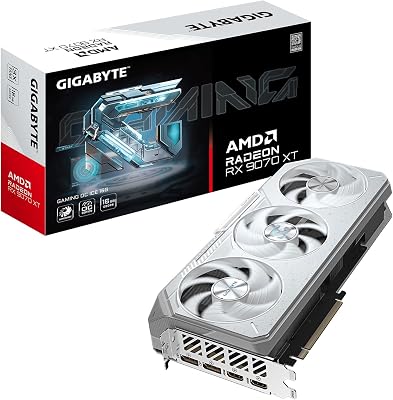
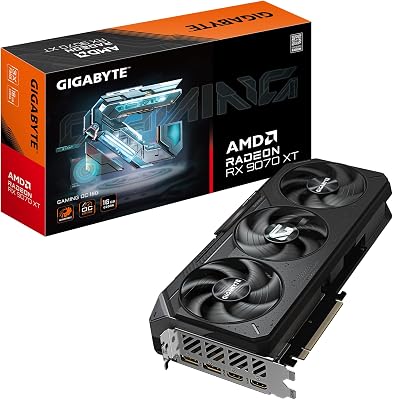
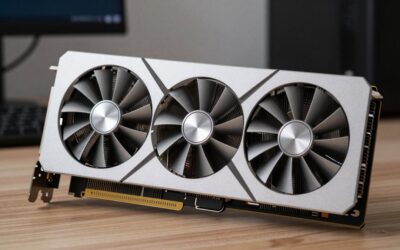
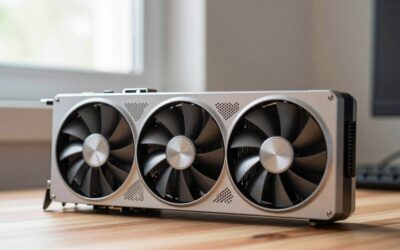
- Top Pick: GIGABYTE Radeon RX 9070 XT Gaming OC 16G Graphics Card, PCIe 5.0, 16GB GDDR6, GV-R9070XTGAMING OC-16GD Video Card
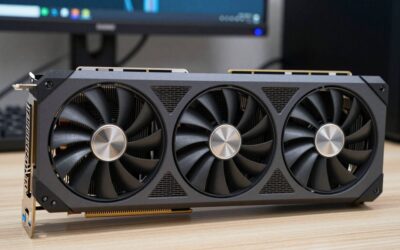
- Best Value: GIGABYTE Radeon™ RX 9070 XT Gaming OC ICE 16G Graphics Card (16GB GDDR6, 256-bit, PCIe 5.0, HDMI/DP 2.1, 2.7 Slot, Hawk Fan, Server-Grade Thermal Gel, Reinforced Structure)
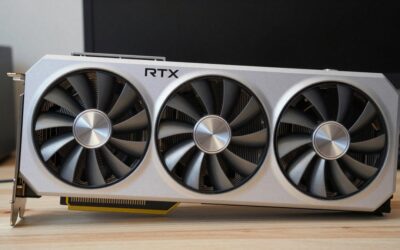
- Premium Choice: ASUS Prime Radeon RX 9070 XT 16GB GDDR6 OC Edition Gaming Graphics Card


Best Seller
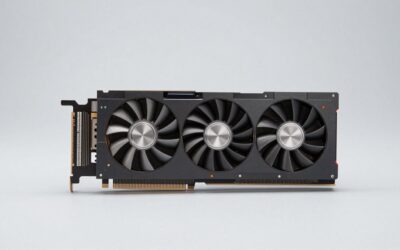
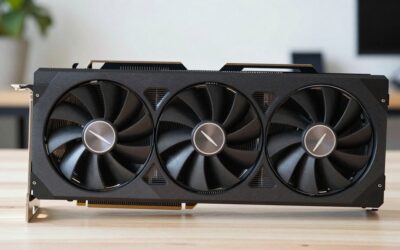
XFX Swift AMD Radeon RX 9070XT Triple Fan Gaming Edition with 16GB GDDR6 HDMI 3xDP, AMD RDNA 4 RX-97TSWF3BA
Radeon RX 9070 XT vs RTX 5090 is a matchup nobody designed on purpose. One card costs roughly $599 and the other roughly $1,999, which means every benchmark chart comparing them is technically correct and practically useless. If you are here, you have almost certainly already watched the reviews. What you are doing now is the thing video cannot help with: opening several tabs, cross-checking numbers against a second source, and trying to work out whether triple the price buys triple anything. This page is built for that job — the numbers, the price-per-frame maths, and the honest answer about who each card is actually for.
The Quick Verdict: RX 9070 XT vs RTX 5090 in One Minute
The RTX 5090 is faster. That was never in question, and if you needed a review to tell you that a $1,999 flagship beats a $599 mid-range card, something has gone wrong. The real finding is the shape of the gap: the 5090 delivers roughly 70-85% more performance at 4K for 233% more money. Every dollar past the 9070 XT buys progressively less. The 9070 XT wins price-per-frame decisively and is the correct purchase for the overwhelming majority of people reading this. The 5090 wins in exactly three situations — 4K at maximum settings with heavy ray tracing, professional workloads that need 32GB, and local AI inference. If none of those describe you, the comparison is already over.
As an Amazon Associate we earn from qualifying purchases at no extra cost to you.


Who Should Buy the Radeon RX 9070 XT
Buy the 9070 XT if you game at 1440p, or at 4K with sensible settings and upscaling enabled. It clears 100 FPS at 1440p in nearly everything and holds 60+ at 4K in most titles with FSR 4 Quality. For the vast majority of monitors people actually own, that is the ceiling of what you can perceive.
Buy it also if your build has constraints. At roughly 304W it runs on a quality 750W supply with two 8-pin connectors — cables you probably already have. The 5090’s 575W demands 1000W minimum and a 12V-2×6 connector that older supplies do not carry.
And buy it if you plan to upgrade again in three years. Spending $599 twice across six years beats spending $1,999 once, because you get a full architecture generation in between. That is not a compromise argument; it is arithmetic.
Who Should Buy the RTX 5090 Instead
The 5090 has three legitimate buyers, and none of them are casual. The first is the 4K 120Hz+ gamer running path-traced titles at maximum settings who genuinely notices the difference between 65 and 110 FPS. That person exists and the 5090 is built for them.
The second is the professional. Blender, DaVinci Resolve, Premiere and 3D rendering scale with CUDA cores and VRAM, and the 5090’s 21,760 cores against the 9070 XT’s 4,096 stream processors produce a gap in render times that translates directly into billable hours. If the card pays for itself in a quarter, price-per-frame is not the metric you should be using.
The third is anyone running local AI models. 32GB of GDDR7 loads models that 16GB simply cannot hold, and CUDA’s software ecosystem remains far ahead of ROCm for this work. This is a capability difference, not a speed difference.
Why This Matchup Is Not Actually a Fair Fight
Worth stating plainly, because search results will not: these cards are two tiers apart. The 9070 XT’s real competitor is the RTX 5070 Ti. The 5090’s real competitor is nothing — it sits alone at the top with no AMD answer at all, since RDNA 4 deliberately skipped the halo segment.
So if you are searching this comparison, you are probably not choosing between two similar options. You are asking a budget question: should I spend $599 or should I spend $1,999? That reframing matters, because the answer depends on what the $1,400 difference would otherwise buy you — which for most builds is a better monitor, a CPU upgrade and a proper power supply, all of which will improve your experience more than the 5090 will.
Specs and 4K Frame Rates Side by Side
The specification gap is enormous, but read the memory rows before the core counts. Bandwidth and capacity determine what each card can attempt, while core count determines how fast it finishes. Those are different questions and buyers routinely conflate them.
Core Specifications Compared
| Specification | RX 9070 XT | RTX 5090 |
|---|---|---|
| Architecture | RDNA 4 (Navi 48) | Blackwell (GB202) |
| Shader units | 4,096 | 21,760 |
| VRAM | 16GB GDDR6 | 32GB GDDR7 |
| Memory bus | 256-bit | 512-bit |
| Bandwidth | ~645 GB/s | ~1,792 GB/s |
| Ray accelerators / RT cores | 64 (3rd gen) | 170 (4th gen) |
| Board power | ~304W | ~575W |
| Power connector | 2x 8-pin | 1x 12V-2×6 |
| PSU recommended | 750W | 1000W+ |
| Launch price | ~$599 | ~$1,999 |
The bandwidth row is the one that quietly decides 4K performance. 1,792 GB/s against 645 GB/s is nearly triple, and at 4K where memory traffic dominates, that gap explains more of the performance difference than shader count does.
Note the power connector row before you plan anything. A 12V-2×6 adapter shipped in the box works, but four 8-pin cables converging on one connector inside a mid-tower is a real cable management problem, not a theoretical one.
4K Performance and Price per Frame
These are 4K native figures at high presets without upscaling, which is the only way to isolate the hardware. Ctrl+F your title.
| Game (4K native) | RX 9070 XT | RTX 5090 | Gap |
|---|---|---|---|
| Cyberpunk 2077 (Ultra, no RT) | ~52 FPS | ~94 FPS | +81% |
| Cyberpunk 2077 (Path tracing) | ~11 FPS | ~29 FPS | +164% |
| Alan Wake 2 | ~44 FPS | ~78 FPS | +77% |
| Black Myth: Wukong | ~41 FPS | ~72 FPS | +76% |
| Call of Duty (recent) | ~98 FPS | ~162 FPS | +65% |
| Horizon Forbidden West | ~68 FPS | ~118 FPS | +74% |
| Counter-Strike 2 | ~215 FPS | ~310 FPS | +44% |
Now the number that matters. At $599 and an average of roughly 76 FPS across this set, the 9070 XT costs about $10 per frame. At $1,999 and roughly 123 FPS, the 5090 costs about $15 per frame — 106% more expensive per frame delivered.
Look at the path tracing row separately, though. That +164% is the one place where the gap is not merely large but categorical: 11 FPS is not a playable game and 29 FPS is at least a starting point for upscaling. If path tracing is your reason for buying, the price-per-frame argument does not apply to you.
Power, PSU and Case Clearance Reality
The 5090’s 575W is not a specification you can ignore. It means a 1000W supply from a reputable brand, and it means roughly 270W more heat dumped into your room than the 9070 XT produces — noticeable in a small room in summer, and a real running cost in regions with high electricity prices.
Physically, Founders Edition 5090s are dual-slot but partner models frequently run 3.5 slots and 330-360mm long. Most 9070 XT models are 2.5-3 slots around 300-330mm. Measure your case before ordering either, and if you are on a 750W supply, factor a PSU replacement into the 5090’s price — that is another $150-200 the comparison charts never show.
Deep Dive Face-Off: Where Your Money Actually Goes
The averages above hide the fact that these cards diverge unevenly. In some workloads the gap is 40%; in others it is 160%. Knowing which bucket your games fall into is the whole decision.
Rasterization vs Ray Tracing
In traditional rendering, the 5090 leads by roughly 65-80%. Large, but proportionate to a card with five times the shaders — architectural efficiency and clock speeds close some of that gap in AMD’s favour.
Turn on ray tracing and the picture changes. RDNA 4 improved AMD’s RT performance substantially over RDNA 3, and in light RT titles the 9070 XT is competitive. But in heavy path-traced workloads the 5090 pulls to 150%+ ahead. Nvidia’s dedicated RT hardware and its shader execution reordering are doing work AMD has no equivalent for yet.
The practical read: if your library is mostly rasterised, the 9070 XT gives you most of the experience for a third of the money. If you specifically want to see path tracing, only one of these cards can show it to you.
DLSS 4, FSR 4 and Frame Generation
FSR 4 closed most of the image quality gap that made earlier FSR versions hard to recommend. At 4K Quality it is genuinely good, and the difference from DLSS is now something you look for rather than something you notice.
Where the 5090 still separates is multi-frame generation. DLSS 4.5 on Blackwell now runs fixed 5X and 6X modes plus a Dynamic mode that shifts the multiplier in real time to hit your display’s refresh rate, generating up to five frames per rendered frame. Whether that is real performance is a legitimate argument — latency does not improve the way the frame counter suggests, and artefacts appear in fast motion — but it is a capability the 9070 XT does not have.
Nvidia also keeps shipping new transformer models through the Nvidia app rather than through game patches – DLSS 4.5’s second-generation model reached over 400 titles this way – so the 5090’s upscaling quality has a genuine upward trajectory over its lifespan. AMD is doing the same with FSR 4, but from further back and with a smaller game roster.
Pros and Cons of Each Card
| RX 9070 XT | RTX 5090 | |
|---|---|---|
| Pros | Roughly half the cost per frame; 304W runs on a 750W PSU; 2x 8-pin, no adapter drama; excellent 1440p and solid 4K with FSR 4; leaves $1,400 for the rest of the build | 32GB GDDR7 for AI and pro work; only card that makes path tracing viable; DLSS 4 multi-frame gen; CUDA ecosystem; holds value well |
| Cons | 16GB may tighten by 2028 at 4K; path tracing is not realistically playable; ROCm still trails CUDA badly for AI | Costs 233% more for 70-85% more frames; 575W and 1000W PSU; 3.5-slot models need a big case; heats the room; overkill below 4K |
Read those two columns and the decision resolves itself. The 9070 XT’s cons are about the future; the 5090’s cons are about right now, and about money you have to spend today.
Market Context: Why Neither Price Is Coming Down
Everything above assumes you can buy at the prices quoted. That assumption has been shaky for a year, and for a purchase this size the market picture deserves as much attention as the benchmarks.
The H200 Export Decision Competes for Your GPU
The US has approved sales of the H200 — among Nvidia’s most capable AI chips — to China. It reads like distant geopolitics. It is not distant at all if you are buying a 5090.
The reason is allocation. Nvidia’s data-centre products and its flagship consumer dies compete for the same advanced packaging capacity and the same fab slots, and data-centre parts carry margins that consumer GPUs cannot approach. When a market the size of China reopens for high-end AI silicon, the rational business response is to feed it first. The 5090 already occupies the segment most exposed to this squeeze, since GB202 is the largest consumer die Nvidia produces.
The practical implication for this comparison is uncomfortable but useful: expect 5090 supply to stay tight and expect discounting to be rare. If you have been waiting for the 5090 to drift toward MSRP, the demand picture argues against it. The 9070 XT is largely insulated from this — AMD is not diverting Navi 48 wafers to AI customers — which is a quiet point in its favour that no benchmark chart captures.
Component Prices Flattened, But Did Not Fall
There is real good news here, and it should be reported accurately rather than hopefully. The steep climb seen through late 2025 has eased. Framework, which publishes unusually frank component pricing updates, has described a period of relative stability — while still warning that volatility has not gone away. Stability is not a decline.
New supply is genuinely coming. OEMs can now source DDR5 from Chinese manufacturers such as CXMT, and Micron is building two fabs in Idaho. Both are real additions to global capacity. Neither helps this purchase, because those fabs do not come online until 2027-2028.
So the honest summary is: prices have stopped rising, they have not started falling, and meaningful relief sits two to three years out. For a $599 card that argument is mild. For a $1,999 card it is significant — waiting eighteen months to save nothing, while your current card ages, is a worse outcome than buying today.
The Alternative: The Card Between These Two
If the 9070 XT feels light for 4K but the 5090 is indefensible, the honest answer is the RTX 5070 Ti or RTX 5080. Both land between these two on price and performance, both carry DLSS 4 multi-frame generation, and both sidestep the 575W problem entirely.
The 5080 in particular is the card most people searching this comparison actually want: meaningful 4K capability, Nvidia’s feature set, and a power budget that does not require a new supply. Compare current pricing and stock across the 9070 XT, 5080 and 5090 before committing, because in this market the ordering shifts month to month and the card that made sense in January may not be the one that makes sense today.
See More:
Final Verdict: Radeon RX 9070 XT vs RTX 5090
The radeon rx 9070 xt vs rtx 5090 question has a clear answer for almost everyone: buy the 9070 XT. It delivers roughly half the cost per frame, runs on a power supply you probably already own, handles 1440p effortlessly and 4K competently with FSR 4, and leaves $1,400 for a monitor, a CPU and a proper PSU — upgrades that will improve your experience more than the 5090 would.
Buy the RTX 5090 only if you fall into one of three groups: you play path-traced titles at 4K and genuinely see the difference, you earn money in Blender or Resolve where render time is billable, or you run local AI models that need 32GB. Those buyers are real, and for them the 5090 is not overpriced — it is the only option. Everyone else is paying a 106% premium per frame for headroom they will never use. Check live pricing on both before deciding, and remember that the supply pressure on the 5090 is not easing.
Frequently Asked Questions
How large is the performance gap?
Very large. The RTX 5090 with 32GB of GDDR7, 512-bit bus and 575W board power is roughly twice as fast as the RX 9070 XT in 4K rasterised games and considerably more than that in path traced titles. These are not really competing products, they are two very different price and power classes.
Is the RX 9070 XT better value?
Dramatically. It typically costs a fraction of a 5090 while delivering excellent 1440p and capable 4K performance with FSR 4. Unless you specifically need 4K ultra with path tracing at high refresh, or 32GB for local AI and heavy 3D work, the 9070 XT is the far more rational purchase.
What are the power and cooling requirements?
The RX 9070 XT is around 304W and works with a good 750W to 850W supply and two or three 8-pin connectors. The RTX 5090 at 575W realistically wants a 1000W to 1200W ATX 3.1 unit with a native 12V-2×6 cable, plus a case with genuinely strong airflow to handle the heat it dumps.
Does VRAM capacity matter between 16GB and 32GB?
For gaming, rarely. 16GB covers 4K in current titles. The 32GB on the 5090 matters for local large language model inference, high resolution video timelines, large Blender scenes and 8K workflows, where a model or scene that fits entirely in VRAM runs many times faster than one that does not.
Which should I buy for 4K gaming?
Buy the 9070 XT if you accept quality mode upscaling and settings just below maximum, which most people cannot distinguish in motion anyway. Buy the 5090 only if you want native or near-native 4K with path tracing at high refresh and the price difference is not a meaningful constraint on the rest of your build.
Ready to decide? Our #1 pick for 2026 is the Architecture.
Live price & availability on Amazon.

Write Your Review
No reviews yet. Be the first to share your experience!