
- Top Pick: Sapphire 11348-03-20G Pulse AMD Radeon™ RX 9070 XT Gaming Graphics Card with 16GB GDDR6, AMD RDNA 4
- Best Value: Panorama XL RTX 5080 16GB, AMD 16-Core Ryzen 9 9950X3D Processor, 64GB DDR5 RAM, 2TB Gen4 NVMe SSD, Gaming Desktop PC w/Windows 11 Pro, 3-Year Warranty, Keyboard+Mouse, Internal Wi-Fi 7
- Premium Choice: Velztorm Black Praetix 3D Custom Built Y60 Gaming Desktop PC (GeForce RTX 5080 16GB (>4090), Liquid Cooled AMD Ryzen 7 9800X3D, 32GB DDR5, 2TB PCIe SSD, 1000W PSU, WiFi 7, Win11Home)


Best Seller
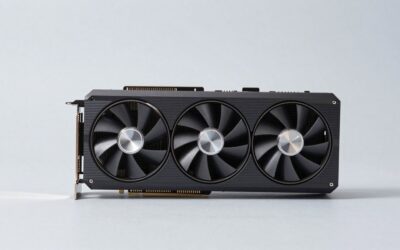
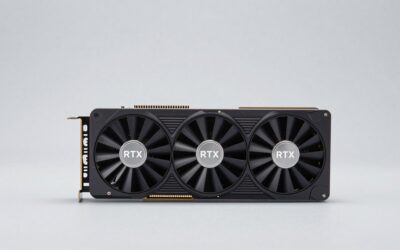
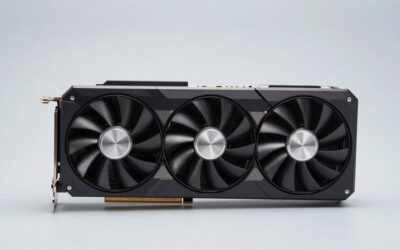
XFX Swift AMD Radeon RX 9070XT Triple Fan Gaming Edition with 16GB GDDR6 HDMI 3xDP, AMD RDNA 4 RX-97TSWF3BA
Best Seller
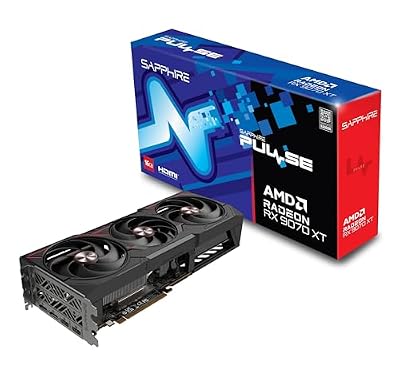
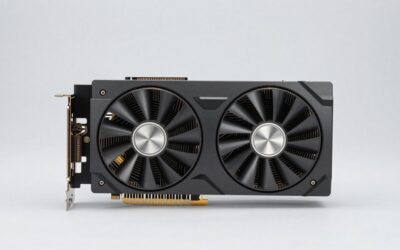
Sapphire 11348-03-20G Pulse AMD Radeon™ RX 9070 XT Gaming Graphics Card with 16GB GDDR6, AMD RDNA 4

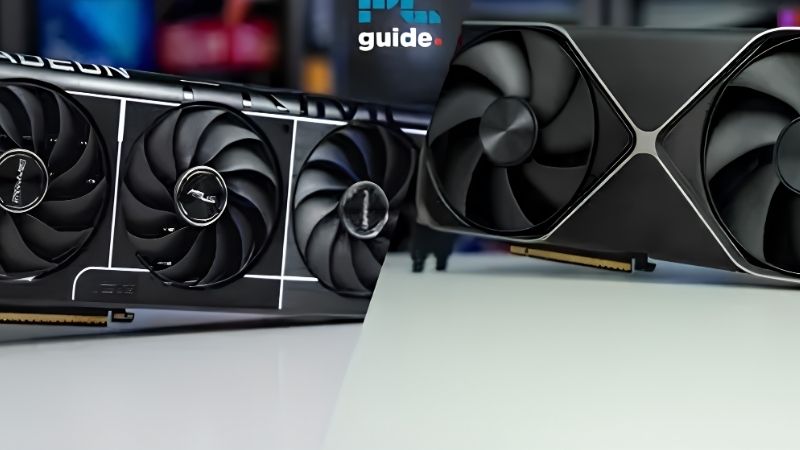
amd 9070 xt vs rtx 5080 is not a question about which card is faster – everyone already knows the answer to that. It is a question about whether $400 buys enough. That makes it a maths problem rather than a benchmark problem, and maths problems have clean answers. The RTX 5080 wins on frames. The 9070 XT wins on value, and it is not close. The interesting part is that both carry 16GB, which removes the usual tiebreaker and forces the decision onto price-per-frame – where the $999 card has a genuinely awkward case to make.
Quick Verdict: RX 9070 XT vs RTX 5080
The RTX 5080 is roughly 30-35% faster at 1440p and 4K for 67% more money. That is poor value on paper and it is the correct card anyway for a narrow group: people running 4K at high refresh, people who need ray tracing at settings the 9070 XT cannot sustain, and people whose machine earns money in CUDA applications. For everyone else the 9070 XT delivers most of the experience for $400 less – and the fact that both cards carry the same 16GB removes the longevity argument that usually justifies paying up.
As an Amazon Associate we earn from qualifying purchases at no extra cost to you.




The Price-Per-Frame Maths
Run it honestly, because this is the number the comparison actually turns on.
Performance scales at roughly 132%. Price scales at roughly 167%. That means the 5080 costs 27% more per frame than the 9070 XT. In a stack where tiers usually maintain rough price-per-frame parity – Nvidia’s own 5060 Ti and 5070 land within a percent of each other – a 27% penalty is not the ordinary flagship tax. It is a signal that you are paying for something other than frames.
What you are paying for is real: ray tracing headroom, DLSS 4 with Multi Frame Generation, CUDA, and the ability to hold 4K without compromise. Those are legitimate products. They are just not frames, and if frames are what you want, you are buying the wrong card.
The honest framing: at 1440p, the 9070 XT already delivers more frames than most panels display. Paying $400 to raise a ceiling you are not reaching is the single most common way people overspend at this tier.
Why the Shared 16GB Changes Everything
This is the detail that makes this comparison unusual, and most articles skip past it.
Normally the more expensive card wins the VRAM argument, and that argument does the heavy lifting in justifying the price – buy more memory now, keep the card longer. Here both cards carry 16GB. The 5080 has faster GDDR7 on a 256-bit bus; the 9070 XT has GDDR6 on a 256-bit bus. Bandwidth differs. Capacity does not.
That matters because capacity is what causes stutter, and bandwidth is what causes frame rate. A card short on bandwidth runs slower – predictable, tunable. A card short on capacity hitches and streams textures in late while its average frame rate stays deceptively healthy. Both of these cards hit that wall at the same point.
So the longevity argument for the 5080 evaporates. In three years, when 16GB starts feeling tight at 4K with maxed textures, both cards feel it together. You cannot buy your way out of that with $400 here – which is genuinely awkward for a $999 card, and it is why the 16GB decision on the 5080 has been the most criticised thing about it.
Full Comparison Table
Everything that decides this in one scan.
| Specification | AMD RX 9070 XT | Nvidia RTX 5080 |
|---|---|---|
| Launch MSRP | $599 | $999 |
| VRAM | 16GB GDDR6 | 16GB GDDR7 |
| Memory bus | 256-bit | 256-bit |
| Board power | ~304W | ~360W |
| Recommended PSU | 750W | 850W |
| Power connector | 2x 8-pin | 1x 16-pin (12V-2×6) |
| Raster 1440p (avg) | ~100-125 fps | ~135-165 fps |
| Raster (relative) | 100% | ~132% |
| Ray tracing (relative) | 100% | ~150-160% |
| Price (relative) | 100% | ~167% |
| Price per frame | 100% | ~127% (worse) |
| Best for | 1440p high refresh, value | 4K, heavy RT, CUDA work |
Compare rows eight, nine, and ten. Raster scales at 132%, ray tracing at 150-160%, price at 167%. Only one of those columns comes close to justifying the money, and it is not the one most buyers actually use. If ray tracing is off in your library, the 5080’s entire premium is unfunded.
Deep Dive: When the 5080 Is Genuinely Correct
Poor value is not the same as wrong, and there are three buyers for whom the 5080 is the right card despite everything above. It is worth defining them precisely rather than dismissing a $999 product, because if you are one of them, the maths stops mattering.
The 4K Buyer
At 4K the comparison shifts meaningfully. The 9070 XT handles 4K but works for it – expect upscaling to be mandatory rather than optional in demanding titles. The 5080 has the headroom to run 4K at high refresh with room to spare, and that is a capability difference rather than a percentage.
The threshold worth knowing: if your panel is 4K 144Hz and you intend to actually fill it, the 9070 XT will not get there in modern AAA titles and the 5080 will, with DLSS 4 and Multi Frame Generation doing meaningful work. That is what the $400 buys, and for that specific person it is money well spent.
At 1440p, none of this applies. The 9070 XT already exceeds what most 144Hz and 165Hz panels display. Buying the 5080 for 1440p is buying a ceiling you cannot see.
The Ray Tracing and CUDA Buyer
Ray tracing is the 5080’s strongest category and the gap is large – 50-60% ahead in RT-heavy titles, widening further in path-traced showcases. If you play the heaviest RT titles and intend to actually enable those settings rather than admire them in screenshots, this is not a preference, it is the card.
CUDA is the harder blocker. If your machine runs Blender, DaVinci Resolve, or local AI workloads, AMD is not slower – it is frequently not an option. That is a workflow constraint rather than a performance gap, and no price-per-frame calculation touches it. For a machine that earns money, the 5080 pays for itself in hours saved and the $400 stops being a consideration.
The forward-looking argument has some weight too. Nvidia’s software cadence has repeatedly added capability to cards after purchase, and its AI-driven feature direction suggests the 5080 will do things in 2028 it cannot do today. That is real, unquantifiable value – worth something to you or nothing at all, and only you know which.
Pros and Cons: 9070 XT vs RTX 5080
| AMD RX 9070 XT | Nvidia RTX 5080 | |
|---|---|---|
| Pros | 27% better price per frame; the same 16GB as the $999 card; 304W on a 750W PSU; conventional 8-pin cables with no seating risk; already exceeds most 1440p panels; $400 left for a monitor, CPU, or RAM | 30-35% more raster and 50-60% more ray tracing; the right card for 4K high refresh; DLSS 4 and Multi Frame Generation; CUDA for Blender, Resolve and local AI; strong resale; features that keep improving after purchase |
| Cons | Ray tracing deficit is large and structural; no CUDA – a hard blocker for creator work; works hard at 4K and needs upscaling to get there; FSR 4 coverage thinner than DLSS | 67% more money for 32% more frames; only 16GB on a $999 card – no longevity advantage over a $599 one; 360W and an 850W PSU; 16-pin connector must be fully seated; overkill at 1440p |
The shape is unusual for a flagship comparison. The 5080’s weaknesses are not about capability – it is the better card in every technical sense. They are about proportion. You are paying flagship money without receiving the flagship’s traditional benefit, which was always more memory.
Why the 5080’s 16GB Is Not Getting Fixed
The most reasonable objection to the 5080 is its memory configuration, and understanding why it exists explains more about your purchase than any benchmark.
Prices Have Flattened but Are Not Falling
The memory-driven surge through late 2025 lifted component and laptop pricing broadly, and graphics cards were not exempt. The genuinely positive development is narrow but real: the steep climb seen at the end of 2025 has stopped, and manufacturers including Framework have reported a stretch of relative stability – while still warning openly that further volatility remains possible.
Flat is not falling. Neither card is likely to be meaningfully cheaper in three months, which means the $400 gap is a durable, real $400 rather than something that closes on its own. The panic-buy urgency has eased; the reward for waiting never arrived.
This matters more than usual here because of the shared 16GB. Normally you would justify the 5080 by buying memory headroom that outlasts the cheaper card. That argument does not exist in this matchup – which means in a flat market, the $400 buys frames and features and nothing that protects you from the future.
New Memory Capacity Arrives in 2027 or 2028
Genuine relief is under construction. OEMs can now source DDR5 from Chinese suppliers such as CXMT, and Micron is building two fabrication plants in Idaho – funded, structural additions to global supply rather than speculation.
The obstacle is the calendar. Those Idaho plants do not come online until 2027-2028. Fabrication capacity takes years to stand up, and this purchase concludes long before that supply reaches a shelf.
That context explains the 16GB decision on a $999 card better than any conspiracy theory does. High-bandwidth memory has been expensive and contested, and GDDR7 capacity has been allocated conservatively across the stack. It also means the situation does not improve mid-generation – the 5080 you buy today is the 5080 that exists, and there is no refresh with more memory arriving before that supply does.
The Alternative Between the Two
There is a card sitting directly in this gap and it deserves a price check before you commit to either extreme. The RTX 5070 Ti at $749 delivers most of the 5080’s ray tracing advantage and the same 16GB for $250 less – and it lands close enough to the 5080 in raster that the 5080’s remaining premium looks thin. For a lot of people asking this question, that is the actual answer.
If you go the other way, the plain RX 9070 at $549 gives up 10-12% against the XT and saves another $50 while keeping the 16GB. And whichever you choose, price your PSU into the total before deciding which card is cheaper – a 360W card on a 750W supply is a shutdown waiting to happen.
See More:
- A fan curve msi afterburner
- amd radeon rx 9070 vs rtx 5070
- 5060 ti vs 5070 benchmark
- rx 6600 vs rtx 3050
- 2060 vs 3060
Final Verdict and Recommendation
On amd 9070 xt vs rtx 5080, the 5080 is the better card and the 9070 XT is the better purchase – and those two sentences are not in conflict.
Buy the RX 9070 XT at $599 if you play at 1440p, if ray tracing is optional to you, and if your machine does not depend on CUDA. It already exceeds what your panel displays, it carries the same 16GB as the card costing $400 more, and the money you save buys a monitor, a CPU upgrade, or a proper PSU. At 27% better price per frame with no VRAM penalty, this is the rational default.
Buy the RTX 5080 at $999 if you run 4K at high refresh, if ray tracing is genuinely non-negotiable, or if your machine earns money in Blender, Resolve, or local AI. Those are real reasons and they justify the money completely. Wanting more frames at 1440p is not one of them.
And look hard at the 5070 Ti at $749 before deciding. It has the same 16GB, most of the RT advantage, and sits exactly where this argument actually resolves – which is probably why nobody frames the comparison that way.
Frequently Asked Questions
How much faster is the RTX 5080 for the extra $400?
Expect roughly twenty-five to forty percent more rasterized performance at 1440p and 4K, and a considerably larger lead in ray traced workloads. On a pure frames-per-dollar basis the RX 9070 XT wins comfortably, since a forty percent price increase buying a thirty percent performance increase is a losing trade unless you specifically need the absolute frame rate ceiling.
Which is the better 4K card?
The RTX 5080 is the stronger 4K option, holding high settings at sixty-plus frames natively in most titles and pushing far higher with DLSS 4 and multi frame generation. The RX 9070 XT is capable at 4K but leans harder on FSR 4 upscaling and is more naturally suited to high refresh 1440p where it feels genuinely uncompromised.
Do both have 16GB of VRAM?
Yes, both carry 16GB on a 256-bit bus, with the RTX 5080 using faster GDDR7 and the RX 9070 XT using GDDR6. Because capacity is identical, memory is not a differentiator here. Sixteen gigabytes is sufficient for 4K high textures in current titles, though it is the most commonly criticized specification on the RTX 5080 relative to its price.
What are the power supply requirements for each?
The RTX 5080 is rated around 360W and the RX 9070 XT around 304W. Plan on a quality 850W unit for the GeForce build, particularly with a high-core-count CPU, and 750W to 850W for the Radeon. The RTX 5080 uses a 12V-2×6 connector, so an ATX 3.1 supply with a native cable is the cleanest and safest pairing.
Who should buy which card?
Buy the RX 9070 XT if you play at 1440p, care most about frames per dollar, and treat ray tracing as optional. Buy the RTX 5080 if you own a 4K high refresh display, want maximum ray tracing and path tracing headroom, stream with NVENC, or depend on CUDA acceleration for rendering, video work or local AI models.
Ready to decide? Our #1 pick for 2026 is the Launch MSRP.
Live price & availability on Amazon.

Write Your Review
No reviews yet. Be the first to share your experience!