


Prime
Editor's Pick
PNY NVIDIA GeForce RTX™ 5080 OC Triple Fan, Graphics Card (16GB GDDR7, 256-bit, Boost Speed: 2730 MHz, PCIe® 5.0, HDMI®/DP 2.1, 2.99-Slot, NVIDIA Blackwell Architecture, DLSS 4)


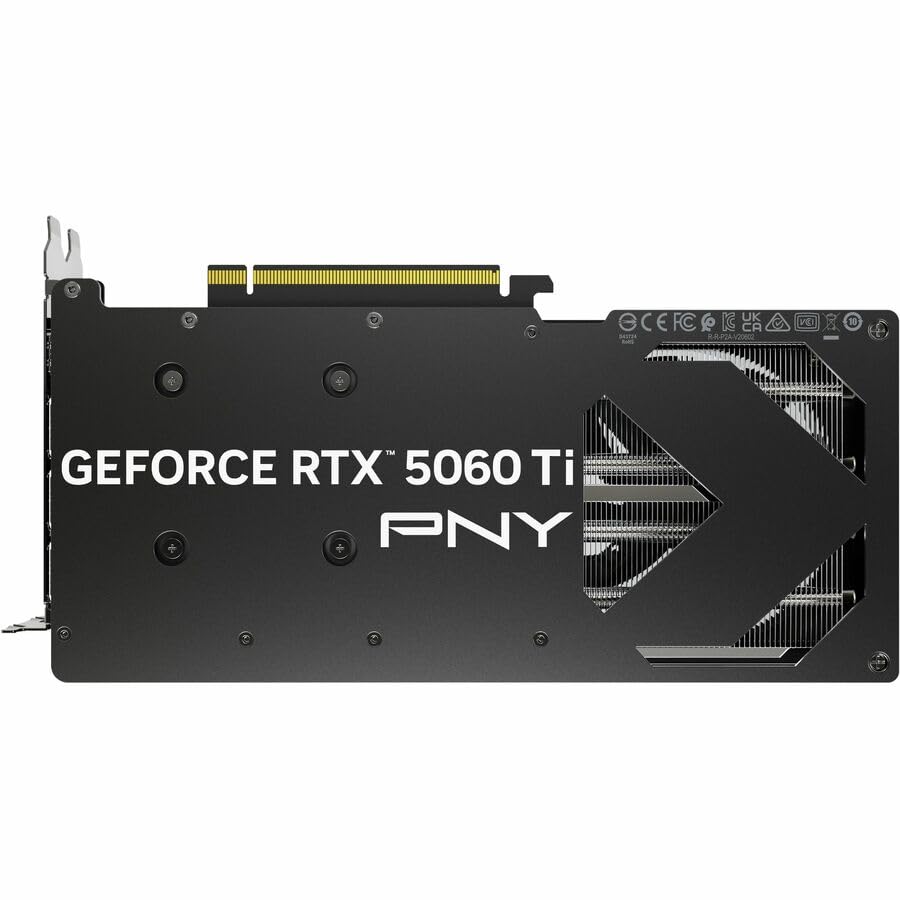
PNY GeForce RTX 5080 review coverage barely exists, and that is not an accident. Reviewers cover Founders Editions and the flagship ASUS and MSI models because those generate views. PNY sits at the bottom of the price list, which is exactly why you are looking at it — it is frequently the cheapest RTX 5080 on the shelf, and you want to know what that discount costs you. This review answers the four questions that actually decide the purchase: does it run hot, is it loud, will it physically fit, and is the warranty going to bite you.
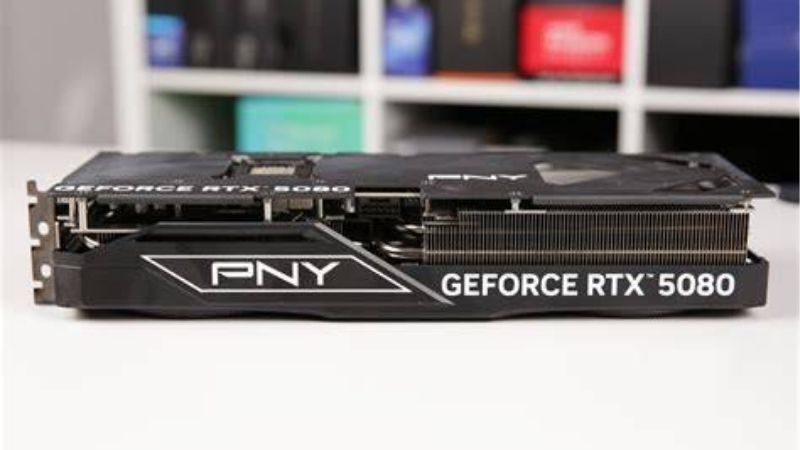
What the PNY RTX 5080 Actually Is
PNY is an authorised Nvidia board partner and has been one for decades — it is also the exclusive distributor for Nvidia’s professional Quadro and RTX workstation line in North America and Europe, which is a credential most people do not associate with the brand. Their consumer cards are built to a price rather than to a spec sheet, and understanding exactly where that money is saved is the whole point of this review.
As an Amazon Associate we earn from qualifying purchases at no extra cost to you.




The Silicon Is Identical, Here Is What PNY Changes
Start with the part nobody disputes. The GB203 die inside a PNY RTX 5080 is the same GB203 inside a $1,200 ASUS ROG Strix. Same 10,752 CUDA cores, same 16GB of GDDR7 on a 256-bit bus, same 960 GB/s of bandwidth, same 360W board power. Nvidia sets the specification and partners cannot change it.
What partners control is the cooler, the VRM design, the factory clock, the backplate, the RGB and the warranty. That is the entire scope of the difference. A premium model buys you a heavier heatsink, more power phases and a longer warranty — not more performance in any meaningful sense.
The gap between a stock-clocked card and a heavily factory-overclocked one is typically 2-4% in real frame rates. On a 100 FPS scene, that is two to four frames. Whether that is worth $150-250 is a question the benchmark charts never frame honestly.
Which PNY RTX 5080 Model You Are Looking At
PNY sells the 5080 under two main lines and the naming is genuinely confusing, so check the box before you buy:
| Model line | Cooler | Clock | Typical price position |
|---|---|---|---|
| VERTO (base) | Triple fan, 2.5-slot | Reference | Lowest 5080 on the list |
| VERTO OC | Triple fan, 2.5-slot | Mild factory OC | +$20-40 |
| XLR8 Gaming VERTO Epic-X RGB | Triple fan, 3-slot, RGB | Higher OC | +$60-100 |
| XLR8 Epic-X RGB OC | Triple fan, 3-slot, RGB | Highest PNY OC | +$80-120 |
The practical guidance: the base VERTO is the value pick and the reason most people arrive at this page. The Epic-X models add a thicker cooler and RGB, which buys lower temperatures and lower noise rather than more frames.
Why PNY Is Usually the Cheapest RTX 5080
PNY spends less on marketing, less on RGB, less on packaging and less on the elaborate industrial design that adds $100 to a Strix. They also run thinner margins to hold shelf position against larger brands. None of that is a red flag — it is a business model.
The honest trade-off is in the cooler mass and the warranty terms, both covered below. If those two things do not bother you, the base VERTO is the same GPU as everything else on the shelf for the least money, and that is a legitimate reason to buy it.
Thermals, Noise and Whether It Fits Your Case
This is the section that video reviews of PNY cards do not exist to provide, and it is the section that determines whether the card works in your specific build. Read the dimensions before you read anything else.
Temperatures Under Load
Aggregating owner reports produces a consistent picture. Under sustained gaming load in a case with decent airflow, the base VERTO runs roughly 68-74C on the GPU core and 76-84C on memory junction. The Epic-X models with the thicker cooler land about 4-6C lower.
Those numbers are fine. Blackwell’s thermal limit is 90C and GDDR7 is rated to 105C, so even the base VERTO has meaningful headroom. What it does not have is headroom in a bad case. Owners reporting temperatures above 80C are almost universally running two intake fans in a solid-front-panel case, and the card is not the problem there.
Practical rule: if your case has a mesh front and at least three fans, the base VERTO is thermally uneventful. If it has a glass front and two fans, spend the extra on the Epic-X or fix the airflow first.
Fan Noise and the Zero-RPM Mode
All PNY 5080 models run zero-RPM idle — fans stop entirely below roughly 50C, so desktop use is silent. Under load, the base VERTO sits around 38-42 dBA at one metre. The Epic-X drops to roughly 34-37 dBA because the larger heatsink lets the fans spin slower for the same cooling.
For context, 40 dBA is audible over headphones only in quiet passages. Nobody in the aggregated feedback described the base VERTO as loud, but several described it as “clearly there” during long sessions. If your PC sits on the desk rather than under it, that distinction matters.
Dimensions, Slot Count and PSU Requirements
The numbers that stop a purchase. Measure before ordering — this is the single most common cause of returns on cards in this class.
| Item | VERTO base | XLR8 Epic-X |
|---|---|---|
| Length | ~305-320mm | ~330-340mm |
| Height | ~120mm | ~130mm |
| Slots occupied | 2.5 | 3 |
| Power connector | 1x 12V-2×6 | 1x 12V-2×6 |
| Adapter in box | 3x 8-pin to 12V-2×6 | 3x 8-pin to 12V-2×6 |
| PSU recommended | 850W | 850W |
Two warnings from owner feedback. First, the 12V-2×6 connector needs clearance above the card for the cable bend, so a 320mm card in a case rated for 330mm may still not close — measure to the side panel, not just to the drive cage. Second, if your PSU is ATX 3.0 with a native 12V-2×6 cable, use it rather than the bundled adapter. Three 8-pins converging into one adapter head works, but it is bulky and it is the part owners most often describe as a fight.
Pros and Cons: What Buyers Praise and Complain About
Owner sentiment on PNY cards splits cleanly. The positive reviews cluster on one theme and the critical reviews cluster on a different one, and neither group is wrong — they simply weight the same trade-off differently.
What the 4 and 5-Star Reviews Consistently Say
The dominant praise is value, expressed almost identically across dozens of reports: same performance as cards costing $150-250 more. Buyers who cross-checked benchmarks against premium models and found a 2-3% difference consistently describe the purchase as obvious in hindsight.
Second most common: quieter than expected. The zero-RPM idle surprises people who assumed a budget cooler meant a noisy one, and the base VERTO’s load noise lands below what most buyers braced for.
Third: build quality exceeded expectations. Metal backplate, no coil whine in most reports, no sag with the included support bracket. Several reviewers noted that PNY’s professional Quadro heritage shows in the assembly quality even on the cheap consumer line.
The Complaints in 2 and 3-Star Reviews
The most frequent complaint by a wide margin is warranty. PNY offers three years where several competitors offer three plus a registration extension, and — more importantly — owner reports on the RMA process are mixed. The recurring theme is slow turnaround and a requirement to deal with PNY directly rather than through the retailer. This is the real cost of the discount, and it deserves weight.
Second: coil whine in a minority of units. This is silicon lottery rather than a PNY defect, and it appears in reports across every brand, but it comes up often enough to mention.
Third: size complaints from buyers who did not measure. This is a self-inflicted problem, but the volume of it is a signal — the card is genuinely large and the product listings understate the clearance needed for the power connector.
Pros and Cons Summary
| Pros | Cons |
|---|---|
| Same GB203 silicon, typically $150-250 less than premium models | Three-year warranty; RMA process reported as slow |
| Zero-RPM idle; 38-42 dBA under load | Base cooler needs a case with real airflow |
| 68-74C core is well within limits | Minority coil whine reports |
| Metal backplate, support bracket included | 305-320mm plus connector clearance excludes many cases |
| 2.5 slots — narrower than most 3-slot rivals | Bundled 3x 8-pin adapter is bulky |
The summary that matters: you are trading warranty comfort and cooler mass for $150-250. If you keep cards three years and have a well-ventilated case, that is a good trade. If you keep hardware for five years, the warranty column deserves more weight than the price column.
Is This the Right Time to Buy an RTX 5080?
The value case above depends entirely on the price gap holding. That gap is a function of a market that has been anything but stable, and anyone about to spend four figures should understand the direction of travel.
Why RTX 5080 Prices Have Not Softened
Component and laptop prices have continued trending upward rather than settling back, and graphics cards have absorbed a disproportionate share of that pressure because of one component: memory. GDDR7 is new, supply is concentrated among very few manufacturers, and the RTX 5080 carries 16GB of it.
This is precisely why PNY’s position on the price list has become more interesting rather than less. When the underlying bill of materials rises across every board partner equally, the brand that spends least on everything except the components ends up with the widest gap to the premium models. The discount you are looking at is not shrinking — if anything, rising memory costs have widened it, because a premium cooler and RGB array become harder to justify when the silicon and memory beneath them cost more.
The practical consequence: the historical instinct to wait for a price drop has been consistently wrong in this segment. Buyers who waited through 2025 for the 5080 to approach MSRP mostly paid more later than they would have paid immediately.
The Slowdown Is Real, But Relief Is Not Close
There is genuine positive news and it deserves precision rather than optimism. The sharp climb seen in late 2025 has eased; Framework, which publishes unusually candid pricing updates, has reported a stretch of relative stability while still cautioning that volatility persists. Prices stopped accelerating. They did not reverse.
Supply is expanding too. OEMs can now source DDR5 from Chinese manufacturers such as CXMT, and Micron is constructing two fabs in Idaho. These are real capacity additions to a genuinely constrained market. But those fabs do not begin production until 2027-2028, which puts them well outside the useful life of a purchase decision you are making this month.
So the accurate framing is: flat, not falling, with meaningful relief two to three years away. Do not structure this purchase around a discount that is not coming.
Who Should Buy It and Who Should Wait
Buy the PNY base VERTO if you want RTX 5080 performance for the least money, your case has mesh airflow and 330mm+ of clearance, and you replace hardware every three years or so. That is a large group and the card serves it well.
Choose the Epic-X if your case airflow is mediocre or your PC sits on the desk — the 4-6C and 4 dBA are worth $60-100 in that specific situation. Choose a different brand entirely if you keep hardware five years or more and want warranty certainty. Check current pricing across the PNY VERTO, Epic-X and the competing 5080 models before deciding — the gap between them moves week to week, and on some weeks the premium card is close enough that the warranty argument wins.
See More:
Final Verdict: PNY GeForce RTX 5080 Review
This PNY GeForce RTX 5080 review reaches a straightforward conclusion: the card does exactly what it is supposed to do, and the discount is real rather than a trap. Identical GB203 silicon, 68-74C under load, 38-42 dBA, zero-RPM idle and a metal backplate — for $150-250 less than boards whose main advantage is a heavier heatsink and better lighting. Buyers looking for the cheapest legitimate route to 5080 performance have found it.
The two things to check before you order are not performance related. Measure your case to 330mm including connector clearance, and decide honestly whether a three-year warranty with a mixed RMA reputation is acceptable to you. If both answers are yes, this is the sensible 5080. With memory costs keeping board prices firm and no correction on the horizon, waiting is unlikely to improve the deal — check current stock and pricing while the gap to the premium models is this wide.
Frequently Asked Questions
What temperatures should I expect?
A triple-fan RTX 5080 in a case with reasonable airflow typically runs around 62 to 70 degrees Celsius on the core under sustained gaming load, with a hotspot roughly 10 to 15 degrees higher and GDDR7 memory junction in the 70s to low 80s. Anything above 90 on memory suggests poor case intake rather than a card fault.
How loud is it under load?
Most partner 5080 designs sit around 35 to 40dBA at one metre under gaming load, which is audible but not intrusive inside a closed case. The fans stop entirely below roughly 50 degrees, so desktop and light use is silent. A custom curve that trades a few degrees for lower RPM usually helps more than anything else.
Will it fit my case?
Measure before ordering. Triple-fan 5080 cards typically run around 330mm long and occupy 2.5 to 3 slots. Check the maximum GPU length in your case specification, allow for front mounted radiators or fans, and confirm you have clearance below the top PCIe slot for a thick cooler and a cable bend.
Is the 12V-2×6 connector safe on this card?
The revised 12V-2×6 standard addressed the seating issues of the original 12VHPWR, but good practice still matters. Use a native cable from an ATX 3.0 or 3.1 supply rather than a four-way adapter, push until it clicks, and avoid bending the cable within about 35mm of the plug. At 360W the 5080 is also less stressed than a 575W 5090.
Does it overclock well?
Modest gains are typical. Expect around 5 percent from raising the power limit and adding 100 to 150MHz to the core with a memory offset, assuming thermals allow. Many owners get better results undervolting instead, holding near stock performance at 60 to 80W less power with noticeably quieter fans.
Ready to decide? Our #1 pick for 2026 is the VERTO (base).
Live price & availability on Amazon.


Write Your Review
No reviews yet. Be the first to share your experience!