
The best motherboard for AMD Ryzen 7 7800X3D doesn’t need extreme overclocking headroom, since 3D V-Cache chips run a lower voltage ceiling than standard Ryzen parts. What actually matters is VRM thermal consistency during long gaming sessions and a BIOS that handles Curve Optimizer and PBO cleanly.
As an Amazon Associate we earn from qualifying purchases at no extra cost to you. Product prices and availability are accurate as of the date shown and are subject to change.





As an Amazon Associate we earn from qualifying purchases at no extra cost to you. Product prices and availability are accurate as of the date shown and are subject to change.
By Ryan Cole
How to Choose the Right Motherboard for Ryzen 7 7800X3D
The 7800X3D’s 120W PPT and 3D V-Cache thermal limits change the calculus versus a standard Ryzen 7 chip. Here’s what to prioritize when hunting for the best motherboard for AMD Ryzen 7 7800X3D specifically, rather than just any AM5 board.
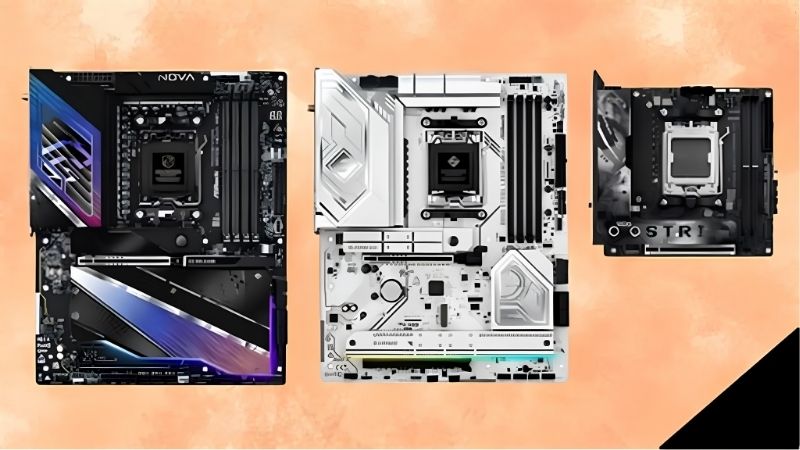
Sustained VRM thermals over peak overclocking
Because the 7800X3D doesn’t traditionally overclock via multiplier (AMD locks it down to protect the V-Cache), the VRM’s job is sustained thermal stability during long gaming or streaming sessions rather than surviving extreme voltage. A 14+2+1 phase, 80A-class VRM like the MSI MAG B650 Tomahawk WiFi’s runs cooler under those loads than an 8-12 phase budget board.
Undervolting and Curve Optimizer tuning are common with the 7800X3D to reduce heat and improve boost consistency, so a board with a clean, well-documented Curve Optimizer implementation in BIOS is a genuine practical advantage.
This is the single biggest thing that separates a great pick from a merely adequate one when choosing a board for this CPU, since the CPU’s own power ceiling is fixed regardless of which board you choose.
Cooler and case clearance around the socket
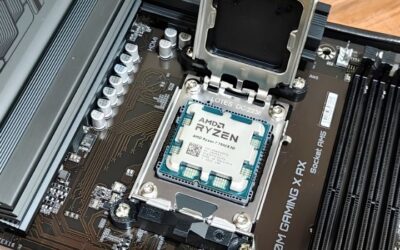
The 7800X3D’s V-Cache layer runs slightly hotter under localized load than a standard chip, making cooler contact quality and mounting pressure matter more. Confirm your board’s included backplate and mounting mechanism (many current boards use a screwless AM5 bracket) matches your CPU cooler’s specified mounting kit before buying.
ITX and compact mATX boards with tightly packed VRM heatsinks can occasionally interfere with large tower air coolers, so check clearance specs if you’re building small.
A poor cooler mount undoes even the best VRM on paper, so treat mounting-hardware compatibility as seriously as the phase count when comparing candidates.
M.2 storage and future-proofing
Since the 7800X3D is popular as a “buy once” gaming CPU that many builders don’t plan to replace for years, pairing it with a board that includes at least one PCIe 5.0 M.2 slot gives room to add a faster SSD down the line without a motherboard swap. AMD’s AM5 socket is confirmed to support new CPUs through at least 2029, so a board bought today has a genuinely long useful life ahead of it.
Two to three M.2 slots is typically enough for a gaming-focused 7800X3D build; workstation-adjacent builds should look at boards with three or more.
Buying ahead on storage headroom is cheap insurance against a full rebuild later, especially since Gen5 SSD prices are trending down even as DRAM prices climb through the rest of 2026.
Top Picks: Best Motherboard for AMD Ryzen 7 7800X3D
These five boards balance VRM thermal headroom, BIOS quality, and price for a 7800X3D gaming build.
| Motherboard | Chipset | VRM | Form Factor | M.2 |
|---|---|---|---|---|
| MSI MAG B650 Tomahawk WiFi | B650 | 14+2+1 (80A) | ATX | 3 (Gen4 only) |
| ASUS ROG Strix B650E-F Gaming WiFi | B650E | 12-phase (80A) | ATX | 3 (1x Gen5) |
| Gigabyte B650 AORUS Elite AX | B650 | 14+2+1 | ATX | 1x Gen5 + more |
| ASUS TUF Gaming B650-PLUS WiFi | B650 | 12+2 (60A) | ATX | 3 (1x Gen5) |
| ASUS TUF Gaming B650M-Plus WiFi | B650 | 12+2+2 (60A) | Micro ATX | 2 (1x Gen5) |
MSI MAG B650 Tomahawk WiFi
This is the best motherboard for AMD Ryzen 7 7800X3D for builders who want sustained VRM thermal margin without paying B650E prices. Its 14+2+1 phase, 80A Duet Rail VRM under extended heatsinks and a heat pipe keeps temperatures well controlled during multi-hour gaming sessions, which is exactly the workload profile the 7800X3D is bought for.
All three M.2 slots run at PCIe 4.0 rather than Gen5, and street pricing has drifted below MSI’s original MSRP as newer B650E boards have taken market share, which actually makes it a stronger value today than at launch.
ASUS ROG Strix B650E-F Gaming WiFi
For builders who want a Gen5 M.2 slot alongside strong VRM thermals, the Strix B650E-F’s 12-phase 80A VRM and Q-Release GPU latch make it a premium but well-rounded pick if you’re comparing every candidate for the best motherboard for AMD Ryzen 7 7800X3D, backed by WiFi 6E and Intel 2.5GbE.
It costs meaningfully more than a standard B650 board for PCIe 5.0 bandwidth the 7800X3D’s gaming workload won’t fully exploit today. It’s the right pick if you specifically want a Gen5 SSD now or plan one soon, and the extended VRM heatsink coverage adds real thermal margin during multi-hour ranked sessions.
Gigabyte B650 AORUS Elite AX
The Elite AX’s 14+2+1 power phase gives comfortable thermal margin for the 7800X3D, and the V2 revision’s PCIe 5.0 primary M.2 slot plus 5-year warranty add long-term value that’s hard to find elsewhere in this price band. WiFi 6E and 2.5GbE round out the connectivity without any real compromise.
Gigabyte’s BIOS UX and RGB software remain less refined than ASUS or MSI’s, and some early production units reported slower first-boot times that a firmware update resolves. Neither issue affects day-to-day gaming performance.
ASUS TUF Gaming B650-PLUS WiFi
If budget matters more than headroom, the TUF Gaming B650-PLUS’s 12+2 teamed 60A VRM still comfortably handles the 7800X3D’s 120W PPT ceiling, and it includes a PCIe 5.0 M.2 slot, WiFi 6, and 2.5GbE for a genuinely mid-range price. It’s a frequently recommended entry point for the best motherboard for AMD Ryzen 7 7800X3D on a tighter budget.
Its VRM runs warmer under sustained load than the Tomahawk’s beefier design, though not to a degree that causes throttling with this specific CPU’s power profile. For most 7800X3D gaming builds, it’s a sound budget-conscious choice.
ASUS TUF Gaming B650M-Plus WiFi
For a compact 7800X3D build, this mATX board’s 12(60A)+2(60A)+2 power stages were tested by Tom’s Hardware running a 7950X without throttling at stock settings, more than enough margin for the lower-power 7800X3D in a smaller case. It’s a solid dark-horse option if your case rules out full ATX entirely.
It carries only two M.2 slots versus three on full-ATX siblings, and its Realtek ALC897 audio codec is dated. For a space-constrained X3D gaming build, those are reasonable tradeoffs for the smaller footprint.
Market Context: Timing Your 7800X3D Build
The 7800X3D is a “buy once, keep for years” gaming chip, so platform longevity and launch timing genuinely factor into choosing the best motherboard for AMD Ryzen 7 7800X3D. Here’s a grounded read on the market rather than a pressure pitch, since this is a build most people keep for a long time.
AM5 support runs through at least 2029
AMD confirmed at Computex 2026 that AM5 keeps receiving new CPUs through the end of 2029. That’s especially reassuring for a 7800X3D buyer: the board you pair with today’s best-in-class gaming chip can later host whatever X3D successor AMD ships, without a platform swap. You’re buying into years of upgrade runway, not a soon-to-be-orphaned socket.
For a chip people tend to hold onto, that longevity turns a good board into a genuinely long-term investment. Spending sensibly on VRM cooling and a Gen5 M.2 slot now pays off across the board’s multi-year life.
No new gaming chip is imminent
If you’re wondering whether a newer X3D chip is around the corner, the next AMD desktop generation (Zen 6) isn’t expected until CES in early 2027 at the earliest. The 7800X3D remains one of the strongest pure-gaming CPUs available, and there’s no imminent replacement that would make a build today feel dated next month. Waiting mostly just costs you months of gaming.
So for anyone who wants a top-tier gaming rig now, the 7800X3D plus a well-cooled B650 board is a rational buy rather than a compromise you’ll regret when the next launch lands.
Cheap upgrades still deliver real gains
One practical note: if the full 7800X3D build is a stretch this year, the parts that reliably improve an existing system, better CPU cooling and quality fans, are exactly the categories where genuine deals still exist, unlike memory. Pairing the 7800X3D with a solid cooler matters more than chasing an expensive board, since this chip rewards good thermals over raw VRM overkill.
Frequently Asked Questions
Common questions builders ask when pairing a motherboard with the best motherboard for AMD Ryzen 7 7800X3D shortlist above.
Does the 7800X3D need a high-end VRM?
Not an extreme one, since AMD limits multiplier overclocking on X3D chips to protect the V-Cache. A mid-to-high tier 12-14 phase VRM in the 60-80A range is enough for sustained thermal stability during long gaming sessions.
Should I get a B650E board for the 7800X3D?
Only if you specifically want a PCIe 5.0 GPU slot or Gen5 SSD now. The 7800X3D’s gaming performance doesn’t depend on B650E’s mandatory Gen5 bandwidth, so standard B650 is a valid, less expensive choice.
Can I undervolt the 7800X3D on any B650 board?
Yes, Curve Optimizer and PBO tuning work across current B650/B650E boards, though implementation polish in the BIOS varies by brand. ASUS and MSI generally offer the most straightforward Curve Optimizer interfaces.
How long will an AM5 board bought today stay relevant?
AMD has confirmed AM5 socket support for new CPUs through at least 2029, so a board purchased for a 7800X3D today has a long practical upgrade runway ahead of it.
See More:
- Best MSI motherboard
- Best motherboard processor combo for gaming
- Best B550 motherboard
- Best CPU for streaming
- What is the best AM4 CPU for gaming
Final Thoughts
The best motherboard for AMD Ryzen 7 7800X3D comes down to sustained VRM thermal margin rather than overclocking headroom, since AMD’s V-Cache protections change the equation versus standard Ryzen chips. The MSI MAG B650 Tomahawk WiFi is the strongest all-around pick, the ASUS ROG Strix B650E-F Gaming WiFi adds Gen5 storage headroom, and the ASUS TUF Gaming B650M-Plus WiFi handles compact builds well.

Write Your Review
No reviews yet. Be the first to share your experience!