
- Top Pick: be quiet! Pure Wings 3 120mm Silent PWM Computer Case Fan, Maximum Airflow
- Best Value: Thermalright TL-C12C-S X3 CPU Fan 120mm ARGB Case Cooler Fan, 4pin PWM Silent Computer with S-FDB Bearing Included, up to 1550RPM Cooling Fan(3 Quantities) (TL-C12C X3)
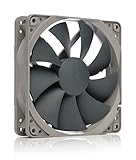
- Premium Choice: Noctua NF-P12 redux-1700 PWM, Quiet Fan 120mm
Best quiet case fans are rarely the ones with the lowest number printed on the box, because manufacturers measure noise at different distances and under different loads. What actually makes a build quiet is fan size, bearing design, how the fan is mounted and where you set the curve. This guide covers all four.
As an Amazon Associate we earn from qualifying purchases at no extra cost to you. Product prices and availability are accurate as of the date shown and are subject to change.




As an Amazon Associate we earn from qualifying purchases at no extra cost to you. Product prices and availability are accurate as of the date shown and are subject to change.
By Ryan Cole
How to Choose the Best Quiet Case Fans
Choosing the best quiet case fans means reading past the headline decibel rating. Four factors decide whether a build is genuinely quiet or merely quiet on paper.
Decibels, Sones and Why Ratings Disagree
Manufacturers publish noise at maximum speed, usually measured at one metre in an anechoic chamber. Real cases add resonance and reflect sound, so the figure is useful for comparison between fans but not as an absolute.
Some brands quote sones instead, a measure weighted to human perception. Arctic rating a fan at 0.3 sone and Noctua rating one at 22.6 dBA are not directly comparable numbers, which is a common source of confusion.
The more useful comparison is noise at a fixed airflow rather than at maximum speed. A fan that moves the same air more slowly will almost always be the quieter one in practice.
Larger Fans Running Slower
A 140mm fan moves the same volume of air as a 120mm fan at noticeably lower rotational speed, and speed is the dominant contributor to noise. Where your case supports 140mm mounts, using them is the single easiest quietness gain.
The limitation is fitment. Most CPU coolers and radiators are built around 120mm spacing, so 140mm tends to be a case panel option rather than something you can use everywhere in a build.
Bearing Type and Motor Noise
Fluid dynamic bearings are the mainstream quiet choice and typically carry ratings above 100,000 hours. Sleeve bearings cost less but wear faster in horizontal mounts, and that wear shows up as a low rattle long before failure.
Motor hum is separate from air noise and often more irritating. Premium fans use better motor controllers that eliminate the buzz cheaper fans produce at low PWM duty cycles, which is precisely where a quiet build spends most of its time.
Mounting, Decoupling and Fan Curves
Rubber corner pads or mounting grommets stop vibration transferring into the chassis panels, which is frequently the loudest part of a supposedly quiet build. Several fans include both hard and soft corner options.
The curve matters more than the fan. Setting a flat profile that holds fans at moderate speed rather than ramping constantly avoids the changing pitch that draws attention, and most motherboards allow a delay before speed changes.
Top Picks: Best Quiet Case Fans Worth Buying
These six cover both sizes and several budget levels, chosen for low noise at usable airflow rather than headline figures. Specifications are manufacturer-rated at maximum speed as of August 2026.
| Fan | Size | Max Speed | Rated Noise | Bearing |
|---|---|---|---|---|
| be quiet! Silent Wings 4 120mm | 120mm | 1600 RPM | 18.9 dBA | Fluid dynamic |
| Noctua NF-A14 PWM | 140mm | 1500 RPM | 24.6 dBA | SSO2 |
| Noctua NF-A12x25 PWM | 120mm | 2000 RPM | 22.6 dBA | SSO2 |
| Arctic P14 PWM PST | 140mm | 1700 RPM | 0.3 sone | Fluid dynamic |
| be quiet! Pure Wings 3 140mm | 140mm | 1100 RPM | Low | Rifle |
| Fractal Design Aspect 14 PWM | 140mm | 1700 RPM | Moderate | Hydrodynamic |
be quiet! Silent Wings 4 120mm – Quietest at 120mm
Rated at 18.9 dBA at its 1600 RPM ceiling, this is the best quiet case fans option at 120mm by a clear margin. The lower maximum speed is deliberate: it cannot be pushed into loud territory, which suits a build where silence is the priority.
It includes both rubber and hard mounting corners so you can tune vibration isolation for the position. The retail packaging also offers three-pin and four-pin cables depending on how you want to control it.
The tradeoff is airflow ceiling. On a thick radiator or a dense heatsink it runs out of static pressure sooner than higher-speed alternatives, so it is best used on case panels rather than cooling duty.
Noctua NF-A14 PWM – Best 140mm Overall
Moving substantial air at just 1500 RPM, this fan takes the pressure off your curve entirely. The SSO2 bearing carries a 150,000 hour rating with a six year warranty, which is the longest coverage in the category.
The brown and beige colour scheme divides opinion and there is no lighting option. It also costs several times what a competent budget fan does, which is difficult to justify across six mounting positions.
Noctua NF-A12x25 PWM – Best 120mm All-Rounder
The very tight tip clearance lets this fan produce strong static pressure while staying quiet at moderate speeds, so one model can serve radiator, cooler and case duty without compromise.
It is the most expensive 120mm fan here by a clear margin. If your build has six mounting points, the total cost approaches what some people spend on a graphics card tier upgrade.
Arctic P14 PWM PST – Best Value at 140mm
Rated at 0.3 sone, the P14 delivers close to premium quietness for a fraction of the price, and the PST pass-through connector chains several fans from a single motherboard header. A five-pack is the cheapest route to a quiet case.
Build quality sits a step below the premium tier, with more audible motor hum at higher duty cycles. The two year warranty is also short compared with what be quiet! and Noctua offer.
be quiet! Pure Wings 3 140mm – Cheapest Genuinely Quiet Option
With a 1100 RPM ceiling on the standard model, this fan physically cannot become loud. For intake and exhaust duty in a build prioritising silence over cooling headroom, it does the job for very little money.
The rifle bearing is a step below fluid dynamic designs for longevity, particularly in horizontal mounts. Airflow is modest, so this is not the fan for a case with restricted intake or a hot graphics card.
Fractal Design Aspect 14 PWM – Best Bundled Upgrade
These are quiet enough at moderate speeds while costing considerably less than the premium options, which makes them a sensible way to fill several mounts at once. Cable length is generous, easing routing in larger cases.
At higher speeds they become noticeably louder than the be quiet! and Noctua alternatives, and there is more motor noise at low duty cycles. Keep them below roughly half speed and they behave well.
Building Quietly in the 2026 Market
Fans sit in one of the few categories where pricing stayed sensible, which affects when to buy the best quiet case fans for a build this quarter.
Cooling Parts Still See Genuine Discounts
While memory and storage climbed steeply through 2026, fans, coolers, cases and power supplies stayed close to normal pricing with real seasonal reductions and single-digit manufacturer increases.
That makes the November sales period a legitimate time to buy a multi-pack, unlike storage where sale stock carries elevated contract costs. If you are building over several months, buy the fans when they are discounted.
Quiet Is the Cheap Upgrade That Still Works
With graphics pricing elevated and no new architectures arriving before CES in January 2027, more builders are extending the life of existing systems. Replacing tired fans is one of the few changes that produces an immediate, obvious result.
Old fans develop bearing noise long before they fail, and a set of four replacements often transforms how a three-year-old machine sounds. It costs a fraction of any performance upgrade and you notice it every day.
The Budget Tier Is Thinning
Manufacturers have shifted focus toward mid and high-tier products as entry-level sales declined, and promotional pricing policies tightened in early 2026. Some of the cheapest fan lines are quietly disappearing from listings.
That is not a reason to rush, but it does mean buying a multi-pack rather than single units is the safer approach if a specific budget model works well in your case.
Frequently Asked Questions
The best quiet case fans question is usually followed by these, from builders working out why a system with quiet fans still is not quiet.
Do the best quiet case fans actually make a build silent?
They remove one source of noise, not all of them. Graphics card fans, an all-in-one pump, coil whine and vibration through chassis panels all contribute. Quiet case fans are necessary for a silent build but rarely sufficient on their own.
Are 140mm fans always quieter than 120mm?
At the same airflow, generally yes, because they achieve it at lower rotational speed. The advantage disappears if you run them at full speed, and fitment limits where they can be used since most radiators use 120mm spacing.
How many fans should a quiet build use?
More fans running slowly are quieter than fewer running fast. Three filtered intakes and one or two exhausts, all held at moderate speed, typically produces less noise than two fans working hard to move the same air.
Why do my fans hum at low speeds?
Usually the motor controller rather than the blades. Cheaper fans produce audible buzz at low PWM duty cycles, which is exactly where a quiet build operates. Raising the minimum duty slightly often eliminates it entirely.
See More:
- Best 4TB NVMe SSD
- Best thermal grizzly paste
- Best thermal paste for 7800X3D
- Best CPU case fans
- Best motherboard for gaming computer
Final Thoughts
The best quiet case fans for your build depend on where they are going. The Silent Wings 4 is the quietest 120mm option for panel duty, the NF-A14 is the strongest 140mm choice if budget allows, and the Arctic P14 covers a full case for a fraction of the cost. Pair whichever you choose with proper decoupling and a flat fan curve, and remember that cooling parts are still discounting normally through late 2026.


Write Your Review
No reviews yet. Be the first to share your experience!