
What is the best AM4 CPU for gaming is a question about squeezing the most out of a platform that has stopped receiving new chips. Ryzen 5000 is the ceiling, so the real decision is how much cache and how many cores you need before AM4 is retired for good.
As an Amazon Associate we earn from qualifying purchases at no extra cost to you. Product prices and availability are accurate as of the date shown and are subject to change.





As an Amazon Associate we earn from qualifying purchases at no extra cost to you. Product prices and availability are accurate as of the date shown and are subject to change.
By Ryan Cole, PC hardware writer at NVIDIA Review.
How to Decide What Is the Best AM4 CPU for Gaming
AM4 spans several generations, but only Ryzen 5000 makes sense for a gaming upgrade today. Four factors separate the options when working out what is the best AM4 CPU for gaming, and cache surprises people most.
3D V-Cache Changes the Ranking Completely
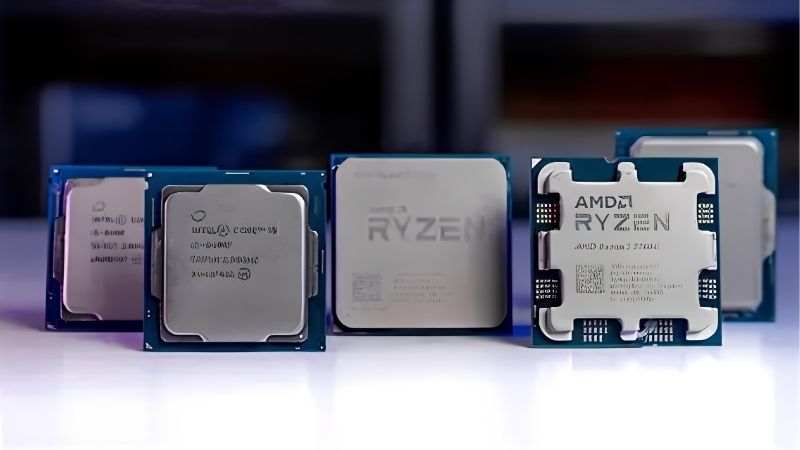
The X3D chips carry 96 MB of L3 cache compared with 32 MB on standard eight-core parts. That extra cache keeps game data closer to the cores, which lifts minimum frame rates substantially in titles with large worlds or heavy simulation.
Clock speed becomes secondary as a result. The 5800X3D boosts lower than a 5800X yet outperforms it in most games, which is why asking what is the best AM4 CPU for gaming almost always leads back to a cache-equipped chip.
Match Core Count to How You Actually Play
Six cores and twelve threads remain adequate for the majority of current games at 1080p and 1440p. Eight cores add comfort when background applications are running, and twelve or more mainly benefit productivity workloads rather than frame rates.
Threads matter more if you stream or record while playing. Even then, hardware encoding on the graphics card means an eight-core chip handles gaming and streaming together without the stutter that older six-core parts sometimes showed.
Check PCIe Support and iGPU Status
Most Ryzen 5000 desktop chips support PCIe 4.0 and have no integrated graphics, so a discrete card is required. One notable exception is the Ryzen 5 5500, which is limited to PCIe 3.0 because of how its silicon is configured.
PCIe 3.0 versus 4.0 costs very little on a mid-range graphics card but does halve NVMe drive throughput. If you already own a Gen4 SSD, that limitation is worth avoiding for the small extra cost of a 5600 instead.
Factor In Cooling and Board Compatibility
The 105W chips run warmer than the 65W parts, and the 5800X3D in particular concentrates heat because of its stacked cache design. A decent dual-tower air cooler or a 240 mm AIO is sensible rather than a bundled stock cooler.
On the board side, every B450, B550, X470 and X570 model supports Ryzen 5000 with the right BIOS. Update firmware before swapping the CPU, or use a board with BIOS Flashback if you have no older chip available to boot with.
Top Picks: What Is the Best AM4 CPU for Gaming Right Now
These six processors cover the practical range from budget upgrades to the fastest gaming chip AM4 ever received. Availability on a retired platform varies, so check stock before planning a build around a specific model.
| CPU | Cores / Threads | Max Boost | L3 Cache | TDP |
|---|---|---|---|---|
| Ryzen 7 5800X3D | 8 / 16 | 4.5 GHz | 96 MB | 105W |
| Ryzen 7 5700X3D | 8 / 16 | 4.1 GHz | 96 MB | 105W |
| Ryzen 9 5900X | 12 / 24 | 4.8 GHz | 64 MB | 105W |
| Ryzen 7 5700X | 8 / 16 | 4.6 GHz | 32 MB | 65W |
| Ryzen 5 5600 | 6 / 12 | 4.4 GHz | 32 MB | 65W |
| Ryzen 5 5500 | 6 / 12 | 4.2 GHz | 16 MB | 65W |
Ryzen 7 5800X3D
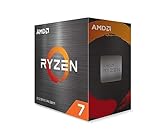
This remains the fastest gaming processor the platform received. Eight cores and sixteen threads combine with 96 MB of L3 cache and a 4.5 GHz boost within a 105W TDP, and it slots into any B450 or B550 board with updated firmware.
It is the clear answer for anyone keeping an AM4 system for several more years. The drawbacks are a locked multiplier, no overclocking headroom and a tendency to run warm under load, so pair it with a capable cooler rather than a budget one.
Ryzen 7 5700X3D
The 5700X3D delivers most of the same experience for less. It shares the eight cores, sixteen threads and 96 MB cache pool of the 5800X3D, trading a lower 4.1 GHz boost ceiling for a lower price when both are in stock.
In games the gap between the two is modest because cache does the heavy lifting. The limitation is the same locked design plus slightly reduced clocks, which shows up more in single-threaded applications than in actual gameplay.
Ryzen 9 5900X
If your machine also handles rendering or compiling, twelve cores and twenty-four threads make sense. The 5900X boosts to 4.8 GHz with 64 MB of L3 cache split across two core complexes, at a 105W TDP.
For pure gaming it generally sits behind the X3D chips despite the higher clocks, because the cache is divided rather than unified. It also demands solid VRM cooling, so it suits a mid-tier or better B550 board rather than an entry model.
Ryzen 7 5700X
This is the balanced non-X3D option. Eight cores and sixteen threads boost to 4.6 GHz within a 65W TDP, which means low temperatures, quiet operation and compatibility with almost any B450 or B550 board without VRM concerns.
It is a strong pick for a 1440p build paired with a mid-range graphics card. The compromise is the 32 MB cache pool, which leaves minimum frame rates less consistent than an X3D chip in simulation-heavy or heavily modded titles.
Ryzen 5 5600
For the money this is still one of the best value gaming upgrades available. Six cores and twelve threads boost to 4.4 GHz at 65W, with full PCIe 4.0 support and a bundled cooler adequate for stock operation.
Paired with a mid-range card at 1080p it rarely becomes the limiting factor. The honest limit is longevity: six cores are sufficient now but leave less headroom for future titles than an eight-core chip does.
Ryzen 5 5500
The cheapest option here works for a basic gaming machine. Six cores and twelve threads boost to 4.2 GHz at 65W, which is enough for esports titles and older games at high frame rates on a modest graphics card.
Two limitations matter. The L3 cache is halved to 16 MB compared with the 5600, and the chip is restricted to PCIe 3.0, which caps NVMe throughput. For a small price difference the 5600 is usually the better long-term buy.
How the 2026 Market Affects AM4 Buyers
Two things about the current market make AM4 upgrades more attractive than they might appear on paper. Both are about total cost rather than raw performance.
AM4 Is Finished, but AM5 Is Expensive to Enter
AMD confirmed at Computex 2026 that AM5 will receive new CPUs through 2029, which makes it the better long-term platform. Moving there, however, means buying a new board, a new CPU and DDR5 memory in one go.
If you already own DDR4 and an AM4 cooler, a 5700X3D or 5800X3D upgrade costs a fraction of that and delivers a large jump over a Ryzen 2000 or 3000 chip. That is the strongest practical case for staying on AM4 for now.
Memory Pricing Makes DDR4 Ownership Valuable
DRAM contract prices climbed sharply through 2026 with further increases forecast into the fourth quarter, and no significant new capacity is expected before late 2027. DDR5 kits have absorbed much of that rise.
Owning a working 32 GB DDR4 kit is now a genuine financial advantage. It shifts the break-even point in favour of one last AM4 CPU upgrade rather than a full platform migration at current memory prices.
There Is No New Hardware Arriving Before 2027
Zen 6 desktop chips and Intel Nova Lake have both moved to CES in January 2027, so waiting for the next generation means a long delay with nothing launching in between. Current parts are what the market offers.
That removes the usual argument for holding off. If your existing CPU is limiting frame rates today, an AM4 upgrade now buys you a better experience for a year or more before an AM5 migration becomes the sensible next step.
Frequently Asked Questions
These questions come up repeatedly from people deciding on a final AM4 upgrade.
What is the best AM4 CPU for gaming on a budget?
The Ryzen 5 5600 offers the strongest performance per pound at the low end, with six cores, PCIe 4.0 support and a bundled cooler. The 5700X3D is the better choice if the budget stretches, thanks to its much larger cache pool.
Will a Ryzen 5000 chip work on my B450 board?
Yes, with a BIOS update. Every B450 board received firmware adding Ryzen 5000 support, but you need a compatible older CPU or BIOS Flashback to apply it. Check VRM quality too before pairing a B450 board with a 5900X.
Is the 5800X3D still worth buying in 2026?
For an existing AM4 system, yes. It remains the fastest gaming chip on the platform and avoids the cost of new memory and a new board. For a build starting from nothing, AM5 is the better investment despite the higher entry price.
Do I need to replace my cooler when upgrading?
Usually not, since AM4 mounting is consistent across the platform. However, moving from a 65W chip to a 105W X3D part is a meaningful thermal step up, so a basic stock cooler should be replaced with a decent tower model.
See More:
- Best MSI motherboard
- Best motherboard processor combo for gaming
- Best B550 motherboard
- Best CPU for streaming
Final Thoughts
What is the best AM4 CPU for gaming comes down to cache and budget: the 5800X3D and 5700X3D lead clearly for frame rates, the 5600 and 5700X cover value builds, and the 5900X only makes sense if productivity matters alongside gaming. With DDR5 pricing elevated, one last AM4 upgrade remains a defensible choice.





Write Your Review
No reviews yet. Be the first to share your experience!