
- Top Pick: Cooler Master 360L Core AIO CPU Liquid Cooler – 360mm Radiator, 3X ARGB PWM Fans, Patented Gen S Dual-Chamber Pump, Quiet Cooling & Easy Installation, AMD AM5/AM4 & Intel LGA 1851/1700, Black
- Best Value: ID-COOLING FX360 PRO White 360mm AIO CPU Cooler, High-Efficiency Fans
- Premium Choice: Thermalrlght Assassin X 90 SE ARGB CPU Air Cooler, 4 Heat Pipes, TL-P9-S PWM ARGB Fan, Computer heatsink Cooler CPU, AGHP 4.0 Technology, for AMD AM4 AM5/Intel LGA 1150/1151/1200/1700
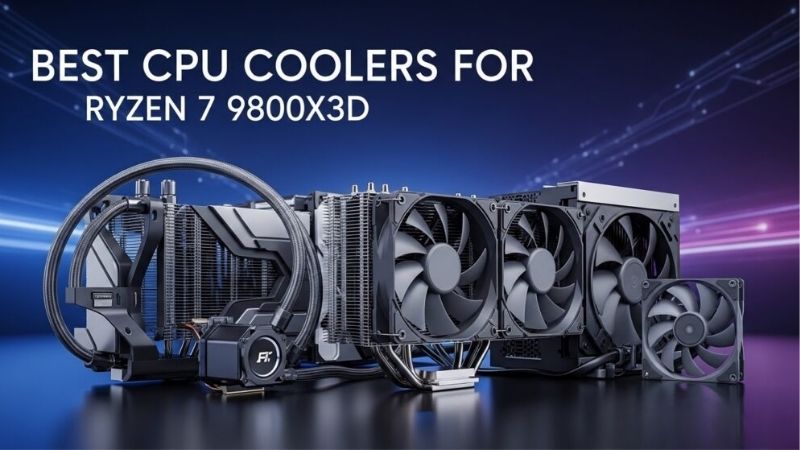
Best CPU cooler for 9800X3D advice often overshoots badly. This is an eight-core chip with a 120W rating and a 162W package limit, not a 250W flagship, so the real challenge here is the concentrated hot spot sitting under the stacked cache die rather than raw heat output spread across the whole processor package.
As an Amazon Associate we earn from qualifying purchases at no extra cost to you. Product prices and availability are accurate as of the date shown and are subject to change.
By Ryan Cole, PC hardware writer at NvidiaReview
How to Choose the Best CPU Cooler for 9800X3D
Picking the best CPU cooler for 9800X3D builds means understanding what this processor actually asks for. Three things matter: how much cooling 162W really requires, how the mounting and contact plate deal with the hot spot, and whether air or liquid suits your case and memory better.
Why 162W Does Not Need a Flagship Cooler
At a 162W package limit, this chip draws far less than a 16-core part under all-core load. A good dual-tower air cooler or a 240mm liquid unit has enough capacity, and stepping up to a 360mm radiator buys lower fan speeds and quieter running rather than meaningfully lower temperatures.
What it does need is a cooler that keeps up during sustained gaming rather than short bursts. The processor holds high boost clocks for long periods, so a heatsink that copes for two minutes in a benchmark but saturates after an hour of play is the wrong kind of purchase here.
Hot Spot Behaviour and Mounting Contact
The stacked cache die concentrates heat into a smaller area than a standard chip, which means contact quality matters more than usual. Coolers with native offset mounting for AMD shift the cold plate toward that hot spot, and several manufacturers now build this into their AM5 hardware.
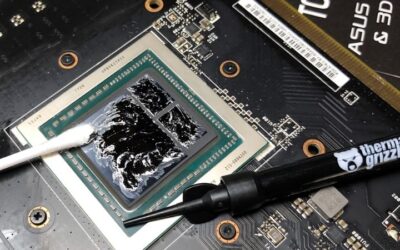
Even mounting pressure is the other half. Tighten the bracket diagonally in stages so the compound spreads evenly across the rectangular AM5 heat spreader. A cooler with a well-machined base and a proper spring-loaded backplate is worth more here than one with a bigger TDP claim.
Air Versus Liquid for This Chip
Air cooling is the pragmatic choice: no pump to fail, a decade of service life, and enough capacity for this processor from any competent dual-tower design. The compromises are memory clearance under the front fan and a large heatsink sitting over the board in a visible build.
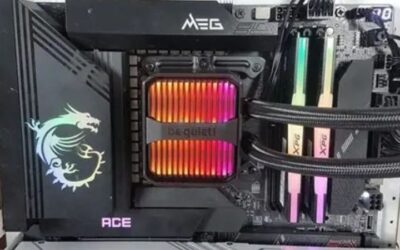
Liquid moves heat straight out of the chassis, clears tall memory entirely, and keeps the area above the socket open. It costs more, adds a pump as a wear component, and needs a radiator mount your case supports. For this chip, either approach works; the case usually decides.
Top Picks: Best CPU Cooler for 9800X3D Builds
These five candidates for the best CPU cooler for 9800X3D cover budget air, premium air and liquid options. All figures are vendor-published specifications; independent test results vary by bench. Availability and pricing tiers were checked in August 2026 and change with stock.
| Cooler | Type | Size | Fans | Best for |
|---|---|---|---|---|
| Thermalright Peerless Assassin 120 SE | Dual tower air | Around 155 mm | 2 x 120 mm | Best value |
| DeepCool AK620 | Dual tower air | Around 160 mm | 2 x 120 mm | Balanced air option |
| Noctua NH-D15 G2 | Dual tower air | Around 168 mm | 2 x 140 mm | Quietest air cooling |
| be quiet! Dark Rock Pro 5 | Dual tower air | Around 163 mm | 135 mm + 120 mm | Silent builds |
| Arctic Liquid Freezer III 240 | Liquid AIO | 240 mm, 38 mm thick | 2 x 120 mm | Best liquid choice |
Thermalright Peerless Assassin 120 SE – Best Value
Six heatpipes, two towers and two 120mm fans at a budget price makes this the most sensible starting point for this processor. It has ample capacity for 162W, holds clocks through long gaming sessions, and costs a small fraction of what a premium cooler or a 360mm liquid unit would.
It overhangs the memory slots on most boards, so low-profile modules are the safe plan, and at around 155mm it fills a mid-tower. Mounting hardware is good rather than exceptional. For the overwhelming majority of builds around this chip, spending more genuinely buys very little.
Arctic Liquid Freezer III 240 – Best Liquid Option
Arctic pairs a 38mm thick radiator with P12 PRO fans, native offset mounting that shifts the cold plate toward the AMD hot spot, and an integrated VRM fan that cools the power stages beside the socket. For a 162W chip, a 240mm unit at this thickness is genuinely sufficient.
The thick radiator plus fans needs roughly 63mm of clearance, which some cases cannot provide at the top. The VRM fan adds a small noise source at high duty, and a pump is a wear component an air cooler does not have. On performance per pound in liquid cooling, it leads comfortably.
DeepCool AK620 – Best Balanced Air Cooler
The AK620 pairs two towers with two 120mm fans and a clean brushed top plate, sitting between budget and premium in both price and finish. Capacity is comfortable for this processor, mounting is straightforward on AM5, and the fan curve is calmer than most coolers at similar prices.
At around 160mm it is tall enough to be tight in some mid-towers, and like all wide dual-tower designs it interferes with tall memory heat spreaders. Peak performance sits just behind the premium options. As a middle-ground choice that looks tidy and installs easily, it is well judged.
Noctua NH-D15 G2 – Best Premium Air Cooler
The G2 revision refines Noctua’s long-standing dual-tower design with reworked fin stacks and 140mm fans, and it remains the benchmark for air cooling that stays quiet under load. Mounting hardware is the best in the category, and Noctua supports its brackets across sockets for years.
It is expensive, physically enormous at around 168mm tall, and blocks the first memory slot with the front fan in its standard position. For a 162W processor it is also more cooler than strictly necessary. What you are buying is near-silence and hardware that will outlast several builds.
be quiet! Dark Rock Pro 5 – Best for Silent Builds
be quiet! tunes this dual-tower cooler entirely around acoustics, pairing a 135mm and a 120mm fan with a dark finish and a decoupled mounting design. In a quiet room it disappears into the background during a gaming session, which is the entire point of the range.
It is large at around 163mm, heavy enough to want care during installation, and priced near the premium tier. Peak capacity trails the very best air coolers by a small margin. If the machine sits on your desk and noise is your first concern, that trade is easy to justify.
What the 2026 Market Means for Cooling This Chip
Cooling remains one of the few components where 2026 pricing has behaved sensibly, which affects where an upgrade budget should go and how urgently the best CPU cooler for 9800X3D builds actually needs buying. Three market factors are worth weighing carefully before you order anything for an existing machine.
Cooling Is the Affordable Upgrade This Year
With graphics cards up sharply and memory following, a full platform refresh is beyond many builders. Improving cooling on an existing machine is one of the few upgrades that still costs little, and on a chip that boosts aggressively it directly extends how long those clocks hold.
If your processor currently sits under a modest cooler and drops clocks during long sessions, that is exactly the situation a better heatsink fixes. Undervolting with Curve Optimizer alongside the cooler swap typically produces a larger improvement than either change would deliver on its own.
Cooler Pricing Has Crept Upward
Cooling components have risen roughly 6 to 8 percent as manufacturers concentrate on mid-range and premium products, and the promotional pricing policies that used to soften those increases were withdrawn in February 2026. The very cheapest options have thinned out across the category.
That said, this is not a market to panic in. The best value option for this processor is a budget dual-tower cooler that has barely moved in price, and the premium tier buys silence rather than performance. Spending more than you need here returns very little on a 162W chip.
Late-Year Sales Still Deliver on Cooling
Waiting for November discounts is poor advice for memory, storage and prebuilt systems this year, because that inventory was built from expensive contract components. Coolers, cases, fans and power supplies fall outside that problem and continue to see genuine reductions in that window.
So if the machine is throttling now, buy and fix it rather than waiting for a small saving. If the cooler is part of a planned build alongside other parts, grouping the purchase into late November is reasonable. All pricing described here reflects August 2026 conditions.
Frequently Asked Questions
The questions builders ask most when choosing the best CPU cooler for 9800X3D builds: whether a 360mm radiator is ever necessary, how hot this chip should run, what undervolting actually achieves, and whether air cooling is genuinely sufficient for a modern gaming flagship.
Do I need a 360mm liquid cooler for this chip?
No. The best CPU cooler for 9800X3D builds is often a 240mm unit or a good dual-tower air cooler, since either handles 162W comfortably. A 360mm radiator lets fans run slower for the same temperature, which means less noise rather than better performance. Buy the larger unit for acoustics or because your case suits it, not out of necessity.
What temperatures should I expect?
This processor is designed to boost until it reaches its thermal limit, so seeing high numbers under load is normal rather than alarming. What matters is whether clocks hold steady during long sessions. If they drop noticeably after twenty minutes, the cooling or the case airflow is the constraint.
Does undervolting help more than a bigger cooler?
Often, yes. Per-core Curve Optimizer undervolting reduces the heat produced in the first place, which lets boost clocks hold longer regardless of the heatsink. Doing both together produces the best result, but tuning costs nothing except an evening of stability testing.
Is air cooling really enough?
For this chip, comfortably. A dual-tower air cooler matches a 240mm liquid unit closely at this power level and has no pump to fail. Liquid wins on memory clearance, appearance and moving heat out of the case, which are the practical reasons to choose it rather than raw capacity.
See More:
- Best thermal compound paste
- Thermal paste at Best Buy
- Graphics card at Best Buy
- Best AM4 CPU for gaming
- Best motherboard for 9800x3d
Final Thoughts
The best CPU cooler for 9800X3D is one sized to a 162W chip rather than a flagship. The Peerless Assassin 120 SE covers it for a fraction of the price of the alternatives, the Liquid Freezer III 240 is the liquid answer if your case allows a thick radiator, and the premium air coolers buy silence rather than speed.
As an Amazon Associate we earn from qualifying purchases at no extra cost to you. Product prices and availability are accurate as of the date shown and are subject to change.






Write Your Review
No reviews yet. Be the first to share your experience!