
- Top Pick: STGAubron Gaming PC Desktop,Core I7,RX 580 8G,16G RAM,512G SSD
- Best Value: KOTIN Gaming PC Desktop, Ryzen 7 8700F, RTX 5060 Ti 8GB, 16GB DDR5, 1TB SSD
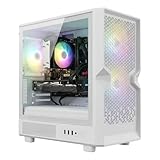
- Premium Choice: LXZ Gaming PC Desktop Ryzen 7 5700X | GeForce RTX 5060 8GB | 1TB SSD | 16GB DDR4 RAM | High-Performance PC for AAA Gaming, Streaming & Creative Work
Best CPU for Gaming and Streaming choices used to mean buying every core you could afford. Hardware encoders changed that, and the question now is how much of the encoding you hand to the graphics card and how much you keep on the processor.
As an Amazon Associate we earn from qualifying purchases at no extra cost to you. Product prices and availability are accurate as of the date shown and are subject to change.


As an Amazon Associate we earn from qualifying purchases at no extra cost to you. Product prices and availability are accurate as of the date shown and are subject to change.
By Ryan Cole, hardware writer at NVIDIAReview.
How to Choose the Best CPU for Gaming and Streaming
The right chip depends on where the encoding happens. If your graphics card handles it, the best cpu for gaming and streaming is simply a strong gaming processor. If the processor encodes, core count starts to matter again.
Decide Where the Encode Runs Before Buying Cores
Modern GPU encoders handle a single stream at high quality with almost no measurable effect on frame rate. For one machine streaming one game to one platform, that is the sensible default and it takes the load off the processor entirely.
Software encoding on the processor still produces slightly better quality at low bitrates, which matters for fast-moving content on bandwidth-limited platforms. That path wants twelve cores or more before it stops interfering with gameplay.
A third option is a second machine with a capture card, which removes the question entirely. It costs more but keeps the gaming system doing one job, which is why many full-time streamers still run that setup.
Cache Drives Frame Rates, Cores Drive Everything Else
Large L3 cache has become the single biggest factor in gaming frame rates, which is why chips with stacked cache lead almost every gaming chart despite modest core counts and clock speeds.
Extra cores do nothing for frame rate once you pass roughly eight, but they absorb background load: chat overlays, alerts, browser sources, recording a local copy and whatever else runs alongside the game.
The practical split is eight fast cores with big cache for a GPU-encoded stream, and twelve to sixteen cores if you encode in software or record and stream simultaneously.
Power Draw, Cooling and Sustained Clocks
Streaming keeps a processor loaded for hours rather than minutes, so sustained behaviour matters more than peak boost. A chip that holds its clocks for a three-hour session is worth more than one that spikes higher briefly.
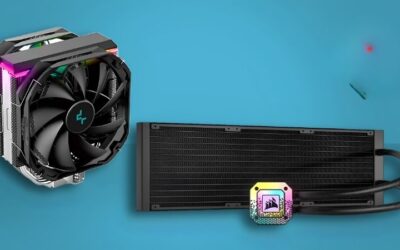
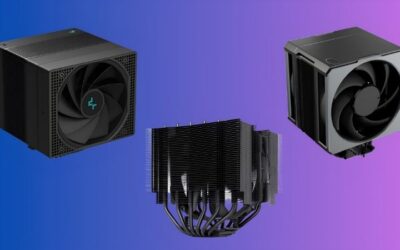
Budget cooling accordingly. A 65 W part is comfortable on a mid-range tower, while a sixteen-core chip pulling over 200 W under a long encode wants a large dual-tower or a 360 mm loop.
Case airflow is part of that equation. A processor holding full power for three hours warms the whole chassis, which then raises graphics card temperatures, so an undersized cooler shows up as noise from every fan rather than from one.
Platform Life and What You Can Upgrade Into
AMD has committed to new processors on the AM5 socket through the end of 2029, while Intel’s next generation moves to a different socket. That gives an AM5 build a clear upgrade path from a mid-range chip later on.
Memory is the other platform cost. Streaming setups benefit from thirty-two gigabytes rather than sixteen, and with memory pricing rising through 2026 it is worth buying that capacity up front.
Top Picks for the Best CPU for Gaming and Streaming in 2026
Candidates for the best cpu for gaming and streaming cover single-PC setups from budget to workstation-class. Specifications are manufacturer-listed, and retail pricing at the time of writing in August 2026 changes weekly, so treat tiers as your guide.
| Processor | Cores / threads | Boost | TDP | Best for |
|---|---|---|---|---|
| AMD Ryzen 7 9800X3D | 8 / 16 | Up to 5.2 GHz | 120 W | GPU-encoded streaming |
| AMD Ryzen 9 9950X3D | 16 / 32 | Up to 5.7 GHz | 170 W | Software encoding, editing |
| AMD Ryzen 9 9900X | 12 / 24 | Up to 5.6 GHz | 120 W | Balanced multitasking |
| Intel Core Ultra 7 265K | 20 cores | Up to 5.5 GHz | 125 W base | Background task offload |
| AMD Ryzen 7 9700X | 8 / 16 | Up to 5.5 GHz | 65 W | Efficient mid-range builds |
| Intel Core Ultra 5 245K | 14 cores | Up to 5.2 GHz | 125 W base | Budget Intel streaming |
AMD Ryzen 7 9800X3D
Eight cores with stacked cache make this the strongest gaming processor available, and for a stream encoded on the graphics card that is exactly what you need. It leaves plenty of headroom for overlays, chat and alerts alongside a demanding title.
Software encoding is where it runs out of room, since eight cores cannot absorb a high-quality encode and a game at once. It also runs warm under sustained load and needs a substantial cooler to hold its clocks.
AMD Ryzen 9 9950X3D
Sixteen cores paired with stacked cache means you get gaming performance close to the 9800X3D while having enough threads left for software encoding, local recording and editing between sessions.
It is expensive, draws serious power under all-core load and demands a large cooler. Scheduling between the cache-equipped and standard core groups also occasionally needs firmware and driver updates to behave correctly.
AMD Ryzen 9 9900X
Twelve cores without stacked cache is the sensible middle. Gaming performance sits below the cache-equipped parts but remains high, and the extra threads handle background tasks without the flagship price.
In pure frame rate terms it trails a cheaper eight-core with big cache, which makes it a poor choice if your stream is entirely GPU-encoded. Buy it when the extra threads will actually be used.
Intel Core Ultra 7 265K
Intel’s hybrid layout is well suited to this workload, with performance cores handling the game and efficiency cores absorbing capture software, browser sources and background applications.
Gaming frame rates trail the cache-equipped AMD parts in most titles, and the platform requires a new socket with no long-term upgrade commitment. Memory tuning also matters more here than on AM5.
AMD Ryzen 7 9700X
At 65 W this is the efficient option, running cool on a mid-range tower cooler while delivering eight strong cores. For a GPU-encoded stream in a compact or quiet build, it covers the requirement comfortably.
It lacks the stacked cache that separates the X3D parts in gaming, and eight cores leave little spare for software encoding. Enabling the higher power mode narrows the gap at the cost of extra heat.
Intel Core Ultra 5 245K
This is the budget entry into a current Intel platform, with enough performance cores for gaming and a set of efficiency cores to keep streaming software off the critical path.
Frame rates sit well behind the top AMD parts, and the socket has no announced future processors. It suits a build you expect to keep as-is rather than upgrade in two years.
What 2026 Conditions Mean for Streaming Builds
Timing matters more than usual this year, because the release calendar and memory pricing both affect what the best cpu for gaming and streaming costs to build around. Three points are relevant.
Nothing New Arrives Before CES 2027
The next generation of AMD and Intel processors has moved to CES in January 2027, so anyone asking whether to wait is looking at a delay of several months followed by launch pricing and early firmware issues.
Current chips are also at their most mature, with stable firmware and settled memory compatibility. For a streaming machine that needs to be reliable rather than cutting edge, that is worth more than a new model number.
AM5 Gives You a Genuine Upgrade Path
AMD confirmed at Computex 2026 that AM5 will receive new processors through the end of 2029, while Intel’s next generation requires another socket change. Buying a mid-range AM5 chip now leaves the door open.
That makes starting with an eight-core part and upgrading later a realistic plan, rather than the usual advice to buy as much processor as you can afford up front.
Memory Pricing Should Shape the Budget
DRAM pricing has continued climbing through 2026, with forecasts revised upward again and new production capacity not expected before late 2027. Thirty-two gigabytes costs noticeably more than it did a year ago.
Since streaming benefits from that capacity, buy it in one kit now rather than planning to add modules at unknown future prices. Trimming the processor by one tier to fund the memory is often the better trade.
Frequently Asked Questions
These come up most often once someone has shortlisted the best cpu for gaming and streaming and starts planning the rest of the system.
Is GPU encoding good enough for a professional-looking stream?
For a single stream at common bitrates, yes. Current hardware encoders are close enough to software quality that most viewers will not distinguish them, and the frame rate cost is negligible.
How many cores do I actually need?
Eight is sufficient for a GPU-encoded stream with overlays and chat. Move to twelve or sixteen only if you encode in software, record a local copy simultaneously or edit on the same machine.
Does a second PC still make sense?
It does for high-bitrate multi-platform streaming or if you want complete isolation between gameplay and broadcast. For most single-platform streamers it is more complexity than the quality gain justifies.
How much memory should a streaming build have?
Thirty-two gigabytes is the practical target, since capture software, browser sources and a modern game together can push past sixteen. Buy it as a single kit rather than mixing modules later.
See More:
- What Is the Best Thermal Paste
- Best PC Case Fans 120mm
- Thermal Paste Best Brand
- Best Thermal Paste Brands
- Best CPU Cooler Reddit
Final Thoughts
The best cpu for gaming and streaming for most people is a strong eight-core with large cache, paired with GPU encoding and thirty-two gigabytes of memory. Step up to twelve or sixteen cores only if you encode in software or edit on the same machine, and put the money you save into the graphics card instead.


Write Your Review
No reviews yet. Be the first to share your experience!