
- Top Pick: CORSAIR Vengeance LPX DDR4 RAM 32GB (2x16GB) Up to 3200MHz CL16-20-20-38 1.35V Intel XMP AMD EXPO Computer Memory – Black (CMK32GX4M2E3200C16)
- Best Value: Corsair Vengeance RGB RS DDR5 16GB (2 x 8GB) Up to 6000MHz AMD Intel RAM
- Premium Choice: Patriot Viper 3 DDR3 RAM 16GB (2X8GB) 1866MHz CL10 Desktop Memory
Best brand of RAM for gaming is a slightly misleading question, because almost none of the names on the packaging manufacture the memory chips inside. Three companies make nearly all of them. This guide explains who does what, and ranks six kits on the things the brand genuinely controls.
As an Amazon Associate we earn from qualifying purchases at no extra cost to you. Product prices and availability are accurate as of the date shown and are subject to change.





As an Amazon Associate we earn from qualifying purchases at no extra cost to you. Product prices and availability are accurate as of the date shown and are subject to change.
By Ryan Cole
How to Judge the Best Brand of RAM for Gaming
Module brands buy chips, bin them, design the circuit board and set the profiles. Four things follow from that division of labour, and together they determine what the best brand of RAM for gaming is actually worth paying extra for.
Three Companies Make the Actual Chips
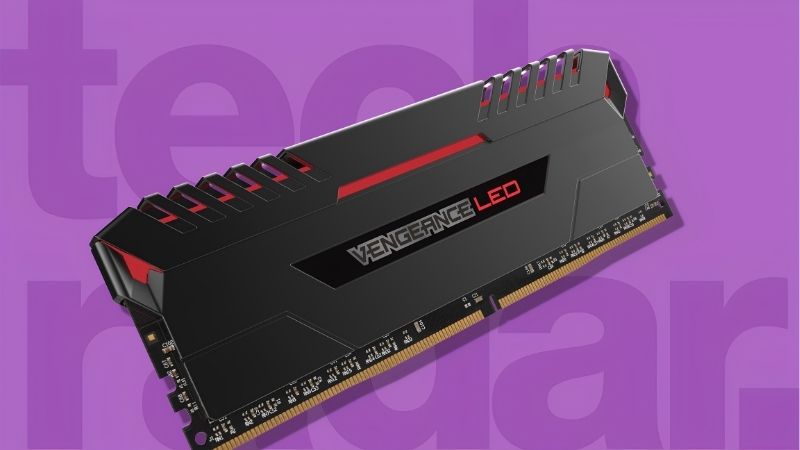
Samsung, SK hynix and Micron manufacture essentially all consumer DRAM between them. G.Skill, Corsair, Kingston, Teamgroup, Patriot and the rest buy those chips, mount them on their own circuit boards and build finished modules around them.
That means two kits from entirely different brands can contain identical silicon cut from the same wafer. Where the brands genuinely differ is in which grade of chip they buy, how carefully they sort it and what profile they validate on top of it.
Binning Is What You Actually Pay For
Chips vary in quality even within a single production run, and module makers test and sort them into grades. Premium kits use the chips that reach tight timings at high frequency reliably, while budget kits are built from the remainder.
This is why a 6000 CL30 kit costs more than a 6000 CL36 kit containing chips from the same production run. You are paying for the sorting, the validation work and the reasonable confidence that the profile will train first time on your board.
Board Validation Separates the Brands
A memory profile only works reliably if the module maker has tested it against your specific motherboard model. Corsair and Kingston validate across the widest range of boards in the industry, while smaller brands necessarily cover a much narrower list.
Check your motherboard’s qualified vendor list, or the kit’s own compatibility page, before buying from a less common brand. A premium kit that will not train its profile is worse than a cheaper kit that does so reliably.
Warranty and Availability Matter Over Time
Most reputable memory carries a lifetime warranty, which is genuinely useful because modules do occasionally fail several years into service. What differs between brands is how straightforward the claim process is and whether the exact kit is still in production when you need a replacement.
Buying from a brand with broad distribution also makes it easier to source a matching kit later, though buying the full capacity up front remains far more reliable than planning to expand a build afterwards.
What the 2026 Market Means for Memory Brands
Supply conditions have changed the calculation between brands this year, and three developments matter for anyone trying to pick the best brand of RAM for gaming right now.
Chip Supply Is the Binding Constraint
TrendForce raised its DRAM forecast again for the second half of 2026, and no new fabrication capacity arrives before late 2027. SK hynix has reportedly sold out its 2026 output entirely.
When chips are scarce, module makers take what they can get, which means the die inside a given kit can change between production batches without notice. Two kits carrying the same part number may not overclock identically as a result.
Availability Now Matters More Than Brand Preference
With supply tight across the whole category, insisting on one particular brand can mean paying a noticeable premium or simply waiting for stock. The practical approach is to shop by specification and board validation rather than by the name on the heat spreader.
A Kingston kit at 6000 CL36 available today beats a G.Skill kit at 6000 CL30 that is out of stock or heavily marked up, because the real-world difference between the two is a fraction of a percent in actual games.
Seasonal Sales Will Not Change This
Memory sold in November was manufactured from chips bought at 2026 contract rates, so genuine reductions are unlikely regardless of brand. The usual advice to wait for a sale does not apply here.
Coolers, fans and cases still see real discounts in that window. If your build needs memory, buy the best-validated kit available at the right specification rather than delaying for a market movement the supply chain does not support.
Top Picks: Best Brand of RAM for Gaming by What It Adds
These are chosen for validation breadth, profile reliability and warranty rather than for the logo, since that is where the best brand of RAM for gaming genuinely differs. Confirm your board takes DDR5 or DDR4 before ordering.
| Kit | Brand Strength | Speed | Profile | Warranty |
|---|---|---|---|---|
| G.Skill Trident Z5 Neo RGB | Tight binning | DDR5-6000 CL30 | EXPO | Lifetime |
| Corsair Vengeance | Widest validation | DDR5-6000 CL30 | EXPO and XMP | Lifetime |
| Kingston Fury Beast | Broad compatibility | DDR5-6000 CL36 | XMP | Lifetime |
| Teamgroup T-Create Expert | Low profile design | DDR5-6000 CL30 | EXPO | Lifetime |
| Crucial Pro | Micron in-house dies | DDR5-5600 | XMP | Limited lifetime |
| Patriot Viper Venom | Value binning | DDR5-6000 CL30 | XMP | Lifetime |
G.Skill Trident Z5 Neo RGB
G.Skill’s reputation rests on binning quality, and the Neo line is sorted specifically for AMD EXPO at 6000 CL30. In practice that means the advertised profile trains first time on the great majority of AM5 boards without any manual intervention.
You pay a clear premium for that sorting work, and the performance gap against a looser kit is small once you are actually gaming. Tall heat spreaders also conflict with large air coolers, so check the clearance figure before ordering.
Corsair Vengeance
Corsair’s advantage is validation breadth rather than raw performance. Vengeance kits are tested against more motherboards than almost anything else on the market, and the dual EXPO and XMP profiles mean the same kit works on either platform without a second thought.
The chips inside are bought from the same three manufacturers as everyone else uses, so this is not a performance argument at all. It is a reliability and flexibility one, which for most builders is considerably more useful.
Kingston Fury Beast
Kingston covers an unusually wide range of boards and price points, which makes Fury Beast the low-risk choice whenever you are unsure about compatibility with a particular motherboard. The 6000 CL36 specification is the sensible value point in the current market.
Looser timings mean less tuning headroom than a tightly binned kit offers, so this is memory to enable the profile on and then leave alone entirely. That suits the great majority of builders perfectly well.
Teamgroup T-Create Expert
The T-Create line’s genuine advantage is a properly low-profile heat spreader that clears any air cooler, combined with EXPO validation at 6000 CL30. That particular combination is considerably rarer on the market than it should be.
Teamgroup’s board validation list is narrower than Corsair’s or Kingston’s, so check your specific motherboard model rather than assuming. Availability is also less consistent than the larger brands.
Crucial Pro
Crucial is Micron’s own consumer brand, which makes it the one name on this list that genuinely manufactures the chips inside its modules. That vertical integration usually translates into competitive pricing and more consistent supply than the resellers manage.
The trade is that Crucial targets reliability rather than enthusiast performance, so speeds and timings sit below the sweet spot and tuning headroom is minimal at best. It is a dependable choice rather than a fast one.
Patriot Viper Venom
Patriot reaches the 6000 CL30 specification at a lower price than the better-known brands, which makes it the value pick for anyone who wants sweet-spot timings without paying for premium branding on the heat spreader.
Validation coverage is narrower and support is less established than the larger names, so confirm your board appears on the compatibility list first. Availability also fluctuates more than the major brands, particularly under current supply conditions.
Frequently Asked Questions
These questions come up whenever builders realise the best brand of RAM for gaming is not the company that actually manufactured the chips inside.
Does the memory brand affect gaming performance?
Barely, at the same specification. Two 6000 CL30 kits from different brands will land within run-to-run variance. What the brand affects is binning quality, board validation and how reliably the profile trains first time.
Which company actually makes memory chips?
Samsung, SK hynix and Micron make essentially all consumer DRAM. Every module brand buys from those three, sorts the chips, designs the circuit board and sets the profile. Crucial is the exception, since it is Micron’s own brand.
Do I need to check the die inside a kit?
Only if you plan to tune timings manually. For anyone enabling EXPO or XMP and leaving it alone, the die matters far less than whether the profile is validated for your board. Dies also change between production batches.
Is a lifetime warranty on memory meaningful?
Reasonably so. Modules do occasionally fail years into service, and most reputable brands cover that. The practical differences are how straightforward the claim process is and whether the identical kit is still in production.
See More:
- Who makes the best motherboard
- Best budget AM5 CPU for gaming
- What is the best thermal paste pattern
- Best mini ITX computer case
- Best desktop RAM for gaming
Final Thoughts
The best brand of RAM for gaming is whichever one has validated the right specification against your motherboard and has it in stock. Samsung, SK hynix and Micron make the chips regardless of the logo, so the brand is buying you binning, validation and support rather than faster silicon. Corsair and Kingston lead on compatibility breadth, G.Skill leads on binning quality, and Crucial is the only one on the list actually making its own memory dies. Figures reflect August 2026 and should be verified before purchase.

Write Your Review
No reviews yet. Be the first to share your experience!