
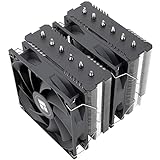
- Top Pick: Thermalright Peerless Assassin 120 SE CPU Cooler, 6 Heat Pipes AGHP Technology, Dual 120mm PWM Fans, 1550RPM Speed, for AMD:AM4 AM5/Intel LGA 1700/1150/1151/1200/1851,PC Cooler
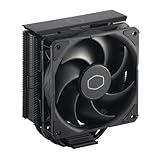
- Best Value: Cooler Master Hyper 212 Black CPU Air Cooler, 4 Heat Pipes, PWM Fan
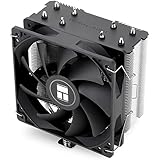
- Premium Choice: Thermalright Peerless Assassin 120 Vision MAX ARGB Black CPU Air Cooler, Twin Tower Radiator 2150RPM,480×854 Resolving Power IPS Screen with 5’’,Computer Cooler for Intel lga1851/1700/115x,AM4/AM5
Best air cooled CPU cooler choices have kept pace with processors that now draw 200W or more under load, and a good tower still matches a 240mm radiator on many chips. This guide covers the clearance numbers that decide whether a cooler fits, and which models genuinely handle current high-power processors.
As an Amazon Associate we earn from qualifying purchases at no extra cost to you. Product prices and availability are accurate as of the date shown and are subject to change.



As an Amazon Associate we earn from qualifying purchases at no extra cost to you. Product prices and availability are accurate as of the date shown and are subject to change.
By Ryan Cole
How to Choose the Best Air Cooled CPU Cooler
Selecting the best air cooled CPU cooler is mostly a fitment exercise once you know the power your processor draws. Three measurements decide whether a cooler works in your case, and one decides whether it works at all.
Height Clearance and Case Compatibility
Large towers run between 155mm and 168mm tall, and most mid-towers accept up to around 165mm. Check your case specification rather than assuming, because a cooler that fouls the side panel by two millimetres is a returned purchase.
Compact cases are stricter still, often limiting height to 70mm or less. In those builds a low-profile cooler or an all-in-one is the only realistic route, and a full tower simply will not go in.
Weight is the other constraint people overlook. Flagship towers exceed a kilogram, which puts real stress on the board when a system is moved, so transport it with the cooler removed or the case lying flat.
Memory Clearance and Fan Position
Dual-tower coolers overhang the first memory slot on many boards. Manufacturers publish a memory height limit, typically around 32mm for the front fan position, and tall heatspreaders on RGB kits routinely exceed that.
The usual workaround is raising the front fan, which restores clearance but costs a small amount of performance and may push the total height past your case limit. Low-profile memory avoids the problem entirely.
Some coolers also overhang the top graphics slot on compact boards. That rarely matters on a standard ATX layout, but on micro-ATX it can interfere with a thick card, so check the board layout before ordering.
Heatpipes, Fin Density and Rated Capacity
Six or seven heatpipes is the mainstream configuration for a capable tower, and more pipes generally move more heat provided the fin stack is large enough to dissipate it. Published TDP ratings are useful for comparison but vary in how they are measured.
Fin density interacts with fan choice. Dense stacks need higher static pressure to push air through, which is why coolers designed around specific fans often underperform when those fans are swapped for quieter ones.
Base finish matters too. A flat, well-machined contact surface transfers heat more consistently than an aggressive convex base, particularly on the larger heatspreaders used by current sixteen-core processors.
Air Versus an All-in-One
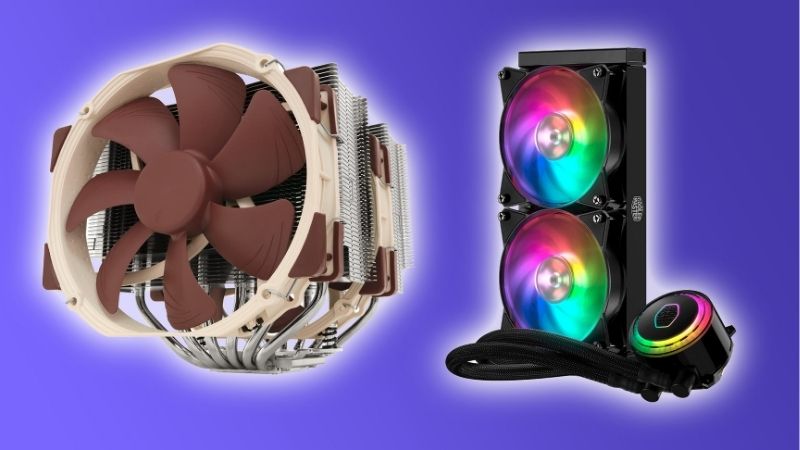
A large air cooler matches a 240mm radiator on most processors and beats it on reliability, since there is no pump to fail and no coolant to permeate. It also survives a decade with nothing more than a fan replacement.
All-in-ones win on clearance and on the very hottest chips, where a 360mm radiator has more surface area than any tower can carry. They also move heat away from the memory and power delivery area, which suits compact boards.
Noise is closer than people assume. A radiator adds pump noise that a tower does not have, and at equivalent cooling performance a large air cooler is frequently the quieter of the two options.
Top Picks: Best Air Cooled CPU Cooler Models
These six span budget towers through to flagship dual-tower designs. Specifications are manufacturer-published as of August 2026, and all support current AM5 and LGA 1851 sockets.
| Cooler | Height | Design | Heatpipes | Best For |
|---|---|---|---|---|
| Noctua NH-D15 G2 | 168 mm | Dual tower | 8 | Maximum air performance |
| be quiet! Dark Rock Pro 5 | 168 mm | Dual tower | 7 | Quiet high-power builds |
| Thermalright Phantom Spirit 120 SE | 154 mm | Dual tower | 7 | Value flagship performance |
| DeepCool AK620 | 160 mm | Dual tower | 6 | Balanced mid-range |
| Noctua NH-U12A | 158 mm | Single tower | 7 | Memory clearance |
| Thermalright Peerless Assassin 120 SE | 155 mm | Dual tower | 6 | Budget builds |
Noctua NH-D15 G2 – Best Overall Performance
Eight heatpipes and a redesigned contact surface make this the best air cooled cpu cooler available outright, handling 200W processors comfortably while staying quiet. Noctua ships socket-specific offset variants to match AMD and Intel die positions.
At 168mm it is at the limit of what many mid-towers accept, and it is heavy enough that transporting the system with it installed needs care. The price also sits well above every alternative here.
be quiet! Dark Rock Pro 5 – Quietest High-Capacity Tower
Seven heatpipes with a brushed aluminium cap and carefully tuned fans make this the quietest cooler in its performance class. The revised mounting system is considerably easier to work with than earlier generations.
It shares the same 168mm height constraint and overhangs memory slots on most boards. Performance trails the Noctua slightly under sustained all-core loads, which is the price of the quieter fan profile.
Thermalright Phantom Spirit 120 SE – Best Value Flagship
Seven heatpipes and a dual-tower design at a fraction of the premium price, landing within a few degrees of coolers costing three times as much. For most builders this is where the sensible money goes.
The included fans are louder than the premium alternatives at equivalent speeds, and the mounting hardware feels less refined during installation. Neither undermines the value, but both are noticeable side by side.
DeepCool AK620 – Balanced Mid-Range Choice
Six heatpipes in a compact dual-tower layout with a clean matte finish, handling mid-range processors comfortably at 160mm tall. It is one of the easier large coolers to install thanks to a straightforward bracket design.
It runs out of headroom on the very hottest sixteen-core chips under sustained load. Memory clearance is also tight, so check heatspreader height before pairing it with a tall kit.
Noctua NH-U12A – Best Memory Clearance
A single 120mm tower with seven heatpipes, this avoids the memory overhang that plagues dual-tower designs while still performing close to much larger coolers. For boards with tall memory or crowded layouts, it solves the problem.
You pay a premium for a cooler that is smaller than its rivals, and it cannot match the true flagships on the hottest processors. The colour scheme also has no lighting option.
Thermalright Peerless Assassin 120 SE – Best Budget Option
Six heatpipes and dual towers at a genuinely low price, comfortably handling mid-range processors that would overwhelm a stock cooler. It has become the default budget recommendation for good reason.
Fan noise at higher speeds is the main compromise, and the finish is plainer than more expensive alternatives. Mounting hardware is functional but fiddly compared with premium brands.
Why Air Cooling Makes Sense in 2026
Component pricing and platform roadmaps both favour buying the best air cooled cpu cooler you can fit rather than treating cooling as an afterthought.
Cooling Parts Still Discount Normally
While memory and storage climbed steeply through 2026, coolers, fans and cases stayed close to normal pricing with genuine seasonal reductions and manufacturer increases in the single digits.
That makes November a legitimate time to buy, unlike storage where sale stock carries elevated contract costs. If you are assembling a build gradually, this is a component worth waiting on for a discount.
A Cooler Outlives the Processor
AMD confirmed that AM5 will keep receiving processors through 2029, so a cooler and bracket bought today will carry over to future chips without replacement. Air coolers have no pump or coolant to degrade over that timescale.
That reframes the price. Spreading the cost of a flagship tower across two or three processor generations makes it considerably more reasonable than judging it against a single build.
Cheap Upgrades Still Deliver Real Results
With graphics pricing elevated and nothing new arriving before CES in January 2027, more builders are extending the life of current hardware. Replacing a stock or tired cooler is among the few changes that produces immediate gains.
A processor running eight degrees cooler holds boost clocks longer and lets the whole system run at lower fan speeds. On a machine several years old, that is the best value upgrade available.
Frequently Asked Questions
The best air cooled cpu cooler debate usually produces these, from builders deciding between a tower and a liquid cooler.
Is the best air cooled cpu cooler as good as a 360mm AIO?
Not quite on the hottest processors, where the larger radiator has more surface area to work with. On mid-range chips the gap is small, and air wins on reliability since there is no pump to fail or coolant to permeate.
Will a large tower fit with tall memory?
Dual-tower coolers typically limit memory height to around 32mm in the front fan position, which many RGB kits exceed. Raising the fan restores clearance at a small performance cost, or you can choose a single-tower design instead.
How long does an air cooler last?
The heatsink itself effectively lasts indefinitely, and quality fans carry ratings above 100,000 hours. A fan replacement after many years is the only maintenance beyond periodic dust removal and an occasional repaste.
Do I need to replace the cooler when I upgrade the processor?
Usually not, provided the socket is supported. Most manufacturers supply free or low-cost brackets for new sockets, and because AM5 will receive chips through 2029, an AM5 cooler bought today has a long useful life ahead.
See More:
- Best 4TB NVMe SSD
- Best thermal grizzly paste
- Best thermal paste for 7800X3D
- Best CPU case fans
- Best motherboard for gaming computer
Final Thoughts
The best air cooled CPU cooler for most builds is the Phantom Spirit 120 SE, which delivers close to flagship performance at a fraction of the cost. The NH-D15 G2 remains the outright performance leader, the Dark Rock Pro 5 is the quiet alternative, and the NH-U12A solves memory clearance problems. With cooling parts still discounting normally and AM5 supported through 2029, a good tower is a purchase that keeps paying back.


Write Your Review
No reviews yet. Be the first to share your experience!