
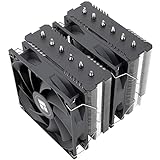
- Top Pick: Thermalright Peerless Assassin 120 SE CPU Cooler, 6 Heat Pipes AGHP Technology, Dual 120mm PWM Fans, 1550RPM Speed, for AMD:AM4 AM5/Intel LGA 1700/1150/1151/1200/1851,PC Cooler
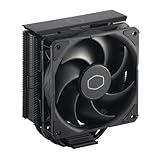
- Best Value: be quiet! Pure Rock 3 Black CPU Air Cooler | 4 High Performance 6mm Heat Pipes with HDT Technology | 120mm PWM Fan | AMD:AM4 AM5/Intel LGA 1700/1150/1151/1200 | Black | BK039
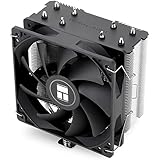
- Premium Choice: Thermalright Assassin X120 Refined SE CPU Air Cooler, 4 Heat Pipes, TL-C12C PWM Fan, Aluminium Heatsink Cover, AGHP Technology, for AMD AM4/AM5/Intel LGA 1150/1151/1155/1200/1700/1851(AX120 R SE)
Best Quiet CPU Cooler shopping goes wrong when people compare headline dBA numbers instead of asking how the cooler behaves during a two-hour session. Noise is about fan size, fin density and how hard the fans have to work. Here are six options that stay quiet in real use.
As an Amazon Associate we earn from qualifying purchases at no extra cost to you. Product prices and availability are accurate as of the date shown and are subject to change.




As an Amazon Associate we earn from qualifying purchases at no extra cost to you. Product prices and availability are accurate as of the date shown and are subject to change.
By Ryan Cole, hardware writer at NVIDIAReview.
How to Choose the Best Quiet CPU Cooler for Your System
A quiet system is one where the fans rarely need to speed up, so the best quiet cpu cooler is usually one with more capacity than your processor strictly requires, left to idle slowly. Four factors decide how well that works in practice.
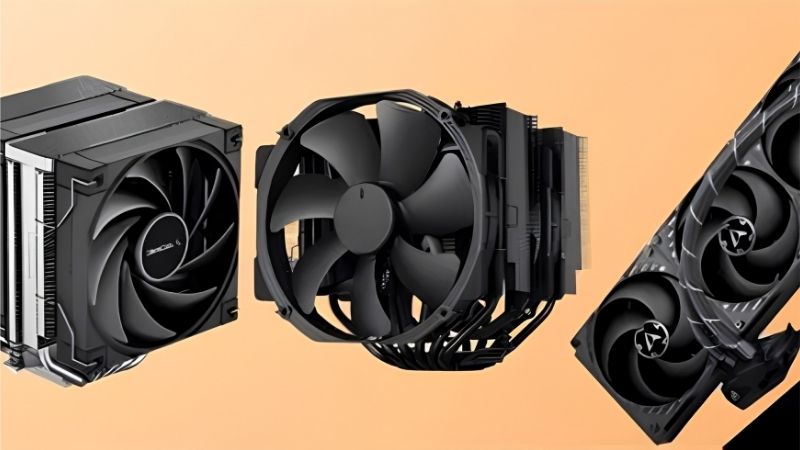
Fan Size and RPM Range Matter More Than Peak dBA
A 140 mm fan moving a given volume of air spins slower than a 120 mm fan doing the same job, and slower blades mean less turbulence noise. That is why the quietest towers use larger fans over a wide, gentle RPM band.
The bottom of the range is as important as the top. A fan that idles near 200 RPM disappears in a quiet room, while one with a minimum around 800 RPM is always faintly present regardless of what the rated maximum says.
Published dBA figures are lab measurements at a fixed distance and are only useful for comparing products from the same maker. Treat them as a ranking, never as a prediction of how a machine will sound on your desk.
Fin Density Changes How Hard the Fans Must Work
Dense fin stacks pull heat away efficiently but need static pressure to push air through, which forces fans to spin faster. Looser spacing does less per pass but lets a slow fan move air freely, which is often the quieter result.
Total fin area is the other half of the equation. A large dual-tower with moderate density can run its fans at half speed and still outperform a compact tower running flat out, which is the whole basis of quiet air cooling.
This is also why oversizing pays off acoustically. Buying a cooler rated well above your processor power means it spends nearly all its time in the quiet part of the fan curve.
Pump Noise and Coil Whine Change the AIO Equation
An all-in-one adds a sound source that an air cooler does not have. Pump whine sits in a narrow frequency band that many people find more irritating than broadband fan noise, even when the measured level is lower.
Most modern pumps can be set to a fixed lower speed in the BIOS or control software, which usually removes the complaint at a small thermal cost. Check whether the model you are buying allows that before assuming it does.
The Case, the Curve and the Mount Also Make Noise
A quiet cooler in a case with high-RPM stock fans achieves nothing. Deal with the loudest component first, then tune the CPU fan curve so it responds slowly rather than reacting to every short spike in temperature.
Mounting pressure matters too. Uneven contact raises temperatures, which makes fans ramp sooner, so a careful installation with fresh paste is part of the acoustic result rather than a separate concern.
Top Picks for the Best Quiet CPU Cooler in 2026
Contenders for the best quiet cpu cooler span an entry-level tower to a thick 360 mm loop. All figures are manufacturer-rated, and retail pricing at the time of writing in August 2026 shifts frequently, so use the tiers as your guide.
| Cooler | Type | Height / Radiator | Fans | Acoustic strength |
|---|---|---|---|---|
| be quiet! Dark Rock Pro 5 | Dual-tower air | 163 mm | 135 mm + 120 mm | Rated 270 W, low noise focus |
| Noctua NH-D15 G2 | Dual-tower air | 168 mm | 2 x 140 mm | Large fans, low-noise adapters |
| Noctua NH-U12A chromax.black | Single-tower air | 158 mm | 2 x 120 mm | Seven heatpipes in 120 mm width |
| be quiet! Pure Rock 2 FX | Single-tower air | 155 mm | 1 x 120 mm | Budget quiet option |
| Scythe Fuma 3 | Dual-tower air | 154 mm | 120 mm + 92 mm | Narrow body, good clearance |
| Arctic Liquid Freezer III 360 | 360 mm AIO | 38 mm thick rad | 3 x 120 mm P12 Pro | Wide 200-2000 RPM range |
be quiet! Dark Rock Pro 5
Seven heatpipes, a 163 mm stack and a Silent Wings pairing of 135 mm and 120 mm fans make this the reference point for quiet air cooling. Rated for 270 W, it has enough capacity to keep both fans well below maximum on most processors.
It is heavy, awkward to install around tall memory, and expensive for its raw thermal result. You are paying for acoustics and finish rather than the lowest possible temperature per pound spent.
Noctua NH-D15 G2
The eight-heatpipe layout and two 140 mm NF-A14x25r G2 fans give this cooler a large, slow-moving air path, and the included low-noise adapters cap the fans lower if you want near silence at some thermal cost. Warranty runs six years.
The 168 mm height rules out many mid-towers, and the price sits at the top of the air cooling market. There are also mounting-pressure variants, so confirm you are ordering the version matched to your socket.
Noctua NH-U12A chromax.black
This packs seven heatpipes and two NF-A12x25 fans into a 120 mm wide, 158 mm tall body. It clears tall memory that a dual-tower would block, and performs close to much larger coolers on mid-range chips while staying quiet.
Cost per degree is poor compared with value brands, and on a genuinely high-power processor it will run its fans harder than a bigger cooler would. It suits builds where clearance is the constraint.
be quiet! Pure Rock 2 FX
For a mainstream processor on a modest budget, this single tower with four heatpipes, a 155 mm height and one 120 mm fan covers the basics quietly, with addressable lighting for builds that want it visible.
Capacity is limited. Push it onto a chip pulling 150 W or more and the fan will spend its time near maximum, which defeats the purpose of buying a quiet-focused cooler in the first place.
Scythe Fuma 3
The Fuma 3 is an unusual dual tower: six heatpipes, a 154 mm height and an asymmetric 120 mm plus 92 mm fan pairing that leaves memory clearance most rivals cannot match. It runs quietly because it never needs to spin fast.
Availability is patchy in some regions, and the smaller front fan means slightly less total airflow than a symmetrical design. Mounting hardware is workable but not as refined as the premium brands.
Arctic Liquid Freezer III 360
If you need liquid cooling and quiet operation together, the wide 200 to 2,000 RPM fan range means this loop can idle very slowly, while the thick 38 mm radiator gives it capacity to stay there. Coverage runs six years.
The fans become clearly audible in the upper half of their range, and the pump is not silent. Roof clearance for a thick radiator plus fans is a real constraint in many mid-towers, so measure before buying.
What 2026 Pricing Means for Quiet Cooling Buyers
Cooling has stayed calmer than most PC categories this year, but three market shifts affect when to buy the best quiet cpu cooler for your system.
Entry-Level Quiet Options Are Getting Squeezed
Makers have concentrated on mid and upper tiers as budget demand fell, and cooler pricing has moved up in the region of six to eight percent alongside power supplies. Promotional pricing that supported cheap models was withdrawn in early 2026.
Because quiet cooling depends on buying extra capacity, that squeeze hits this category harder than most. The cheapest tower that is genuinely quiet now costs closer to the mid-range than it did two years ago.
November Discounts Are Real Here
Memory, drives and prebuilt systems are unlikely to see genuine Black Friday reductions this year, since stock was manufactured against high contract pricing. Coolers, fans, paste and cases remain a category with true markdowns.
If your machine is merely a little louder than you would like, waiting is sensible. If fan noise is already constant because the cooler cannot keep up, the saving is not worth months of it.
Quiet Upgrades Deliver More Than Waiting Does
No new processor or graphics generation is arriving before CES in January 2027, so there is nothing to hold out for. Replacing an undersized cooler or a set of screaming case fans changes daily use far more than a spec-sheet upgrade would.
Fresh thermal paste and a better fan curve cost almost nothing and often remove several degrees, which in turn keeps the fans in their quiet band for longer during ordinary workloads.
Frequently Asked Questions
These come up most often when someone is chasing a genuinely quiet machine rather than simply the best quiet cpu cooler on a spec sheet.
Is an AIO quieter than a good air cooler?
Not usually. A large air cooler has no pump, and pump whine is often the most noticeable sound in a quiet room. Liquid cooling wins on capacity and clearance, not on baseline noise.
Do low-noise adapters actually help?
Yes, they cap maximum fan speed and can make a loud cooler acceptable. You give up a few degrees under sustained load, which matters on a high-power chip but rarely on a mainstream one.
What noise level counts as quiet?
Perception depends on frequency as much as level, but most people stop noticing a system once it sits below the background noise of the room. A steady low hum is far less intrusive than a fan that constantly ramps up and down.
Will undervolting make my PC quieter?
Often, yes. Reducing voltage lowers heat output at the same clocks, so the fans stay slower. Curve Optimizer on AMD and offset undervolting on Intel are the usual routes, and both need stability testing afterwards.
See More:
- What Is the Best Thermal Paste
- Best PC Case Fans 120mm
- Thermal Paste Best Brand
- Best Thermal Paste Brands
- Best CPU Cooler Reddit
Final Thoughts
The best quiet cpu cooler for your build is almost always one size larger than the processor needs, fitted with the biggest fans the case allows and set to a gentle curve. Air wins on baseline noise because there is no pump; liquid wins when clearance or sustained power rules a tower out.


Write Your Review
No reviews yet. Be the first to share your experience!