
- Top Pick: ARCTIC Liquid Freezer III Pro 360 A-RGB – AIO CPU Cooler, Water Cooling
- Best Value: ARCTIC Liquid Freezer III Pro 360 – AIO CPU Cooler,3 x 120 mm Water Cooling
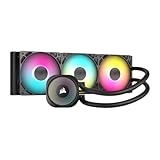
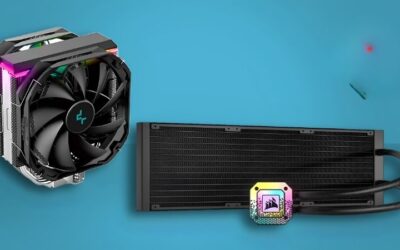
- Premium Choice: CORSAIR Nautilus 360 RS Liquid CPU Cooler – 360mm AIO – Low-Noise – Direct Motherboard Connection – Daisy-Chain – Intel LGA 1851/1700, AMD AM5/AM4 – 3X RS120 Fans Included – Black
Best water cooling CPU cooler choices split into two categories that almost nobody compares honestly: a sealed all-in-one you fit and forget, or a custom loop you maintain. This guide ranks six sealed units on pump longevity and warranty, and sets out what a loop genuinely costs.
As an Amazon Associate we earn from qualifying purchases at no extra cost to you. Product prices and availability are accurate as of the date shown and are subject to change.


As an Amazon Associate we earn from qualifying purchases at no extra cost to you. Product prices and availability are accurate as of the date shown and are subject to change.
By Ryan Cole
Choosing the Best Water Cooling CPU Cooler: AIO or Loop
The decision is about maintenance and risk rather than temperature, because a good sealed unit already cools better than most processors require. These four points cover what separates the two routes to a best water cooling CPU cooler setup.
Pump Life Is the Real Failure Mode
Sealed units fail at the pump far more often than they leak, and community reports cluster those failures around years two and three. A pump that stops is a processor that throttles hard within seconds, which is why warranty length matters here more than in most categories.
Arctic’s six-year coverage is the longest in the category, most premium brands sit at five, and budget units typically offer two or three. That difference maps almost exactly onto the risk window, which makes it more than a marketing number.
Custom Loops Trade Money and Time for Capacity
A loop lets you size the radiator area to the heat load and add the graphics card to the same circuit, which no sealed unit can do. It also costs several times as much once pump, reservoir, blocks, fittings and tubing are counted.
The ongoing commitment is real. Coolant needs replacing periodically, fittings need checking, and a build left untouched for years will grow biological deposits inside the blocks. Treat a loop as a hobby rather than as a cooling upgrade.
Permeation and Top-Up on Sealed Units
Sealed AIOs slowly lose coolant through the tubing over years, which is normal rather than a defect. The effect is gradual and most units have enough volume to tolerate it for their warranty period.
A few premium models include a fill port so coolant can be topped up, which extends useful life considerably. That feature is worth seeking out on a machine you intend to keep for five years or more.
Software, Cables and What You Actually Want
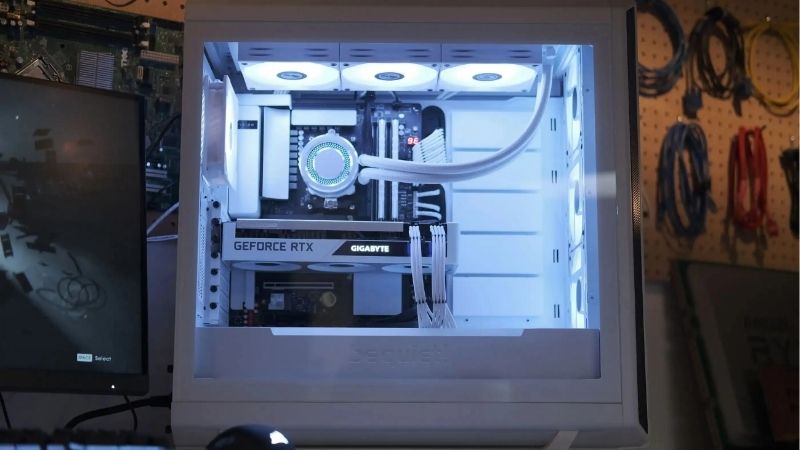
Ecosystem coolers reduce a tangle of fan and lighting cables to a single connection, which genuinely improves a glass-panel build. The cost is dependence on the vendor’s software, which not everyone wants running.
If you would rather avoid that, several strong units ship with daisy-chained fans and no software requirement at all. Decide this before choosing a model, because it is difficult to work around once the cooler is installed.
What the 2026 Market Means for Water Cooling
Three market conditions affect how much of a build budget belongs on cooling this year, and two argue for spending here, which changes what the best water cooling CPU cooler is worth paying for.
Cooling Upgrades Still Deliver Real Gains
With graphics card prices elevated, improving hardware you already own is the practical route to better performance. A better cooler, fresh compound, extra case fans and a decent power supply all produce measurable results.
Moving from a stock cooler to a capable liquid unit frequently restores boost clocks that had been throttling under sustained load. That shows up as steadier frame rates rather than a higher benchmark peak.
Cooling Parts See Genuine Seasonal Discounts
Memory and pre-built systems will not fall meaningfully this November, since that stock uses components bought at this year’s elevated contract prices. Coolers, fans, cases and power supplies remain a different picture.
Buying the cooler alongside compound and replacement fans during a sale is sensible planning. The savings are modest in absolute terms, so do not delay a build that needs the parts today.
Entry Pricing Has Crept Upward
Component vendors moved their ranges upward through 2026 and promotional pricing ended in February. The cheapest credible sealed unit now sits slightly higher than it did two years ago.
That strengthens the case for a good air tower at the bottom of the market, and it makes warranty length a more important part of the value calculation on anything you do buy at the entry level.
Top Picks: Best Water Cooling CPU Cooler Units Ranked
These are ranked on cooling capacity, pump reputation and warranty together, since the best water cooling CPU cooler is the one still running in year four. Confirm radiator clearance against your case before ordering.
| Cooler | Radiator | Warranty | Software Required | Standout Feature |
|---|---|---|---|---|
| Arctic Liquid Freezer III Pro 360 | 360mm, 38mm thick | 6 years | No | Longest coverage |
| Corsair iCUE Link Titan 360 RX | 360mm | 5 years | Yes | Single-cable routing |
| NZXT Kraken Elite 360 | 360mm | 6 years | Yes | 2.7in IPS display |
| EK Nucleus CR360 Lux | 360mm | 5 years | No | Custom-loop pedigree |
| Corsair Nautilus 360 RS | 360mm | 5 years | No | Quiet, no lighting |
| Lian Li Galahad II Trinity 360 | 360mm | 5 years | Optional | Best RGB execution |
Arctic Liquid Freezer III Pro 360
The Pro 360 leads on the two things that matter most over five years: thermal capacity and warranty. A 38mm radiator and an integrated VRM fan put it at the top of independent testing, and six years of coverage spans the usual pump failure window.
Arctic does not offer a display on any model, so buyers who specifically want a screen have to look elsewhere. The thick radiator also needs more clearance than standard units and can foul memory slots in tighter mid towers.
Corsair iCUE Link Titan 360 RX
The Titan’s argument is cable management. One connection to a hub replaces three fan cables, three lighting cables and a pump lead, which transforms the back of a glass-panel build.
That convenience requires the iCUE software running permanently, which many builders would rather avoid. Thermal performance is competitive rather than leading, and the ecosystem lock-in becomes an issue if you later want to mix fan brands in the same case.
NZXT Kraken Elite 360
The 2.7-inch IPS panel on the pump head is the largest and most usable display in the category, showing temperatures, clocks or custom images at a size that is actually readable from across a desk.
It costs considerably more than the value leaders for cooling that is good rather than exceptional, and the display depends on NZXT CAM running in the background. If the screen is not the specific reason you are buying, look elsewhere.
EK Nucleus CR360 Lux
EK’s background in custom loops shows in the block design and build quality, and the Nucleus is the natural pick for someone who may later expand into a proper loop using compatible components.
It is priced above its raw thermal performance, and the value units clearly beat it on temperature per dollar spent. Buy it for the engineering quality and the eventual upgrade path into a full loop rather than for its benchmark position.
Corsair Nautilus 360 RS
The Nautilus strips out the lighting, the screen and the software requirement, leaving a quiet unit with daisy-chained fans and a single header connection. For a stealth build it is the cleanest option here.
Thermal headroom is meaningfully smaller than the Arctic units, so it is not the pick for a 170W processor under sustained load. It also lacks the iCUE Link cable consolidation of its more expensive sibling.
Lian Li Galahad II Trinity 360
If lighting is half the reason you are building, this is the unit that earns it. The infinity mirror effect on the pump head and fans is the best-executed RGB in the category, and it cools competently as well.
It costs more than the value leaders and sits behind them on temperature. Software is optional but the lighting is much less impressive without it, which slightly undermines the no-software argument.
Frequently Asked Questions
These questions come up whenever builders weigh a sealed best water cooling CPU cooler against building a proper custom loop instead.
Is a custom loop worth building?
Only if you want the hobby. A loop costs several times more once pump, reservoir, blocks, fittings and tubing are counted, and it needs coolant changes and periodic checks. Its real advantage is adding the graphics card to the same circuit.
How long does an AIO pump last?
Most last well beyond warranty, but reported failures cluster around years two and three. That is why coverage length matters here more than in most categories, and why a six-year warranty is worth paying a little for.
Do sealed coolers leak?
Rarely. Pump failure is far more common than leakage in modern units. Slow coolant loss through the tubing over years is normal rather than a defect, and a few premium models include a fill port to top it up.
Is liquid cooling quieter than air?
Usually, at 360mm and above, because the larger radiator lets the fans run slower for the same temperature. A 240mm unit is often louder than a good air tower, since the pump adds a constant noise floor that a tower simply does not have.
See More:
- Who makes the best motherboard
- Best budget AM5 CPU for gaming
- What is the best thermal paste pattern
- Best mini ITX computer case
- Best desktop RAM for gaming
Final Thoughts
The best water cooling CPU cooler for almost everyone is a sealed 360mm unit with a long warranty, and the Arctic Liquid Freezer III Pro 360 wins on both counts. Choose the Titan for cable management, the Kraken Elite for a genuinely useful display, and the Nautilus for a quiet build with no software. Custom loops are a hobby with real ongoing costs rather than a straightforward cooling upgrade, and they only make sense if you also intend to bring the graphics card into the same circuit. Figures reflect August 2026 and should be verified before purchase.




Write Your Review
No reviews yet. Be the first to share your experience!