
Nvidia DGX H100 price is the number that stops most procurement conversations cold, and if you are building the business case for an AI training system, you need a clear picture of what that figure actually buys. A DGX H100 is not a graphics card; it is a complete, turnkey supercomputer in a box, and its price reflects eight top-tier GPUs plus everything needed to run them at scale. This guide lays out the real cost range, what drives it, how it compares to alternatives, and whether the DGX H100 price makes sense for your organization in 2026.
As an Amazon Associate we earn from qualifying purchases at no extra cost to you.


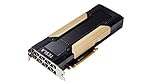

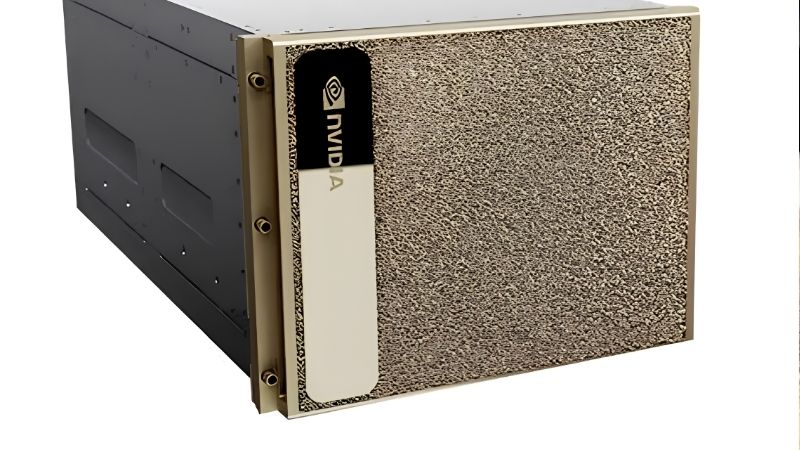
What the Nvidia DGX H100 Price Includes
The first mistake buyers make is comparing the DGX H100 price to the cost of loose GPUs. That comparison misses the point, because the system bundles compute, networking, memory, and software into a validated platform. Understanding the full package is the only way to judge whether the price is fair.
Eight H100 GPUs and 640 GB of Memory
At its core, a DGX H100 carries eight H100 SXM5 GPUs with 80 GB of HBM3 each, for 640 GB of pooled GPU memory. Those GPUs are linked by four NVSwitch chips delivering roughly 3.6 TB/s of bisection bandwidth, so all eight behave far more like one giant accelerator than eight separate cards.
For inference and training alike, that pooled 640 GB is the practical unlock. Models and activations that would never fit on a single 80 GB card spread across all eight GPUs with minimal penalty, which is the whole reason organizations reach for a DGX instead of a rack of loose cards.
That interconnect is the heart of the value. For large-model training, the ability to move data between GPUs at that speed is what lets the system scale efficiently, and it is impossible to replicate by bolting consumer cards together.
The Complete System, Not Just Cards
Beyond the GPUs, a DGX H100 includes dual Intel Xeon Platinum CPUs, around 2 TB of system memory, high-speed NVMe storage, and integrated NDR InfiniBand networking for connecting multiple systems into a cluster. It ships with Nvidia’s validated software stack and enterprise support.
For a data-center architect, that integration is the quiet part of the price. Buying, validating, and supporting all of these components separately consumes engineering months, and the DGX bundle converts that risk and labor into a single line item with one vendor to call.
Support is the underrated line item. Enterprise-grade service, firmware validated as a unit, and a single point of accountability mean that when something fails mid-training-run, you have a defined path to resolution rather than a finger-pointing exercise between component vendors.
Typical Price Range and What Drives It
A single DGX H100 system has commonly been quoted between $300,000 and $500,000 depending on configuration, reseller, and support terms. Volume orders, cluster networking, and service contracts move the number within and beyond that band.
The analytical drivers are straightforward: the eight H100 GPUs dominate the bill, followed by the NVSwitch fabric, high-speed memory, and networking. When you see the DGX H100 price, you are mostly looking at the current market value of Hopper-class silicon multiplied by eight, plus the integration premium.
Because GPUs dominate the bill, the DGX H100 price moves with the Hopper market rather than with Nvidia’s branding. When you evaluate a quote, treat the GPU value as the anchor and judge whether the integration, networking, and support premium on top is worth it for your team’s staffing and risk tolerance.
It also helps to separate capital cost from operating cost. The DGX H100 price is the visible number, but power, cooling, networking, and staff time form an operating cost that runs for years, and a realistic total-cost view often changes which option actually looks cheapest.
Is the DGX H100 Price Worth It vs Alternatives?
The price only makes sense in comparison to how else you could get the same compute. For most organizations the real decision is between a DGX, a self-built HGX server, and renting cloud capacity, and each answers a different question about control, speed, and cash flow.
DGX vs Building Your Own HGX Server
OEM HGX H100 servers use the same eight-GPU baseboard and can cost less than a branded DGX, which tempts teams to build their own. The trade-off is that you take on integration, validation, driver support, and troubleshooting, and any downtime becomes your problem to solve.
For a well-staffed infrastructure team, an HGX build can genuinely lower cost per node. For everyone else, the DGX H100 price includes an insurance policy against the weeks of engineering time a self-build can quietly consume.
There is also a standardization angle. DGX systems are a known quantity that many data centers and clouds are built around, which can simplify support contracts and future expansion compared to a bespoke server only your own team fully understands.
DGX vs Cloud Rental
Renting eight-GPU instances avoids the capital outlay entirely, which is ideal for short projects or unpredictable demand. The practical math flips once utilization is high: a system you run around the clock for a year or more often costs less to own than to rent over the same period.
The break-even point is the decision. If your GPUs will sit near full utilization continuously, owning a DGX usually wins on total cost; if usage is spiky, cloud keeps you flexible and preserves cash.
A blended strategy is common and sensible. Many teams own a DGX for steady baseline training and burst into the cloud for peak demand, capturing ownership savings on predictable load while keeping the flexibility to scale up without buying more hardware than they can keep busy.
Watch the hidden cloud costs too. Data egress, storage, and premium on-demand rates can inflate a rental bill well beyond the headline hourly price, so compare fully loaded costs, not just the advertised instance rate, when weighing cloud against owning a DGX.
Power, Cooling, and Data Center Requirements
A DGX H100 draws up to roughly 10.2 kW at full load, which is a serious facilities commitment. You need appropriate power delivery, redundant cooling, and rack space rated for that density before the system arrives, or the hardware sits idle waiting on the building.
This is the practical cost that never appears on the quote. Budget for power distribution and cooling upgrades alongside the DGX H100 price, because a deployment that ignores facilities is the most common reason a rollout slips its timeline.
Plan for the full cluster, not one box. If your roadmap includes multiple DGX systems connected over InfiniBand, the networking, cooling, and power engineering compound quickly, so involve your facilities team before the first purchase order rather than after delivery.
Buying a DGX H100 in 2026: Market Forces and Verdict
Hardware this expensive is bought against a moving market, and two developments in 2026 directly shape both availability and price. Understanding them helps you decide whether to lock in an order now or gamble on better terms later.
How the H200-to-China Decision Affects Hopper Supply and Price
The United States has moved to permit Nvidia to sell the H200, one of its most powerful AI chips, into China. Because the DGX H100 shares the Hopper generation and its HBM3 supply chain, that policy shift adds a large new source of demand to the same pool of parts your DGX draws from.
The lesson for buyers is practical rather than alarmist: when scarce Hopper-class silicon gains a huge new market, assuming prices will soften and supply will loosen is a risky bet. If your roadmap already needs the capacity, competing global demand argues for securing allocation early.
For procurement teams the analytical read is simple. Global demand for Hopper-class systems is broad and growing, and lead times on validated platforms like the DGX H100 can stretch, so building slack into your delivery timeline protects your schedule far more than chasing a hypothetical future discount.
Memory Costs and Why Prices Are Not Falling Soon
The broader memory market is the second force holding the DGX H100 price up. Component prices spiked through late 2025 and have since only leveled off, which is relief but not a reduction. A system stacked with high-bandwidth memory is fully exposed to those costs.
New supply is coming, with OEMs able to source DDR5 from vendors such as CXMT and Micron building two Idaho plants, but those fabs will not reach volume until 2027 to 2028. In short, prices have stopped climbing while real relief remains years out, so waiting for a large discount is optimistic budgeting.
Component prices trending upward across the board reinforce this. When memory, boards, and systems all drift higher, the safest financial assumption for a multi-hundred-thousand-dollar purchase is that today’s quote is close to the best you will see for a while.
DGX H100 Pros and Cons
The ownership picture, distilled for a fast decision.
Pros: eight H100 GPUs with 640 GB pooled memory and NVSwitch fabric; validated, turnkey platform with enterprise support; strong total cost of ownership at high utilization; a single vendor accountable for the whole stack.
Cons: very high upfront DGX H100 price; heavy facilities demands near 10.2 kW; cheaper per-node if you self-build an HGX server with skilled staff; supply and pricing pressured by strong global Hopper demand.
The recurring theme in buyer accounts is that satisfaction tracks utilization. Organizations that keep a DGX H100 busy rarely regret the price, while those that bought ahead of demand and let it idle feel the cost most sharply. Buy to a real workload, not to a roadmap hope.
See More:
Final Verdict: Is the Nvidia DGX H100 Price Justified?
For organizations that will run their GPUs at high utilization and want a supported, ready-to-run platform without spending engineering months on integration, the Nvidia DGX H100 price is justified by the time, risk, and reliability it buys. For teams with strong infrastructure staff and tight budgets, a self-built HGX server can deliver similar compute for less, and for spiky workloads, cloud rental remains the smarter cash decision.
Whichever path you choose, the deciding number is utilization, not the sticker on the quote. Model your expected GPU-hours honestly, compare owning against renting over three years, and the right answer for your organization usually becomes obvious, and the DGX H100 price stops looking like a single intimidating number and starts looking like one planned line in a multi-year budget.
If a DGX fits your plan, current supply pressure and a stubborn memory market both favor acting sooner rather than waiting. Check the latest Nvidia DGX H100 price, configurations, and lead times through the link below and secure your allocation before demand tightens further.
Top-Rated Picks


| Product | Brand | Rating | Reviews | Price |
|---|---|---|---|---|
| ARCTIC MX-4 (4 g) – Premium Performance Thermal Paste… | ARCTIC | ★ 4.8 | 104k | $4.99 |
| ARCTIC MX-4 (incl. Spatula, 4 g) – Premium Performanc… | ARCTIC | ★ 4.8 | 71.9k | $5.49 |
| Crucial 8GB DDR4 RAM 3200MHz (PC4-25600), Downclockab… | Crucial | ★ 4.8 | 62.8k | $74.99 |
| AMD Ryzen 5 5600X 6-core, 12-thread unlocked desktop … | — | ★ 4.8 | 30.2k | $177.60 |
| NVIDIA Shield Remote; Voice Search, Motion-Activated,… | — | ★ 4.7 | 10.6k | $25.99 |
Frequently Asked Questions
What is actually included in a DGX H100 system?
The base unit is an 8U server with eight SXM5 H100 GPUs totalling 640GB of HBM3, four NVSwitch chips for full all-to-all GPU bandwidth, dual Intel Xeon CPUs, 2TB of system memory, NVMe storage and ConnectX-7 networking. The price also bundles NVIDIA AI Enterprise software entitlement and Base Command, which many buyers overlook when comparing quotes.
Why does it cost several times the price of eight loose H100s?
The NVSwitch fabric, the validated eight-GPU baseboard, the 10kW power and cooling design, the InfiniBand adapters and the enterprise support contract are all bundled. Buying eight PCIe H100s separately gives you far less inter-GPU bandwidth, which cripples large-model training where gradients must be exchanged every step.
What power and rack requirements should I plan for?
A DGX H100 draws roughly 10.2kW at peak, needs 200-240V three-phase circuits and produces enough heat that a standard office server closet is not viable. Most sites need at least 15-20kW of cooling headroom per rack position plus front-to-back airflow containment, which is often the real cost driver in an on-premise deployment.
Is renting cloud H100 capacity cheaper than buying?
For bursty research the answer is usually yes, since hourly eight-GPU node rentals avoid capital outlay and datacentre overhead. Buying tends to win once utilisation stays above roughly 50-60% for two or more years, or when data residency and egress fees make cloud impractical. Model your duty cycle honestly before committing.
Should I wait for a Blackwell-based DGX instead?
If your workloads are inference-heavy and can exploit FP4, the Blackwell generation offers a large jump in throughput per rack. However, Hopper systems are now widely available with shorter lead times and steeper discounts, and CUDA software support is mature. Buying proven Hopper capacity now often beats waiting months for allocation on a newer platform.


Write Your Review
No reviews yet. Be the first to share your experience!