
- Top Pick: ASUS Prime AMD Radeon RX 9070 XT 16GB GDDR6 OC Edition Graphics Card, AMD (PCIe 5.0, HDMI/DP 2.1, 2.5-Slot Design, Axial-tech Fans, Ball Bearings, Dual BIOS, GPU Guard), 3 Year Warranty
- Best Value: ASUS Dual NVIDIA GeForce RTX 5060 8GB GDDR7 OC Edition (PCIe 5.0, 8GB GDDR7, DLSS 4, HDMI 2.1b, DisplayPort 2.1b, 2.5-Slot Design, Axial-tech Fan Design, 0dB Technology), 3 Year Warranty
- Premium Choice: ASRock Intel Arc A580 Challenger 8GB OC Graphics Card, Intel Xe HPG Architecture, 8GB GDDR6, PCIe 4.0, Dual Fans, 0dB Silent Cooling, DisplayPort 2.0
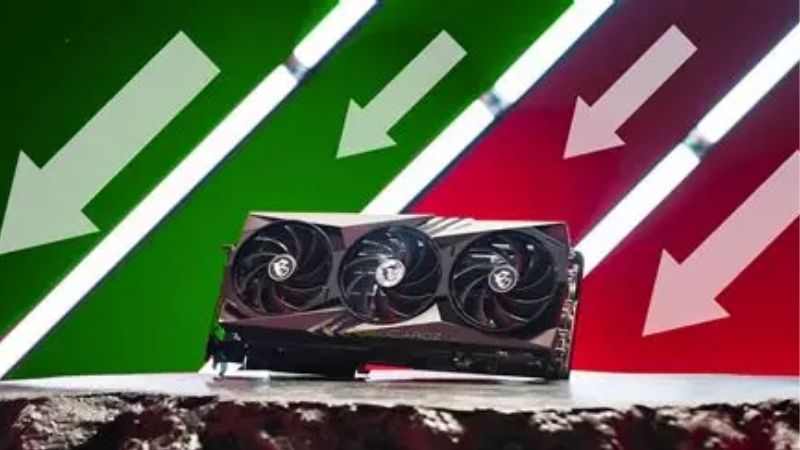
GPU shortage is a phrase most people associate with 2021 — crypto miners, scalper bots, empty shelves, and a correction that eventually arrived. The 2026 version looks similar from the outside and is structurally different underneath, which matters because the thing that ended the last one is not going to end this one. This is a memory shortage wearing a graphics card costume. Here is what is actually happening, which cards have quietly disappeared, and whether waiting is a plan or a way of losing two years.
What Is Actually Causing This One
The 2021 shortage was a demand problem: too many buyers chasing a fixed supply, inflated by mining economics that collapsed when the economics did. The 2026 shortage is a supply problem, and supply problems have longer timelines.
It Is a Memory Shortage
The constraint is DRAM, and specifically GDDR7 for the current generation. Component pricing has continued trending upward with memory as the dominant pressure, and graphics cards are unusually exposed because they consume a great deal of it per unit.
The arithmetic is unforgiving. A 16GB card uses twice the memory modules of an 8GB one. When modules are the scarce input, the 16GB product is where a rational allocator cuts first — regardless of how much gamers want it.
That is not a market failure or a conspiracy. It is what happens when the bottleneck moves from the chip to the memory around it.
The AI Demand That Sits Underneath
Consumer cards and datacentre accelerators compete for the same constrained resources: advanced packaging capacity and high-bandwidth memory supply. Nvidia’s highest-margin products are not GeForce cards.
The United States has approved Nvidia selling the H200 — among its most capable AI accelerators — into China. For a gamer the relevance is indirect but real: a large new market for the highest-margin silicon removes the pressure that would normally push consumer pricing down. It does not empty shelves by itself. It removes the incentive to fill them.
Reports have also pointed to Nvidia reducing RTX 50 production in early 2026, with a substantial share of Q1 supply concentrated in a small number of SKUs.
Why 2026’s Ending Does Not Apply
The last shortage ended when mining demand evaporated. Cards flooded the used market, prices collapsed, and buyers who waited were rewarded.
There is no equivalent event here. AI demand is not a speculative bubble tied to a token price — it is enterprise capital expenditure with multi-year commitments. And the supply side cannot respond quickly: fabrication capacity takes years to build.
That is the structural difference, and it is why the advice that worked in 2022 is the wrong advice now.
Which Cards Have Actually Disappeared
The shortage is not uniform. It is concentrated, and knowing where changes what you should be shopping for.
The End-of-Life Reports
At CES 2026, ASUS told Hardware Unboxed that Nvidia had stopped supplying GPUs for the RTX 5070 Ti and the RTX 5060 Ti 16GB, and that ASUS had placed its own products in those lines — the PRIME and TUF Gaming models — into end-of-life status. Retailers across several regions reported being unable to source the SKUs from any board partner.
Nvidia responded publicly that all SKUs remain in production and the 5070 Ti is not end of life. ASUS subsequently called the reports incomplete. The dispute is unresolved.
The price data does not require resolution. The cheapest available RTX 5070 Ti went from roughly $730 in November 2025 to $830 by January 2026, and one major US retailer moved from $835 to $990 overnight at the end of January. Cards listed at $743 have reappeared at $1,010 weeks later.
The Pattern: 16GB Is the Casualty
Look at what survived. Nvidia’s allocation has visibly shifted toward 8GB parts — the RTX 5060 and RTX 5060 Ti 8GB remain readily available near list. The RTX 5070, with 12GB on a 192-bit bus, has been unaffected.
The RTX 5080 and RTX 5090 are now the 16GB-and-above cards clearly in normal production. Everything between has thinned.
The logic follows the silicon. The RTX 5070 Ti and RTX 5080 are both GB203 dies. With memory constrained, shipping every usable die as the higher-margin 5080 is the rational move.
| Card | VRAM | Supply status, July 2026 |
|---|---|---|
| RTX 5060 | 8GB | Normal, near list (~$339 vs $299) |
| RTX 5060 Ti 8GB | 8GB | Normal |
| RTX 5060 Ti 16GB | 16GB | Reported EOL by AIBs; ~$470–$589 |
| RTX 5070 | 12GB | Normal — spared by its bus width |
| RTX 5070 Ti | 16GB | Reported EOL; $979–$1,049 |
| RTX 5080 | 16GB | Now the main 16GB card in production |
| RX 9070 XT | 16GB | Available — uses GDDR6, not GDDR7 |
The AMD Detail Worth Noticing
The last row is the most interesting one. AMD’s RX 9070 XT carries 16GB on a 256-bit bus and was criticised at launch for using GDDR6 rather than moving to GDDR7 — slower memory, a visible cost decision.
That criticism was technically correct and has aged badly. GDDR6 is not the component everyone is fighting over. While Nvidia’s 16GB tier became a scavenger hunt, AMD’s 16GB card stayed on shelves.
It has still risen above list — roughly $729–$769 against a $599 MSRP as of July 2026 — but without the overnight jumps Nvidia’s 16GB cards have seen.
The Good News, Honestly Assessed
There is positive news. It is real, it is weak, and it is further away than anyone wants. Presenting it accurately matters more than presenting it optimistically.
The Climb Has Flattened
The steep escalation seen through late 2025 has levelled off. Framework has reported a stretch of relative stability while still warning that volatility has not gone away.
That is a change in slope, not a change in direction. Prices stopped rising sharply. They have not fallen.
The distinction matters because “prices have stabilised” reads as good news and means something closer to “the bleeding slowed.”
New Supply Is Coming — in 2027 and 2028
Two developments genuinely point the right way. OEMs now have the option of sourcing DDR5 from Chinese suppliers such as CXMT, which adds a source outside the incumbent oligopoly. And Micron is building two fabrication plants in Idaho.
Neither helps this year. Those fabs do not begin producing until 2027–2028. Fabrication capacity is measured in years because that is genuinely how long it takes to build.
So the honest summary: prices levelled off, real relief is two to three years out, and nothing between now and then changes the arithmetic.
What About the SUPER Refresh?
Not a plan. The RTX 50 SUPER lineup would use 3GB GDDR7 modules to lift capacities — 24GB on the 5070 Ti and 5080 tiers, possibly an 18GB 5070 and a 12GB 5060.
The timing has moved repeatedly: from early 2026 to Q3 2026, and in other reports toward CES 2027 or later, with GDDR7 supply named as the cause every time. Nvidia has never confirmed a date, and no product embargo document has surfaced.
Waiting for the SUPER cards means waiting on an unannounced product built from the exact component that is in shortest supply.
So Should You Wait or Buy?
This is the only question that matters, and the answer is not the same for everyone. Three groups, three answers.
If Your Card Still Works: Wait
Nothing about this market rewards spending for a marginal gain. If you own an RTX 3060 Ti, an RX 6800, or better and you play at 1080p or 1440p, you are fine. Drop settings from Ultra to High — frequently indistinguishable in motion, and free.
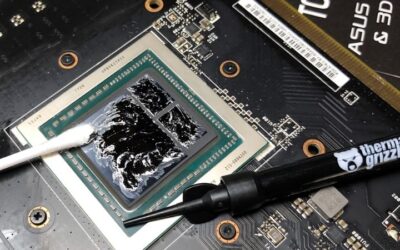
Spend an afternoon instead. A repaste and an undervolt on a card more than three years old typically drops 10–20°C and recovers sustained clocks you have quietly been losing to throttling. That competes surprisingly well against $400.
If You Are on Pre-RTX Hardware: Buying Is Not Getting Cheaper
This is the group for whom waiting has genuinely stopped being free. If you run a GTX 10-series or older card, Nvidia ended Game Ready support for Maxwell, Pascal, and Volta in October 2025 — quarterly security patches through 2028 and no new optimisation. You are also outside DLSS entirely, permanently, while games are increasingly designed assuming upscaling is available.
The cards available now are approximately the cards available in 2028, at approximately these prices. Waiting costs you two years of playable frame rates and gains you nothing the supply data supports.
If You Are Buying: Shop Availability, Not Preference
This is the strange part. In a normal market you decide what you want and then find it. This year, what is in stock sets the shortlist.
The tiers still in normal supply are the RTX 5060, the RTX 5060 Ti 8GB, the RTX 5070, the RTX 5080, and AMD’s RX 9070 series. If you want 16GB below the 5080, you are shopping the last batch — and if a 5070 Ti or 5060 Ti 16GB appears near list, that is the decision made rather than the start of a comparison.
The RTX 5060 class is where the money works hardest right now: $299 MSRP trading near $339, the tightest MSRP-to-street gap in the lineup, and the tier Nvidia is clearly still making. It is worth checking what is genuinely in stock across the 5060, 5070, and RX 9070 before settling on a tier at all.
What Would Actually Signal a Change
Rather than watching prices, watch three things. First, memory contract pricing — it leads GPU pricing by a quarter or two, and it is the underlying variable rather than a symptom.
Second, whether the SUPER refresh gets a confirmed date. Nvidia issues a product embargo document a month or two before launch; until one surfaces, the refresh is not imminent regardless of what the rumour cycle says.
Third, whether the 16GB tiers return to shelves at list. That would be the clearest signal that GDDR7 allocation has loosened, and it would happen before any price correction rather than after.
See More:
- Nvidia beta
- Nvidia CUDA 11.8
- Check CUDA version
- Nvidia GPU for gaming
- PNY GeForce RTX 5080 16GB OC review
Final Verdict on the 2026 GPU Shortage
This GPU shortage is not 2021 repeating. That one was a demand bubble tied to mining, and it popped. This one is a memory supply constraint underwritten by AI capital expenditure, and there is no equivalent event coming to end it. The cards that vanished are the 16GB ones, because 16GB consumes twice the GDDR7 of 8GB — the RTX 5070 Ti and 5060 Ti 16GB were both reported end of life by board partners while Nvidia disputed the characterisation and prices climbed regardless.
The good news is real and small: the steep climb has flattened, and new supply from CXMT and Micron’s Idaho fabs is genuinely coming — in 2027 and 2028. Between now and then, the honest guidance splits three ways. If your card works, keep it and spend the afternoon on a repaste rather than the money on a replacement. If you are on pre-RTX hardware, waiting has stopped being free and there is no correction in the data. And if you are buying, check availability before preference — this is the year the shortlist is set by what is on the shelf rather than what you would have chosen.
Frequently Asked Questions
Why is this shortage different from the previous ones?
Earlier squeezes were demand shocks from crypto mining and pandemic buying, which cleared once demand fell. This one is driven by memory supply and by AI datacentre orders competing for the same fabrication and packaging capacity. When the constraint sits upstream in DRAM and advanced packaging rather than in card assembly, prices do not fall quickly just because gamers stop buying.
Should I buy a graphics card now or wait?
If your current card still runs what you play, waiting costs you nothing. If you need a card now, buy at the tier you actually need rather than stretching upward, and avoid paying substantially above the reference price for a small performance step. Historically, waiting for a supply crunch to clear has been rewarded, but only when there is no urgent need.
Are used cards a sensible option during a shortage?
They can be, but scrutiny matters more than usual. Ask for the purchase date, check the fans spin freely and the backplate is not warped, and run a stress test plus a memory error check before the return window closes. Cards from mining farms are not automatically bad, though they often need new thermal pads and a repaste.
Does the shortage affect all tiers equally?
No. Cards with large or fast memory configurations feel it most, because GDDR7 and high capacity modules are the constrained component. Entry tier cards using older GDDR6 and smaller buffers are usually easier to find near list price, which is why value in a shortage often sits at the lower and middle of the stack.
How do I avoid overpaying from a scalper listing?
Compare against the manufacturer suggested price and against several retailers before committing, and be sceptical of marketplace listings well above that. Set stock alerts at established retailers rather than chasing third party sellers, and remember that a factory overclocked model is never worth a large premium, since the clock difference is only a few percent.
As an Amazon Associate we earn from qualifying purchases at no extra cost to you.


Ready to decide? Our #1 pick for 2026 is the RTX 5060.
Live price & availability on Amazon.



Write Your Review
No reviews yet. Be the first to share your experience!