
- Top Pick: Thermal Grizzly Kryonaut – 1 Gram – Extremely High Performance
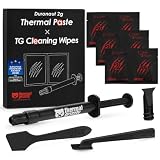
- Best Value: Thermal Grizzly Kryonaut – 1 Gram – Extremely High Performance Thermal Paste + 12 Cleaning Wipes 6 Wet & 6 Dry – for Demanding Applications and Overclocking CPU/GPU/PS4/PS5/Xbox
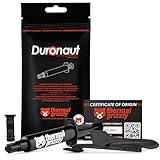
- Premium Choice: Thermal Grizzly Duronaut 6 Gram Thermal Paste – Exceptional Stability
Best thermal grizzly paste is a harder question than it looks, because the company sells nine different compounds and several of them will damage hardware if used on the wrong part. This guide sorts the lineup by what you are actually cooling, how long you want it to last, and how much risk you are willing to take.
As an Amazon Associate we earn from qualifying purchases at no extra cost to you. Product prices and availability are accurate as of the date shown and are subject to change.





As an Amazon Associate we earn from qualifying purchases at no extra cost to you. Product prices and availability are accurate as of the date shown and are subject to change.
By Ryan Cole
How to Choose the Best Thermal Grizzly Paste
Finding the best thermal grizzly paste starts with a correction: the company does not sell one flagship compound with cheaper versions below it. Each product targets a different tradeoff between conductivity, electrical safety, viscosity and service life, so the right pick depends entirely on the job.
Conductivity Numbers and What They Actually Buy You
The lineup spans 8.5 W/mK for Aeronaut up to 82 W/mK for Conductonaut Extreme. Those figures are real, but the gap between a good 12 W/mK paste and a great 14 W/mK paste on a normal CPU is usually one to two degrees under load.
The jump to liquid metal is different in scale. Replacing a standard compound with Conductonaut on a delidded or direct-die setup can move temperatures by ten degrees or more, because the bottleneck stops being the interface material.
For a stock CPU under an air cooler or AIO, the paste is rarely the limiting factor. Mounting pressure, cooler contact and case airflow all matter more, which is why chasing the highest number on the tube is usually wasted money.
Electrical Conductivity and Where You Must Not Use It
Kryonaut, Kryonaut Extreme, Hydronaut, Duronaut and Aeronaut are all electrically non-conductive and safe to spill on a socket. Conductonaut and KryoSheet are conductive and must be kept away from surface-mount components and PCIe pins.
Conductonaut also reacts with aluminium, so it can never go on an aluminium cold plate. Most quality coolers use copper or nickel-plated copper, but budget AIOs and stock coolers frequently do not, and the reaction destroys the cooler.
Viscosity, Application and How Much You Need
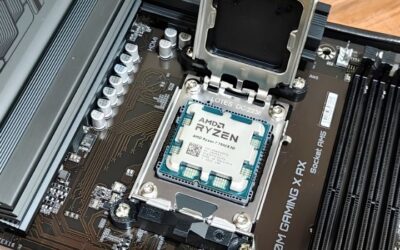
Kryonaut is thick and holds its shape, which suits the five-dot method on a large AM5 heatspreader. Hydronaut spreads more easily and is more forgiving if you are new to applying paste by hand.
Tube sizing matters more than people expect. A 1g tube covers roughly three to four applications on a desktop CPU; anyone repasting laptops or testing coolers regularly should buy the 5.55g size, which works out far cheaper per use.
Service Life and Pump-Out Resistance
Kryonaut is known for excellent day-one numbers but degrades faster than average under repeated heat cycling, particularly on hot chips. Duronaut was designed specifically to address that, trading a little peak performance for stability over years.
Pump-out is the process where thermal cycling gradually pushes paste out from between the two surfaces. It is worst on laptops and on CPUs with concave heatspreaders, which is exactly where phase-change and graphene options make more sense than a standard paste.
Top Picks: Best Thermal Grizzly Paste for Each Use Case
These six cover every realistic build, so the best thermal grizzly paste for your situation is almost certainly among them, from a first repaste to a delidded overclocking setup. All conductivity figures below are manufacturer-rated as of August 2026.
| Product | Conductivity | Electrically Conductive | Best For |
|---|---|---|---|
| Kryonaut | 12.5 W/mK | No | General desktop use |
| Kryonaut Extreme | 14.2 W/mK | No | Benchmarking, sub-ambient |
| Duronaut | 14 W/mK | No | Long-term set and forget |
| Hydronaut | 11.8 W/mK | No | Beginners, budget builds |
| KryoSheet | Graphene pad | Yes | Reusable, zero pump-out |
| Conductonaut Extreme | 82 W/mK | Yes | Delid and direct-die |
Thermal Grizzly Kryonaut – The Safe Default
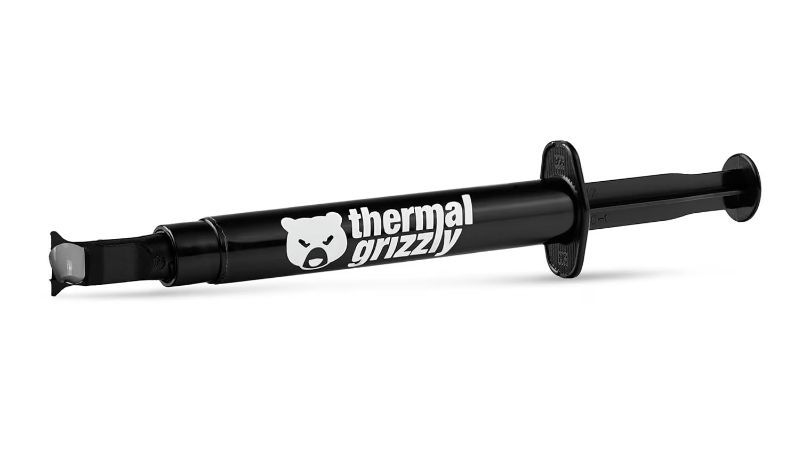
Kryonaut is the compound most builders should buy. It performs within a degree of anything else non-conductive, it is thick enough that it will not run, and its rated operating range from -250C to 350C means it handles anything a desktop throws at it.
The known weakness is longevity on hot chips. On a CPU that regularly sits above 80C, Kryonaut can dry out and lose a few degrees within a year or two. If you dislike repasting, one of the alternatives below is the better long-term answer.
Thermal Grizzly Kryonaut Extreme – For Benchmarking Runs
Rated at 14.2 W/mK, Kryonaut Extreme was built for extreme cooling scenarios where every fraction of a degree counts. It also handles very low temperatures without cracking, which matters for chilled water and dry ice setups.
For a normal build it is difficult to justify. The measurable gain over standard Kryonaut is usually well under a degree at stock settings, while the price per gram is significantly higher. Buy it for competitive overclocking, not for a gaming PC.
Thermal Grizzly Duronaut – Best for Set and Forget
Duronaut is the answer for anyone who wants to paste a CPU once and leave it. Rated at 14 W/mK, it was engineered around resistance to drying and pump-out rather than peak day-one numbers, which suits systems that run hot for hours daily.
It is stiffer than Kryonaut and takes more pressure to spread evenly, so a careless application can leave gaps. It is also newer, which means less independent long-term data exists than for the compounds it is meant to replace.
Thermal Grizzly Hydronaut – Best Value and Easiest to Apply
At 11.8 W/mK, Hydronaut gives up almost nothing in real temperatures while costing noticeably less per gram. Its lower viscosity makes it the most forgiving option for a first repaste, and it works well on GPUs and consoles too.
The tradeoff is that it can migrate slightly under high pressure over time, and it is not the compound to reach for on a heavily overclocked chip. For most builds that difference never becomes visible in a temperature reading.
Thermal Grizzly KryoSheet – No Paste at All
KryoSheet is a graphene pad rather than a compound. It cannot dry out, cannot pump out, and is reusable across multiple mounts, which makes it excellent for anyone who swaps coolers frequently or owns a laptop that gets opened often.
It is electrically conductive, so any overhang onto the socket or nearby components is a real hazard. It also needs firm, even mounting pressure to perform, and on a slightly concave heatspreader it can trail a normal paste by a few degrees.
Thermal Grizzly Conductonaut Extreme – Liquid Metal for Experts
At 82 W/mK, nothing else in the lineup is close. On a delidded CPU or a direct-die mount it delivers temperature drops that no conventional paste can match, and it is the standard choice for handheld and console repastes done properly.
It is conductive, it corrodes aluminium, it stains nickel plating permanently, and a spill onto the board can kill it. Applying it requires masking the surrounding area and a steady hand. If you have any doubt, buy Kryonaut instead.
How 2026 Component Pricing Changes the Calculation
Thermal compound is one of the few parts of a build where the market is working in your favour, which is worth factoring in when you buy the best thermal grizzly paste for your system this quarter.
Cooling Parts Are Still Discounting Normally
While memory and storage prices climbed hard through 2026, thermal paste, coolers, fans and cases have stayed close to normal pricing with genuine seasonal discounts. Manufacturer increases in the cooling category have been in the single-digit percentages rather than the double digits seen in memory.
That makes November a legitimately good time to stock up on a larger tube. Unlike storage, where sale-period stock was built from expensive contract material, paste inventory is not carrying that cost pressure.
A Repaste Is the Cheapest Real Upgrade Available
With graphics card prices up roughly 19% globally and no new architectures arriving before CES in January 2027, a lot of builders are choosing to hold their current hardware for another year. That makes maintenance the sensible spend.
A CPU running five to eight degrees cooler after a fresh application boosts sustained clocks and reduces fan noise for the price of a coffee. On a system three or more years old, it is the highest-return money you can spend on it.
Where the Budget Segment Is Thinning
Entry-level cooling accessories have narrowed as manufacturers concentrate on mid and high-tier products, and promotional pricing policies tightened in early 2026. Buying a larger tube once is now often cheaper per gram than repeat small purchases.
None of this is a reason to rush. Prices in this category are stable rather than rising, so buy the size that matches how often you actually repaste rather than stockpiling material that will sit unused for years.
Frequently Asked Questions
The best thermal grizzly paste question rarely arrives alone, because the product names give very little away about what each compound is for.
Which is the best thermal grizzly paste for a first-time builder?
Hydronaut or standard Kryonaut. Both are electrically non-conductive, so a small spill onto the socket area is not fatal, and both perform within a degree of the premium options on a stock cooler. Neither requires masking or special handling.
How long does Kryonaut last before it needs replacing?
On a CPU that stays below roughly 75C under load, three to five years is realistic. On a hot chip or a laptop that regularly exceeds 90C, degradation can become measurable within twelve to eighteen months, which is where Duronaut or KryoSheet make more sense.
Can I use Conductonaut on a stock AMD or Intel cooler?
No. Stock coolers and many budget models use aluminium cold plates, and liquid metal reacts with aluminium in a way that destroys the contact surface. Conductonaut is only for nickel-plated copper or bare copper, and only when you can mask the surrounding board.
Is a graphene pad better than paste on a laptop?
Often yes, because laptops cycle temperature aggressively and that is exactly what causes pump-out. KryoSheet eliminates that failure mode entirely, though it needs even mounting pressure and careful trimming so no edge touches nearby components.
See More:
- Best 4TB NVMe SSD
- Best thermal paste for 7800X3D
- Best CPU case fans
- Best motherboard for gaming computer
Final Thoughts
The best thermal grizzly paste for you depends on the job rather than the headline conductivity figure. Kryonaut remains the sensible default for a desktop, Hydronaut is the value pick, Duronaut is for people who never want to repaste again, and Conductonaut belongs only on delidded or direct-die setups where the risk is understood. With cooling parts still discounting normally in late 2026, a fresh application is the cheapest genuine performance gain available on an ageing build.





Write Your Review
No reviews yet. Be the first to share your experience!