
- Top Pick: be quiet! Pure Rock Low Profile 100W TDP CPU Cooler | Intel 1700 1200 1150 1151 1155 | AMD -AM5 AM4 | BK034
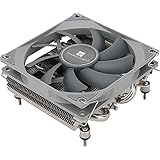
- Best Value: Thermalright AXP90 X36 Low Profile ITX CPU Cooler, 36mm Height, TL-9015 Slim PWM CPU Fan, Computer ITX Heatsink Cooler, for AMD:AM4 AM5/Intel LGA1150/1151/1200/1700/1851
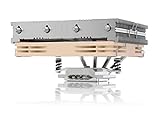
- Premium Choice: Noctua NH-L12S, Quiet High-Performance Low-Profile CPU Cooler
The best SFF CPU cooler depends less on the heatsink itself than on the chassis you are dropping it into. A sandwich case, a console-style box and a cube all move air differently, so this guide sorts coolers by case archetype and lists the height each one really needs. Measure the true clearance in your case first.
As an Amazon Associate we earn from qualifying purchases at no extra cost to you. Product prices and availability are accurate as of the date shown and are subject to change.



As an Amazon Associate we earn from qualifying purchases at no extra cost to you. Product prices and availability are accurate as of the date shown and are subject to change.
By Ryan Cole
How to Choose the Best SFF CPU Cooler for Your Chassis
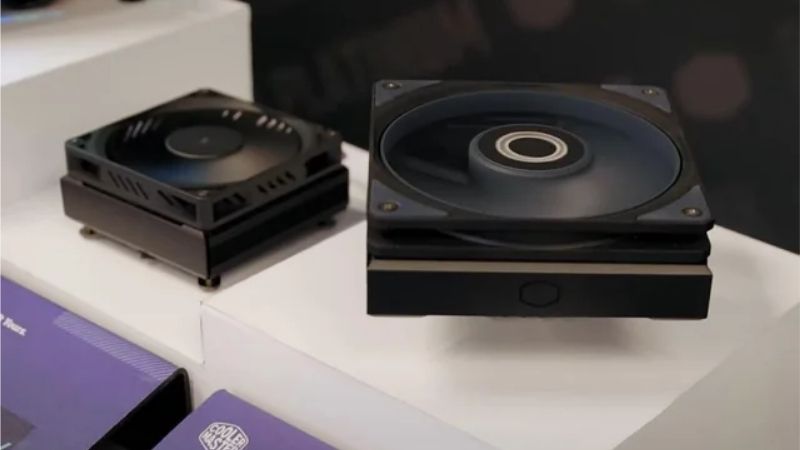
Small form factor cooling is a fit problem before it is a thermal problem. These four checks match the heatsink to the way your specific case moves air, which matters more than any headline capacity figure. The best SFF CPU cooler for a sandwich case is rarely the right one for a cube.
Sandwich cases: side intake, tight ceilings
Sandwich layouts put the motherboard and graphics card in separate compartments with a vented side panel over each. Cooler clearance is usually between 47mm and 55mm, and the fan draws air straight from outside the case rather than from a shared internal volume. That separation is what keeps clearance so tight on the CPU side.
That side intake is an advantage, because the cooler receives ambient air instead of exhaust from the graphics card. It also means a downdraft design nearly always beats a small tower here, since there is no clean front-to-back path for a tower to exhaust into. It is also why fan orientation matters less here than case venting.
Console-style cases: 67mm to 80mm of room
Flat chassis designed to sit under a television usually allow between 67mm and 80mm. That extra height unlocks 120mm and 130mm slim fans, which move the same air at far lower RPM than a 92mm unit and change the acoustic character of the whole build. Slim fans are the reason this height class exists at all.
Check what sits under the cooler as well as above it. Board-mounted M.2 heatsinks, VRM shrouds and tall memory all reduce the usable envelope, and some cases quote clearance from the tray rather than from the top of the motherboard. Read the manual diagram rather than the marketing page for that figure.
Cube and small tower cases: room for a real tower
Cube chassis often accept 120mm to 160mm, which brings 92mm and even 120mm tower coolers into play. In these cases the airflow path is conventional, so a tower exhausting toward a rear or top fan behaves much as it would in a mid-tower build. That makes cube builds far more forgiving than sandwich layouts.
The trap is width. A dual-tower cooler may fit the height limit while colliding with the side panel or the power supply shroud, so confirm the cooler depth in millimetres against the internal width of the chassis before ordering anything large. Cooler depth is listed in the specification table on most product pages.
Matching capacity to your CPU power limit
Set the expectation by package power, not by model name. A 65W chip is comfortable under almost any low-profile cooler, while a 125W or 170W processor needs either a taller heatsink with six heatpipes or a deliberately reduced power limit in BIOS. Model names tell you very little about sustained power draw.
Undervolting is standard practice in this niche rather than an enthusiast trick. Cutting a power limit by 15% to 20% typically costs single-digit multi-core performance and gives back several degrees, which in a sealed case is the difference between quiet and audible. It costs nothing to try and is reversible in the BIOS.
Top Picks: Best SFF CPU Cooler by Case Type
These five coolers cover the three chassis archetypes above. Identify your case type first, then use the height column to confirm the cooler clears your lid with a couple of millimetres to spare. Any of them can be the best SFF CPU cooler depending on the chassis, and stock was checked in August 2026.
| Cooler | Height | Fan | Case type |
|---|---|---|---|
| Thermalright AXP90-X53 Full | 53mm | 92mm slim | Sandwich |
| Scythe Big Shuriken 3 | 69mm | 120mm slim | Console-style |
| Noctua NH-L12S | 70mm | 120mm slim | Console-style |
| be quiet! Shadow Rock LP | 75.4mm | 130mm | Console-style |
| Noctua NH-U9S | 125mm | 92mm tower | Cube / small tower |
Thermalright AXP90-X53 Full
The full-copper version of Thermalright’s 53mm downdraft cooler is the sandwich-case standard. Four heatpipes feed a copper fin stack under a slim 92mm PWM fan, and the square footprint stays clear of the DIMM slots on most ITX boards. Full copper adds mass and cost without changing the mounting footprint at all.
Copper adds weight and cost over the aluminium model without transforming performance, and the 92mm fan gets shrill near maximum speed. Set a shallow fan curve, because the last few hundred RPM buy very little cooling for a lot of extra noise. The aluminium version is the better value for most builds.
Scythe Big Shuriken 3
Scythe’s downdraft design pairs five heatpipes with a 120mm slim fan at a 69mm total height, which is a strong combination for flat chassis. The offset fin stack is shaped to avoid overhanging memory, so tall modules are usually still workable. Five heatpipes under a 120mm fan is a strong combination at this height.
The mounting kit is the weak point: it takes patience in a cramped case and the supplied screwdriver is barely long enough. Availability has also been inconsistent, so check the listing carefully to make sure you are buying the current revision. Buy from a listing that shows the current socket support clearly.
Noctua NH-L12S
The NH-L12S runs its 120mm NF-A12x15 fan underneath the fin stack, which keeps total height at 70mm while leaving memory clearance intact. It is the most refined option in this class, with the SecuFirm2 mounting system and a six-year warranty. Mounting the fan below the fins is what buys the clearance here.
You pay a clear premium for that polish, and the fan can be mounted above the fins for more capacity only if your case allows extra height. In a genuinely sealed enclosure it still runs out of headroom against high-power processors. That premium buys mounting hardware you will not swear at during installation.
be quiet! Shadow Rock LP
At 75.4mm this is the tallest downdraft option here, and it uses a 130mm fan to move air at low rotational speed. That larger fan is the main reason the cooler sounds calmer than 92mm rivals when the system is under sustained load. The larger 130mm fan is essentially the whole argument for choosing this cooler.
The footprint is wide enough to sit over the first memory slot on some boards, so low-profile modules are the safe choice. It also needs a case that genuinely offers 76mm, which rules out most sandwich designs entirely. Check the height and the width of the socket area before you order this one.
Noctua NH-U9S
When your cube case allows 125mm, this compact 92mm tower changes the maths. It exhausts toward the rear fan rather than onto the board, handles higher power limits than any downdraft cooler here, and keeps a narrow footprint that clears memory and the top slot. That exhaust path is the condition attached to the whole recommendation.
It only works in cases with a clear exhaust path, and it is expensive next to larger 120mm towers that would fit a normal mid-tower. Treat it as a specialist part for cube builds rather than a general recommendation. Price it against a 120mm tower before committing to the format.
What the 2026 Market Means for SFF Builders
Compact builders feel market shifts faster than anyone else, because the parts that fit are a narrow subset of what is on sale. Two current factors are worth planning around. Planning around them is easier than reacting later, because the best SFF CPU cooler for a given case is often simply the one still available.
Entry-level parts are getting squeezed
Motherboard sales are down more than 25% and vendors have concentrated on mid and high-end models, while cooler pricing has moved up around 6% to 8% and promotional pricing policies ended at the start of February 2026. Low-profile coolers sit squarely in that squeezed tier. Availability has been the bigger problem this year.
The pragmatic approach is to buy the compact cooler when it is available rather than optimising for a lower price later. These parts ship in small volumes, and discontinued models in this category are rarely replaced at the same price. Discontinued models in this class rarely come back into stock at all.
November discounts are selective this year
Memory, solid state drives and prebuilt systems are not expected to see genuine reductions, since November stock reflects high contract memory pricing. Cooling hardware, fans and cases are outside that constraint and should still see real discounts. That distinction is worth knowing if you are timing a full build.
All pricing here reflects the market in August 2026 and should be verified against the current listing. If your build already runs, waiting for late November costs you nothing on the cooling side of the parts list. There is no cooling reason to delay a purchase beyond the end of November.
Cheap fixes that still move the needle
Before spending on a new heatsink, replace old thermal compound and clean the dust filters. On a compact system that has run for two or three years, both jobs together often recover several degrees for the price of a tube of paste. Both jobs cost less than a single case fan and take under an hour.
After that, the case fans deserve the next portion of the budget. In a small enclosure, a pair of quality intakes with decent static pressure frequently improves CPU temperatures more than moving up one cooler height class. Airflow is the cheapest performance in a small build, and it always has been.
Frequently Asked Questions
The questions readers ask most often when planning cooling for a small form factor system, from radiator support to noise expectations. They also cover the trade-offs that decide whether the best SFF CPU cooler for a chassis is a downdraft design, a compact tower or a small radiator.
Can I fit a 240mm radiator in an SFF case?
Some sandwich and cube chassis support one, but it usually competes with the graphics card or the power supply for space. If the mount exists and the tubing routes cleanly, it works well; if you have to force it, a downdraft cooler is the better answer. Forcing a radiator into a case that resists it rarely ends well.
How hot is too hot in a small case?
Modern processors are designed to run near their limits, so brief peaks are normal. Sustained operation at the maximum temperature with visible clock reduction is the real signal that the cooler, the case airflow or the power limit needs attention. Log temperatures across a long session rather than a short benchmark run.
Do I need a contact frame for Intel sockets?
A contact frame can improve cold plate contact on LGA1700 boards where the stock mechanism bends the heat spreader slightly. It is a small, optional improvement rather than a requirement, and it must be installed carefully to avoid uneven pressure. It is a refinement rather than something the platform requires.
Is a slim 15mm fan much worse than a 25mm one?
It moves less air at the same speed, so it compensates with higher RPM and a bit more noise. In exchange it saves ten millimetres, which in a compact chassis is often the difference between a cooler that fits and one that does not. In a compact build that trade is almost always worth making.
See More:
- best CPU cooler for Ryzen 5 5600X
- best small form factor CPU cooler
- best CPU cooler for i9-14900K
- What is the best AIO CPU cooler
Final Thoughts
Picking the best SFF CPU cooler starts with your chassis rather than a review chart, because airflow direction and clearance decide what will actually work. Identify your case archetype, measure the true height available, then choose the largest heatsink that fits with margin. Capacity is the last consideration here.




Write Your Review
No reviews yet. Be the first to share your experience!