
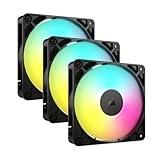
- Top Pick: CORSAIR RS120 ARGB 120mm PWM Fans – Daisy-Chain Connection – Low-Noise – Magnetic Dome Bearing – Triple Pack – Black
- Best Value: Thermalright TL-C12C-S X3 CPU Fan 120mm ARGB Case Cooler Fan, 4pin PWM Silent Computer with S-FDB Bearing Included, up to 1550RPM Cooling Fan(3 Quantities) (TL-C12C X3)
- Premium Choice: Thermalright TL-C12C X5 CPU Fan,Black Cooling, Fan in The unlit Version,Establish Ties or Contact PC Fan with 1550RPM Speed, 120mm Computer Case Cooler,PWM Control for Case and Liquid Cooler
Best 120mm case fans selection depends almost entirely on where the fan is going, because a radiator and an unobstructed rear exhaust ask for opposite characteristics. These six cover intake, exhaust and radiator duty, with the noise trade-offs of each stated plainly.
As an Amazon Associate we earn from qualifying purchases at no extra cost to you. Product prices and availability are accurate as of the date shown and are subject to change.




As an Amazon Associate we earn from qualifying purchases at no extra cost to you. Product prices and availability are accurate as of the date shown and are subject to change.
By Ryan Cole, PC hardware writer at NVIDIA Review.
How to Choose the Best 120mm Case Fans
The 120 mm size is the most universal in PC building, so the choices within it are wider and the differences more meaningful. Four factors determine which of the best 120mm case fans suits each mounting position.
Static Pressure Versus Airflow
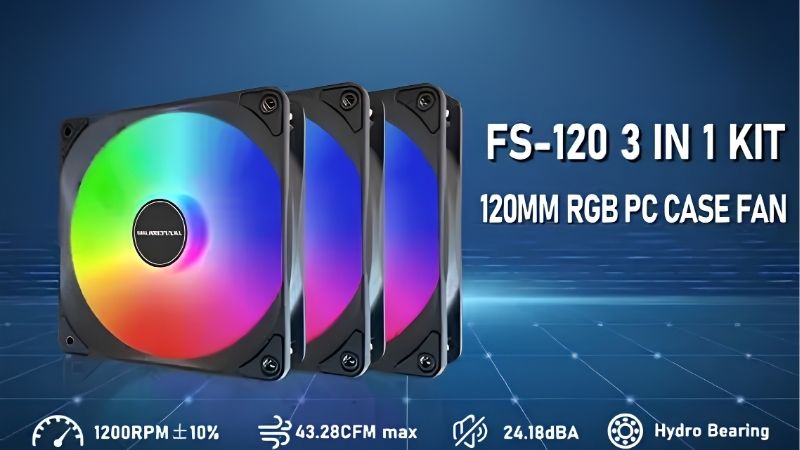
Airflow in CFM measures how much air a fan moves without resistance, while static pressure in mmH₂O measures its ability to push through obstruction. Radiators and dust filters demand pressure; open rear exhausts do not.
Most modern fans compromise between the two and handle either job acceptably. The mistake worth avoiding is fitting a high-CFM, low-pressure fan to a dense 360 mm radiator, where the fin stack blunts it almost entirely.
Read the Full RPM Range, Not Just the Maximum
A quoted maximum tells you the ceiling; the minimum tells you how quiet the machine will be at idle. A fan that spins down to 200 or 300 RPM disappears acoustically, while one with a 700 RPM floor never truly goes silent.
Manufacturer noise figures are measured under laboratory conditions and are not comparable across brands. Use them within a single range, and treat bearing type as a better long-term indicator of how a fan will sound in two years.
Bearing Type Predicts How It Ages
Fluid dynamic and rifle bearings outlast sleeve designs, particularly in horizontal top-mounted positions where gravity works against cheaper bearings. Manufacturers quoting MTBF figures in the tens of thousands of hours are usually confident for good reason.
Warranty length is a useful proxy for build quality. Six years on a case fan represents a real commitment, while a one-year warranty on a budget multipack tells you what to expect from the bearing over time.
Check Thickness and Connector Type
Standard 120 mm fans are 25 mm thick, but thicker 30 mm models exist and perform noticeably better on radiators. They also foul memory and top panels in tighter cases, so measure clearance before ordering them.
Connectors are simpler: a 4-pin PWM header for speed control, plus a separate 3-pin 5V ARGB connection if the fan is lit. Twelve connections across six fans exceeds most boards, so plan for a hub or splitters.
Screw type is a small detail with real consequences. Radiator mounting needs longer screws than case mounting, and they are not always included, so check the accessory list before assembly rather than mid-build.
Top Picks: Best 120mm Case Fans for 2026 Builds
The best 120mm case fans vary by mounting position, so these six span budget multipacks to specialist radiator fans. Figures come from manufacturer sheets; noise ratings are not directly comparable between different brands.
| Fan | RPM Range | Thickness | Lighting | Best Position |
|---|---|---|---|---|
| Arctic P12 PWM PST | Around 200-1800 | 25 mm | None | Intake and radiators |
| Noctua NF-A12x25 PWM | Around 450-2000 | 25 mm | None | Any position |
| be quiet! Silent Wings 4 PWM | Low minimum | 25 mm | None | Quiet builds |
| Phanteks T30-120 | Up to around 3000 | 30 mm | None | Dense radiators |
| Lian Li Uni Fan SL120 V2 | Around 200-1900 | 25 mm | ARGB | Tidy lit builds |
| Thermalright TL-C12C | Up to around 1500 | 25 mm | Optional ARGB | Budget multipacks |
Arctic P12 PWM PST
The P-series is built around static pressure, which makes it the value default for intakes behind dust filters and for radiator duty. It spins down low enough to idle quietly rather than droning at a fixed floor.
PST daisy-chaining lets several fans share one motherboard header, which reduces cabling considerably. The compromise is presentation: the plain black frame has no lighting and looks utilitarian behind a tempered glass panel.
Arctic also sells these in five-packs, which is where the value becomes difficult to beat. For a case needing six fans, that pricing sits well below almost anything else with comparable static pressure.
Noctua NF-A12x25 PWM
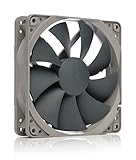
This remains the reference 120 mm fan and has held that position for years. Extremely tight blade-to-frame tolerances let it perform well in both airflow and static pressure roles, which few fans manage convincingly.
Bearing quality and a long warranty make it a genuine buy-once component. The drawbacks are price, which is high per fan, and the brown and beige colour scheme that not every builder wants on display.
A chromax version in all black solves the colour objection at a small premium. That option makes it far easier to justify in a build where the fans sit behind a tempered glass side panel.
be quiet! Silent Wings 4 PWM
When noise is the priority above all else, this is the fan to fit. The frame and blade design target low turbulence, and the low minimum speed means it becomes effectively inaudible during desktop use.
It suits front intakes and rear exhausts in a quiet build particularly well. The limitation is peak airflow, which sits below more aggressive fans, so it is not the first choice for a dense radiator under heavy load.
Phanteks T30-120
The T30 is a specialist, using a 30 mm thick frame to deliver static pressure well beyond standard fans. On a dense radiator it produces results that 25 mm fans cannot match at comparable noise levels.
A physical switch limits maximum speed, which makes it flexible between quiet and performance modes. The obvious drawback is thickness, which frequently fouls memory or top panel clearance in mid-tower cases.
Lian Li Uni Fan SL120 V2
If lighting matters and cabling does not, the Uni Fan system solves both. Fans interlock physically and electrically, so a bank of three connects to the controller with a single cable rather than six separate leads.
Performance is competitive enough for radiator use as well as case positions. The trade-offs are ecosystem lock-in, a controller that needs mounting somewhere, and a higher cost per fan than conventional models.
Thermalright TL-C12C
Thermalright continues to undercut established brands while delivering acceptable performance. Sold in multipacks, these fans provide reasonable airflow for builders filling six or seven case positions on a strict budget.
For a first build the value is difficult to argue with. The honest caveats are bearing noise that becomes noticeable above roughly two-thirds speed and a shorter warranty than the premium options here.
Buying a six-pack rather than several two-packs improves the value further. If one unit fails outside warranty, replacing a single fan from a budget set costs little enough that it rarely becomes a real problem.
Where Fan Upgrades Sit in the 2026 Market
Two market conditions make case fans one of the more rational places to spend a modest upgrade budget this year.
Airflow Is the Upgrade That Still Pays
With graphics card pricing elevated, adding case fans is among the few changes that improves a system for a small outlay. Better intake and exhaust lower component temperatures and reduce how hard every other fan has to work.
The gain is largest in cases with restrictive front panels or a single stock exhaust. Two decent intakes frequently drop graphics card temperatures enough that the card’s own fans audibly back off under load.
Fans Remain a Real Discount Category
Advice to wait for seasonal sales does not hold for memory, storage or prebuilt systems this year, since those are built from components purchased at elevated contract prices. Cooling hardware sits outside that problem.
Fans, coolers, cases and power supplies still see genuine discounts during sale events. If your upgrade is not urgent, this is one of the few places where holding out for a sale event remains sensible.
Budget Multipacks Have Crept Upward
Cooling hardware absorbed some broader cost pressure, with cooler pricing up roughly 6 to 8 percent and promotional pricing policies withdrawn in February 2026. Entry-level multipacks felt that more than premium ranges did.
Compare price per fan across pack sizes rather than headline price. A six-pack is usually better value than three separate two-packs, and that gap has widened as budget pricing tightened through the year.
Frequently Asked Questions
These questions come up most often when people replace or add case fans to an existing build.
How many 120 mm fans does a build need?
Two front intakes and one rear exhaust covers most mid-towers well. Adding more helps mainly in cases with restrictive panels or where a large graphics card dumps significant heat directly into the chamber.
Should intakes have higher static pressure than exhausts?
Yes, generally. Intakes pull air through dust filters and front panel mesh, which creates resistance. Exhaust positions face little obstruction, so an airflow-oriented fan is sufficient there unless it sits on a radiator.
Are the best 120mm case fans worth more than cheap ones?
For bearing longevity and noise character, often yes. Performance differences at the same RPM are modest, but a premium fan running slower for the same airflow produces a quieter machine over a longer service life.
Can I mix 120 mm and 140 mm fans in one case?
Absolutely, and most builds do. Use 140 mm where the case supports it for quieter airflow, and 120 mm in rear exhaust positions and on radiators, where the smaller size is usually the only option available.
See More:
- Best MSI motherboard
- Best motherboard processor combo for gaming
- Best B550 motherboard
- Best CPU for streaming
- What is the best AM4 CPU for gaming
Final Thoughts
The best 120mm case fans for your build are decided by mounting position more than by brand. Arctic P12 covers filtered intakes cheaply, the NF-A12x25 remains the buy-once reference, the T30 solves dense radiators if clearance allows, and Thermalright fills a case affordably when budget is the binding constraint.




Write Your Review
No reviews yet. Be the first to share your experience!