
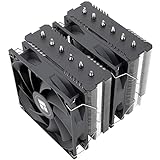
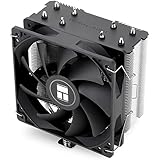
- Top Pick: Thermalright Peerless Assassin 120 SE CPU Cooler, 6 Heat Pipes AGHP Technology, Dual 120mm PWM Fans, 1550RPM Speed, for AMD:AM4 AM5/Intel LGA 1700/1150/1151/1200/1851,PC Cooler
- Best Value: ARCTIC Liquid Freezer III Pro 360 A-RGB – AIO CPU Cooler, Water Cooling
- Premium Choice: ARCTIC Liquid Freezer III Pro 360 – AIO CPU Cooler,3 x 120 mm Water Cooling
Best CPU cooler for 7800X3D decisions are easier than most people expect, because this eight-core chip has a 120W TDP and a locked power ceiling that prevents it from running away. The real considerations are noise, memory clearance and how heat concentrates beneath the stacked cache.
As an Amazon Associate we earn from qualifying purchases at no extra cost to you. Product prices and availability are accurate as of the date shown and are subject to change.




As an Amazon Associate we earn from qualifying purchases at no extra cost to you. Product prices and availability are accurate as of the date shown and are subject to change.
By Ryan Cole, PC hardware writer at NVIDIA Review.
How to Choose the Best CPU Cooler for 7800X3D
The 7800X3D runs eight cores and sixteen threads to 5.0 GHz within a 120W TDP, with 3D V-Cache stacked above the compute die. Four factors decide the best CPU cooler for 7800X3D builds as a result.
The Power Ceiling Works in Your Favour
Unlike a 16-core processor, this chip cannot draw unlimited power. Its locked multiplier and capped package power mean a competent mid-range cooler keeps it within specification even during extended gaming sessions.
That makes overspending easy to avoid. A 360 mm AIO will run it cooler than a good tower cooler, but the practical benefit in gaming is small, and the money often works harder as case fans or storage instead.
Heat Concentration Matters More Than Total Wattage
On this generation the cache sits above the compute die, which places an additional layer between the cores and the heat spreader. Heat therefore concentrates in a small area rather than spreading evenly across the surface.
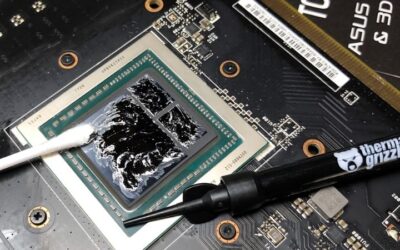
Practically, that rewards good contact more than raw capacity. A properly mounted mid-range cooler with fresh compound often outperforms a larger cooler fitted carelessly, so take time over the mounting pressure and paste spread.
Tighten the bracket in stages using a cross pattern rather than fully securing one screw first. Even pressure across the heat spreader spreads compound more consistently and is the cheapest improvement available to any build.
Check Memory Clearance on AM5
Large air coolers frequently overhang the first DIMM slot. On AM5 boards with four slots that can force low-profile memory or an offset front fan, both of which are easier to plan for than to fix afterwards.
Manufacturers publish clearance figures for exactly this reason. Compare the cooler’s stated RAM clearance against your memory kit’s height before ordering, particularly if the kit has a tall decorative heat spreader.
Front fan position offers a workaround. Many dual-tower coolers allow the forward fan to be raised, which clears tall memory at the cost of slightly reduced airflow through the lower portion of the fin stack.
Prioritise Noise Over Peak Capacity
Since the chip cannot exceed its power ceiling, extra cooling capacity translates into lower fan speeds rather than higher performance. That makes noise the most useful metric to optimise for on this particular processor.
Larger fans spinning slowly are consistently less intrusive than small fans working hard. A 140 mm tower cooler or a 240 mm AIO with a gentle fan curve produces a quieter machine than a compact cooler at full speed.
Fan curve tuning costs nothing and helps immediately. Allowing temperatures to sit a few degrees higher before ramping speeds keeps the machine quiet during gaming, where the chip rarely approaches its thermal limit anyway.
Top Picks: Best CPU Cooler for 7800X3D Builds
The best CPU cooler for 7800X3D depends on case size and how quiet you want the machine, so these six span budget towers to a 240 mm AIO. Specifications come from manufacturer documentation; check height and RAM clearance for your case.
| Cooler | Type | Height / Radiator | Fans | Best For |
|---|---|---|---|---|
| Thermalright Phantom Spirit 120 SE | Air, dual tower | Around 154 mm | 2 x 120 mm | Best value |
| Noctua NH-U12A | Air, single tower | Around 158 mm | 2 x 120 mm | Quiet, compact |
| Arctic Liquid Freezer III 240 | AIO | 240 mm | 2 x 120 mm | AIO value |
| DeepCool AK620 | Air, dual tower | Around 160 mm | 2 x 120 mm | Mid-range air |
| be quiet! Pure Rock 2 Black | Air, single tower | Around 155 mm | 1 x 120 mm | Low noise budget |
| ID-COOLING SE-224-XT ARGB | Air, single tower | Around 154 mm | 1 x 120 mm | Entry builds |
Thermalright Phantom Spirit 120 SE
This is the default recommendation for the 7800X3D and it is difficult to argue against. Dual-tower construction with seven heat pipes and two fans delivers cooling comparable to coolers costing several times as much.
It keeps the chip comfortable during extended gaming with restrained fan noise. The drawbacks are mounting hardware that feels less refined than premium brands and a height that still needs checking against compact cases.
Noctua NH-U12A
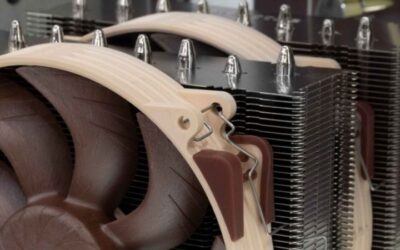
The NH-U12A is the answer when space is tight but noise still matters. Its single-tower design clears memory slots on most AM5 boards while performing close to larger dual-tower coolers thanks to dense fin stacking.
Mounting hardware and fan quality are both excellent, and the warranty is long. The limitation is price, which sits well above the Thermalright while delivering a modest performance advantage on a chip this easy to cool.
Arctic Liquid Freezer III 240
If you prefer liquid cooling, a 240 mm unit is sufficient here and this one offers a thicker radiator than most. The integrated VRM fan also directs airflow across the board’s power stages, which air coolers do naturally.
It keeps the chip cool with low fan speeds during gaming. The trade-offs are radiator thickness that can foul memory in some cases, plus the pump as an additional component with a finite service life.
DeepCool AK620
The AK620 sits in the mid-range with dual-tower cooling and a clean, unfussy appearance. It handles the 7800X3D with plenty of headroom and runs quietly enough that most users never notice it during gaming.
For a build that also does occasional rendering, it has capacity in reserve. The compromise is memory clearance, since its width can overhang the first DIMM slot on AM5 boards with taller memory kits installed.
be quiet! Pure Rock 2 Black
Single-tower coolers are entirely adequate for this processor, and this one prioritises quiet operation. It fits comfortably in mid-towers, clears memory on most boards and keeps the chip within specification during gaming.
The all-black finish suits builds where the cooler is visible. The limitation is capacity under sustained multi-threaded load, where a single 120 mm fan on one tower reaches its ceiling sooner than dual-tower designs.
ID-COOLING SE-224-XT ARGB
At the entry level this remains a sensible choice for a gaming-focused build. Four heat pipes with direct contact and a single 120 mm fan handle a 120W chip during gaming loads without difficulty.
For a first build on a budget it does the job and adds lighting. The honest limitations are noise at higher fan speeds and reduced capacity during long multi-threaded work, where a dual-tower cooler pulls ahead clearly.
Where Cooling Upgrades Sit in the 2026 Market
Two market conditions make cooling a sensible place to spend right now, particularly for anyone holding off on larger purchases.
Small Cooling Upgrades Still Pay Off
With graphics card pricing elevated, cooling is among the few upgrades that reliably improves a machine for modest cost. Fresh compound and a better cooler reduce noise noticeably even when temperatures were already acceptable.
On a chip like this the gain is mostly acoustic rather than performance-related. That still matters day to day, since a quieter machine is more pleasant to use than one running a few degrees cooler under load.
Coolers Remain a Genuine Discount Category
The usual advice to wait for seasonal sales does not apply to memory, storage or prebuilt systems this year, since those are built from components purchased at elevated contract prices. Cooling hardware avoided that.
Coolers, fans, paste, cases and power supplies still see real discounts during sale events. If the upgrade is not urgent, this is one of the few areas where holding out for a sale remains worthwhile.
Budget Cooler Pricing Has Tightened
Cooling hardware absorbed some broader cost pressure, with cooler pricing up roughly 6 to 8 percent and promotional pricing policies withdrawn in February 2026. Entry-level models felt that more than premium ranges.
The gap between budget and mid-tier coolers has narrowed as a result. Since the Phantom Spirit already sits close to entry pricing, stepping up from a single-tower cooler is easier to justify than it once was.
Frequently Asked Questions
These questions come up most often when people pair a cooler with this particular processor.
Do I need a 360 mm AIO for a 7800X3D?
No. The chip’s power ceiling means a good dual-tower air cooler or a 240 mm AIO keeps it within specification during gaming. A 360 mm unit lowers temperatures further but delivers no meaningful performance benefit.
Why does this chip run warm despite only 120W?
Heat concentrates in a small area because the stacked cache sits above the compute die on this generation. That raises reported temperatures without indicating a cooling problem, provided the chip is not hitting its thermal limit.
Will the best CPU cooler for 7800X3D fit with tall memory?
Check the clearance figure. Dual-tower coolers commonly overhang the first DIMM slot, so either choose low-profile memory or select a cooler like the NH-U12A that clears the slots on most AM5 boards.
Is undervolting worth doing on this processor?
Often yes. Curve Optimizer undervolting reduces heat output at little or no performance cost, which lets fans run slower. On a chip already limited by its power ceiling, that translates directly into a quieter machine.
See More:
- Best MSI motherboard
- Best motherboard processor combo for gaming
- Best B550 motherboard
- Best CPU for streaming
- What is the best AM4 CPU for gaming
Final Thoughts
The best CPU cooler for 7800X3D is whichever option runs quietly in your case, since this chip’s power ceiling means extra capacity buys silence rather than speed. The Phantom Spirit 120 SE covers most builds at low cost, the NH-U12A suits tight memory clearance, and a 240 mm AIO is ample if you prefer liquid cooling.



Write Your Review
No reviews yet. Be the first to share your experience!