
- Top Pick: Audio Express AXHDCAP 4K HDMI Video Capture Card, Cam Link Card Game Audio Adapter HDMI to USB 2.0 Record Capture Device for Streaming, Live Broadcasting, Video Conference, Teaching, Gaming
- Best Value: 4K HDMI Capture Card for Streaming, Full HD 1080P 60FPS USB 3.0 Cam Link Game Audio Video Capture Card, Work with Camera/Nintendo Switch/Xbox/PS4/PS5/PC/OBS (Black)
- Premium Choice: Capture Card 4K HDMI Video Streaming to USB 3.0 1080P 60FPS Capture Device
Best video capture card shopping gets simpler once you separate two very different jobs: recording gameplay at high frame rates, and bringing a camera signal into a computer at broadcast quality. The hardware overlaps a great deal, but the specifications that actually matter for each of those jobs are not the same at all.
As an Amazon Associate we earn from qualifying purchases at no extra cost to you. Product prices and availability are accurate as of the date shown and are subject to change.
By Ryan Cole, PC hardware writer at NvidiaReview
How to Choose the Best Video Capture Card
Selecting the best video capture card starts with the source signal and ends with where the footage goes afterwards. Three things determine whether a device suits your workflow: the resolution and frame rate it records, how it handles HDR and colour, and what your recording drive can sustain.
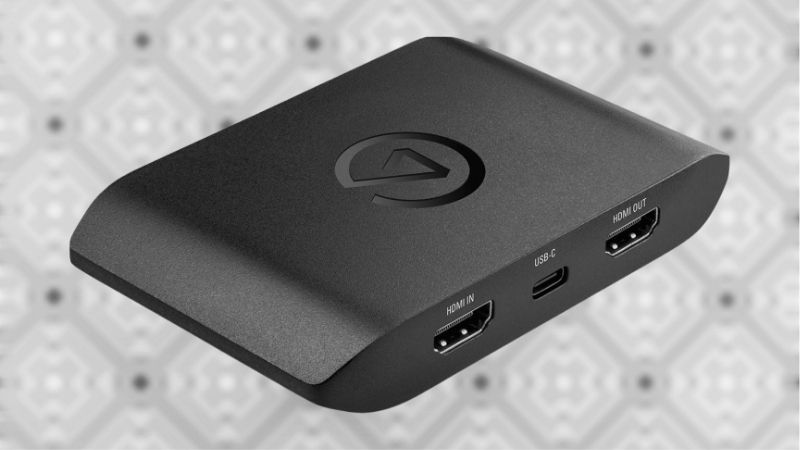
Capture Resolution Against Recording Frame Rate
Most current devices top out at 4K60 for recording, with lower resolutions available at higher frame rates. For video production, 4K30 from a camera is often plenty, while gameplay archives usually benefit more from 1080p120 or 1440p60 than from a 4K file that is awkward to edit.
Be realistic about what you will actually publish. Recording everything at maximum resolution fills drives quickly and slows every subsequent step of editing. Choosing a capture format that matches your final delivery target saves far more time than the extra pixels are worth in most projects.
HDR, Colour Depth and Signal Handling
HDR10 capture is now common at 4K60, but the results depend on your editing pipeline as much as the hardware. If your software or display cannot handle the metadata properly, HDR footage can arrive looking washed out, and converting it afterwards costs more effort than it usually returns.
Check how a device handles the incoming signal too. Some units apply their own processing or limited colour range by default, which shifts contrast before you ever open an editor. Clean, unprocessed capture with a full colour range is worth more than any number printed on the box.
Storage Throughput and Recording Format
Uncompressed and lightly compressed 4K60 capture writes a great deal of data per minute, and a slow drive is a far more common cause of dropped frames than the card itself. An NVMe drive dedicated to recording removes that variable entirely and costs less than replacing working hardware.
Devices with onboard hardware encoding reduce the load by writing a compressed stream instead, at the cost of some flexibility later in editing. If you record long sessions and edit lightly, that trade is worth it. If you grade footage carefully, keep the capture as clean as you can.
Top Picks: Best Video Capture Card for Each Workflow
These five candidates for the best video capture card cover camera work, console recording and high refresh PC capture, in both internal and external formats. All specifications are vendor-published. Availability was checked in August 2026 and shifts with stock levels.
| Device | Format | Max capture | HDR | Primary use |
|---|---|---|---|---|
| Elgato Cam Link 4K | USB 3.0 external | 4K30 / 1080p60 | No | Cameras as webcams |
| Elgato Game Capture 4K X | USB 3.2 Gen 2 | 4K60 | HDR10 | High refresh gameplay |
| Elgato 4K Pro | PCIe internal | 4K60 | HDR10 | Dedicated capture PC |
| AVerMedia Live Gamer Ultra 2.1 | USB 3.2 Gen 2 | 4K60 | Yes | Console recording |
| Razer Ripsaw HD | USB 3.0 external | 1080p60 | No | Simple 1080p capture |
Elgato Cam Link 4K – Best for Camera Sources
Cam Link exists to turn a mirrorless camera or DSLR into a clean video source for a computer, capturing 4K30 or 1080p60 over USB 3.0. Nearly every conferencing and streaming application recognises it as a standard webcam device, which removes almost all of the usual driver friction.
There is no passthrough, so you cannot use it for console capture, and it depends on your camera producing clean HDMI output without overlays. Longer sessions can also overheat some camera bodies regardless of the adapter. For turning good glass into a good video feed, nothing is simpler.
Elgato Game Capture 4K X – Best for High Refresh Gameplay
The 4K X records 4K60 with HDR10 while passing through up to 4K144, 1440p240 or 1080p240 with variable refresh rate support, so your own display keeps running at full speed. Over USB 3.2 Gen 2, it handles both console sources and a second gaming PC without changing configuration.
It requires a true 10Gbps USB-C port to deliver its rated figures, and older ports silently reduce what is available. Recording 4K60 also produces large files that demand a fast dedicated drive. For anyone capturing from a high refresh setup, it is the most complete external option.
Elgato 4K Pro – Best Internal Option
Installed in a PCIe slot, the 4K Pro records 4K60 HDR10 with passthrough up to 4K144 and keeps the whole data path inside the machine. In a dedicated capture or editing workstation, that avoids competing with microphones, external drives and camera adapters for USB controller bandwidth.
It is desktop-only and occupies a slot you might want for storage or audio hardware, and it costs more than the equivalent external unit. Installation also means opening the case. If your capture machine is a fixed desktop that never travels, the internal route is the more reliable one.
AVerMedia Live Gamer Ultra 2.1 – Best for Console Recording
AVerMedia specifies 4K60 HDR capture with 4K144 passthrough over USB 3.2 Gen 2, which suits recording console sessions for later editing without forcing your own display down to 60Hz. It behaves well with standard capture software rather than demanding a proprietary application.
Build quality is plainer than the price implies and the bundled software is basic. It also needs the correct 10Gbps port to reach its specification, which catches out people plugging into a front panel connector. For archiving console footage at high quality, it is a dependable choice.
Razer Ripsaw HD – Best Simple 1080p Device
The Ripsaw HD records 1080p60 while passing through 4K60, connecting over ordinary USB 3.0 with no special port requirements. It also includes a headphone and microphone passthrough on the unit itself, which simplifies audio routing for console players streaming from a single machine.
Capture is capped at 1080p60, so it is not the device for archiving footage you intend to crop or reframe in an editor. Build is functional rather than premium. If your output target is 1080p and you want the audio handling built in, it removes a surprising amount of setup work.
What the Late 2026 Release Calendar Means for Capture Buyers
Demand for the best video capture card options follows the games and content calendar rather than component prices, and the next few months are busier than usual. Three developments are worth factoring into your timing before you order anything for a recording setup.
A Console-Only Blockbuster Is Reshaping PC Setups
GTA 6 launches on 19 November for PlayStation 5 and Xbox with no PC version announced, and past precedent suggests a long wait: GTA V took around 19 months to reach PC, Red Dead Redemption 2 roughly 13. Call of Duty Modern Warfare 4 arrives before it, on 23 October.
For creators built around a PC workflow, that means routing a console through the machine they already own. If you expect to record either title, sort the capture hardware and test the whole chain in advance, because launch week is the worst possible time to discover a cable or port problem.
No New PC Hardware Until CES 2027
Processors and graphics cards from the next generation have slipped to CES in January 2027, so nothing pending will change what your editing machine can encode or how many PCIe lanes you have free. That removes the main reason to delay a capture purchase while waiting for a platform refresh.
Buy for the system you currently run. Confirm whether you have a spare PCIe slot and whether your USB-C ports are genuinely 10Gbps, since both are fixed until you rebuild. Everything described here reflects August 2026 pricing, with accessory discounts likely around the late November sales.
Late November Is a Reasonable Window for Accessories
Black Friday lands on 27 November, after both major releases. Memory and storage will not see real reductions this year because that inventory was built from expensive contract components, but capture hardware, cameras and peripherals generally still discount properly in that period.
If your recording work starts in October, buy now and spend the time testing cables, ports and drive throughput instead. If the project is further out, waiting is sensible, since no new capture hardware generation is expected before CES 2027 and prices should soften slightly.
Frequently Asked Questions
The questions that come up most when setting up a recording chain: what drive speed is genuinely needed, whether HDR is worth capturing at all, how audio gets handled alongside video, and whether the best video capture card really needs to sit inside the machine rather than beside it.
What storage do I need for 4K60 recording?
A dedicated NVMe drive is the safest answer, since sustained 4K60 capture writes a large amount of data continuously. Recording to the same drive that runs your operating system and game is the most common cause of dropped frames, and it is the cheapest problem on this list to fix.
Should I record in HDR?
Only if your editing software and delivery platform both handle it properly. HDR footage that passes through a pipeline expecting standard range typically arrives flat and needs correction work. For most creators publishing to standard platforms, capturing in SDR produces a cleaner result faster.
How is audio handled during capture?
HDMI carries audio alongside video, so game or camera sound arrives with the picture. Microphone audio is usually added separately in your recording software, though some devices include headphone and microphone passthrough on the unit itself to simplify console setups with a wired headset.
Is an internal card better than an external one?
Internal cards keep data off the USB bus and generally show lower preview latency, which helps in a fixed desktop. External units are more flexible, work with laptops, and are easier to move between machines. For most people the deciding factor is available slots and port speed, not image quality.
See More:
- Best thermal compound paste
- Thermal paste at Best Buy
- Graphics card at Best Buy
- Best AM4 CPU for gaming
- Best motherboard for 9800x3d
Final Thoughts
The best video capture card is decided by your source and your delivery target. Cam Link handles cameras with almost no setup, the 4K X covers high refresh gameplay if you have a 10Gbps port, and the Ripsaw HD keeps things simple at 1080p. Sort out a dedicated recording drive before paying for resolution you may never publish.
As an Amazon Associate we earn from qualifying purchases at no extra cost to you. Product prices and availability are accurate as of the date shown and are subject to change.







Write Your Review
No reviews yet. Be the first to share your experience!