
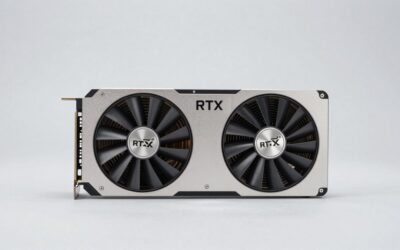
- Top Pick: ASRock Radeon RX 9060 XT Challenger 16GB OC, RDNA 4, 3290MHz Boost, 16GB GDDR6 128-bit, PCIe 5.0, Dual Fans, 0dB Silent, LED Indicator, DisplayPort 2.1a, HDMI 2.1b
- Best Value: KOTIN Prebuilt Gaming PC RTX 5070 12GB, Ryzen 7 9700X, 32GB DDR5, 1TB SSD
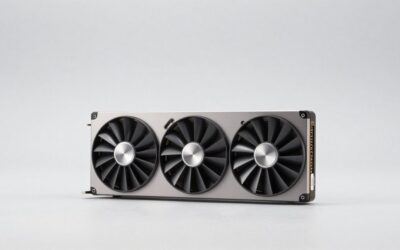
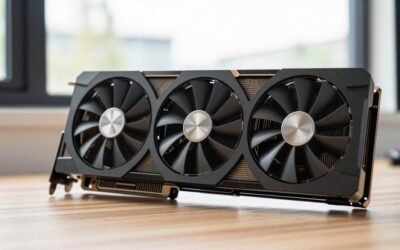
- Premium Choice: ASRock Radeon RX 9070 Challenger 16GB OC Graphics Card, RDNA 4, 2520MHz Boost, 16GB GDDR6 256-bit, PCIe 5.0, Triple Fans, 0dB Silent, LED Indicator
1440p has quietly become the sweet spot for PC gaming in 2026. It delivers a massive jump in sharpness over 1080p without demanding the brutal horsepower (and price) that native 4K still requires. Pair a 1440p panel with a 144Hz, 165Hz, or 240Hz refresh rate and you get buttery-smooth motion in competitive shooters plus crisp detail in sprawling single-player worlds. The catch: not every graphics card is built to feed those high-refresh pixels, and the gap between “playable” and “locked at your monitor’s max refresh” is wider than the spec sheets suggest.
- How Much GPU Power Do You Really Need for 1440p?
- VRAM for 1440p: Is 12GB Still Enough in 2026?
- DLSS 4 vs FSR: Upscaling Changes the Math
- Best 1440p GPU Comparison Table
- Ray Tracing at 1440p: Which Cards Handle It?
- Power and PSU Requirements
- Verdict: The Best 1440p GPUs by Budget
- Related Guides
- Frequently Asked Questions
- Related Articles
- Related Guides
This guide breaks down the best GPUs for 1440p high-refresh gaming right now, spanning NVIDIA’s RTX 50-series (RTX 5070, RTX 5070 Ti, and RTX 5080) and AMD’s Radeon RX 9070 and RX 9070 XT. We’ll cover how much VRAM you actually need at 1440p, how DLSS 4 and FSR change the math, where ray tracing is worth the hit, and what power supply you should plan around. By the end you’ll have a clear per-budget pick instead of a wall of benchmarks.
As an Amazon Associate we earn from qualifying purchases at no extra cost to you.


Whether you’re upgrading from an aging RTX 3060 Ti or building fresh, the goal is the same: maximum frames per dollar at 2560×1440, with enough headroom to keep the card relevant for the next two to three years of game releases.
As an Amazon Associate we earn from qualifying purchases. Prices and availability are accurate as of publication and may change. We only recommend hardware we believe delivers genuine value for 1440p gamers.
How Much GPU Power Do You Really Need for 1440p?
At 2560×1440 you’re pushing roughly 78% more pixels than 1080p, so the GPU is almost always the bottleneck rather than your CPU. For a smooth 60fps in demanding AAA titles at high settings, a modern mid-range card like the RTX 5070 or RX 9070 is the realistic entry point. If your monitor runs at 144Hz or higher and you want to actually saturate it, step up to an RTX 5070 Ti or RX 9070 XT.
Competitive esports titles like Valorant, CS2, and Overwatch 2 will happily run at 240fps+ on nearly any RTX 50-series card. The heavy lifting comes from graphically dense games such as Cyberpunk 2077, Alan Wake 2, and the latest Unreal Engine 5 releases, where ray tracing and dense geometry can halve your frame rate. That’s where upscaling and a larger VRAM buffer earn their keep. If you’re weighing resolutions before you buy, our 1440p vs 4K gaming comparison lays out the trade-offs in detail.
VRAM for 1440p: Is 12GB Still Enough in 2026?
VRAM has become the single most debated spec for 1440p, and for good reason. Modern titles with high-resolution texture packs, ray tracing, and frame generation buffers can push memory usage past the old comfort zones. Here’s the practical breakdown:
- 12GB (RTX 5070): Still fine for the vast majority of 1440p games today, but you’ll occasionally need to dial textures from Ultra to High in the most demanding titles to avoid stutter.
- 16GB (RTX 5070 Ti, RTX 5080, RX 9070/9070 XT): The comfortable sweet spot for 1440p in 2026. It gives you headroom for max textures, ray tracing, and future games without worrying about running out.
- 20GB+ : Overkill for pure 1440p, but useful if you dabble in 4K, local AI workloads, or heavy content creation.
Our advice: if your budget stretches to a 16GB card, take it. VRAM is the spec most likely to age a GPU prematurely, and the jump from 12GB to 16GB buys real longevity. For a deeper look at memory scaling, see our VRAM requirements guide.
DLSS 4 vs FSR: Upscaling Changes the Math
Upscaling is no longer a nice-to-have; at 1440p it’s the difference between 70fps and 140fps in ray-traced titles. NVIDIA’s DLSS 4 with Multi Frame Generation is the current benchmark, using AI to render at a lower internal resolution and reconstruct a razor-sharp 1440p image, then optionally insert generated frames to multiply smoothness. On RTX 50-series cards it’s remarkably clean, with far less ghosting than earlier versions.
AMD’s FSR has closed the gap considerably. The latest ML-based FSR on the RX 9070 series delivers image quality that’s genuinely competitive in most scenes, and it works across a broad range of hardware. For pure rasterized performance per dollar, AMD is aggressive; for the best upscaling and ray tracing package, NVIDIA still leads. If you play a lot of ray-traced single-player games, DLSS 4 tips the value equation toward the green team.
Best 1440p GPU Comparison Table
| GPU | VRAM | 1440p Performance | Best For | Approx Price (USD) |
|---|---|---|---|---|
| NVIDIA RTX 5070 | 12GB GDDR7 | High-refresh at High settings; strong with DLSS 4 | Best value entry to 1440p high-refresh | $549 |
| AMD RX 9070 | 16GB GDDR6 | Excellent raster; solid ray tracing with FSR | VRAM headroom on a mid-range budget | $599 |
| NVIDIA RTX 5070 Ti | 16GB GDDR7 | Maxes most 144Hz panels at Ultra | The 1440p sweet spot pick | $749 |
| AMD RX 9070 XT | 16GB GDDR6 | Top-tier raster; great high-refresh value | Best raster frames per dollar | $699 |
| NVIDIA RTX 5080 | 16GB GDDR7 | Overkill for 1440p; future-proof at 240Hz+ | Max settings with RT and long-term headroom | $999 |
Ray Tracing at 1440p: Which Cards Handle It?
Ray tracing is where NVIDIA’s architecture continues to pull ahead. At 1440p with heavy RT (path-traced titles like Cyberpunk 2077’s Overdrive mode), the RTX 5070 Ti and RTX 5080 deliver comfortably playable frame rates once DLSS 4 is enabled. The RTX 5070 handles moderate ray tracing well but leans harder on upscaling for the most punishing scenes.
AMD’s RX 9070 and 9070 XT have made a real generational leap in RT performance and are now genuinely usable for ray tracing at 1440p, especially with FSR active. They still trail NVIDIA in the heaviest path-traced workloads, but for reflections, shadows, and global illumination in typical AAA games, the experience is smooth. If ray tracing is a top priority, lean NVIDIA; if you mostly play rasterized titles and want more frames for your money, AMD is compelling. For monitor pairing advice, check our best 1440p gaming monitors roundup.
Power and PSU Requirements
The RTX 50-series and RX 9000-series are more power-efficient than the previous generation, but you still need to plan your PSU correctly. Here’s a safe guideline for a typical single-GPU build:
- RTX 5070 / RX 9070: 650W quality PSU recommended.
- RTX 5070 Ti / RX 9070 XT: 750W recommended for headroom.
- RTX 5080: 850W recommended, especially with a high-end CPU.
Stick with an 80 Plus Gold (or better) unit from a reputable brand, and make sure it has the correct power connectors for your chosen card. Undersizing your PSU is a common and avoidable cause of instability. If you’re planning a full system, our 1440p gaming PC build guide pairs each of these GPUs with a balanced CPU and platform.
Verdict: The Best 1440p GPUs by Budget
There’s no single winner because the right card depends on your budget and priorities, but here are our clear picks:
- Best overall value: The RTX 5070 Ti is the 1440p sweet spot. Its 16GB of GDDR7, excellent ray tracing, and DLSS 4 make it the card that maxes most high-refresh panels without compromise.
- Best budget entry: The RTX 5070 delivers superb 1440p performance for the money and pairs beautifully with DLSS 4 to stretch its 12GB buffer.
- Best raster per dollar: The RX 9070 XT gives you top-tier rasterized frames and 16GB of VRAM at a price NVIDIA can’t match head-to-head.
- Best premium / future-proof: The RTX 5080 is technically overkill for 1440p, but if you run a 240Hz+ panel or want years of Ultra-settings headroom, it’s the one to buy.
For most gamers building a high-refresh 1440p rig in 2026, the RTX 5070 Ti hits the ideal balance of price, performance, VRAM, and features. Budget-conscious buyers should look hard at the RTX 5070 or RX 9070 XT depending on whether they prioritize ray tracing or raw raster.
Frequently Asked Questions
Is the RTX 5070 good enough for 1440p high-refresh gaming?
Yes. The RTX 5070 comfortably drives 1440p at high settings and, with DLSS 4 enabled, can push well past 144fps in most modern titles. Its 12GB of VRAM is adequate today, though you may occasionally lower textures from Ultra to High in the most demanding, VRAM-hungry games.
Do I need 16GB of VRAM for 1440p in 2026?
You don’t strictly need it, but 16GB is the recommended comfort zone. A 12GB card like the RTX 5070 handles the vast majority of 1440p games well. Stepping up to 16GB (RTX 5070 Ti, RTX 5080, or the RX 9070 series) buys real longevity and lets you run max textures and ray tracing without memory concerns.
Should I choose NVIDIA or AMD for 1440p gaming?
Choose NVIDIA (RTX 50-series) if ray tracing and the best-in-class DLSS 4 upscaling matter most to you. Choose AMD (RX 9070 / 9070 XT) if you want maximum rasterized frames per dollar and appreciate the generous 16GB VRAM. Both deliver excellent 1440p experiences; it comes down to features versus raw value.
What power supply do I need for an RTX 5070 Ti or RX 9070 XT?
Plan for a quality 750W 80 Plus Gold power supply for either card. That provides comfortable headroom for the GPU, a modern CPU, and peripherals. A 650W unit can work in efficient builds, but 750W leaves room for transient spikes and future upgrades, reducing the risk of instability.

Write Your Review
No reviews yet. Be the first to share your experience!