
Is 12GB VRAM enough for 4K gaming? With 4K putting more pressure on graphics memory than any other resolution, this is a crucial question before you buy a card or a 4K monitor. The honest answer is: yes for most games today, but it is the sensible minimum rather than a generous buffer. This step-by-step guide shows you how to check your real VRAM usage at 4K, tune your settings to stay within budget, and decide confidently whether 12GB works for your setup.
As an Amazon Associate we earn from qualifying purchases at no extra cost to you.






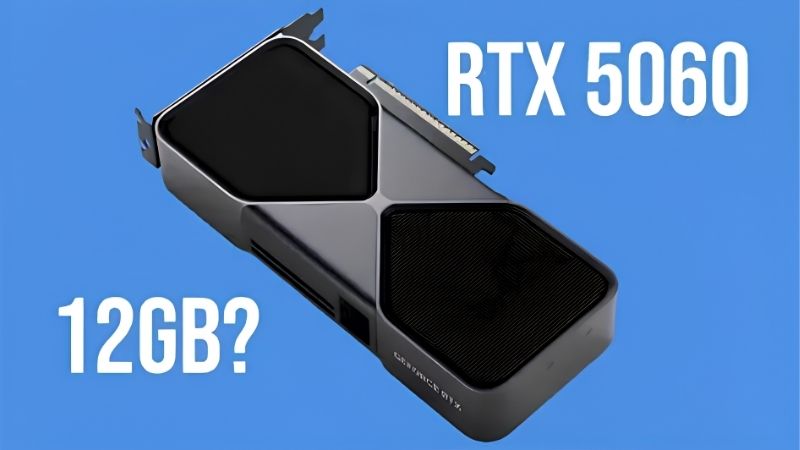
Is 12GB VRAM Enough for 4K? The Honest Answer
Let us settle the debate before diving into specifics. At 4K, VRAM demand rises sharply, so the answer depends on your games and settings more than a single number suggests. Here is the realistic picture for 12GB at 4K and what you need to test it yourself.
The Short Answer: Yes for Most Games, as a Sensible Minimum
For most games at 4K today, 12GB of VRAM is enough to run high settings smoothly. The majority of titles stay within that budget, and 12GB is widely considered the practical minimum for comfortable 4K gaming.
The caution is that a handful of the newest, most demanding AAA titles with ultra textures and heavy ray tracing can approach or brush past 12GB at 4K. In those cases you may need to step textures down slightly to avoid stutter.
So the honest verdict is that 12GB is enough for most 4K gaming now, but it sits closer to the minimum than the comfortable middle. It works well today, while 16GB offers more headroom for the future.
It is worth putting 4K’s demands in perspective. The jump to 4K roughly quadruples the pixels of 1080p, so memory use climbs accordingly, which is why 12GB that feels generous at 1440p becomes merely sufficient at 4K. The amount is workable, but the margin is thinner, and that is the crucial distinction to understand before buying.
What You Will Need to Check Your VRAM
To answer this for your own system, you need a few simple things. Gather these first.
Start with a VRAM monitoring tool. Free overlay software like MSI Afterburner with RivaTuner displays your real-time VRAM usage in-game, which is the only reliable way to see whether your 4K games actually exceed 12GB. You will also need a genuine 4K monitor and the games you play most, since your personal library at 4K decides the answer far more than any general rule.
If you are choosing a new card rather than testing one you own, it is worth weighing a GPU with 16GB or more of VRAM for extra 4K headroom; a 16GB graphics card removes most of the caveats and future-proofs your 4K setup as games grow more demanding.
Reassuringly, none of these tools cost money. Free monitoring software and a little time in your own 4K games give you a precise answer, which matters more than any general rule because 4K VRAM use varies so much from title to title. Your own library is the real test, not a headline figure.
How VRAM Actually Gets Used at 4K
Understanding what fills your VRAM at 4K helps you manage it. Higher resolutions require larger frame buffers, and 4K’s massive pixel count naturally pushes memory use well above 1080p or 1440p for the same game.
Texture quality is the biggest single factor on top of that. Ultra texture packs consume large amounts of VRAM, which is why lowering textures one notch is the most effective way to reduce usage, while ray tracing adds further demand on top.
The key point is that VRAM use at 4K is something you can influence through settings, not a hard wall. By managing textures and features, you can keep most 4K games comfortably within 12GB, which is exactly what the steps below help you do.
DLSS deserves special mention at 4K. By rendering internally at a lower resolution before upscaling to a sharp 4K image, it not only boosts frame rates but can also reduce VRAM pressure, which makes it a valuable companion to a 12GB card at this demanding resolution.
Step-by-Step: How to Tell If 12GB Is Enough for You
This is the core of the guide. Follow these steps in order to find out whether 12GB works for your specific 4K games and settings, with no guesswork. The numbered format makes it easy to repeat for any game so you always know where you stand.
Step 1 and 2: Monitor Your Real VRAM Usage
- Install a monitoring overlay. Set up free software like MSI Afterburner with RivaTuner and enable the VRAM usage display, so you can see actual memory use at 4K rather than relying on guesswork or online arguments.
- Play your most demanding games at 4K. Load the heaviest titles in your library at native 4K and watch the VRAM figure during busy scenes, since that is when usage peaks and any shortfall becomes visible.
This simple check gives you real data from your own system, which is the only measurement that truly matters for your decision.
Step 3 and 4: Test Your Games and Settings
- Note where usage approaches 12GB. If a game sits comfortably below the limit, you are fine; if it repeatedly pushes right up against 12GB at 4K, that is where stutter and pop-in can appear.
- Check for actual symptoms. Watch for texture pop-in, sudden stutters, or frame drops in busy areas, which are the real-world signs that a 4K game wants more VRAM than you have.
Testing this way identifies which specific titles, if any, are a problem, rather than assuming every 4K game will struggle. Most of your library will likely be perfectly comfortable.
Step 5 and 6: Adjust Textures and Features to Fit
- Drop textures from Ultra to High. In any 4K game that exceeds 12GB, step textures down one level, which sharply reduces VRAM use while looking nearly identical in motion.
- Ease off ray tracing if needed. If a game still stutters, lowering or disabling ray tracing frees additional VRAM and usually restores smooth 4K performance.
After these adjustments, recheck your overlay to confirm you are back within budget. In practice, these two tweaks resolve nearly every 12GB VRAM issue at 4K.
Pro Tips, Mistakes, and the Verdict
You can now measure and manage your own VRAM at 4K, but a few extra habits keep your gaming smooth and help you avoid common misunderstandings. This section covers the honest trade-offs of 12GB at 4K, the pro tips that help, and a final verdict.
Pros and Cons of 12GB VRAM at 4K
Before deciding, weigh the realistic upsides and downsides of running 12GB at 4K.
- Pros: Enough for most 4K games at high settings today, available on more affordable cards than 16GB models, and easily managed with a simple texture adjustment.
- Cons: Sits at the minimum for 4K rather than a comfortable buffer, can be tight in the newest AAA titles at ultra, and offers less future headroom than 16GB.
The balance is that 12GB is genuinely usable at 4K today, but buyers focused on maxed settings and long-term future-proofing should give strong consideration to 16GB.
Pro Tips and Mistakes to Avoid
A few habits make managing 12GB at 4K easy. Treat texture quality as your primary VRAM dial, keep an overlay running when trying a demanding new game, and pair 12GB with DLSS, which lowers the internal render resolution and can ease VRAM pressure.
The common mistakes are simple to avoid. Do not assume every 4K game will exceed 12GB, since most will not, and do not max textures out of habit if you see stutter—one notch down usually resolves it invisibly.
Finally, remember that allocated VRAM is not the same as required VRAM. Games often reserve more than they truly need, so smooth gameplay is a better guide than a high number on your overlay.
It also pays to think ahead when buying at 4K specifically. Because memory demands at this resolution are rising faster than at lower ones, a 12GB card that is comfortable today may feel tighter in a few years, which is why many 4K buyers stretch to 16GB for peace of mind.
See More:
Final Verdict: Is 12GB Enough for Your 4K Setup?
For most gamers at 4K, 12GB is enough today, especially if you are comfortable keeping textures at high in the most demanding titles and using DLSS. It is the sensible minimum that gets the job done across the vast majority of games.
If you play the newest AAA blockbusters at ultra textures with heavy ray tracing, or you want a card to stay comfortable at 4K for several more years, 16GB is the safer, more future-proof choice.
If you are choosing a new card for 4K with the long term in mind, you can compare 16GB options and 4K monitors through the links on this page.
Whatever you decide, let your own measurements guide you rather than online arguments. A quick check of your real 4K usage tells you exactly where 12GB stands for your games, which is far more reliable than any general claim about the resolution.
So, is 12GB VRAM enough for 4K? For most games today, yes—it is the sensible minimum that handles 4K high settings smoothly when you manage textures and lean on DLSS. The caveat is a growing set of demanding AAA titles that brush the limit at ultra, where a small texture step down keeps things stutter-free. Use the monitoring steps above to check your own 4K library, and you will know exactly where you stand—and if you are buying new to last several years, a 16GB card gives you the extra headroom that keeps 4K comfortable.
Top-Rated Picks


| Product | Brand | Rating | Reviews | Price |
|---|---|---|---|---|
| ARCTIC MX-4 (4 g) – Premium Performance Thermal Paste… | ARCTIC | ★ 4.8 | 104k | $4.99 |
| ARCTIC MX-4 (incl. Spatula, 4 g) – Premium Performanc… | ARCTIC | ★ 4.8 | 71.9k | $5.49 |
| Crucial 8GB DDR4 RAM 3200MHz (PC4-25600), Downclockab… | Crucial | ★ 4.8 | 62.8k | $74.99 |
| AMD Ryzen 5 5600X 6-core, 12-thread unlocked desktop … | — | ★ 4.8 | 30.2k | $177.60 |
| NVIDIA Shield Remote; Voice Search, Motion-Activated,… | — | ★ 4.7 | 10.6k | $25.99 |
Frequently Asked Questions
Which 4K settings actually fit within 12GB?
Most current games run at 4K with high textures and DLSS Quality inside 12GB without issue. The combinations that break it are ultra texture packs, path tracing and frame generation used together. Dropping textures a single notch usually frees one to two gigabytes with minimal visible difference at typical viewing distances.
What actually happens when a card runs out of video memory?
The driver begins swapping assets over the PCIe bus to system memory, which is vastly slower. The result is not a gradual frame rate decline but sudden severe stutter, visible texture pop-in and 1 percent lows collapsing while the average frame rate still looks acceptable in a benchmark summary.
Does DLSS reduce video memory usage?
Yes. Upscaling renders the frame at a lower internal resolution before reconstructing it, which shrinks the render targets and associated buffers considerably. Switching from native 4K to DLSS Quality commonly saves one to two gigabytes, which is often exactly the margin a 12GB card needs to stay stable.
How does 12GB compare with 16GB for longevity?
Sixteen gigabytes provides meaningfully more headroom for 4K over a three to four year window, particularly as ray tracing and high resolution textures become more common. Twelve gigabytes remains fine at 1440p for the foreseeable future, but at 4K it will increasingly require dropping a setting or relying on upscaling.
Which 12GB cards have the raw power for 4K anyway?
The upper mid-tier cards that ship with 12GB, such as 70-class models from recent generations, can drive 4K at 60fps with upscaling in most titles. Lower cards with 12GB often run out of shader throughput before memory becomes the constraint, so check core performance rather than capacity alone.











Write Your Review
No reviews yet. Be the first to share your experience!