
- Top Pick: ZOTAC Gaming GeForce RTX 5080 Solid CORE OC DLSS 4 16GB GDDR7 256-bit 30 Gbps PCIE 5.0 Gaming Graphics Card, IceStorm 3.0 Advanced Cooling, Spectra RGB Lighting, ZT-B50800J2-10A
- Best Value: ZOTAC Gaming GeForce RTX 5080 Solid CORE OC DLSS 4 16GB GDDR7 256-bit 30 Gbps PCIE 5.0 Gaming Graphics Card, IceStorm 3.0 Advanced Cooling, Spectra RGB Lighting, ZT-B50800J2-10P
- Premium Choice: GIGABYTE GeForce RTX 5080 Gaming OC 16G Graphics Card, WINDFORCE Cooling System, 16GB 256-bit GDDR7, GV-N5080GAMING OC-16GD Video Card

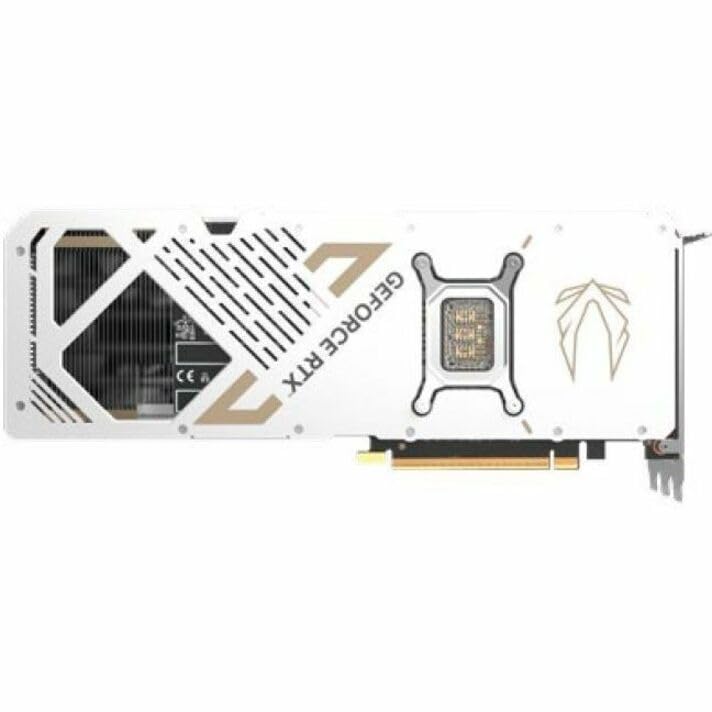


The zotac gaming geforce rtx 5080 solid is a $999 decision made after the hard decision is already over. You picked the 5080. Now you are looking at five cards with identical silicon, a $100-150 spread, and no useful information about which cooler is actually better – because at this tier the audience is too small for anyone to make a video comparing them. This review covers what separates board partners at 360W, the physical and power checks that decide whether the card performs as designed, and whether Zotac’s traditional undercut is a bargain or a compromise.
What Separates Board Partners at 360W
Start with the part that governs everything: every RTX 5080 runs identical silicon. Roughly 10,752 CUDA cores, 16GB of GDDR7 on a 256-bit bus, a 360W board power figure, and a $999 MSRP. Zotac changes none of that. What Zotac sells you is a cooler, a factory clock bin, a warranty, and a price – and at 360W, exactly one of those four genuinely matters.
As an Amazon Associate we earn from qualifying purchases at no extra cost to you.



Why the Cooler Is the Only Real Variable
At 250W, board partner coolers are close to interchangeable and the cheapest competent one wins. At 360W that stops being true, and it is worth understanding why before you optimise for price.
Modern Nvidia cards are not clock-limited – they are power and thermal limited. GPU Boost pushes the card as far as its power budget and temperature allow, dynamically, every second. That means your sustained clock is a function of how well the cooler holds temperature under a four-hour load, not of what the box says.
The practical consequence: a card that settles at 65C holds higher boost bins indefinitely than the same silicon at 75C. That difference is worth roughly 60-90 MHz of sustained clock – considerably more than any factory OC bin, which typically adds 2-4% that you will never feel. So read a model like this correctly: the cooler is the product. Everything else on the box is decoration.
What separates a premium cooler from a value one at this wattage: vapour chamber design and thermal mass, fan hardware quality at matched duty cycles, and frame rigidity. Those are real engineering differences at 360W in a way they simply are not at 250W. Whether they are worth $100 is the question this review exists to answer.
The 360W Reality Check
This is where 5080 purchases actually go wrong, and none of it appears in a benchmark.
Power first. 360W sustained wants an 850W supply as a sensible floor, and ideally ATX 3.0 or newer with a native 12V-2×6 cable. This is not preference at this wattage – the 5080 produces transient spikes well above its rated draw, and an older supply without the headroom will shut your system down under load rather than degrading gracefully.
The connector second, and this is the one that destroys hardware. The 12V-2×6 must be fully seated until it clicks. Partial seating is the mechanism behind essentially every reported melted connector, and the margin for error shrinks as wattage climbs. Seat it, tug it, look at it. If your PSU is ATX 3.0, buy the native cable for it rather than using the bundled adapter – $25 against $999 is not a decision requiring thought.
Heat third. 360W has to leave your case, and if it does not, it cooks your NVMe drive, your VRMs, and your RAM alongside the GPU. A 5080 in a chassis with one intake fan behind a solid glass panel will throttle regardless of whose cooler is on it – at which point you have spent $999 to get $750 of performance and the entire board partner debate becomes irrelevant.
Clearance, Weight and Sag
Measure before you order rather than after, because returns at this price are painful.
Three dimensions matter. Length front to back – cards in this class commonly run 320-350mm, and your case manual’s clearance figure is optimistic because cable routing eats into it. Height from the slot upward, relevant against side panels. And slot thickness, since 3 to 3.5 slots is normal here and will block the PCIe slots beneath – which matters if you run a capture card or NVMe expansion. Verify the exact figures on the product listing rather than a forum post; board partners revise designs between production batches.
Then plan for the weight. A cooler sized for 360W is heavy enough that sag puts genuine lateral strain on the 12V-2×6 connector – which is precisely the failure mode you cannot afford. A $12 support bracket on a $999 card is the most obviously correct purchase in this review. Place it near the far end and raise the card by roughly half its sag rather than back to level; over-correcting inverts the PCB stress instead of removing it.
How Zotac Compares to ASUS, MSI and Gigabyte
You are looking at five 5080 models with a $100-150 spread on identical silicon. Here is how to read that spread honestly, including where I think the value argument breaks down.
Where the Premium Brands Earn It – and Where They Do Not
Zotac’s positioning has been consistent for years: competent coolers at lower prices with a leaner brand presence. At this tier that usually means $50-150 below an equivalent ASUS TUF or MSI Gaming Trio for a card whose sustained temperatures land within a few degrees.
Where the premium models genuinely earn the money at 360W: heavier vapour chambers with more thermal mass, quieter fan hardware at matched duty cycles, and sturdier frames. Those matter here. A card sustaining 65C instead of 73C holds real clock, and on a $999 purchase that is not academic. This is the tier where cooler engineering stops being marketing.
Where they do not earn it: the OC bin, the RGB, the backplate finish, and the box. Those are worth nothing and they are priced as though they are worth something.
The honest calculus at $999: a $100 saving is 10%. If Zotac’s cooler lands within a few degrees of the premium models – and historically it does – take the saving and put it toward a native cable, a support bracket, and intake fans, which will do more for your sustained clocks than the premium cooler would have. The one variable that should override this is regional support: an RMA on a $999 card is not a hypothetical inconvenience, and Zotac’s service quality varies by region in a way no spec sheet captures. If your market has thin Zotac presence, pay the premium and do not let anyone tell you that is irrational.
Pros and Cons of the Zotac RTX 5080 Solid
| Pros | Cons |
|---|---|
| Typically $50-150 below equivalent ASUS and MSI models on identical silicon | 16GB on a $999 card is the most criticised thing about the 5080, and no board partner fixes it |
| Triple-fan cooler with zero-RPM idle – silent on the desktop where the card lives most of the time | 360W demands an 850W ATX 3.0 supply and a properly seated 12V-2×6, not an adapter |
| Genuine 4K capability with DLSS 4 and Multi Frame Generation | Premium coolers do genuinely matter at 360W in a way they do not at 250W |
| Fan curve fully controllable in Afterburner – no vendor software required | 320-350mm at 3+ slots blocks the slots below and rules out most compact cases |
| CUDA and NVENC for creator work, which is a hard requirement rather than a preference | Zotac RMA experience varies by region, and that risk scales with card price |
The one entry worth dwelling on is the first con, because no purchase decision fixes it. The 5080 carries the same 16GB as an RX 9070 XT costing $400 less. That means the flagship-tier justification – buy more memory, keep the card longer – does not exist here. You are paying for frames and ray tracing, not for headroom.
Who Should Actually Buy This Card
Buy it if you run 4K at high refresh, if ray tracing is genuinely part of your play rather than a screenshot feature, or if your machine earns money in Blender, Resolve, or local AI where CUDA is a requirement. It should live in a full or mid tower with real intake airflow, on an 850W ATX 3.0 supply with a native 16-pin cable, with a support bracket underneath.
Do not buy it for 1440p. An RX 9070 XT at $599 already exceeds what most 1440p panels display, carries the same 16GB, and leaves you $400. Do not buy it if your PSU is 750W and staying that way, or if your case is compact. And do not pay a premium for the Solid’s clock bin – build a fan curve in Afterburner and you will exceed it for free in ninety seconds.
Why the 5080’s Price and 16GB Are Not Changing
Everything above assumes today’s price, and the two most reasonable objections to this card – the money and the memory – have the same underlying explanation.
Prices Have Flattened but Are Not Falling
The memory-driven surge through late 2025 lifted component and laptop pricing broadly. The genuinely positive development is narrow but real: the steep climb seen at the end of 2025 has stopped, and manufacturers including Framework have reported a stretch of relative stability – while still warning openly that further volatility remains possible.
Flat is not falling. This card is not going to be meaningfully cheaper in three months. The panic-buy urgency has eased; the reward for waiting never arrived.
What that changes at model level: since the GPU price itself is not moving, the board partner spread is the only saving available to you. That $50-150 gap between Zotac and the premium brands is not noise in a flat market – it is the entire discount that exists on this purchase, which is why it deserves the attention rather than the OC suffix.
The H200 Decision and Why 16GB Exists on a $999 Card
The US has cleared Nvidia to sell the H200 – among its most capable AI accelerators – to China. That reads like data centre news, but it explains the two things people most dislike about this card better than any conspiracy theory does.
Nvidia has finite advanced packaging and high-bandwidth memory allocation, and every unit gets assigned somewhere. AI silicon carries margins gaming cards cannot approach. Opening a large additional market for H200 increases the pull on the same upstream supply that feeds GDDR7 production and board partner allocation – which keeps consumer memory allocation conservative and removes any commercial pressure to compete on price.
The practical read: the 16GB is not an oversight and it is not getting fixed mid-generation. There is no refresh with more memory arriving before new supply does. And the price is not softening, because gaming demand is not what sets Nvidia’s priorities anymore. If this card at this price is right for your work, buy it – waiting is a delay with the same bill at the end.
What to Buy Alongside It
Three accessories decide whether a 360W card behaves, and together they cost about 4% of the GPU.
A native 12V-2×6 cable for your specific PSU is first and it is not optional at this wattage – it removes the adapter from the chain entirely, eliminating the single failure mode that actually destroys these cards. A support bracket is second, because sag strains that same connector and the two risks compound. Intake fans are third: a 360W card is only as good as the air the chassis supplies, and every degree out of case air returns roughly a degree at the core.
See More:
- A fan curve msi afterburner
- amd radeon rx 9070 vs rtx 5070
- 5060 ti vs 5070 benchmark
- rx 6600 vs rtx 3050
- 2060 vs 3060
Final Verdict
The zotac gaming geforce rtx 5080 solid is a sensible way to buy a card whose main problem no board partner can solve.
What you are getting is identical silicon to the ASUS and MSI models with a competent triple-fan cooler at $50-150 less. That is a good trade if you have a mid or full tower with real airflow, an 850W ATX 3.0 supply with a native 12V-2×6 cable, and a support bracket ready. Verify length and slot width on the listing before ordering, and seat that connector until it clicks.
Pay the premium instead if your region has thin Zotac support – an RMA on a $999 card is a genuinely different problem than one on a $400 card, and that is the variable worth weighing hardest.
And go in clear-eyed about the 16GB. It is the same buffer as a card costing $400 less, which means you are buying ray tracing and 4K headroom rather than longevity. That is a legitimate purchase for the right person – just not the flagship bargain the tier name implies.
Frequently Asked Questions
How big is the Solid and will it fit my case?
The Zotac Solid line uses a substantial triple-fan cooler occupying roughly three slots, with lengths commonly in the 330 to 350mm range depending on the exact variant. You need a full-size ATX mid-tower or larger with four free expansion slots. Check the clearance figure your case manufacturer lists, and account for front radiators or drive cages that reduce the usable depth.
What power supply does an RTX 5080 need?
With a 360W total board power rating and meaningful transient spikes above that, plan on a quality 850W supply for a mainstream build and 1000W if you pair it with a high-core-count CPU and many drives. An ATX 3.1 unit with a native 12V-2×6 cable is strongly preferred over the bundled adapter, both for cable management and for connector reliability.
How does the cooler handle 360W of heat?
The large triple-fan heatsink with a full vapour chamber or dense heat pipe array generally keeps core temperatures in the high sixties to mid-seventies Celsius under sustained gaming load in a well-ventilated case, with fan noise remaining reasonable. Memory junction temperature on GDDR7 is worth monitoring in HWiNFO64. Zero-RPM idle keeps the card silent during desktop use.
Is 16GB of VRAM enough for 4K gaming?
For current titles, yes. Sixteen gigabytes handles 4K with high or ultra textures in essentially every game shipping today, especially with DLSS reducing the internal render resolution. It is nonetheless the most criticized aspect of the RTX 5080 given its price, since some enthusiasts expected more headroom at this tier for heavily modded games and future path traced releases.
Is it worth the premium over an RTX 5070 Ti?
The RTX 5080 delivers roughly fifteen to twenty-five percent more performance than the RTX 5070 Ti for a considerably larger price increase, so cost per frame favours the cheaper card. Choose the 5080 if you game at 4K on a high refresh display, want maximum ray tracing headroom, or run professional workloads where the extra throughput pays for itself.

Write Your Review
No reviews yet. Be the first to share your experience!