
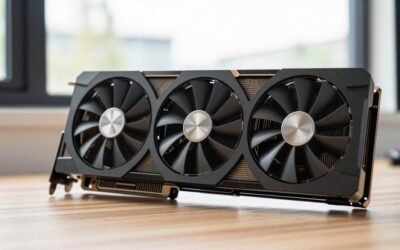
The RTX 3050 occupies a very specific slot: it is the card you reach for when the rest of the computer is not going to change. It launched at a $249 MSRP in its 8GB form, with a 130W board power rating, which puts it in range of office-style prebuilt desktops that ship with small power supplies and no spare cable runs. For that kind of machine it can turn a PC that struggles with games into one that plays most of them at 1080p.
Whether that is “good for gaming” depends on what you compare it against. Put it next to a card at the top of the stack and it looks modest. Put it next to integrated graphics, or a PC that was never meant to hold a graphics card, and it looks like a sensible rescue. This article takes the second view and looks at when the 3050 is a smart purchase, when it is a trap, and what to check on the listing before you order.
As an Amazon Associate we earn from qualifying purchases at no extra cost to you.
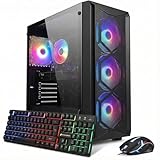

Quick answer: Our top pick in 2026 is the RTX 3060 12GB — our #1 rated choice. See the full ranked comparison, alternatives and buying advice below.
Is It Good? Yes, in One Situation
Yes, if you want 1080p gaming from a system with a limited power supply, you are comfortable using DLSS where available, and you are lowering a few settings in the newest games. No, if you want to play recent releases at high settings, run ray tracing meaningfully, or expect to use the card for many years. The deciding factor is power and budget: the 3050 shines when it saves you from replacing a power supply and case.
What the 3050 Offers
- 8GB of memory in the version this guide covers, more than the 6GB found on the RTX 2060.
- 130W board power rating, lower than the 160W of the 2060 and the 170W of the RTX 3060.
- DLSS upscaling support and hardware ray tracing, though ray tracing is lightweight in practice.
- No frame generation, which starts at RTX 40.
A warning about variants: NVIDIA has sold more than one RTX 3050 configuration over the years, and the memory size and power draw can differ. The $249 MSRP and 8GB figures here refer to the standard 8GB card. Before buying, check the card’s spec page for memory capacity and power connector, because listings sometimes use the same name for different products.
The Prebuilt-PC Scenario
Imagine a small tower from a major brand, built for office work, with a power supply in the 300W to 450W range and a Ryzen 5 or Core i5 processor. The manufacturer never meant for it to take a graphics card, but the PCIe slot is there. A 130W card is plausible in that system, provided the power supply has the PCIe power connector the card needs. Since 130W is well above what the slot alone can deliver, look at both the card and your power supply before you buy.
Check three things in order. First, the power supply’s wattage label and available connectors. Second, the case length and height around the PCIe slot, since prebuilts often have little room. Third, the BIOS, which on some prebuilts needs an update before the system will boot with a discrete GPU. If any of these is a problem, a low-profile or shorter card, or a different plan, may be required.
What to Expect in Games
Review coverage from outlets such as Hardware Unboxed and TechSpot placed the 3050 as a 1080p card at launch, and the general finding has held: competitive and older games run comfortably, new games often need medium settings, and DLSS is the tool that bridges the gap. Do not expect the card to run ray tracing in demanding games, since the frame rate cost is high on a GPU at this tier.
The 8GB of memory is a real advantage over the 6GB cards from the earlier generation, particularly with high-resolution textures. It is not an advantage over the 12GB RTX 3060, which costs more but has meaningfully more room and speed.
Pros and Cons
What works in its favor
- Low 130W board power eases the power supply requirement.
- 8GB of memory suits 1080p.
- DLSS support for performance headroom.
- A low launch MSRP of $249.
What counts against it
- Modest raw speed compared with the RTX 3060 and 4060.
- No frame generation.
- Variant confusion across listings.
- Limited future-proofing for new releases.
Stepping Up or Stepping Sideways
| Option | Cost reference | Trade-off |
|---|---|---|
| RTX 3060 12GB | $329 launch MSRP | More memory and speed at 170W; needs a stronger power supply |
| RTX 4060 8GB | $299 launch MSRP | Frame generation and 115W efficiency; lower power than the 3050 despite being faster |
| RTX 5060 8GB | $299 launch MSRP | Current generation, 145W rating, more features |
| RTX 2060 6GB | $349 launch MSRP | Similar class, but less memory and a higher power rating of 160W |
| Integrated graphics | No extra cost | Fine for esports at low settings; limited for everything else |
The surprising row is the 4060: at 115W it asks less of the power supply than the 3050 does and has a $299 launch MSRP that is only $50 higher. If your power supply can accept it, the 4060 is often the better path. Listing prices change, so compare the live prices of the 3050, 3060, and 4060 on the day you shop, because the gap that makes the 3050 attractive may not exist.
Who Should Buy and Who Should Skip
Buy it if you have a power-limited PC, you play at 1080p, and the listing is priced well below a new RTX 4060 or 5060. Skip it if your power supply can handle a bigger card, if your monitor is 1440p, or if you are choosing between a 3050 and a card that costs only a little more and offers a clear jump in capability.
Frequently Asked Questions
Can the RTX 3050 play modern games in 2026?
Yes at 1080p with adjusted settings and DLSS, though the newest, most demanding releases may need medium or low presets.
How much power does the 3050 need?
The 8GB card is rated at 130W. Check the spec page for the recommended power supply wattage and connector type for your specific model.
Will my old CPU bottleneck it?
A card at this tier pairs well with a Ryzen 5 3600-class or an Intel 10th-gen processor. At 1080p in fast-paced games the CPU may still limit frame rates, but the card is not so powerful that a mid-range older chip wastes it.
Is the 3050 better than integrated graphics?
By a wide margin for gaming, yes. A discrete card with its own 8GB of memory handles recent games far better than integrated graphics.
Ready to decide? Our #1 pick for 2026 is the RTX 3060 12GB.
Live price & availability on Amazon.



Write Your Review
No reviews yet. Be the first to share your experience!