
RTX 5090 vs RTX 5080: The 2026 Flagship Showdown
Two years into the Blackwell generation, NVIDIA’s RTX 5090 and RTX 5080 remain the two cards every high-end PC builder keeps coming back to. On paper they sit side by side at the top of the GeForce stack, but in practice they are aimed at very different buyers. The RTX 5090 is a no-compromise halo card built around a massive GB202 die and 32GB of GDDR7. The RTX 5080 is the “sane flagship” — still enormously powerful, far cheaper, and easier to cool and power. Choosing between them in 2026 is less about which is faster (the 5090 obviously is) and more about whether the price gap buys you performance you will actually use.
- RTX 5090 vs RTX 5080: The 2026 Flagship Showdown
- RTX 5090 vs RTX 5080 Specs Compared
- 4K and 1440p Gaming Performance Gap
- Ray Tracing and DLSS 4 Compared
- Power Draw, Cooling, and PSU Requirements
- Price Gap and Value in 2026
- Who Should Buy Each Card?
- Verdict: Which Should You Buy in 2026?
- Related Guides
- Frequently Asked Questions
- Related Articles
This head-to-head breaks down the specs that matter — CUDA cores, VRAM, memory bandwidth, TDP — and translates them into real 4K and 1440p gaming, ray tracing with DLSS 4, and creator/AI workloads. Prices have softened since the chaotic 2025 launch window, so the value math looks different now than it did on day one. If you have already narrowed your shortlist, you may also want to read our RTX 5090 full review and RTX 5080 full review for card-by-card testing.
As an Amazon Associate we earn from qualifying purchases at no extra cost to you.



Below you’ll find a clear recommendation for gamers, creators, and AI hobbyists, plus a spec table and FAQ. The short version: most people should buy the 5080 and pocket the difference, but a specific group of users genuinely needs what only the 5090 delivers.
As an Amazon Associate we earn from qualifying purchases. Prices and availability are accurate as of 2026 and may change; always confirm current pricing before buying.
RTX 5090 vs RTX 5080 Specs Compared
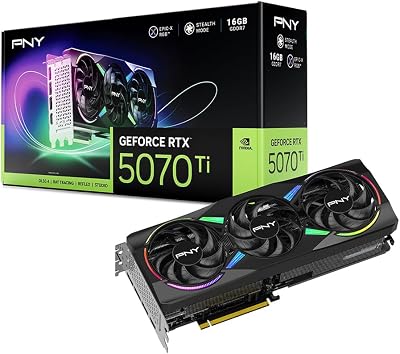
The single most important difference is the silicon. The RTX 5090 uses the full-fat GB202 GPU with roughly 21,760 CUDA cores and a 512-bit memory bus feeding 32GB of GDDR7. The RTX 5080 uses the smaller GB203 die with around 10,752 CUDA cores, a 256-bit bus, and 16GB of GDDR7. In other words, the 5090 has roughly double the shader hardware and double the VRAM. That gap is the reason the two cards feel like they belong in different classes despite sharing a launch window.
Memory bandwidth follows the same story. The 5090’s wide bus and fast GDDR7 push close to 1.8 TB/s, while the 5080 lands near 960 GB/s. Bandwidth matters most at 4K, in heavy ray tracing, and in memory-bound creative apps, which is exactly where the 5090 stretches its lead. For a deeper look at how Blackwell’s memory subsystem behaves under load, see our GDDR7 memory deep dive.
| Spec | RTX 5080 | RTX 5090 |
|---|---|---|
| GPU die | GB203 | GB202 |
| CUDA cores | ~10,752 | ~21,760 |
| VRAM | 16GB GDDR7 | 32GB GDDR7 |
| Memory bus | 256-bit | 512-bit |
| Memory bandwidth | ~960 GB/s | ~1.79 TB/s |
| TDP | 360W | 575W |
| Recommended PSU | 850W | 1000W+ |
| Power connector | 1x 16-pin (12V-2×6) | 1x 16-pin (12V-2×6) |
| MSRP (2026) | ~$999 | ~$1,999 |
| Best resolution | 1440p / entry 4K | 4K / 4K high-refresh |
4K and 1440p Gaming Performance Gap
In raw gaming terms, the RTX 5090 is typically 30-45% faster than the RTX 5080 at native 4K, depending on how well a title scales with shader count and bandwidth. That is a big gap, but notice it is not the “double” you might expect from the spec sheet — games rarely scale perfectly, and CPU limits, engine bottlenecks, and driver overhead eat into the theoretical advantage. At 1440p the gap narrows further, often to 20-30%, because both cards start bumping into CPU limits in fast-paced titles.
What does that mean in practice?
- 4K 60-120 fps gaming: The RTX 5080 already handles most 2026 titles at 4K with high settings, especially with DLSS. The 5090 is the card you buy when you want to hold high frame rates at 4K in the most demanding path-traced games without leaning on upscaling.
- 4K high-refresh (144Hz+): This is the 5090’s home turf. If you own a 4K 240Hz OLED, the extra headroom keeps 1% lows smooth where the 5080 occasionally dips.
- 1440p high-refresh: The RTX 5080 is arguably the better-balanced choice here. Both cards are frequently CPU-bound at 1440p, so much of the 5090’s extra silicon sits idle.
If your monitor is 1440p, the honest answer is that the 5090 is overkill for pure gaming. Save the money unless you also do creative or AI work. For monitor pairing advice, check our best 4K gaming monitors guide.
Ray Tracing and DLSS 4 Compared
Both cards are Blackwell-generation parts, so they share the same fourth-generation RT cores, fifth-generation Tensor cores, and full DLSS 4 support including Multi Frame Generation. In heavy ray tracing and path tracing, the performance gap actually widens slightly compared to rasterized games, because RT workloads lean harder on the 5090’s extra RT cores and its far larger bandwidth and VRAM pool.
DLSS 4 is the great equalizer for the RTX 5080. With Multi Frame Generation and the transformer-based Super Resolution model, the 5080 can turn a demanding path-traced 4K title into a smooth high-refresh experience that would be impossible natively. The 5090 benefits from the same tech and pulls even further ahead, but the practical takeaway is that DLSS 4 lets the cheaper card punch well above its weight. The one caveat is VRAM: at 4K with frame generation and high-resolution textures, memory use climbs, and this is where the 5080’s 16GB can occasionally become a limiter in the most extreme scenarios — a non-issue on the 32GB 5090.
Power Draw, Cooling, and PSU Requirements
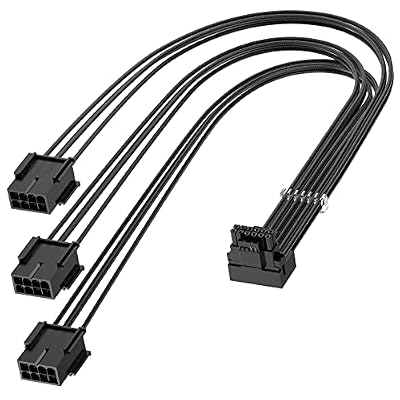
Power is a real, practical differentiator. The RTX 5090 carries a 575W TDP and transient spikes that push well beyond that, so NVIDIA recommends a 1000W (or larger) PSU with a native 12V-2×6 connector. It runs hot, demands excellent case airflow, and occupies a large 3-to-4-slot cooler in most designs. The RTX 5080, at 360W, is dramatically easier to live with: an 850W PSU is comfortable, temperatures are lower, and the cards are physically smaller.
- RTX 5090: 1000W+ PSU, strong airflow or a large air/AIO cooler, and attention to the 16-pin connector being fully seated to avoid the well-documented melting risk. Budget for higher electricity use and more heat dumped into your room.
- RTX 5080: 850W PSU, standard mid-tower airflow, and far less total system heat. It is the friendlier choice for small-form-factor and quiet builds.
If you are upgrading from an older system with a 750-850W supply, the 5080 may drop in without a new PSU, while the 5090 almost certainly requires one — an extra cost worth factoring into the comparison. See our PSU sizing calculator before you buy.
Price Gap and Value in 2026
At 2026 pricing, the RTX 5080 sits around $999 and the RTX 5090 around $1,999 — roughly a 2x price difference for what averages out to a 30-45% gaming performance uplift at 4K. That is the crux of the value argument. On a pure dollars-per-frame basis, the 5080 wins decisively. The 5090 charges a steep premium for the top few percent of performance and for its 32GB VRAM buffer.
Value, though, depends on what you do. For a gamer, the 5080 is the smarter spend nearly every time. For a professional whose render times, 3D scenes, or local AI models are bottlenecked by VRAM and compute, the 5090’s extra $1,000 can pay for itself quickly in saved hours. The 32GB buffer alone unlocks workloads — large local LLMs, 8K video timelines, huge Blender scenes — that simply will not fit on 16GB.
Who Should Buy Each Card?
Buy the RTX 5080 if you are:
- A gamer on a 1440p or 4K 120-144Hz display who wants flagship performance without flagship pricing.
- Building a quieter, cooler, or smaller system and want to keep your existing 850W PSU.
- Value-focused and happy to lean on DLSS 4 for the most demanding path-traced titles.
Buy the RTX 5090 if you are:
- Gaming at 4K high-refresh and want maximum native frame rates with no compromises.
- A creator running Blender, DaVinci Resolve, 3D rendering, or high-resolution video where cores and bandwidth cut render times.
- An AI hobbyist or developer running local LLMs and diffusion models that need the full 32GB of VRAM.
Verdict: Which Should You Buy in 2026?
For the overwhelming majority of buyers, the RTX 5080 is the smarter purchase in 2026. It delivers roughly two-thirds of the 5090’s 4K gaming performance for half the price, runs cooler, sips less power, and pairs beautifully with DLSS 4 to tackle even the heaviest path-traced games. Unless you have a specific need for 32GB of VRAM or you are chasing the absolute top of the 4K high-refresh charts, the money you save is better spent on a great monitor, a faster CPU, or more storage.
The RTX 5090 is the right buy for a narrower audience: 4K high-refresh purists, professional creators, and local-AI users. For them, the extra cores and doubled VRAM are not a luxury but a requirement, and the premium is justified by real productivity gains. If that describes you, the 5090 is the only card that fully delivers. If it doesn’t, buy the 5080 and enjoy the savings.
Frequently Asked Questions
Is the RTX 5090 worth twice the price of the RTX 5080?
For pure gaming, no — the 5090 is about 30-45% faster at 4K for roughly double the money, so the 5080 offers far better value. The 5090 becomes worth it only if you need its 32GB of VRAM for creative or AI work, or you want uncompromised 4K high-refresh gaming.
Is 16GB of VRAM on the RTX 5080 enough for 4K gaming in 2026?
Yes, for the vast majority of games 16GB is sufficient at 4K, especially with DLSS 4. A handful of extreme cases — maxed textures plus frame generation plus heavy ray tracing — can approach the limit, but developers still target 16GB as a high-end baseline, so it remains a comfortable choice today.
What power supply do I need for the RTX 5090 and RTX 5080?
NVIDIA recommends at least a 1000W PSU for the 575W RTX 5090 and an 850W PSU for the 360W RTX 5080. Both use the 12V-2×6 (16-pin) connector, and you should ensure it is fully seated to avoid overheating at the plug.
Which card is better for AI and content creation?
The RTX 5090, clearly. Its 32GB of VRAM, ~21,760 CUDA cores, and ~1.8 TB/s bandwidth let it run larger local AI models and render faster in Blender, DaVinci Resolve, and similar apps. The 5080’s 16GB is capable but will bottleneck the largest models and highest-resolution projects.

Write Your Review
No reviews yet. Be the first to share your experience!