
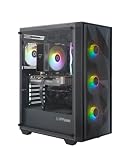
- Top Pick: KOTIN Prebuilt Gaming PC RTX 5070 12GB, Ryzen 7 9700X, 32GB DDR5, 1TB SSD
- Best Value: ZOTAC MEK Gaming PC Desktop, Ryzen 5 5500, NVIDIA GeForce RTX 5060 8GB
- Premium Choice: GIGABYTE Radeon™ RX 9070 XT Gaming OC ICE 16G Graphics Card (16GB GDDR6, 256-bit, PCIe 5.0, HDMI/DP 2.1, 2.7 Slot, Hawk Fan, Server-Grade Thermal Gel, Reinforced Structure)
4K gaming has finally hit its stride in 2026. What used to demand a small fortune and constant compromise is now achievable across several price tiers, thanks to a new generation of silicon, smarter upscaling, and — crucially — bigger frame buffers. If you own a 4K 144Hz or 4K 240Hz monitor, or you are about to buy one, the graphics card is the single most important decision you will make. The wrong pick leaves you stuttering at 40 fps with textures popping in; the right one delivers buttery-smooth, ray-traced worlds that look like the marketing screenshots.
- Why 4K Gaming Demands More From Your GPU
- The Best 4K GPUs of 2026 at a Glance
- RTX 5090: The Uncompromising 4K Flagship
- RTX 5080 and DLSS 4 Frame Generation: The Sweet Spot for High-Refresh 4K
- AMD RX 9070 XT: The Value Champion for 4K
- Ray Tracing and Power Draw at 4K: What to Plan For
- Which 4K GPU Should You Buy? Our Verdict
- Related Guides
- Frequently Asked Questions
- Related Articles
This guide cuts through the noise. We compared and analyzed the cards that actually matter for 4K in 2026 — NVIDIA’s RTX 5090 and RTX 5080 flagships, the excellent-value AMD Radeon RX 9070 XT, and the more attainable RTX 5070 Ti — and we break them down by budget so you can find the right fit whether you are chasing a locked 4K/60 experience or pushing 4K high-refresh with every setting maxed. We cover the details that separate a good 4K card from a frustrating one: VRAM capacity, DLSS 4 Frame Generation, ray tracing headroom, and the power and PSU requirements you cannot ignore.
As an Amazon Associate we earn from qualifying purchases at no extra cost to you.



Whether you are building a brand-new rig or upgrading an aging RTX 30-series card, this is the buyer’s guide we wish we’d had. Let’s find the best GPU for your 4K setup and your wallet.
As an Amazon Associate we earn from qualifying purchases…
Why 4K Gaming Demands More From Your GPU
4K (3840 × 2160) pushes roughly four times the pixels of 1080p and 2.25 times that of 1440p. Every frame is more expensive to render, which means raw shader horsepower and memory bandwidth matter more than at any lower resolution. At 4K, the gap between a mid-range card and a flagship widens dramatically — a GPU that cruises at 1440p can fall apart when you crank the resolution.
Two things separate 4K-capable cards from pretenders. First is sheer compute: you need enough streaming multiprocessors (or compute units, on AMD) and memory bandwidth to keep frame rates above your target. Second — and increasingly the deciding factor — is VRAM. Modern games at 4K with high-resolution texture packs and ray tracing routinely consume 12–15GB of video memory. Anything less than 16GB is now a genuine liability, and we’d steer serious 4K gamers toward cards with 16GB or more. If you’re weighing memory capacity carefully, our deep dive on how much VRAM you really need for 4K gaming is worth a read before you commit.
Native 4K vs. Upscaled 4K
Almost nobody runs demanding modern titles at native 4K anymore, and that’s a good thing. Upscaling technologies like NVIDIA DLSS 4 and AMD FSR 4 render the game internally at a lower resolution (say, 1440p) and reconstruct a razor-sharp 4K image using AI. The result is often indistinguishable from native — sometimes better, thanks to superior anti-aliasing — while delivering 40–80% more frames. When we quote “4K performance” in this guide, we assume you’ll use quality-mode upscaling, which is how these cards are meant to be played.
The Best 4K GPUs of 2026 at a Glance
Here’s how the top contenders stack up. Prices reflect realistic 2026 US street pricing, which has stabilized after the brutal launch-window markups of early 2025.
| GPU | VRAM | 4K Performance | Best For | Approx Price (USD) |
|---|---|---|---|---|
| NVIDIA RTX 5090 | 32GB GDDR7 | Exceptional — 4K 120+ fps with max ray tracing | No-compromise 4K/240Hz and creators | $1,999 |
| NVIDIA RTX 5080 | 16GB GDDR7 | Excellent — 4K 90–120 fps with DLSS 4 | High-refresh 4K enthusiasts | $999 |
| AMD RX 9070 XT | 16GB GDDR6 | Very good — 4K 70–100 fps, strong raster | Best value 4K/high-refresh raster | $649 |
| NVIDIA RTX 5070 Ti | 16GB GDDR7 | Very good — solid 4K/60–90 with DLSS 4 | Mainstream 4K entry with ray tracing | $749 |
| AMD RX 9070 | 16GB GDDR6 | Good — reliable 4K/60 with FSR 4 | Budget-conscious 4K/60 gamers | $549 |
RTX 5090: The Uncompromising 4K Flagship
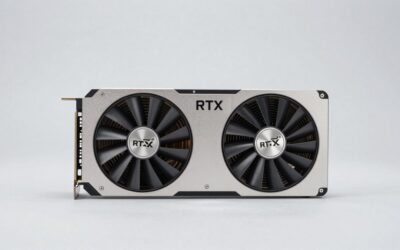
If money is no object and you want the fastest 4K gaming experience that exists, the RTX 5090 is the card. With 32GB of GDDR7 on a wide memory bus, it laughs at texture-heavy titles that choke lesser cards, and its enormous CUDA count lets it drive native 4K in many games — and 4K/240Hz in nearly all of them once DLSS 4 is enabled. Path-traced showcases like Cyberpunk 2077 and Alan Wake 2, which bring every other GPU to its knees, run smoothly here.
The catch is power. The 5090 can draw well north of 500W under full load, so you’ll want a quality 1000W PSU with the native 12V-2×6 connector, plus a case with serious airflow. This is not a card for a cramped mini-ITX build unless you plan carefully. But for content creators who leverage that 32GB frame buffer for 3D rendering and AI workloads, the 5090 doubles as a productivity monster, which softens the sting of its $1,999 price. For most gamers, though, it’s overkill — and that’s exactly the point.
RTX 5080 and DLSS 4 Frame Generation: The Sweet Spot for High-Refresh 4K
For the majority of enthusiasts, the RTX 5080 is the smarter flagship. At half the price of the 5090, it delivers 4K/90–120 fps in demanding titles with DLSS 4 Quality mode, and its 16GB of GDDR7 is enough for 4K today — though we’d have loved to see 20GB for longevity. Where the 5080 truly shines is DLSS 4 Multi Frame Generation, which can generate multiple AI frames between rendered ones to push high-refresh 4K monitors to their limits.
Frame Generation is transformative at 4K. In a path-traced game where the 5080 natively renders 50–60 fps, MFG can catapture you past 150 fps, saturating a 4K 144Hz panel with fluid motion. The technology has matured impressively — latency is well-managed via Reflex, and artifacts are rare in real gameplay. If you want to understand the trade-offs in detail, see our breakdown of how DLSS 4 Frame Generation actually works. For 4K high-refresh gaming without a four-figure flagship, the 5080 is the card to beat.
AMD RX 9070 XT: The Value Champion for 4K
AMD came out swinging with the RDNA 4-based RX 9070 XT, and at $649 it may be the best-value 4K card of the generation. Its rasterization performance trades blows with pricier NVIDIA cards, its 16GB of GDDR6 handles 4K textures comfortably, and FSR 4 — AMD’s new AI-based upscaler — finally closes much of the image-quality gap with DLSS. In pure raster titles like competitive shooters and open-world games, the 9070 XT delivers a superb 4K/high-refresh experience for the price.
Where it still trails is heavy ray tracing. RDNA 4 improved RT throughput substantially, but in the most demanding path-traced games the RTX 5080 pulls ahead. If you play a mix of genres and don’t obsess over maxed ray tracing, the 9070 XT is an easy recommendation — and its more modest ~300W power draw means a solid 750W PSU will do the job. It’s the card we point value-focused 4K builders toward first.
Ray Tracing and Power Draw at 4K: What to Plan For
Ray tracing at 4K is the most punishing workload in consumer gaming. Full path tracing can halve your frame rate, which is precisely why upscaling and Frame Generation exist. NVIDIA still holds a clear lead here — its fourth-generation RT cores and mature DLSS ecosystem make the RTX 5080 and 5090 the cards to buy if ray tracing is your priority. AMD’s RX 9070 XT is respectable but a step behind in the heaviest RT scenarios.
Power and PSU planning are not afterthoughts at this tier. Budget for at least a 750W unit for the RX 9070 XT or RTX 5070 Ti, 850W for the RTX 5080, and a robust 1000W (ideally ATX 3.1 with a native 12V-2×6 cable) for the RTX 5090. Cheaping out on the PSU is the most common mistake we see in 4K builds — transient spikes on these cards can trip the protection on undersized units. If you’re speccing a full system, our guide to choosing the right power supply for a high-end GPU walks through the math.
Which 4K GPU Should You Buy? Our Verdict
There is no single “best” 4K card — only the best card for your budget and priorities. Here’s how we’d spend the money in 2026:
- Best overall value: The AMD RX 9070 XT at ~$649 delivers the most 4K performance per dollar, especially in rasterized games.
- Best high-refresh 4K: The RTX 5080 is the sweet-spot enthusiast pick, pairing strong native performance with DLSS 4 Multi Frame Generation.
- Best no-compromise flagship: The RTX 5090 for those who want native/path-traced 4K and creator-grade horsepower — if you can afford it.
- Best 4K/60 on a budget: The RTX 5070 Ti or RX 9070 both deliver a smooth, upscaled 4K/60 experience without breaking $800.
For most readers, the RTX 5080 and RX 9070 XT are the two cards worth cross-shopping. Choose the 5080 if ray tracing and Frame Generation top your list; choose the 9070 XT if you want maximum raster performance for less. Either way, pair it with 16GB or more of VRAM, a quality PSU, and a fast 4K monitor, and you’ll be gaming at the resolution’s best in no time. If you’re still torn on displays, check our companion piece on the best 4K gaming monitors to pair with these GPUs.
Frequently Asked Questions
Is 16GB of VRAM enough for 4K gaming in 2026?
Yes, 16GB is the practical minimum and is sufficient for virtually all games at 4K today, including with high-resolution textures and ray tracing. Cards like the RTX 5080, RX 9070 XT, and RTX 5070 Ti all carry 16GB. If you want maximum future-proofing or run heavy creator workloads, the RTX 5090’s 32GB provides substantial headroom, but 16GB will serve most 4K gamers well for years.
Do I need DLSS 4 or FSR 4 for 4K gaming?
For demanding modern titles, effectively yes. Native 4K is brutally expensive, and upscalers like DLSS 4 and FSR 4 render internally at a lower resolution before reconstructing a sharp 4K image, often with little to no visible quality loss. They deliver 40–80% more frames, and DLSS 4 Frame Generation can push high-refresh 4K monitors even further. These technologies are how 4K gaming is meant to be played on today’s hardware.
What PSU wattage do I need for a 4K gaming GPU?
It depends on the card. Plan for at least 750W for the RX 9070 XT or RTX 5070 Ti, 850W for the RTX 5080, and 1000W (preferably ATX 3.1 with a native 12V-2×6 connector) for the power-hungry RTX 5090. Always buy from a reputable brand with an 80+ Gold or better rating, since transient power spikes on high-end GPUs can trip undersized units.
Should I buy the RTX 5080 or the AMD RX 9070 XT for 4K?
Buy the RTX 5080 if ray tracing performance and DLSS 4 Frame Generation are your priorities and your budget stretches to ~$999. Buy the RX 9070 XT if you want the best rasterization value at ~$649 and don’t obsess over maxed-out path tracing. Both carry 16GB of VRAM and handle 4K high-refresh gaming well; the decision comes down to your feature priorities and how much you’re willing to spend.

Write Your Review
No reviews yet. Be the first to share your experience!