
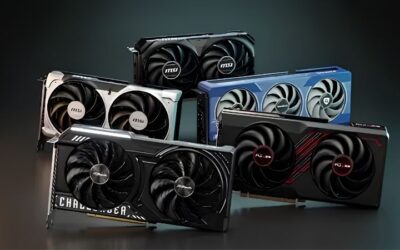
- Top Pick: ASRock Radeon RX 7700 XT Challenger 12GB OC Graphics Card, AMD RDNA 3 Architecture, 12GB GDDR6, 2584 MHz Boost Clock, 3X DisplayPort 2.1, 1x HDMI 2.1, Dual Fan Cooling
- Best Value: ASRock Radeon RX 9060 XT Challenger 16GB OC, RDNA 4, 3290MHz Boost, 16GB GDDR6 128-bit, PCIe 5.0, Dual Fans, 0dB Silent, LED Indicator, DisplayPort 2.1a, HDMI 2.1b
- Premium Choice: ASRock RX 7700 XT Steel Legend 12GB OC, RDNA 3, 2599MHz Boost, 12GB GDDR6 192-bit, PCIe 4.0, Triple Fan Graphics Card
RX 7700 XT is a good 1440p card with one nagging question hanging over it: is it worth buying when the RX 7800 XT often costs only a little more? That is the exact dilemma most shoppers land on, and it deserves a straight answer rather than a spec dump. With 12GB of VRAM and capable 1440p performance, the 7700 XT makes sense at the right price and looks awkward at the wrong one. This review covers the frame rates, the practical build details, and the value math that decides whether the 7700 XT or the step up to the 7800 XT is the smarter spend.
RX 7700 XT Performance: Capable 1440p on a Tighter Budget
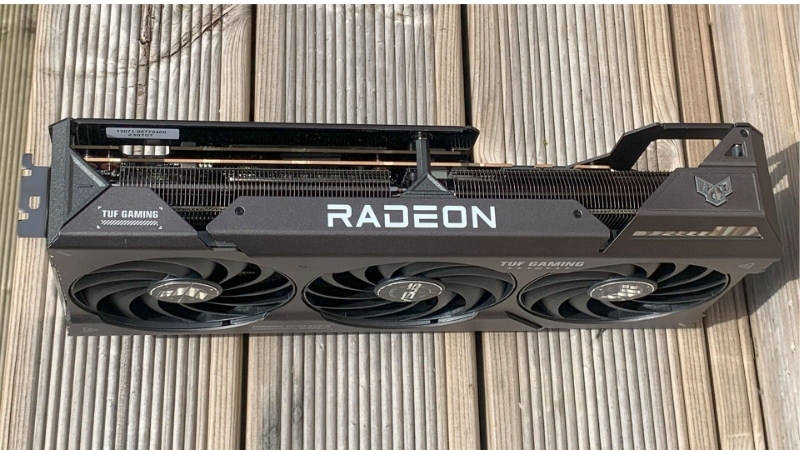
The 7700 XT is the cut-down sibling of the 7800 XT, built on the same RDNA 3 Navi 32 silicon with 12GB of GDDR6 on a 192-bit bus. It is a genuinely capable 1440p card, sitting a step below the 7800 XT in both performance and VRAM, and carrying the same AMD strengths and ray-tracing caveat. Below, the performance is broken down the way a budget-conscious 1440p buyer evaluates it.
As an Amazon Associate we earn from qualifying purchases at no extra cost to you.



1440p Gaming Performance
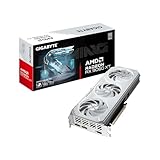
At 1440p the 7700 XT is a strong performer, clearing 60 FPS comfortably and often pushing well past it at high settings in most modern titles. For 1440p high-refresh gaming it holds up well in the majority of games, stepping down only in the very heaviest titles.
The 12GB frame buffer is adequate for 1440p today, though it is the more limited side of the equation compared with the 7800 XT’s 16GB. In the most VRAM-hungry recent titles, that gap is where the two cards begin to separate over time.
The practical read: this is a solid 1440p card that covers the resolution most gamers use, as long as the price reflects its position a clear step below the 7800 XT.
Ray Tracing and FSR Upscaling
Ray tracing follows the RDNA 3 pattern. The 7700 XT manages light to moderate ray tracing at 1440p but trails comparable NVIDIA cards in heavier ray-traced titles, so it should be chosen for its rasterization rather than its ray-tracing chops.
On upscaling it relies on FSR, including FSR 3 Frame Generation, which is broadly supported and effective but a step behind DLSS in image quality. As with the rest of the generation, FSR 4 is an RDNA 4 feature and is not available on this card, a limitation worth weighing if upscaling quality is a priority.
For a budget 1440p buyer, current FSR support is broad enough to be genuinely useful, so this is more a long-term footnote than a dealbreaker. It mainly factors in when comparing the 7700 XT against a newer card that supports the latest upscaling, where the gap may justify a step up if the prices are close.
What Owners Praise and Criticize
Owner feedback is positive on performance but pointed on value. The praise centers on solid 1440p frame rates and the general RDNA 3 strengths, with many owners happy with the card once they bought it at a genuine discount to the 7800 XT.
The dominant criticism is the price gap to the 7800 XT: at launch the two cards were close enough that many felt the 7700 XT was hard to justify, since a small extra outlay bought meaningfully more performance and 4GB more VRAM. The usual notes on ray tracing and driver polish also appear. The consensus is clear: this is a good card when the price gap is real, and a poor choice when it is not.
That single theme runs through almost every owner verdict, which makes the 7700 XT unusually simple to judge: the hardware is fine, and the buying decision is really a pricing decision relative to the 7800 XT.
| Strengths | Trade-offs |
|---|---|
| Capable high-refresh 1440p performance | Only worth it at a clear discount to the 7800 XT |
| Lower entry price than the 7800 XT | 12GB VRAM versus 16GB on the 7800 XT |
| Solid in traditional rasterized titles | Ray tracing trails comparable NVIDIA cards |
| Efficient, easy to build around | No FSR 4; FSR behind DLSS in quality |
RX 7700 XT Build Fit: Power, Size and Cooling
The 7700 XT is an easy card to build around, but a clean install still depends on three things: the power draw and PSU needs, the physical size for your case, and how it handles heat and noise. Each is covered below so your 1440p build comes together without surprises.
Power Draw and PSU Requirements
With a board power around 245W, the 7700 XT is moderate in its demands, and a quality 650W power supply is plenty for most builds. It uses standard 8-pin connectors, keeping the install simple.
That modest draw makes it a friendly upgrade for existing systems, since many builds already have the headroom and will not need a PSU swap. It also keeps system heat and noise reasonable.
For a budget-conscious buyer, that matters because it keeps the total upgrade cost down to the price of the card alone. There is no hidden power-supply expense lurking behind the purchase, which reinforces the 7700 XT’s role as the cost-saving option in the family.
Card Size and Case Compatibility
Partner 7700 XT cards are generally moderate in size, with many 2.5 to 3-slot designs that fit standard mid-towers comfortably. Check the exact length against your case, but most builds will accommodate the card easily.
For smaller cases, compact models are available, and the card’s reasonable power draw means a modest cooler keeps temperatures in check. You are not forced into a large model to manage heat.
This makes the 7700 XT a sensible choice for compact and budget builds where space and cost are both tight. The card’s efficiency means even an affordable dual-fan model handles it well, so you can keep the rest of the build lean.
Cooling, Noise and Temperatures
Thanks to its moderate power draw, the 7700 XT runs cool and quiet on most coolers, with fan-stop keeping it silent at idle. Under sustained gaming it stays comfortably within thermal limits without ramping fans aggressively.
A mild undervolt lowers temperatures and noise further with negligible performance loss for the noise-sensitive. Out of the box, most owners find it quiet enough to leave alone.
The quiet, cool operation is consistent with the rest of the experience: the 7700 XT is an undemanding card to live with. None of its real weaknesses are about heat or noise; they are entirely about whether the price makes sense next to the 7800 XT.
RX 7700 XT Pricing, Value and When to Buy
More than most cards, the 7700 XT lives or dies on price, since its value depends entirely on the gap to the 7800 XT. The current component market shapes that, so this section covers where prices stand, how the card compares, and which buyer it suits.
Where Prices Stand Right Now
Price context is decisive for this card. PC component prices have broadly trended upward, driven mainly by memory costs, and that pressure touches graphics cards and whole builds. The encouraging side is real but limited: the steep climb of late 2025 has cooled, and some makers, Framework included, have noted a relatively stable recent stretch while still warning of further movement.
New memory supply is coming but not soon, with OEMs now able to source DDR5 from suppliers like CXMT and Micron building two fabs in Idaho, though those plants are not expected to run until 2027–2028. In short, prices have stopped spiking rather than started falling, so genuine relief is still some distance out.
For a 7700 XT buyer, the single most important number is the price gap to the 7800 XT. When that gap is wide enough to be meaningful, the 7700 XT is a smart buy; when it is small, the 7800 XT is almost always the better spend.
RX 7700 XT vs the RX 7800 XT
This is the comparison that matters most. The 7800 XT offers more performance and 4GB more VRAM, and whenever its price premium over the 7700 XT is small, it is the better long-term value. The 7700 XT only makes clear sense when it is discounted enough that the saving is genuinely significant.
Against NVIDIA’s mid-range cards, the 7700 XT typically leads on raster and VRAM while trailing on ray tracing and DLSS. But the decisive question is almost always the in-family gap to the 7800 XT, so check both prices side by side before committing.
A simple rule of thumb helps here: if the 7800 XT costs only a small amount more, pay it, because the extra performance and 4GB of VRAM are worth that little premium and improve longevity. Only when the 7700 XT is meaningfully cheaper does it become the rational pick, which is why this one purchase decision hinges on a price comparison more than almost any other card in the range.
Who Should Buy the RX 7700 XT
Buy it if you game at 1440p, want to keep costs down, and can find it at a clear discount to the 7800 XT that makes the saving worthwhile. For that price-sensitive buyer it delivers a strong 1440p experience without overspending.
Look elsewhere, specifically at the 7800 XT, if the two cards are priced close together, where the extra performance and VRAM are worth the small premium. If the 7700 XT is genuinely discounted, check the current price and availability through the link here, and compare it directly against the 7800 XT before you decide.
That side-by-side check is genuinely the whole ballgame for this card. Spend the extra minute to compare the two live prices, weigh the saving against the 7800 XT’s extra performance and VRAM, and you will know immediately which one is the right buy for your budget.
See More:
- Colorful iGame RTX 4090
- Founders Edition vs AIB
- Best RTX 4080 Super card
- Best RTX 5080 AIB
- Best RTX 5070 Ti card
Conclusion: Is the RX 7700 XT Worth It?
The RX 7700 XT is a capable 1440p card whose value hinges almost entirely on price. At a clear discount to the RX 7800 XT it is a smart, budget-conscious 1440p buy with solid rasterized performance; priced too close to its bigger sibling, it is hard to recommend over the extra performance and 4GB of VRAM the 7800 XT provides. Its ray-tracing and FSR 4 limitations are the familiar RDNA 3 trade-offs. With component prices stabilizing rather than falling, the move is simple: if the RX 7700 XT is genuinely cheaper than the 7800 XT, it is worth buying, so compare the two prices before you commit, and let that single number decide which card belongs in your build.
Top-Rated Picks


| Product | Brand | Rating | Reviews | Price |
|---|---|---|---|---|
| ARCTIC MX-4 (4 g) – Premium Performance Thermal Paste… | ARCTIC | ★ 4.8 | 104k | $4.99 |
| ARCTIC MX-4 (incl. Spatula, 4 g) – Premium Performanc… | ARCTIC | ★ 4.8 | 71.9k | $5.49 |
| Crucial 8GB DDR4 RAM 3200MHz (PC4-25600), Downclockab… | Crucial | ★ 4.8 | 62.8k | $74.99 |
| AMD Ryzen 5 5600X 6-core, 12-thread unlocked desktop … | — | ★ 4.8 | 30.2k | $177.60 |
| NVIDIA Shield Remote; Voice Search, Motion-Activated,… | — | ★ 4.7 | 10.6k | $25.99 |
Frequently Asked Questions
Is the RX 7700 XT worth buying over the RX 7800 XT?
Only when the price gap is genuinely large. The 7800 XT adds six more compute units, a 256-bit bus instead of 192-bit, and 16GB rather than 12GB of memory, for roughly ten to fifteen percent more performance at 1440p. If the 7800 XT costs less than about fifteen percent more, it is the better long-term buy.
Is 12GB of VRAM enough for 1440p?
For now, yes in nearly all titles. Twelve gigabytes clears the requirements of current 1440p ultra presets with room left over, and only the most aggressive texture packs or ray-traced open worlds approach the limit. It is less future-proof than 16GB, but it avoids the hard wall that 8GB cards run into today.
What PSU and connectors does the RX 7700 XT need?
Board power sits near 245W and partner cards use two 8-pin PCIe connectors. A quality 650W to 700W supply is the right target for a modern gaming build. Use two separate PCIe cables rather than a single daisy-chained cable where your power supply provides them, since that keeps current per connector comfortably in spec.
How well does the RX 7700 XT handle ray tracing?
Adequately in lighter implementations, poorly in path-traced showcases. Expect playable ray-traced shadows and reflections at 1440p with FSR enabled in games like Resident Evil 4 or Spider-Man Remastered, but heavy titles such as Alan Wake 2 or Cyberpunk 2077 with full RT will need aggressive upscaling and reduced settings to stay smooth.
What size case do I need for this card?
Most RX 7700 XT models run roughly 270mm to 320mm long and take two and a half to three expansion slots because of the 245W cooling requirement. Measure from the rear bracket to any front radiator or drive cage before ordering, and check slot clearance if you plan to use a card in the second PCIe slot.



Write Your Review
No reviews yet. Be the first to share your experience!