
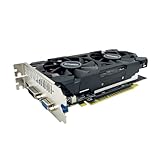
- Top Pick: QTHREE GeForce GTX 750 Ti 4GB Graphics Card,GDDR5,128bit,HDMI,DVI,VGA,Video Card for PC Working,Computer GPU,PCI Express x16,Dual Fans,DirectX 12
- Best Value: GPVHOSO GTX 750Ti 4GB Graphics Card GDDR5,
- Premium Choice: Geforce GTX 750 Ti 4G D5 128-bit Graphics Card DVI HDMI VGA for Windows 11
Top Nvidia Geforce Gtx 750 Tiny Picks for 2026
Here are our current top nvidia geforce gtx 750 tiny picks, compared on real Amazon owner reviews, price, and features. Live prices update below.


Nvidia GeForce GTX 750 Ti is one of the most quietly legendary budget cards ever made, the little Maxwell GPU that could revive an old office PC without even needing a power connector. Launched in 2014 at $149 with 640 CUDA cores, 2GB of GDDR5, and a tiny 60W power envelope, it became famous for slotting into prebuilt systems with weak power supplies. In 2026 it is firmly a niche card, but it still has a job to do. This review covers its specs, real-world limits, and exactly who the GTX 750 Ti still makes sense for.
As an Amazon Associate we earn from qualifying purchases at no extra cost to you. Product prices and availability are accurate as of the date shown and are subject to change.






Specifications and the No-Connector Design
The defining trait of the GTX 750 Ti is efficiency, and understanding its modest hardware explains both why people still seek it out and where it falls short.
Core Specs
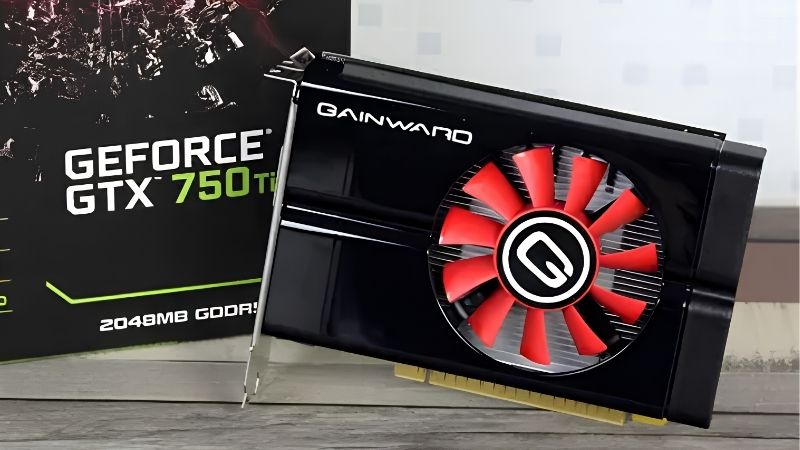
The card uses 640 CUDA cores on Nvidia’s Maxwell architecture, paired with 2GB of GDDR5 on a 128-bit bus for roughly 88 GB/s of bandwidth. Its rated power draw is about 60W.
That 60W figure is the whole story. It sits within the power a PCIe slot can supply, which is why most GTX 750 Ti models need no external power connector at all.
The 2GB framebuffer is the other defining number, and it is the card’s hardest limit. Adequate for light and older games, it quickly becomes the bottleneck in anything modern, so it shapes realistic expectations even more than the modest core count does.
Why the Power Profile Matters
For anyone resurrecting a cheap office prebuilt with a low-wattage power supply, this is transformative. You can add real graphics capability without upgrading the PSU, which keeps the total cost of the upgrade minimal.
It also runs cool and quiet, often with a single small fan. For a low-noise media PC or a basic gaming box, that simplicity is a genuine advantage rather than a compromise.
It also lowers the total cost of an upgrade dramatically, since you avoid both a new power supply and the labor of swapping one. For someone reviving a hand-me-down office PC, that saving can be the difference between upgrading and not bothering at all.
Size and Compatibility
Many GTX 750 Ti models are short and available in low-profile form, fitting slim and small-form-factor cases that larger cards cannot enter.
It plugs into any standard PCIe slot and works with virtually any system old enough to still be running. The practical limit is the rest of the PC, not the card, since it pairs naturally with older processors.
That said, an old CPU and slow storage will cap the experience, so the 750 Ti shines most when the rest of the system is at least functional. Think of it as the graphics piece of a light-use machine rather than the heart of a dedicated gaming build.
Real-World Performance Expectations
Setting honest expectations is essential here, because the GTX 750 Ti is a light-duty card and treating it as anything more leads to disappointment.
Esports and Older Titles
In lightweight competitive games at 1080p with low to medium settings, the 750 Ti can deliver playable frame rates, making it viable for casual esports and older favorites.
This is where it earns its keep. For someone who mostly plays undemanding titles, it transforms an integrated-graphics machine into something genuinely usable for gaming.
Emulation of older consoles, indie titles, and classic favorites also sits comfortably within its abilities. For a retro or casual gaming box, the 750 Ti covers a surprising amount of ground for its tiny footprint.
Modern AAA Games
Demanding modern AAA titles are largely beyond it. The 2GB buffer and modest compute mean many recent games will not run well, or at all, even at low settings.
If your goal is current big-budget gaming, this is not the card. Its place is light gaming, emulation, media playback, and basic productivity rather than the latest releases.
Even where a modern game launches at all, the 2GB buffer often forces the lowest texture settings and still struggles, so the experience is rarely satisfying. Setting that expectation up front prevents disappointment and keeps the card matched to suitable tasks.
What It Lacks: Modern Nvidia Features
As a Maxwell card, the GTX 750 Ti predates RT cores, Tensor cores, and DLSS entirely. There is no ray tracing and no AI upscaling to lean on, so what you see is the raw output.
It does include an early NVENC encoder, which can assist with basic video tasks. But the absence of modern proprietary features is a firm reminder that this is a legacy product, valuable for its niche rather than its technology.
For buyers, the absence of these features simply confirms the card’s role. It is a functional, ultra-low-power stopgap rather than a platform for modern visual technology, and judging it on that basis keeps the purchase sensible.
Owner Feedback: Pros and Cons
Years of owner reports paint a remarkably consistent picture of what the GTX 750 Ti is good for and where it frustrates people.
What Owners Love
The overwhelming praise is for its plug-and-play simplicity in weak prebuilt systems. Owners repeatedly describe it as the perfect no-hassle upgrade for a PC with a tiny power supply.
Its reliability, low heat, and quiet operation also draw consistent appreciation, especially from buyers building media PCs or light gaming machines for family members.
Many describe it as the card that quietly kept an old computer useful for years, which is high praise for a budget part. That dependability, more than any benchmark number, is what sustains its reputation today.
Common Complaints
The main criticism is simply that it is underpowered for modern gaming, with the 2GB buffer cited most often as a hard ceiling in newer titles.
Some owners also note that buying new is now difficult, pushing most purchases to the used market where condition and age become factors worth checking.
Because new stock is scarce, inspecting a used unit for fan wear and dust buildup pays off, as these tiny coolers can accumulate grime over years of service. A simple clean often restores quiet, cool operation on an otherwise healthy card.
Pros and Cons Summary
For the GTX 750 Ti, the trade-offs are clear and rooted entirely in its budget, low-power identity.
Pros: no power connector needed on most models, very low 60W draw, cool and quiet, compact and low-profile options, ideal for reviving weak prebuilts. Cons: only 2GB VRAM, weak for modern AAA games, no ray tracing or DLSS, primarily a used-market purchase now.
Read together, these trade-offs make the 750 Ti easy to recommend for its narrow niche and easy to rule out for anything beyond it. The clarity of that verdict is, in its own way, a virtue at this price point.
Should You Buy a GTX 750 Ti in 2026?
The verdict is narrow but real, and the current market actually reinforces the small niche where this card still belongs.
Rising Prices and the Ultra-Budget Case
With laptop and PC-component prices trending upward and likely to keep rising, the appeal of the cheapest possible functional upgrade grows for buyers who simply cannot stretch further.
For reviving an old PC on a tight budget, a low-cost GTX 750 Ti remains one of the few options that adds gaming capability without forcing a power-supply upgrade. When new entry cards get pricier, that no-extra-cost advantage matters more.
Nvidia’s AI Focus and Entry-Level Supply
The U.S. recently cleared Nvidia to sell H200 AI chips to China. The H200 is a data-center accelerator with no connection to a card like the 750 Ti, so it changes nothing about its performance.
Indirectly, Nvidia’s heavy focus on lucrative AI silicon means little engineering attention flows to the very bottom of the GPU market, leaving older budget cards to fill that gap. That keeps the 750 Ti relevant for its specific job.
Who Should Buy It, and the Alternative
The GTX 750 Ti suits a precise audience: anyone reviving a low-power prebuilt for light gaming, emulation, or media use who needs a drop-in card with no PSU upgrade.
It is not the right choice, however, for anyone hoping to play current titles, even occasionally, since the 2GB buffer and modest compute simply cannot keep up with modern requirements.
If you want to play modern games at all, even a slightly newer budget card with 4GB or more and its own power connector is a far better alternative. But for the no-connector niche, the 750 Ti is still the classic answer. Check current listings if this matches your build.
Conclusion
In 2026, the Nvidia GeForce GTX 750 Ti is not a gaming card in the modern sense, and it does not pretend to be. It is a tiny, efficient, no-power-connector upgrade whose entire value lies in reviving weak systems cheaply and quietly. For light gaming, emulation, and media PCs built on a strict budget, it remains a genuinely useful tool, and as rising component prices squeeze the lowest end of the market, the humble GTX 750 Ti continues to earn its place as the ultra-budget upgrade that simply works.
Frequently Asked Questions
What is the best nvidia geforce gtx 750 ti in 2026?
The best nvidia geforce gtx 750 ti depends on your budget and how you plan to use it. The options compared above are our top-rated picks based on real customer ratings, build quality, and overall value — start with the highest-rated model that fits your budget.
How much should I expect to spend on a nvidia geforce gtx 750 ti?
Prices vary by brand and features. Budget options cover the essentials, while mid-range and premium models add durability, performance, and extra features. Compare the prices in the list above to find the best value for your needs.
What should I look for when buying a nvidia geforce gtx 750 ti?
Focus on what matters most for your use case — build quality, compatibility, performance, warranty, and verified customer reviews. Every pick above is selected to balance these factors.
Are budget nvidia geforce gtx 750 ti options worth it?
Yes. For most people a well-reviewed budget or mid-range nvidia geforce gtx 750 ti delivers excellent value. You only need to spend more if you specifically require premium materials or top-tier performance.
How did we choose these nvidia geforce gtx 750 ti picks?
We compare current Amazon ratings, review counts, key features, and price to surface the options with the best real-world value. The list is refreshed as ratings and availability change.


Write Your Review
No reviews yet. Be the first to share your experience!