
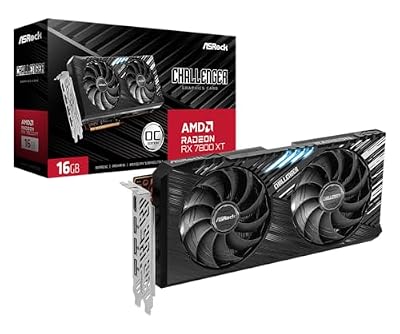
- Top Pick: ASRock Radeon RX 7700 XT Challenger 12GB OC Graphics Card, AMD RDNA 3 Architecture, 12GB GDDR6, 2584 MHz Boost Clock, 3X DisplayPort 2.1, 1x HDMI 2.1, Dual Fan Cooling
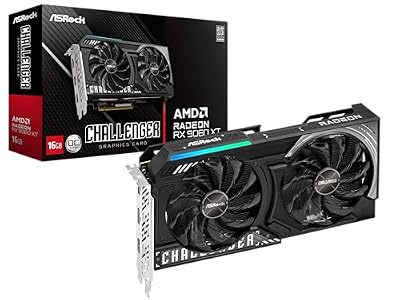
- Best Value: ASRock Radeon RX 9060 XT Challenger 16GB OC, RDNA 4, 3290MHz Boost, 16GB GDDR6 128-bit, PCIe 5.0, Dual Fans, 0dB Silent, LED Indicator, DisplayPort 2.1a, HDMI 2.1b
- Premium Choice: GIGABYTE Radeon RX 9070 XT Gaming OC 16G Graphics Card, PCIe 5.0, 16GB GDDR6, GV-R9070XTGAMING OC-16GD Video Card
RX 7800 XT earned its reputation as the 1440p sweet spot, and that is exactly what most buyers want to verify before clicking buy. With 16GB of VRAM, a sensible power draw, and a launch price of $499, it targets the resolution the majority of gamers actually use and does it with enough longevity headroom to last. This review focuses on the measurable 1440p performance, the practical build details that make it an easy upgrade, and the honest pros and cons drawn from the way real owners describe living with the card.
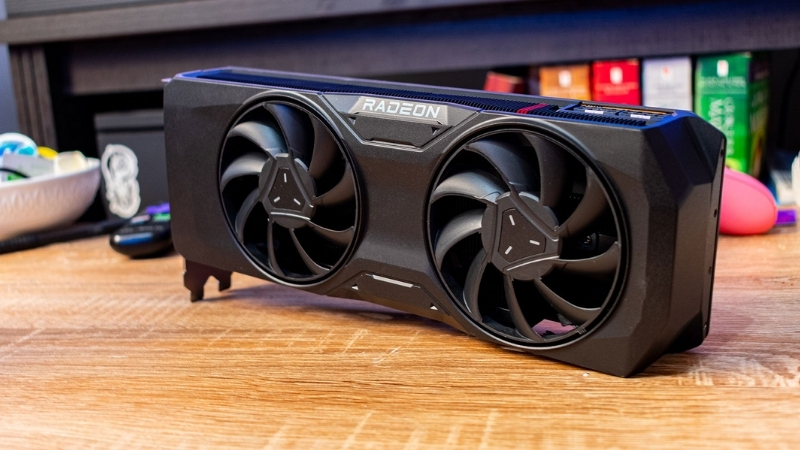
RX 7800 XT Performance: Built for High-Refresh 1440p
The 7800 XT is RDNA 3 tuned squarely for 1440p, with 16GB of GDDR6 on a 256-bit bus and a 263W board power that keeps it efficient relative to the bigger Radeon cards. Its identity is consistency: it is a card that holds high frame rates at 1440p without drama, while carrying the usual AMD strengths and the usual ray-tracing caveat. Below, the performance is broken down the way a value-focused 1440p buyer evaluates it.
As an Amazon Associate we earn from qualifying purchases at no extra cost to you.





1440p Gaming Performance
At 1440p the 7800 XT is comfortably a high-refresh card, clearing 100 FPS in most modern titles at high settings and keeping pace with fast 1440p panels in all but the very heaviest games. This is its home resolution, and it handles it with room to spare.
The 16GB frame buffer is the right amount for 1440p and a genuine longevity advantage, since newer titles increasingly push past the 12GB found on some rivals. That extra VRAM is the kind of headroom that quietly pays off two or three years into ownership.
The practical read: this card is sized precisely for the resolution most people game at, delivering smooth high-refresh 1440p without paying for 4K performance a mainstream build does not need.
Ray Tracing and FSR Upscaling
Ray tracing is the familiar trade-off. The 7800 XT can handle light to moderate ray tracing at 1440p, but it trails comparable NVIDIA cards in the heaviest ray-traced titles, so it is best viewed as a strong rasterization card that does ray tracing rather than a ray-tracing specialist.
For upscaling it uses FSR, including FSR 3 Frame Generation, which is widely supported and effective though generally a notch behind DLSS in image quality. As with the rest of RDNA 3, the newer FSR 4 is an RDNA 4 feature and is not available here, which is worth knowing if future upscaling quality matters to you.
For most 1440p buyers, though, current FSR is perfectly usable and supported across a wide library, so this limitation is more a longevity footnote than a daily concern. It mainly becomes relevant when you weigh the 7800 XT against a newer RDNA 4 card that does support the latest upscaling.
What Owners Praise and Criticize
Owner sentiment is strongly positive and centers on value. The most common praise is the combination of solid 1440p performance, the generous 16GB of VRAM, and reasonable efficiency, all at a price that made it a default 1440p recommendation. Many owners describe it as the card that simply does its job without fuss.
The criticisms are the predictable ones: ray tracing trails NVIDIA, FSR image quality is a step behind DLSS, and the usual notes about driver polish. None undermine its core value proposition, but they matter to buyers who weight ray tracing and upscaling heavily.
Taken together, the feedback paints a consistent picture: this is a dependable, no-drama card that does the 1440p job well and holds its value reputation, with weaknesses that are easy to live with for its target buyer.
| Strengths | Trade-offs |
|---|---|
| Excellent high-refresh 1440p performance | Ray tracing trails comparable NVIDIA cards |
| 16GB VRAM for real longevity | FSR image quality a step behind DLSS |
| Reasonable 263W power and efficiency | No FSR 4 (RDNA 3 hardware) |
| Strong value at its price point | Driver polish slightly behind NVIDIA |
RX 7800 XT Build Fit: Power, Size and Cooling
One of the 7800 XT’s quiet strengths is how easy it is to build around, but it still pays to confirm three things: the power draw and PSU needs, the physical size for your case, and how it handles heat and noise. Each is covered below so the upgrade is a clean drop-in rather than a compatibility surprise.
Power Draw and PSU Requirements
With a 263W board power, the 7800 XT is moderate in its demands, and a quality 650W to 700W power supply is plenty for most builds. It uses standard 8-pin connectors, keeping things simple.
That sensible draw makes it an easy upgrade for existing systems, since many builds already have the necessary headroom and will not need a PSU swap. It also keeps case heat and noise in check compared with the bigger Radeon cards.
This efficiency is a quiet part of the value story. Because you are unlikely to need a new power supply, the real upgrade cost is just the card itself, which makes the 7800 XT an even easier recommendation for someone refreshing an older mid-range build rather than starting from scratch.
Card Size and Case Compatibility
Partner 7800 XT cards are generally moderate in size, with plenty of 2.5 to 3-slot designs that fit standard mid-towers comfortably. Dimensions vary by brand, so check the exact length against your case, but most builds will accommodate this card without trouble.
For smaller cases, compact dual and triple-fan models are readily available, and the card’s reasonable power draw means a modest cooler keeps it perfectly happy. You are not forced into a giant model to manage temperatures.
That flexibility makes the 7800 XT a strong fit for small-form-factor and budget builds alike, where the larger high-end cards simply will not go. For a mid-tower it is a non-issue, but it is reassuring to know the card scales down to tighter chassis without a performance penalty.
Cooling, Noise and Temperatures
Thanks to its moderate power draw, the 7800 XT runs cool and quiet on most partner coolers, with fan-stop keeping it silent at idle and during light use. Under sustained gaming it stays well within comfortable thermals without ramping fans aggressively.
For the noise-sensitive, a mild undervolt lowers temperatures and noise further with negligible performance loss. Out of the box, though, most owners find the acoustic experience genuinely good.
The combination of moderate heat output and quiet fans is part of why the 7800 XT is so often recommended as a no-fuss upgrade. It does not demand an elaborate cooling setup or a high-airflow case to behave well, which is exactly what a mainstream builder wants from a 1440p card.
RX 7800 XT Pricing, Value and When to Buy
The 7800 XT built its reputation on value, so price is central to the verdict, and the current component market is part of that picture. This section covers where prices sit, how the card compares to its rivals, and exactly which buyer it suits.
Where Prices Stand Right Now
For a value card, the market backdrop matters. PC component prices have broadly trended upward, driven mainly by memory costs, and that pressure reaches graphics cards and the rest of a build. The encouraging side is real but limited: the steep climb of late 2025 has cooled, and some makers, Framework included, have reported a relatively stable recent stretch while still warning of further movement.
New supply is on the way but not soon, with OEMs now able to source DDR5 from suppliers like CXMT and Micron building two fabs in Idaho, though those plants are not expected to run until 2027–2028. In short, prices have stopped spiking rather than started falling, so genuine relief is still some way off.
For a 7800 XT buyer, the takeaway is to judge it on its live price against newer mid-range cards rather than waiting for a near-term drop. When it sits at or below its launch price, its value case remains strong.
RX 7800 XT vs the Competition
Against the RTX 4070 and 4070 Super, the 7800 XT typically leads on rasterization and VRAM while trailing on ray tracing and DLSS, usually at a competitive price. Against newer RDNA 4 cards, it gives up the FSR 4 and ray-tracing improvements but can still be the better-value pick when discounted.
The decision comes down to priorities: weight raster and 16GB VRAM per dollar and the 7800 XT remains excellent; weight ray tracing and the newest upscaling and a newer card may be worth the step up. For mainstream 1440p gaming, it stays a strong value.
It is also worth weighing against AMD’s own newer RDNA 4 cards. They bring FSR 4 and stronger ray tracing, but when the 7800 XT is discounted, its raster-and-VRAM value can still come out ahead for a buyer who does not prioritise those features. As always, the live price on the day is what settles the comparison.
Who Should Buy the RX 7800 XT
Buy it if you game at 1440p, want 16GB of VRAM for longevity, value strong rasterized performance per dollar, and prefer an efficient, easy-to-cool card. This is the mainstream sweet spot the 7800 XT was built for, and it remains one of the easiest 1440p recommendations at the right price.
Look elsewhere if ray tracing and the newest upscaling are central to your decision, where a current-generation card may serve you better. If the 7800 XT is priced well, check the current price and availability through the link here before you buy, since strong listings on a card this popular tend to move quickly.
Because the 7800 XT has been a default 1440p recommendation for so long, it frequently appears in sales and bundles, so a little patience can land it at an even better price. Set a price alert if it is not currently discounted, and you stand a good chance of catching it at its strongest value.
See More:
- Colorful iGame RTX 4090
- Founders Edition vs AIB
- Best RTX 4080 Super card
- Best RTX 5080 AIB
- Best RTX 5070 Ti card
Conclusion: Is the RX 7800 XT Worth It?
The RX 7800 XT remains a benchmark for 1440p value, pairing excellent high-refresh performance with 16GB of VRAM, sensible efficiency, and a price that made it a default recommendation. Its trade-offs, weaker ray tracing and no FSR 4, are the familiar RDNA 3 ones and matter only if those features top your list. With component prices stabilizing rather than falling, there is little reason to wait, so if the RX 7800 XT fits your resolution and lands at a fair price, it is still one of the smartest mainstream graphics cards you can buy, and a card you can install and forget about for years of smooth 1440p gaming.
Top-Rated Picks



| Product | Brand | Rating | Reviews | Price |
|---|---|---|---|---|
| ARCTIC MX-4 (4 g) – Premium Performance Thermal Paste… | ARCTIC | ★ 4.8 | 104k | $4.99 |
| ARCTIC MX-4 (incl. Spatula, 4 g) – Premium Performanc… | ARCTIC | ★ 4.8 | 71.9k | $5.49 |
| Crucial 8GB DDR4 RAM 3200MHz (PC4-25600), Downclockab… | Crucial | ★ 4.8 | 62.8k | $74.99 |
| AMD Ryzen 5 5600X 6-core, 12-thread unlocked desktop … | — | ★ 4.8 | 30.2k | $177.60 |
| NVIDIA Shield Remote; Voice Search, Motion-Activated,… | — | ★ 4.7 | 10.6k | $25.99 |
Frequently Asked Questions
Why is the RX 7800 XT considered the 1440p sweet spot?
It combines 60 compute units, 16GB of GDDR6 on a 256-bit bus, and enough raw throughput to hold high or ultra settings at 1440p with frame rates typically well above 80fps in modern titles. Nothing in the configuration bottlenecks first, which is why it ages better than narrower-bus cards in the same price bracket.
What power supply does the RX 7800 XT require?
Rated board power is about 263W and cards use two 8-pin PCIe connectors, so a solid 700W unit is the safe recommendation, with 650W acceptable for efficient CPUs and good quality supplies. RDNA 3 cards can produce short transient spikes above their rated draw, so headroom protects against nuisance shutdowns.
How does it compare to the RTX 4070 and 4070 Super?
The 7800 XT generally wins rasterized performance against the standard RTX 4070 and offers 16GB against 12GB, which matters for texture-heavy games. NVIDIA answers with clearly superior ray tracing, DLSS image quality, lower power draw and better encoding. The 4070 Super narrows the raster gap considerably, so pricing on the day decides it.
Is the RX 7800 XT good for 4K?
It is a capable 4K card for high settings with FSR quality upscaling, and the 16GB buffer means memory is not the constraint at that resolution. Native 4K ultra in the newest AAA releases will fall below 60fps, so plan on upscaling. For 4K60 in older or well-optimised titles it performs strongly.
Does it support driver features like AFMF and HYPR-RX?
Yes. Adrenalin software gives RDNA 3 owners Fluid Motion Frames for driver-level frame generation, Anti-Lag for input latency, Radeon Super Resolution, and HYPR-RX to enable the stack in one click. These are especially useful in older or unsupported games where in-engine FSR 3 is not available.



Write Your Review
No reviews yet. Be the first to share your experience!