
Founders Edition vs AIB is the first real decision a buyer faces once they have chosen a GPU model, and it confuses a lot of people because both versions use the same core chip and deliver the same baseline performance. The difference is everything around that chip: the cooler, the size, the noise, the factory overclock, the price, and how easy each is to actually buy. This comparison cuts to the decision with a quick verdict, a clear differences table, a feature-by-feature face-off, an alternative if neither suits you, and a recommendation on whether a Founders Edition or an AIB card is the smarter buy.
- The Quick Verdict: Founders Edition vs AIB at a Glance
- Deep Dive Face-Off: Performance, Overclocking and Availability
- Choosing the Right Card: Alternatives and Final Verdict
- Conclusion: Founders Edition vs AIB, the Smart Buy
- Top-Rated Picks
- Related Guides
- Frequently Asked Questions
- Related Articles
- Related Guides
The Quick Verdict: Founders Edition vs AIB at a Glance
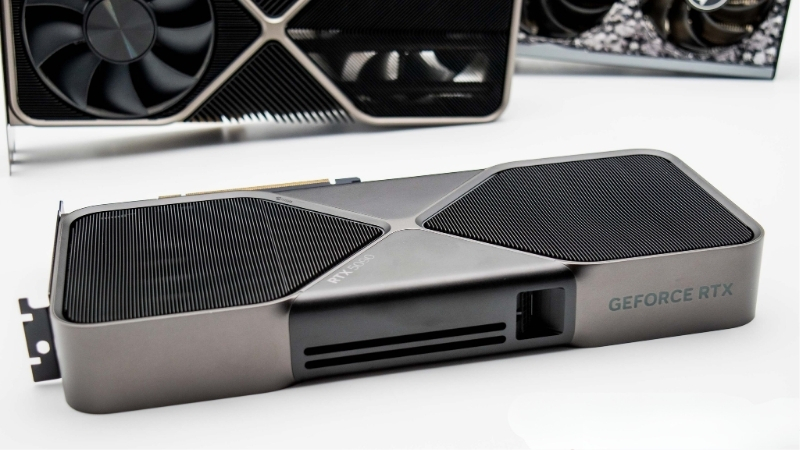
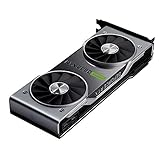
Here is the short version. A Founders Edition (the reference card built by the GPU maker) wins on compact size, clean looks, and a guaranteed reference price, making it ideal for tidy or smaller builds. An AIB card (built by partners like ASUS, MSI, or Gigabyte) wins on cooling, choice, factory overclocks, and availability, with options ranging from budget to premium. For most buyers an AIB card is the practical pick, while a Founders Edition suits those who specifically want a small, understated, reference-priced card and can find one in stock.
As an Amazon Associate we earn from qualifying purchases at no extra cost to you. Product prices and availability are accurate as of the date shown and are subject to change.




Who Wins on Cooling and Noise
On cooling, AIB cards generally have the edge, especially the larger triple-fan models whose oversized heatsinks keep the GPU cooler and the fans quieter under sustained load. For high-power cards in particular, a good AIB cooler holds higher boost clocks more consistently.
Founders Edition cards are not poor coolers, and modern reference designs are far better than the old blower-style cards, often running quietly and efficiently for their compact size. But because they are smaller, they have less heatsink to work with, so the best premium AIB coolers usually win on outright temperatures and low-load noise.
For a buyer who games long hours or wants the quietest possible system, that gap is worth taking seriously, since a premium AIB cooler can keep a hot card both cooler and noticeably quieter. For a buyer who simply wants a tidy, capable card, a Founders Edition’s cooling is more than sufficient and the difference rarely matters in practice.
Who Wins on Size, Build and Looks
Founders Edition cards win decisively on size and aesthetics. They are typically more compact, often two slots where AIB cards stretch to three, and their clean, understated industrial design appeals to buyers who want a tidy build without aggressive styling or heavy RGB.
AIB cards trade that compactness for cooling and features, so they are usually larger and heavier, sometimes requiring a support bracket. The upside is variety: AIB models come in countless designs, sizes, and lighting options, so whatever look or form factor you want, there is almost certainly an AIB card to match, which a single reference design cannot offer.
This variety is one of the strongest practical arguments for AIB cards. Whether you want a compact model for a small case, an oversized cooler for the quietest possible operation, or a particular colour scheme to match a build, there is an AIB version to suit, whereas the Founders Edition gives you exactly one take on the card.
Founders Edition vs AIB Comparison Table
The table summarizes the practical differences rather than performance, since the core GPU is identical and frame rates are within a couple of percent. Focus on size, cooling, and availability, because those are what actually differ between the two.
| Attribute | Founders Edition | AIB Cards |
|---|---|---|
| Cooler | Reference, compact | Varies; often larger and cooler |
| Size | Smaller, often 2-slot | Larger, often 2.5–3.5 slot |
| Factory overclock | Reference clocks | Often factory overclocked |
| Aesthetics | Clean, understated | Wide variety, RGB options |
| Price | Reference MSRP | Budget to premium |
| Availability | Often limited | Widely available |
| Best for | Compact, tidy builds | Cooling, choice, value range |
Deep Dive Face-Off: Performance, Overclocking and Availability
A glance at the differences is not enough to spend wisely, so this section compares the two on the factors that actually affect ownership: how much the factory overclocks really matter, how availability and warranty differ, and where pricing and timing land in the current market. These are what separate a clean purchase from a frustrating one.
Performance and Factory Overclocks
Because both versions use the same GPU, the real-world performance difference is small. AIB cards often ship with a factory overclock, but that typically translates to only a couple of percent in games, which is rarely noticeable in practice and well within what a manual tweak could achieve on a Founders Edition.
The more meaningful performance factor is sustained clocks, which depend on cooling. A better-cooled AIB card can hold its boost clocks more consistently under long sessions, giving it a slight, steady edge over a thermally tighter card, though the gap remains modest. For most buyers, the factory overclock should be treated as a minor bonus rather than a deciding factor.
If you do care about squeezing out every last frame, remember that a Founders Edition can usually be manually overclocked to close most of the gap to a factory-overclocked AIB card. The factory overclock buys convenience, not exclusive performance, which is another reason it should rarely tip the decision on its own.
Availability, Warranty and Support
Availability is a genuine practical advantage for AIB cards. Founders Edition stock is often limited and can sell out quickly, particularly around a launch, whereas AIB cards are produced by many partners in far greater volume, so you are much more likely to find one in stock at a price you want.
On warranty and support, both are generally solid, but the experience varies by brand. The major AIB partners offer their own warranty terms and support channels, and some are better regarded than others, so it is worth checking the specific brand’s reputation. A Founders Edition is backed directly by the GPU maker, which some buyers prefer for its consistency.
It is worth registering your card with the manufacturer after purchase regardless of which you choose, since that often activates the full warranty period and can matter if you ever need support. For an expensive component, a few minutes of admin is cheap protection against a rare but costly failure.
Pricing and the Component-Cost Picture
Pricing is where the two diverge most. A Founders Edition sells at the reference price, which can be excellent value when AIB cards carry premiums, but AIB cards span a wide range, with budget models sometimes undercutting the reference price and premium models costing considerably more. The smart move is to compare the live price of the Founders Edition against several AIB options at the moment you buy.
The wider market matters too. PC component prices have broadly trended upward, driven mainly by memory costs, and that pressure reaches graphics cards and whole builds alike. The encouraging news is real but limited: the steep climb of late 2025 has cooled, and some makers, Framework among them, have reported a relatively stable recent stretch while still warning of further movement.
New supply is on the way but not soon, with OEMs now able to source DDR5 from suppliers like CXMT and Micron building two fabs in Idaho, though those plants are not expected to come online until 2027–2028. The honest reading is that prices have stopped spiking rather than started falling, so there is little to gain by waiting; buy whichever version offers the best value on the day, and factor the whole build cost into your budget.
Choosing the Right Card: Alternatives and Final Verdict
With the differences clear, the decision comes down to your priorities, your case, and what is actually in stock. This section covers what to do if neither obvious choice fits, then gives a direct recommendation on who should buy a Founders Edition and who is better served by an AIB card.
The Alternative If Neither Fits
If the Founders Edition is sold out and the premium AIB cards are too expensive, the answer is almost always a mid-tier AIB model. These cards offer most of the cooling and quiet of the flagship designs at a far more reasonable price, and they are the sensible default for the majority of buyers.
Conversely, if you want the smallest possible card and no Founders Edition exists for your chosen GPU, look for a compact dual-fan AIB model designed for small-form-factor builds. There is usually an AIB option that mirrors the Founders Edition’s compactness while remaining easy to buy.
Whichever direction you take, the key is to shop by what is actually in stock rather than fixating on one specific version. Because the underlying GPU is identical, a well-chosen AIB card delivers the same gaming experience as a Founders Edition, so flexibility on the exact model usually gets you a better price or a faster purchase.
Who Should Buy a Founders Edition
Buy a Founders Edition if you value a compact, clean, understated card, want the reassurance of the reference price, and are building a tidy or smaller system where size and looks matter. For that buyer it is an elegant, fairly priced choice, provided you can find one in stock.
It is also a good pick if you simply prefer a single, consistent design backed directly by the GPU maker rather than navigating dozens of partner variants. The main catch is availability, so be prepared to act quickly when stock appears.
Who Should Buy an AIB Card
Buy an AIB card if you want the best cooling and quiet, the widest choice of sizes and prices, or simply the card that is easiest to actually purchase, which describes most buyers. With options from budget to premium, there is an AIB card for nearly every build and budget.
Match the model to your needs: a mid-tier triple-fan card for the best all-round value, a premium model for the quietest high-end build, or a compact design for a small case. Whichever route you take, compare the live prices of the Founders Edition and several AIB cards through the links here before deciding, since the best value shifts with stock and discounts.
See More:
Conclusion: Founders Edition vs AIB, the Smart Buy
There is no universal winner in the Founders Edition vs AIB debate, only the right choice for your build. A Founders Edition is the compact, clean, reference-priced option for tidy and smaller systems, while an AIB card wins on cooling, choice, and availability, making it the practical pick for most buyers. Since both share the same GPU and the same baseline performance, let your case size, your priorities, and the live price decide, and compare the Founders Edition against several AIB options before you commit.
Top-Rated Picks
Best Seller
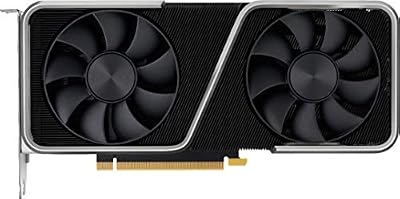
NVIDIA GeForce RTX 3060 Ti Founders Edition 8GB GDDR6 PCI Express 4.0 Graphics Card (Renewed)
Save $148.03

Save $350.00

Dropped $0.02


| Product | Brand | Rating | Reviews | Price |
|---|---|---|---|---|
| ARCTIC MX-4 (4 g) – Premium Performance Thermal Paste… | ARCTIC | ★ 4.8 | 104k | $4.99 |
| ARCTIC MX-4 (incl. Spatula, 4 g) – Premium Performanc… | ARCTIC | ★ 4.8 | 71.9k | $5.49 |
| Crucial 8GB DDR4 RAM 3200MHz (PC4-25600), Downclockab… | Crucial | ★ 4.8 | 62.8k | $74.99 |
| AMD Ryzen 5 5600X 6-core, 12-thread unlocked desktop … | — | ★ 4.8 | 30.2k | $177.60 |
| NVIDIA Shield Remote; Voice Search, Motion-Activated,… | — | ★ 4.7 | 10.6k | $25.99 |
Frequently Asked Questions
What is the actual difference between the two?
Founders Edition cards are designed and sold by Nvidia at reference specification with their own cooler design, while AIB cards come from partners such as ASUS, MSI, Gigabyte and Zotac with custom coolers, power delivery, factory overclocks and varying sizes. The underlying GPU silicon is identical.
Which one runs cooler and quieter?
Usually the larger partner cards, because a triple fan cooler with a bigger fin stack moves more heat at lower fan speeds. Founders designs are more compact and typically run warmer or louder at the same power, though the newer flow-through designs have narrowed the gap considerably.
Does the factory overclock on partner cards matter?
Marginally. A typical factory overclock adds two to four percent in real games, which is not perceptible in play. What matters more is the higher power limit some models allow, plus the better cooling headroom, which lets the card hold boost clocks during long sessions rather than sliding back.
Will an AIB card fit my case?
Check carefully. Premium partner models are frequently three or three and a half slots thick and exceed 320mm in length, which conflicts with front radiators, drive cages and smaller cases. Founders cards are typically more compact, making them the easier fit for small form factor and space constrained builds.
Which offers better warranty and support?
Partner warranties vary by brand and region, commonly three years, and some offer advance replacement. Nvidia handles Founders support directly. The practical advice is to check the specific brand’s reputation for turnaround in your country, since that varies more than the printed warranty length suggests.






Write Your Review
No reviews yet. Be the first to share your experience!