
Top Nvidia Geforce Rtx 4090 Founders Picks for 2026
Here are our current top nvidia geforce rtx 4090 founders picks, compared on real Amazon owner reviews, price, and features. Live prices update below.
- Top Nvidia Geforce Rtx 4090 Founders Picks for 2026
- What the RTX 4090 Founders Edition Still Delivers
- Pros and Cons From Years of Owner Reviews
- The Market Around This Card in 2026
- Recommended Products
- Conclusion: A Legend Priced Like One
- Related Guides
- Frequently Asked Questions
- Related Articles
- Related Guides

Dropped $200.00


Dropped $159.05
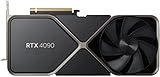
Nvidia GeForce RTX 4090 Founders Edition remains, years after launch, one of the most discussed graphics cards ever built — a 450W monolith that defined an era of 4K gaming and then found a strange second life as the AI hobbyist’s workhorse. In 2026 it exists only on the used and remaining-stock market, priced at or above its original $1,599 MSRP, which makes reviewing it now a different exercise than reviewing it at launch. This review measures what the Founders Edition still delivers, synthesizes years of owner feedback into an honest scorecard, and answers the question the market keeps asking: who should actually buy one today?
As an Amazon Associate we earn from qualifying purchases at no extra cost to you. Product prices and availability are accurate as of the date shown and are subject to change.



What the RTX 4090 Founders Edition Still Delivers
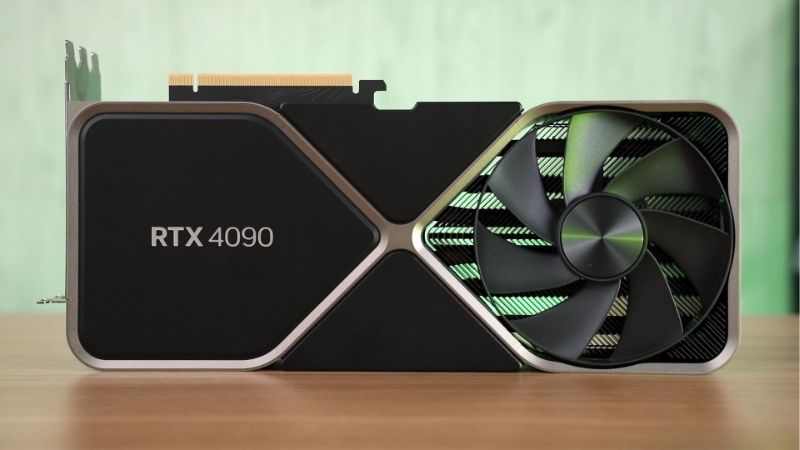
The specification sheet has lost none of its shock value: 16,384 CUDA cores, 24GB of GDDR6X at 1,008 GB/s, a 2.52 GHz boost clock, and a 450W TDP wrapped in Nvidia’s flow-through Founders cooler. Those numbers made it the fastest consumer GPU of its generation — and in pure rasterization, only the RTX 5090 has clearly surpassed it since.
Gaming Benchmarks That Still Impress
At 4K ultra native, the card holds numbers most 2026 hardware envies: Cyberpunk 2077 at 82 FPS, Horizon Forbidden West at 116 FPS, Black Ops 6 at 138 FPS — roughly matching the RTX 5080 and clearing the 5070 Ti by 20-30% in raster workloads. At 1440p it is simply CPU-limited in most titles, pushing past 200 FPS wherever the engine allows.
Ray tracing holds up nearly as well: third-generation RT cores deliver playable path tracing at 4K with DLSS upscaling, and frame-time consistency — long the Founders Edition’s quiet strength — remains among the best ever logged. The one ceiling is generational: DLSS 4 Multi Frame Generation is Blackwell-exclusive, capping this card at DLSS 3’s single generated frame forever.
That cap has a measurable consequence worth stating plainly: in DLSS 4 showcase titles, a $749 RTX 5070 Ti with Multi Frame Generation now produces higher effective frame rates than this former flagship — path-traced Cyberpunk 2077 at 4K runs roughly 145 FPS on the newer card against roughly 115 FPS here. In raster the 4090 still rules its price class; in the feature-accelerated games that increasingly headline each month, the hierarchy has quietly inverted.
The Founders Cooler: Design That Aged Gracefully
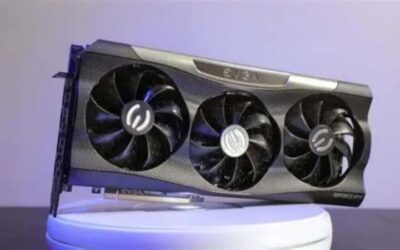
Nvidia’s dual flow-through design pushed 450W through a 304mm, 3-slot card that ran 65-72°C under sustained 4K load at 38-40 dBA — measurements partner cards twice its bulk struggled to match. Years of owner feedback confirm the durability: the vapor chamber and fan bearings show remarkably low failure rates for a card run this hard.
The honest asterisk is the 12VHPWR connector, the card’s one documented design controversy. Early adapter-seating failures produced melted connectors in a small percentage of units; revised connectors and user education largely closed the issue, but every used-market inspection checklist still starts there for a reason.
System integration remains the Founders Edition’s practical tax: a quality 1000W ATX 3.x power supply is the realistic floor given measured transient spikes above 600W, the 3-slot 304mm body needs verified case clearance, and the card’s exhaust path rewards cases with generous top ventilation. Owners migrating from smaller cards consistently underestimate the airflow planning — a recurring theme in otherwise positive reviews — and the 450W of heat delivered into a small room in summer is the specification no benchmark chart shows.
The 24GB Buffer: Why AI Changed Its Price
The specification that rewrote this card’s fate is the 24GB of VRAM. Quantized 30B-parameter language models fit entirely in memory, Stable Diffusion runs large batches without offloading, and Blender scenes that crash 16GB cards render without complaint — capabilities that made it the default recommendation for local AI work below professional pricing.
That demand is why the used market behaves abnormally: organizations and hobbyists priced out of data center hardware buy 4090s instead, holding its street price at $1,300-1,600 — at or above launch MSRP years later, a depreciation curve no gaming card has ever shown.
The workload specifics behind that demand are concrete: 24GB holds a quantized 30B-parameter model with context to spare where 16GB cards must split layers to system RAM at a severe speed penalty, batch image generation runs at sizes smaller buffers reject outright, and 8K video timelines scrub without proxies. Reviews from professional users repeatedly frame the card in payback periods rather than frame rates — the clearest sign a gaming product changed categories.
Pros and Cons From Years of Owner Reviews
Few cards have accumulated as deep a review record. Aggregating it — launch-era 4-5 star praise through current used-market experiences — produces a scorecard with unusual confidence behind every line.
What 4-5 Star Reviews Consistently Celebrate
The dominant theme across thousands of reviews is absence of compromise: owners describe years of 4K gaming without touching a settings menu, and the phrase “best purchase I ever made” recurs at rates unusual even for flagships. The Founders cooler specifically earns praise for staying quiet at loads that send partner cards into turbine territory.
The second theme arrived later: AI hobbyists and creators rating the card a career tool — render farms replaced, local models unlocked, 8K timelines scrubbed smoothly. Professional reviews frequently include payback math, which is its own category of endorsement.
What 2-3 Star Reviews Warn About
The complaint clusters are equally consistent. The 12VHPWR connector leads the launch-era criticism — seating anxiety and the documented early failures. Power and heat follow: 450W warms rooms measurably, demands a quality 1000W power supply, and produces transient spikes that tripped marginal units.
The used-market era added its own tier: cards arriving from mining or AI duty with degraded thermal pads, memory junction temperatures past 100°C, rattling fans, and no warranty behind any of it. The satisfied used buyers — visible in the same review pools — bought from listings with stress-test evidence and original packaging, then verified temperatures inside the return window. The diligence gap separates the star ratings almost perfectly.
One inspection detail is unique to this model and worth isolating: the Founders Edition’s connector sits at an angle that stresses tight case clearances, so used buyers should photograph the connector seating before first power-on and confirm the cable’s full click — the two-minute habit that the connector-failure reports almost universally lacked.
Who Should Buy One in 2026 — and Who Should Not
The rational buyer profile has narrowed to one group: professionals and serious hobbyists whose workloads genuinely require 24GB — local AI, heavy 3D, 8K video — for whom this card remains the cheapest ticket to that capacity, and for whom its price is a business calculation rather than a gaming one.
Pure gamers should not buy one at current prices: the RTX 5080 matches its raster within 5-10% for less money with DLSS 4 and a warranty, and the 5070 Ti delivers most of the experience for half the cost. The 4090’s gaming era was magnificent; its gaming value era is over.
The Market Around This Card in 2026
No graphics card’s price is more directly shaped by current industry news than this one, and understanding the mechanism turns its strange market behavior from mystery into forecast.
H200 Sales to China Anchor Its Price Floor
The United States has approved Nvidia selling the H200 — one of its most powerful AI chips — to China, reopening enormous data center demand. The cascade lands squarely on the 4090: organizations that cannot source enough data center silicon buy high-VRAM consumer cards as substitutes, which is precisely the demand holding a discontinued gaming card at launch pricing.
The same approval tightens consumer GPU supply broadly, since H200 production competes for the identical fabrication and memory capacity behind GeForce cards — historically thinning availability within a quarter or two of each demand surge.
Component Inflation Removes the Bargain Scenario
Simultaneously, laptop and component prices are trending upward with memory leading, as AI infrastructure absorbs DRAM production. Used GPU prices track new prices with a short lag, and with 50-series cards holding above MSRP, the 4090’s floor has structural support from below as well as demand support from above.
The practical forecast follows: buyers waiting for this card to depreciate to historical post-flagship levels — $800-900 — are waiting on a mechanism that no longer exists. Memory contracts negotiated quarters ahead extend the trend through 2026.
Buy, Wait, or Redirect: The Decision
For the 24GB-dependent buyer, the conclusion is direct: prices are anchored by demand with no scheduled end, so if the workload needs the card, delay purchases nothing. Verify the connector, demand stress-test evidence, and buy within a return window.
For everyone else, redirect: the RTX 5080 and 5070 Ti deliver the modern gaming experience this card pioneered, new and warrantied, for less. Comparing all three on Amazon prices the whole decision in minutes.
Recommended Products
ASUS
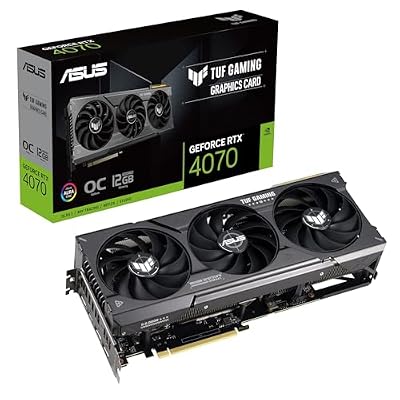
ASUS TUF Gaming NVIDIA GeForce RTX 4070 OC Edition Gaming Graphics Card (PCIe 4.0, 12GB GDDR6X, HDMI 2.1, DisplayPort 1.4a), 3 Year Warranty
View on Amazon
1 day ago

Sapphire
Sapphire Pulse AMD Radeon RX 7800 XT Gaming 16GB GDDR6 Dual Video Card
View on Amazon
1 day ago

ASUS
ASUS ROG Strix GeForce RTX 4090 OC Edition Gaming Graphics Card (PCIe 4.0, 24GB GDDR6X, HDMI 2.1a, DisplayPort 1.4a), 3 Year Warranty
View on Amazon
5 hours ago
As an Amazon Associate we earn from qualifying purchases. Product prices and availability are accurate as of the date/time indicated.
See more:
- ASUS TUF Gaming GeForce RTX 5090 3080 vs 5080
- Nvidia RTX 4070 Super graphics card
- Sapphire graphics card
- Is HDR good for gaming
- RTX 4080 vs 5070
Conclusion: A Legend Priced Like One
The Nvidia GeForce RTX 4090 Founders Edition reviews in 2026 as something rare: a card whose engineering — the flow-through cooler, the frame-time consistency, the 24GB buffer — aged so well that the market refuses to let it depreciate. The verdict splits cleanly along buyer lines: for AI, rendering, and VRAM-bound professional work it remains the most capacity per dollar below professional hardware, and the demand anchoring its price proves it; for gaming, its crown has passed to Blackwell cards that cost less and do more. With the H200’s data center pull and component inflation holding every price floor up, neither buyer profile gains by waiting. Check the current RTX 4090 Founders Edition listings — and the RTX 5080 alternative — on Amazon today, and let your workload, not the legend, write the check.
Frequently Asked Questions
What is the best nvidia geforce rtx 4090 founders edition in 2026?
The best nvidia geforce rtx 4090 founders edition depends on your budget and how you plan to use it. The options compared above are our top-rated picks based on real customer ratings, build quality, and overall value — start with the highest-rated model that fits your budget.
How much should I expect to spend on a nvidia geforce rtx 4090 founders edition?
Prices vary by brand and features. Budget options cover the essentials, while mid-range and premium models add durability, performance, and extra features. Compare the prices in the list above to find the best value for your needs.
What should I look for when buying a nvidia geforce rtx 4090 founders edition?
Focus on what matters most for your use case — build quality, compatibility, performance, warranty, and verified customer reviews. Every pick above is selected to balance these factors.
Are budget nvidia geforce rtx 4090 founders edition options worth it?
Yes. For most people a well-reviewed budget or mid-range nvidia geforce rtx 4090 founders edition delivers excellent value. You only need to spend more if you specifically require premium materials or top-tier performance.
How did we choose these nvidia geforce rtx 4090 founders edition picks?
We compare current Amazon ratings, review counts, key features, and price to surface the options with the best real-world value. The list is refreshed as ratings and availability change.


Write Your Review
No reviews yet. Be the first to share your experience!