
- Top Pick: msi Gaming GeForce GT 1030 4GB DDR4 64-bit HDCP Support DirectX 12 DP/HDMI Single Fan OC Graphics Card (GT 1030 4GD4 LP OC)
- Best Value: ASUS GeForce GT 1030 2GB GDDR5 Graphics Card
- Premium Choice: maxsun GEFORCE GT 1030 2GB GDDR5 64-Bit Video Graphics Card GPU PCIe 3.0 DirectX 12 ITX HDCP DVI HDMI SFF Low Profile Ready Fast Performance Than 2GD4
Nvidia GeForce GT 1030 is one of the smallest, cheapest discrete cards you can still buy, and it exists for a very specific job rather than for gaming. It brings a dead PC back to life, adds proper display outputs, and gives an office or media machine smooth video without a big power bill. The key to being happy with it is knowing exactly what it is for, avoiding one nasty version trap, and recognizing the point where a few extra dollars buys a vastly better card. This review lays all three out clearly.


Editor's Pick
ASUS GeForce GT 1030 2GB GDDR5 HDMI DVI Graphics Card (GT1030-2G-CSM), 3 Year Warranty

Prime
Limited Time
maxsun GEFORCE GT 1030 2GB GDDR5 64-Bit Video Graphics Card GPU PCIe 3.0 DirectX 12 ITX HDCP DVI HDMI SFF Low Profile Ready Fast Performance Than 2GD4
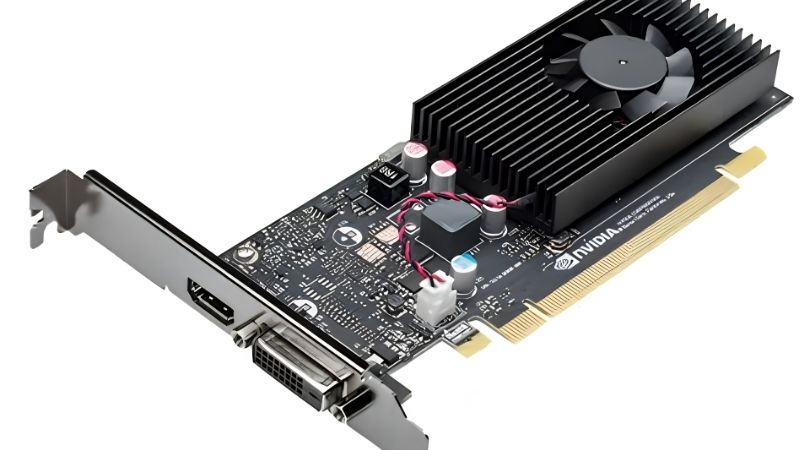
Nvidia GeForce GT 1030 Specs and What It Is For
This card is defined by modesty, and its specifications make its purpose obvious the moment you read them. It is not trying to be a gaming card; it is the smallest sensible step up from having no dedicated graphics at all. Set your expectations to match that role and it is genuinely useful, but treat it as a gaming part and disappointment is guaranteed, so understanding the intent behind the design matters more here than raw numbers.
As an Amazon Associate we earn from qualifying purchases at no extra cost to you.



Core Specs and Low-Power Design
The GT 1030 uses Nvidia’s older Pascal architecture with 384 CUDA cores and a small 2GB memory buffer. Those are tiny figures by modern standards, but they are matched to the light workloads the card is meant for rather than anything demanding.
Its defining feature is efficiency. It draws roughly 30 watts and pulls all of that from the motherboard slot, so it needs no separate power connector at all. That single fact makes it one of the few cards that will drop into a weak prebuilt or office PC without a power supply upgrade.
Because it is physically small and asks so little of the system, it fits in cases and machines that could never house a proper gaming card, which is a large part of its appeal to the people who buy it.
What the GT 1030 Can and Cannot Do
For everyday computing this card is perfectly capable. It handles web browsing, office work, multiple monitors and smooth high-resolution video playback, and it adds hardware acceleration that makes a sluggish machine feel more responsive.
Gaming is where it stops. It can run older, lighter and less demanding titles at low settings and low resolutions, and it manages many esports games acceptably, but modern AAA games are well beyond it. The 2GB memory alone rules out anything with large textures, so this is not a card for playing current releases.
It is worth being blunt about this, because the card’s low price tempts hopeful buyers into expecting more than it can give. The GT 1030 is a display and light-media card that happens to run a few old games, not a budget gaming card that happens to be small, and buying it with the second expectation is the surest route to disappointment.
Display Outputs and Everyday Use
A common and genuinely valid reason to buy this card is simply to get working display outputs. If a processor lacks integrated graphics, or a motherboard’s outputs have failed, the GT 1030 restores a functioning display for very little money.
In a home theatre PC or a family machine it also earns its place, driving crisp video and multiple screens quietly and coolly. For those roles it is not a compromise but exactly the right tool, doing a small job well without fuss or noise.
The practical value here is easy to underrate. For someone whose processor has no built-in graphics, or whose motherboard video output has failed, a working display is not a luxury but the difference between a usable computer and a dead one, and the GT 1030 delivers exactly that for a small outlay and no power supply worries.
Strengths, Weaknesses and the Version Trap
Judged against its actual purpose rather than against gaming cards, the GT 1030 has a clear set of pros and cons, plus one buying pitfall that catches out a surprising number of people. Laying these out plainly is the difference between a satisfying cheap upgrade and a frustrating one, so it is worth going in with eyes open before you part with any money.
Nvidia GeForce GT 1030 Pros and Cons
Here is the honest balance for a buyer weighing this specific low-end card.
| Pros | Cons |
|---|---|
| No power connector; fits weak PSUs | Not a gaming card in any real sense |
| Very low power draw and heat | Only 2GB of memory |
| Restores or adds display outputs cheaply | Aging Pascal design, no modern features |
| Small enough for tiny cases | The slow DDR4 version is a real trap |
The takeaway is that it excels at basic display and media duty and fails at gaming, so value depends entirely on buying it for the right job and the right version.
The GDDR5 Versus DDR4 Version Trap
This is the single most important thing to know before buying. The GT 1030 exists in two versions that look identical on the box: a GDDR5 model and a much slower DDR4 model. They share a name but perform very differently.
The DDR4 version has drastically lower memory bandwidth and can be roughly half as fast in real use, which cripples even the light tasks the card is meant for. Sellers do not always make the distinction obvious, so it is easy to buy the wrong one by accident.
Always confirm you are buying the GDDR5 version before you pay. Check the specification carefully, because paying the same money for the DDR4 model means getting a noticeably worse card for no saving, and it is the mistake most likely to leave a buyer unhappy.
Is It Worth Buying at the Right Price
This card only makes sense when it is genuinely cheap and used for its intended job: adding display outputs, driving a media or office PC, or reviving a machine with no graphics. At a low price for those roles, it is a sensible, no-hassle buy.
The moment it costs anywhere near a modern entry card, the argument falls apart, because that small step up buys dramatically more capability. Value here is entirely about paying little for a small, specific job.
Framing the purchase that way keeps you honest. If you catch yourself justifying the price by imagining light gaming sessions, that is the signal to look at an entry gaming card instead, because the GT 1030 rewards buyers who want a cheap fix and punishes those hoping for performance it was never built to provide.
Who Should Buy It and Alternatives
The final decision comes down to matching this card to a genuinely light use case, because it is perfect for some buyers and a poor choice for anyone with bigger ambitions. Being honest about which group you fall into is what turns this into a smart little purchase rather than a card you outgrow immediately.
Ideal Buyers
The perfect owner needs basic display output, a media PC, an office machine or a fix for a computer with no working graphics. For them the GT 1030 is cheap, quiet, cool and exactly enough, with no wasted spend on power they do not need.
It is also a reasonable pick for a spare or secondary machine where the goal is a functioning display rather than any real performance, which is a common and entirely valid reason to buy one.
System builders and repair shops keep these cards on hand for exactly this reason, using them to test a build or to get a customer’s machine displaying again quickly and cheaply. In that context the GT 1030 is less a compromise and more a reliable tool that does one job dependably.
When to Step Up to a Real Card
If you want to play modern games, edit video, or keep a machine relevant for years, this card is not the answer, and its ceiling is fixed no matter how you configure it. Wanting any of those things is the clear signal to look higher up the range.
Even a modest step up to an entry gaming card transforms what the machine can do, adding real performance, more memory and modern features the GT 1030 simply lacks. For anything beyond light duty, that extra spend pays for itself quickly.
A useful rule of thumb is the price ratio: if a card with real gaming ability costs only modestly more than the GT 1030, the value tilts decisively toward the better card, and the small saved sum is a poor reason to accept a fraction of the capability.
See More:
Compatibility and Buying Tips
The card’s low demands make compatibility easy: it fits almost any case and needs no extra power. The only real check is confirming you are buying the GDDR5 version rather than the slow DDR4 model, which matters far more than any system requirement here.
If your needs are light and you have confirmed the right version, you can compare current GT 1030 listings, or an entry-level card if you want a little more, through the links on this page and pick the option that fits your job and budget.
One last practical note: because the card is so small and low-powered, it will not bottleneck a modern processor for the light tasks it handles, so you do not need to worry about pairing it carefully. The only decision that really matters is the GDDR5 versus DDR4 one, so make that check and the rest takes care of itself.
In summary, the Nvidia GeForce GT 1030 remains a genuinely useful little card in 2026, but strictly within its lane: a cheap, no-connector way to add display outputs or drive a media and office PC. Buy the GDDR5 version, use it for light duty, and it does its small job quietly and well. Ask it to game and its 2GB memory and aging design show instantly. For basic tasks it is a smart, low-cost choice, but if real performance is the goal, a modest step up to an entry gaming card is money far better spent.
Frequently Asked Questions
What is the GT 1030 actually good for in 2026?
It is a display output and light desktop card, nothing more. It suits reviving an old office machine, driving multiple monitors from a system with no integrated graphics, or acting as a video output alongside a headless compute card. It is not a gaming card, managing only older or very light titles at low settings.
Should I avoid the DDR4 version?
Absolutely. NVIDIA and partners released a DDR4 variant that looks identical on the box but delivers roughly half the memory bandwidth of the GDDR5 model, gutting performance in anything graphically demanding. Always check the memory type in the product specifications before buying, since retailer listings frequently obscure the distinction.
Can the GT 1030 encode video for streaming or Plex?
No, and this catches many buyers out. The GP108 die omits the NVENC hardware encoder entirely, so it can only decode video, not encode it. If your goal is Plex or Jellyfin transcoding, this is the wrong card and you need at least a GTX 1050 or newer part with a working encoder block.
Does it need a power connector?
No. Board power is around 30 watts and it draws everything through the PCIe slot, so it works with even very weak or old power supplies. Many models are available in low profile form with half height brackets, which makes it one of the easiest cards to fit into slim desktop and small office machines.
Is there a better option at a similar price?
A used GTX 1050 Ti or GTX 1650 offers dramatically more performance, still requires little or no auxiliary power, and includes a functioning video encoder. Modern integrated graphics from recent Intel and AMD processors also comfortably exceed the GT 1030, so if you are building new rather than reviving old hardware, skip it entirely.









Write Your Review
No reviews yet. Be the first to share your experience!