
Gainward Phantom RTX 4070 comes from a value-focused brand that gets little video coverage, so this written guide is often the quickest way to get the answers you need. You want an objective verdict, the specs, and a clear fit check before buying, not a long video. This review weighs the price, the cooling, and the dimensions, and pulls in real buyer sentiment so you can judge a less-covered 4070 with confidence.
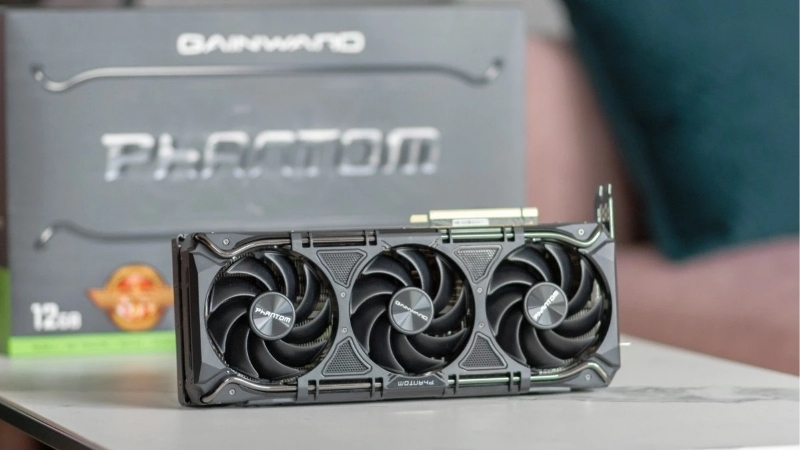
Is the Gainward Phantom RTX 4070 Worth It?
Short answer: yes, the Gainward Phantom RTX 4070 is solid value, delivering full 4070 performance at a competitive price, with the main reason to hesitate being the brand’s lower profile rather than the card itself. The 4070 is a strong 1440p card regardless of partner, so the real question is whether Gainward’s price and cooling justify choosing it over a better-known brand. For value-minded buyers comfortable looking past the name, it often does, and this guide fills the information gap that scarce coverage leaves. The card uses the same 4070 GPU as any better-known partner, so you are not buying a weaker product, just a less famous one. For a research-minded buyer, that is precisely where the value tends to hide.
As an Amazon Associate we earn from qualifying purchases at no extra cost to you.


Who This Card Is For
The Phantom RTX 4070 suits value-focused 1440p gamers who want full performance at a competitive price and are comfortable with a less mainstream brand. It targets buyers who prioritize dollars per frame over badge recognition and are happy to do a little extra research for a better deal. For that buyer, the Phantom offers the complete 4070 experience without a brand premium attached.
It is not the pick for buyers who specifically want a big-name brand for the widest service network or resale confidence. Those buyers may prefer a more common partner even at a higher price.
For the value buyer who cares about price and capability over brand recognition, the Phantom is a credible, overlooked option, and its scarce coverage means a careful reader can find value others pass over. Less attention often means more competitive pricing, since the brand cannot lean on name recognition, which can translate into full 4070 performance for noticeably less money.
Specs and Size at a Glance
Clear specs are exactly what is hard to find for a less-covered card, so here they are in one place. Treat the dimensions as approximate and confirm the exact numbers for your specific revision before buying.
| Spec | Gainward Phantom RTX 4070 |
|---|---|
| VRAM | 12 GB GDDR6X |
| Board power | Around 200W |
| Recommended PSU | 650W or higher |
| Power connector | 16-pin (12VHPWR) or 8-pin, varies by revision |
| Length | Approximately 300 mm |
| Thickness | Around 2.5 to 3 slots |
The takeaway is approachable power and size. With a modest 200W draw and a 650W PSU requirement, the Phantom fits comfortably in most mid-tower builds, though as always you should confirm length and slot clearance against a smaller case before buying.
Real Performance Expectations
The 4070 delivers strong 1440p gaming and entry-level 4K capability, with 12 GB of memory that handles modern titles comfortably at high settings. The Phantom performs in line with any well-cooled 4070, since it shares the same core GPU. The value lives in the price and the cooling, not in any compromise to capability.
Its mild factory overclock yields only a marginal frame difference over a baseline card, so you should not expect a meaningful speed gain from the Phantom badge alone. The story here is value, not raw speed.
What you get is the full 4070 experience at a competitive price, which is exactly what makes the card appealing to buyers who care about dollars per frame rather than brand prestige. Those Nvidia features also keep improving through driver updates over time, so a value 4070 bought today gradually feels more capable, quietly strengthening an already strong value case for a card that was affordable to begin with.
Living With the Gainward Phantom RTX 4070
Day-to-day ownership of a mid-range card is shaped by cooling, noise, and how easily it fits rather than by chasing benchmark records. The Phantom runs its modest power comfortably and fits most builds, which makes it an easy card to live with.
Cooling and Noise
The Phantom’s cooler is sized sensibly for the 4070’s modest 200W output, keeping temperatures in a comfortable range under load without needing an oversized chassis. The low heat output gives the cooler an easy job, which is a big part of why the card stays both efficient and manageable in size.
Because the heat output is low, the fans rarely need to spin hard, so the card stays reasonably quiet in normal use. It is composed enough for most builds, if not the absolute quietest 4070 available.
That efficient cooling keeps the card a manageable size, which feeds directly into the fit considerations that follow and make it easy to accommodate in the vast majority of standard builds.
Will It Fit Your Case and PSU?
Fit is straightforward on this card. At roughly 300 mm and around 2.5 to 3 slots, the Phantom fits comfortably in most mid-tower cases, with only genuinely compact builds needing a careful measurement. Its sensible size is part of the appeal, since it pairs full 4070 performance with broad case compatibility.
On power, a quality 650W supply is comfortably enough thanks to the modest 200W draw, so most existing systems handle it without a PSU upgrade. The connector varies by revision, so confirm whether yours uses a 16-pin or 8-pin input.
For the majority of builds the Phantom is an easy fit, but measuring your case’s GPU clearance first is still wise, especially if you are working with a smaller chassis. A quick check of your case’s maximum GPU length removes the only real fit uncertainty, and with that confirmed the install is genuinely straightforward.
Pros and Cons of the Gainward Phantom RTX 4070
Weigh the value honestly with this breakdown tied directly to whether the Phantom is the right 4070 for you.
- Pros: strong price-to-performance, full 4070 capability, modest power needs, a manageable size that fits most builds, and easy installation.
- Cons: a less mainstream brand, thinner independent review coverage, and only a marginal performance edge from the factory overclock.
The verdict is straightforward: the Phantom is worth it for value and capability, with the main hesitation being brand profile rather than the card itself, so buy it for dollars per frame. As long as the warranty and service in your region check out, you are getting a full-fledged 4070 for less than the better-known names typically charge.
Should You Buy the Gainward Phantom RTX 4070?
With performance and fit settled, the decision rests on what owners report, whether the timing makes sense, and the questions value buyers still have about a model that is harder to research.
What Buyers Report
Because the Phantom is less covered, feedback is more limited, but available sentiment is positive on value, with owners praising full 4070 performance at a competitive price.
Buyers also note the card runs cool and quiet enough for most builds and installs without fuss, which suits its value-focused positioning.
The few complaints in lower ratings are practical rather than performance-based, usually about fan noise under heavy load or simply brand unfamiliarity. Buyers who prioritized value over a big name are consistently satisfied. As with most value cards, the negative feedback reflects expectations and brand perception rather than any real fault in the hardware.
Is Now the Right Time to Buy?
For a value purchase, timing is less fraught, but it still helps to read the market. Prices have steadied in 2026 rather than climbing sharply, so you are not buying into a spike.
At the same time, broader component prices have kept trending upward and supply remains tight, so waiting for a large 4070 discount is unlikely to pay off in the near term. A value card at a fair price today is a reasonable buy.
The practical move is to buy when you find one at a good price, especially since the 4070 keeps gaining value from ongoing Nvidia features like DLSS and frame generation that improve through driver updates over time.
FAQ on the Gainward Phantom RTX 4070
Fast answers to the questions value buyers ask about this less-covered card.
Is a less-known brand a risk? The card performs like any 4070, so the main considerations are warranty terms and service in your region, which are worth confirming before buying. The hardware is the same class of GPU as any partner card, so the brand question is about support rather than capability.
Is it slower than pricier 4070s? No, it delivers the same core 4070 performance; the difference is brand and acoustics polish, not frames, which is why it is such strong value. You get the complete 4070 experience for less, with the only real concessions being a quieter brand name and a touch more noise under heavy load.
See More:
- Are GPU prices dropping
- Refurbished GPU worth it
- Open box GPU risk
- GPU warranty transfer
- Microcenter GPU deals
Conclusion
The Gainward Phantom RTX 4070 is a credible, often overlooked value pick, delivering full 4070 performance at a competitive price with only the brand’s lower profile as a real reason to hesitate. For a research-minded buyer chasing dollars per frame, that lower profile is often where the savings quietly live. Because it is less reviewed, the concrete specs and fit details above matter more than usual, and the card itself performs like any other 4070. Confirm it fits your case and check the warranty terms, then when you find it at a good price, use the links in this guide to check the latest Amazon listing and grab a 4070 that fits both your build and your budget.
Top-Rated Picks



| Product | Brand | Rating | Reviews | Price |
|---|---|---|---|---|
| ARCTIC MX-4 (4 g) – Premium Performance Thermal Paste… | ARCTIC | ★ 4.8 | 104k | $4.99 |
| ARCTIC MX-4 (incl. Spatula, 4 g) – Premium Performanc… | ARCTIC | ★ 4.8 | 71.9k | $5.49 |
| Crucial 8GB DDR4 RAM 3200MHz (PC4-25600), Downclockab… | Crucial | ★ 4.8 | 62.8k | $74.99 |
| AMD Ryzen 5 5600X 6-core, 12-thread unlocked desktop … | — | ★ 4.8 | 30.2k | $177.60 |
| NVIDIA Shield Remote; Voice Search, Motion-Activated,… | — | ★ 4.7 | 10.6k | $25.99 |
Frequently Asked Questions
What power supply does the Gainward Phantom RTX 4070 need?
The RTX 4070 draws about 200W, which is remarkably efficient for its performance class, and NVIDIA recommends a 650W supply. A quality 550W unit will run it in a modest build. Cards ship with either a 12VHPWR input plus a two-way 8-pin adapter or a direct 8-pin connector depending on the specific revision.
Is 12GB of VRAM enough for 1440p gaming?
Yes, for current titles at ultra settings including ray tracing. Twelve gigabytes clears 1440p requirements with headroom, and DLSS reduces memory pressure further by rendering at a lower internal resolution. It is less generous than a 16GB Radeon competitor, which is worth weighing if you keep GPUs for five years or run heavily modded games.
How large is the Phantom cooler?
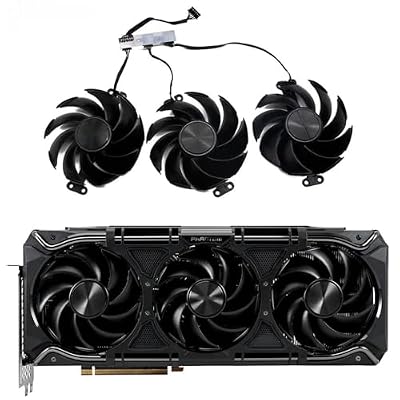
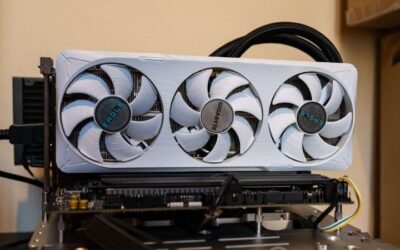
Gainward’s Phantom design uses a triple-fan heatsink around 300mm long and roughly two and a half to three slots thick, which is oversized for a 200W card and therefore very quiet. Confirm the exact figure on the product page for your regional SKU, then check it against your case’s stated maximum GPU length.
Is the RTX 4070 good for 4K?
It is capable at 4K with DLSS quality upscaling and high rather than ultra settings, comfortably so in older or well-optimised games. Native 4K in demanding AAA releases will fall short of 60fps. The card is designed as a high-refresh 1440p solution that can serve 4K60 with upscaling assistance.
What do I gain over an RTX 3070 or 3080?
Against a 3070 you gain roughly 20 to 30 percent performance, four extra gigabytes of VRAM and DLSS frame generation, at far lower power. Against a 3080 raw raster performance is similar, so the case rests on efficiency, the 12GB buffer and frame generation support rather than a large frame rate jump.




Write Your Review
No reviews yet. Be the first to share your experience!