
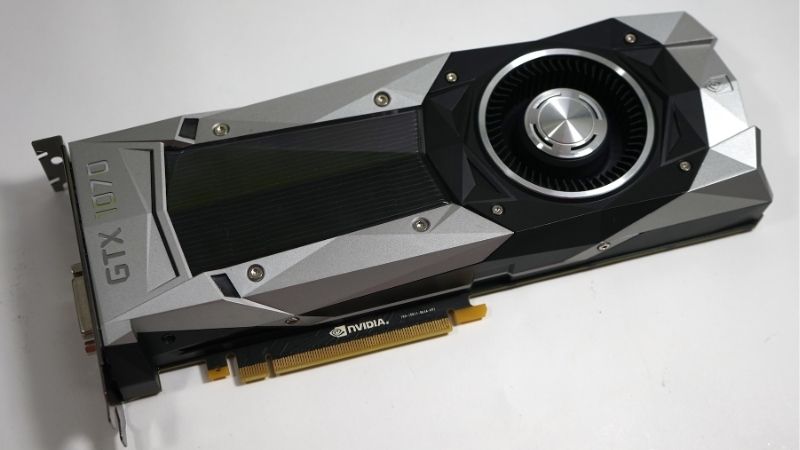
- Top Pick: Nvidia GeForce GTX 1070 Founders Edition (Renewed)
- Best Value: EVGA GeForce GTX 1070 SC GAMING ACX 3.0 Black Edition, 8GB GDDR5, LED, DX12 OSD Support (PXOC) 08G-P4-5173-KR (Renewed)
- Premium Choice: MSI Gaming GeForce GTX 1070 8GB GDDR5 SLI DirectX 12 VR Ready Graphics Card (GTX 1070 ARMOR 8G OC) (Renewed)
Top Nvidia Geforce Gtx 1070 Legend Picks for 2026
Here are our current top nvidia geforce gtx 1070 legend picks, compared on real Amazon owner reviews, price, and features. Live prices update below.
- Top Nvidia Geforce Gtx 1070 Legend Picks for 2026
- What the GTX 1070 Still Delivers in 2026
- GTX 1070 Pros and Cons From a Decade of Owners
- The Upgrade Arithmetic and Market Timing
- Recommended Products
- Conclusion: A Legend That Earned Its Retirement Terms
- Related Guides
- Frequently Asked Questions
- Related Articles
- Related Guides

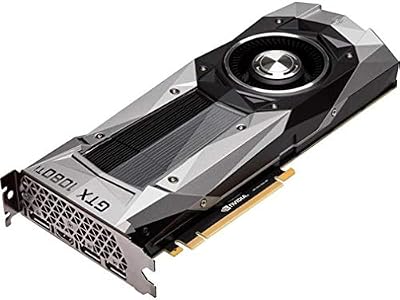


Nvidia GeForce GTX 1070 belongs to the most beloved GPU generation ever made, and a decade after Pascal’s 2016 debut it still circulates by the hundreds of thousands — in aging gaming rigs, on used-market listings at $70-100, and in the upgrade deliberations of owners who got more years from one card than anyone reasonably promised. This review takes an honest 2026 measurement of what the legend still delivers, where its age has finally become structural rather than cosmetic, what years of owner feedback say about buying or keeping one, and the upgrade arithmetic that current market conditions have made unusually time-sensitive.
As an Amazon Associate we earn from qualifying purchases at no extra cost to you.





What the GTX 1070 Still Delivers in 2026
The specification sheet is a time capsule with surprising remaining utility: 1,920 CUDA cores, 8GB of GDDR5 at 256 GB/s, and a 150W TDP from a single 8-pin connector. The 8GB buffer — extravagant for 2016 — is the single decision that kept this card relevant years past its peers, and it remains the anchor of every capability discussed below.
Real Gaming Performance, Measured Honestly
The good news leads: esports and the back catalog remain genuinely solid. Counter-Strike 2 holds 120-160 FPS at 1080p competitive settings, Valorant exceeds 200 FPS, League of Legends and Rocket League run effectively uncapped, and nearly everything released before 2019 plays at 1080p high or better — a decade of acclaimed games sitting comfortably inside this card’s envelope.
Modern AAA titles tell the structural story: 2024-2026 releases manage 25-40 FPS at 1080p low where they run at all, and a growing list requires hardware features Pascal lacks — mesh shaders chief among them — and simply refuses to launch. The card has crossed from “slow in new games” to “excluded from some new games,” a different category of aging that buyers must price in.
The Missing Letters: No RTX, No DLSS
The 1070’s defining 2026 limitation is what its name never had: no Tensor cores means no DLSS of any version, and no RT cores means ray tracing is purely academic. Where a similar-age RTX 2070 leans on the transformer upscaler to stay modern, the 1070 fights every frame at native resolution with 2016 silicon.
FSR partially fills the gap — AMD’s upscaler runs on any GPU and recovers 25-35% in supported titles, a genuine lifeline owners should enable everywhere it exists — but spatial and ML upscaling quality differ visibly, and the broader feature economy of modern gaming has simply moved to hardware this card predates.
The tuning playbook that maximizes what remains is short: textures can stay high thanks to the 8GB buffer, while shadows, volumetrics, and post-processing are the levers worth pulling first; a mild undervolt drops temperatures and noise on aging coolers with no performance cost; and FSR plus a 60 FPS cap produces the most consistent experience the silicon can still offer in 2021-2023 titles.
Driver Status: The Clock Has Effectively Struck
Pascal’s driver era has wound down to maintenance: Nvidia transitioned the GTX 10 series out of the Game Ready optimization cycle, leaving security-focused updates without per-title tuning. The card will not stop working — Windows and existing games run fine — but new releases now ship with zero optimization attention for this architecture.
The practical meaning for owners: stability is safe, performance in new titles will only drift further behind, and the software floor under the card is final rather than evolving. For a purchase decision, that converts the 1070 from “aging card” to “fixed-capability appliance” — a fair deal only at appliance prices.
One footnote extends the software story usefully: Linux gives Pascal a quieter second life, where community-maintained drivers and the platform’s lighter back-catalog focus suit the card’s remaining strengths — a path the home-server and retro-gaming crowds document enthusiastically. The 1070’s 8GB and low draw also make it a serviceable media-transcode and light-compute card for homelab duty, the retirement job a surprising number of current reviews describe.
GTX 1070 Pros and Cons From a Decade of Owners
Few products in PC history carry a longer or warmer review record. Synthesizing it — launch enthusiasm through current used-market reports — produces a scorecard where even the criticisms read like respect.
What Ten Years of Owners Celebrate
Longevity dominates everything: owners report eight, nine, and ten years of service from a single card, spanning multiple CPUs, cases, and operating systems — “outlived three computers” is the genre’s signature phrase. The 150W thermal load stressed nothing, fan bearings outlasted warranties by half a decade, and failure-rate chatter is nearly absent from a sample of millions.
Value earns the second chorus: at $379 launch pricing, the cost per year of service ended up among the best in hardware history, and reviewers updating their old posts say so explicitly. The 8GB decision draws specific retroactive praise — the spec that let the card skip the VRAM walls that retired its 4GB and 6GB contemporaries early.
What Current Reviews Honestly Warn
The 2-3 star tier of recent feedback tells consistent stories: buyers expecting modern AAA gaming meet the optimization wall, the missing-DLSS reality surprises shoppers who assumed all Nvidia cards upscale, and launch-refusal titles produce the sharpest disappointment because no settings menu can fix them.
Used-condition reports add the age tax: most circulating units need a repaste and dust-out, fans on heavily-used cards rattle, and a meaningful fraction served in the 2017-2018 mining wave. The satisfied current buyers paid $70-90, demanded working-condition video from sellers, and budgeted the maintenance hour — the formula appears in review after review, and the buyers who skipped any element of it supply most of the dead-on-arrival and weeks-later-failure stories that fill the remainder of the low-star file.
Who Should Buy, Keep, or Retire One
Buy one only at the floor: $70-90 for an esports machine, a back-catalog box, or a child’s first gaming PC remains defensible value — nothing new touches the performance at that money, and the card’s single 8-pin requirement drops it into systems that reject anything hungrier. Above $100, the used RX 6600 at $140 delivers roughly double the capability and modern driver support, ending the argument.
Keep one if your library fits its envelope — the card costs nothing to continue using and its stability is proven. Retire one the moment your wishlist includes 2024+ releases, because the exclusion list only grows and no future driver will negotiate with it.
The Upgrade Arithmetic and Market Timing
Most readers researching this card own one, and the real question is what replacing it costs and buys. The answer in 2026 is dramatic on both counts — and shaped by market forces that reward acting over drifting.
What a Modern Budget Card Actually Buys
The generational distance has become the largest in the upgrade market: an Intel Arc B580 at $249 roughly triples the 1070’s performance with 12GB and modern upscaling, while an RTX 5060 at $299 or RX 9060 XT 16GB at $349 quadruple it and add frame generation — converting titles the 1070 cannot launch into 100+ FPS experiences.
The system math is the upgrade’s quiet gift: every card named draws 145-180W from connectors the 1070’s power supply already provides, meaning the decade-old PSU almost always survives the swap. Owners describe the transplant taking an evening and feeling like a new computer — the highest-leverage $250-350 in their machine’s history.
The News That Sets the Timing
Two current developments press directly on this decision. The United States has approved Nvidia selling the H200 — one of its most powerful AI chips — to China, reopening enormous data center demand that competes with consumer GPUs for fabrication and memory supply; every previous surge of this kind tightened consumer availability and firmed prices within one to two quarters. Simultaneously, laptop and component prices are trending upward with memory leading, as AI infrastructure absorbs DRAM production.
The budget tier — precisely where 1070 owners shop for successors — registers these pressures first, because thin margins cannot hide rising memory costs. Price tracking already shows the traditional drift of budget cards below MSRP failing to appear this cycle, and memory contracts negotiated quarters ahead extend the trend through 2026. The replacement that costs $299 today is statistically more likely to cost $330-350 next quarter than less.
The Verdict on Waiting
For owners whose gaming fits the 1070’s envelope, holding remains free — the card asks nothing and delivers what it always has. For owners feeling the walls, the data is one-directional: successor prices are rising, the 1070’s own resale value (modest as it is) holds firm on the same tide, and every month of drift widens the gap between the two numbers.
Checking current budget GPU listings on Amazon converts the whole deliberation into three concrete prices in ten minutes — the cheapest decision-support this upgrade will ever get.
Recommended Products

ASUS TUF Gaming NVIDIA GeForce RTX 5070 12GB GDDR7 OC Edition Graphics Card, (PCIe 5.0, HDMI/DP 2.1, 3.125-Slot, Military-Grade Components, Protective PCB Coating, Axial-tech Fans), 3 Year Warranty

ZOTAC
ZOTAC Gaming GeForce RTX 4060 Ti 8GB Twin Edge OC White Edition DLSS 3 8GB GDDR6 128-bit 18 Gbps PCIE 4.0 Compact Graphics Card, IceStorm 2.0 Advanced Cooling, Spectra RGB Lighting, ZT-D40610Q-10M

msi
MSI GeForce RTX 4060 Ti Gaming X Slim 16G Graphics Card – NVIDIA RTX 4060 Ti, 16GB GDDR6 Memory, 18Gbps, PCIe 4.0, Twin Frozr 9, RGB, DLSS3
As an Amazon Associate we earn from qualifying purchases. Product prices and availability are accurate as of the date/time indicated.
See more:
- ASUS TUF Gaming GeForce RTX 5090 3080 vs 5080
- Nvidia RTX 4070 Super graphics card
- Sapphire graphics card
- Is HDR good for gaming
- RTX 4080 vs 5070
Conclusion: A Legend That Earned Its Retirement Terms
The Nvidia GeForce GTX 1070 closes its 2026 review the way few products ever get to: still useful, still loved, and honest about being finished. At $70-90 it remains a defensible esports and back-catalog purchase with a reliability record the industry has never repeated; as a daily driver for modern gaming, its missing DLSS, ended optimization era, and growing launch-exclusion list mark the boundary no affection can move. Owners inside its envelope should enjoy the free years it keeps giving; owners outside it should act on the upgrade while budget-tier prices remain in reach — the market is raising the cost of waiting, not lowering it. Compare today’s used GTX 1070 listings against the modern budget cards on Amazon, and give the legend either its earned continued service or its earned, well-timed send-off.
Frequently Asked Questions
What is the best nvidia geforce gtx 1070 in 2026?
The best nvidia geforce gtx 1070 depends on your budget and how you plan to use it. The options compared above are our top-rated picks based on real customer ratings, build quality, and overall value — start with the highest-rated model that fits your budget.
How much should I expect to spend on a nvidia geforce gtx 1070?
Prices vary by brand and features. Budget options cover the essentials, while mid-range and premium models add durability, performance, and extra features. Compare the prices in the list above to find the best value for your needs.
What should I look for when buying a nvidia geforce gtx 1070?
Focus on what matters most for your use case — build quality, compatibility, performance, warranty, and verified customer reviews. Every pick above is selected to balance these factors.
Are budget nvidia geforce gtx 1070 options worth it?
Yes. For most people a well-reviewed budget or mid-range nvidia geforce gtx 1070 delivers excellent value. You only need to spend more if you specifically require premium materials or top-tier performance.
How did we choose these nvidia geforce gtx 1070 picks?
We compare current Amazon ratings, review counts, key features, and price to surface the options with the best real-world value. The list is refreshed as ratings and availability change.


Write Your Review
No reviews yet. Be the first to share your experience!