
- Top Pick: PNY NVIDIA GeForce RTX™ 5090 OC Triple-Fan Graphics Card
- Best Value: PNY Technology VCG509032TFXPB1 Ge Force RTX 5090 32GB GDDR7 512 Bit PCI-E Graphics Card
- Premium Choice: CyberGeek GeForce RTX 5090 Overclocked Triple Fan Graphics Card, 32GB GDDR7, 28 Gbps, 512-bit, 3352 AI Tops, DLSS 4, AI Content Creation, Local LLM Inference, DP 2.1b x3, HDMI 2.1b, with GPU Holder

Best Seller
PNY GeForce RTX™ 4080 Super 16GB Verto™ Overclocked Triple Fan Graphics Card DLSS 3 (Renewed)


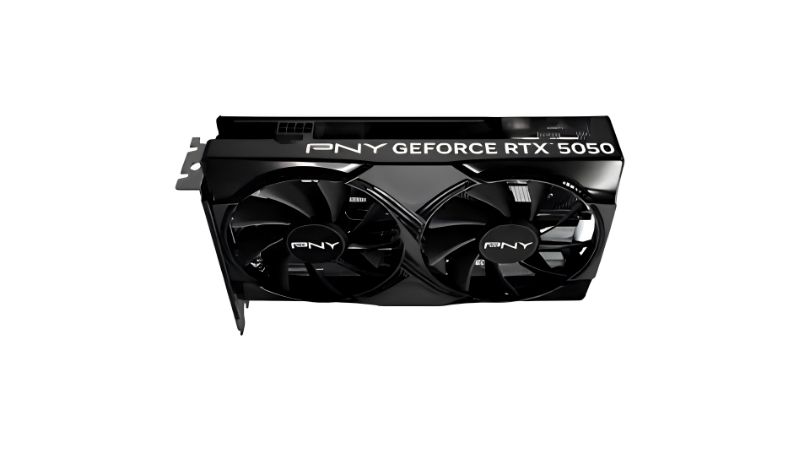
The pny geforce rtx 5090 overclocked triple fan sits in the strangest part of the market: a $2,000 purchase with almost no dedicated coverage, because the audience is too small for anyone to make a video about. You have already decided on the 5090. Now you are choosing whose cooler goes on top of it, and the internet has largely left you to guess. This review covers what the OC bin genuinely delivers, the 575W and connector realities that decide whether this card is safe in your build, and whether PNY’s traditional price undercut is a bargain or a signal. Read the power section before you order anything.
What This Card Actually Is
Start with the part that matters and is least understood at this tier: every RTX 5090 runs identical silicon. Roughly 21,760 CUDA cores, 32GB of GDDR7 on a 512-bit bus, a 575W board power figure, and a $1,999 MSRP. PNY changes none of that. What PNY sells you is a cooler, a factory clock bin, a warranty, and a price – and at $2,000, those four things had better be worth thinking about carefully.
As an Amazon Associate we earn from qualifying purchases at no extra cost to you.




What the OC Bin Genuinely Buys You
Factory overclocked cards are sold on a number and bought on a hope. The honest reality: a typical factory OC at this class adds roughly 2-4% over reference clocks. On a card delivering 120 fps, that is 123-125 fps. You will not feel it, and you will not measure it without a frame counter open.
The reason is that a 5090 is not clock-limited in any meaningful sense – it is power and thermal limited, aggressively so. At 575W the card is already pressed hard against its power budget, and GPU Boost is dynamically pushing it as far as the budget and temperature allow, every second. A factory OC raises a ceiling the card rarely reaches, because it hits a different wall first.
What actually determines your sustained clocks is the cooler and the air you feed it. A 5090 held at 65C holds higher boost bins indefinitely than the same silicon at 78C, and that gap dwarfs any factory bin. So read a model like this honestly: ignore the OC suffix entirely, evaluate the cooler, and treat the extra clocks as a rounding error included for free.
The 575W Reality Nobody Prepares You For
This is the section that matters most and it has nothing to do with performance. A 5090 is not a graphics card in the way previous cards were. It is a 575W space heater with a display output, and it changes requirements across your entire build.
Power supply first. 575W sustained means a 1,000W unit as a sensible floor, and 1,200W if you are pairing it with a high-core CPU and intend to run both hard. Critically, the supply should be ATX 3.0 or newer with a native 12V-2×6 cable. This is not a preference at this wattage – it is the difference between a card that runs and a card that shuts your system down under transient spikes, which the 5090 produces enthusiastically.
The connector second, and this is the one that destroys hardware. The 12V-2×6 must be fully seated until it clicks. Partial seating is the mechanism behind essentially every reported melted connector, and at 575W the margin for error is smaller than on any other consumer card ever sold. Seat it, tug it, look at it with a torch. Do not use an adapter if you can possibly avoid it – buy the native cable for your specific PSU. On a $2,000 card, a $25 cable is not a decision that requires thought.
Heat third. 575W dumped into your case has to leave it. A 5090 in a chassis with one intake fan will throttle, and it will also cook everything else in there – your NVMe drive, your VRMs, your RAM. This card demands genuine airflow in a way that mid-range cards forgive. If your front panel is sealed glass, solve that before the card arrives, not after.
Clearance and Sag: The Physical Checks
Cards at this class are among the largest consumer GPUs ever made, and physical fit failures are common enough at this tier to be worth their own section.
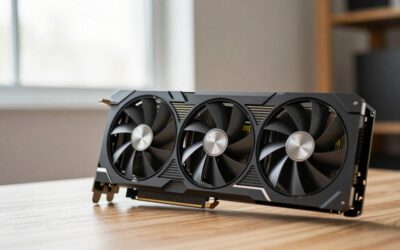
Measure three dimensions before ordering. Length front to back – flagship triple-fan designs commonly run in the 320-360mm range, and your case manual’s maximum clearance figure is optimistic because cable routing eats into it. Height from the slot upward, which matters against side panels. And slot thickness, because 3 to 3.5 slots is normal here and it will block the PCIe slots beneath – relevant if you run a capture card or NVMe expansion. Verify the exact figures on the product listing rather than a forum post; board partners revise designs between batches.
Then plan for the weight. A card of this size and cooler mass is heavy enough that sag is not cosmetic – it puts lateral strain on the 12V-2×6 connector, which is precisely the failure mode you cannot afford here. A $12 support bracket on a $2,000 card is the most obviously correct purchase in this entire review. Place it near the far end and raise the card by about half its sag, not back to level. Over-correcting inverts the PCB stress rather than removing it.
How PNY Compares to the Alternatives
Nobody buys this card in isolation. You are looking at five or six 5090 models on the same page, all with identical silicon and a spread that can exceed $200. Here is how to read that spread rather than guess at it.
PNY vs ASUS, MSI and Gigabyte at This Tier
PNY’s positioning has been consistent for years: competent coolers at lower prices, with a leaner brand presence and less marketing. At this tier that usually means paying $50-150 less than an equivalent ASUS ROG or MSI Suprim for a card whose sustained temperatures land within a few degrees.
Where the premium brands genuinely earn the money at 575W: heavier vapour chamber designs with more thermal mass, better fan hardware at matched duty cycles, and sturdier frames that resist sag. Those matter more at 575W than they do at 250W – this is the one tier where cooler engineering is not marketing. A card that sustains 65C instead of 75C is genuinely holding higher clocks, and on a $2,000 purchase that difference is not academic.
Where the premium brands do not earn it: the OC bin, the RGB, and the box. Those are worth nothing.
The honest calculus: at $2,000, a $100 saving is 5%. If PNY’s cooler is within a few degrees of the premium models, take the saving. If your region has weak PNY support, do not – because an RMA on a $2,000 card is not a hypothetical inconvenience. That is the variable spec sheets never capture and the one you should weigh hardest.
Pros and Cons of the PNY RTX 5090 Overclocked Triple Fan
| Pros | Cons |
|---|---|
| 32GB of GDDR7 on a 512-bit bus – unmatched headroom for 4K, local AI models, and heavy creator work | The OC bin adds roughly 2-4%, which is unmeasurable in practice – do not pay a premium for the suffix |
| Typically $50-150 below equivalent ASUS ROG and MSI Suprim models on identical silicon | 575W demands a 1,000W+ ATX 3.0 supply and a native 12V-2×6 cable, not an adapter |
| Triple-fan cooler with zero-RPM idle – silent on the desktop where the card spends most of its life | Premium coolers genuinely matter at 575W in a way they do not at 250W – a few degrees is real sustained clock |
| Fan curve fully controllable in Afterburner – no vendor software required | 320-360mm at 3+ slots blocks the slots below and rules out most mid-towers |
| The most capable consumer GPU available, with no meaningful compromise on paper | PNY RMA experience varies by region, and that risk scales with the price of the card |
The balance is the same one PNY has always offered, just with higher stakes attached. You are trading brand polish and RMA confidence for real money on identical silicon – except at 575W, one of those trades has an engineering component that did not exist further down the stack.
Who Should Actually Buy This Card
Buy it if you run 4K at high refresh, work with local AI models where 32GB of VRAM is the entire point, or do heavy Blender and Resolve work where the card pays for itself in hours saved. It should live in a full tower with genuine intake airflow, fed by a 1,000W+ ATX 3.0 supply with a native 16-pin cable, and it should have a support bracket under it.
Do not buy it if any of those are missing. A 5090 in a mid-tower on a 850W supply with an adapter is not a fast card – it is a throttling card with a connector risk, and you have spent $2,000 to get $1,200 of performance and a worry.
And if you are buying it for the OC suffix, reconsider. Build a fan curve on any 5090 and you will exceed what the factory bin gave you, for free, in ninety seconds.
Why 5090 Pricing Is Structurally Broken
Everything above assumes you can buy this card near MSRP. That assumption deserves examining, because the reason a 5090 costs what it does has very little to do with gamers.
Prices Have Flattened but Have Not Fallen
The memory-driven surge through late 2025 lifted component and laptop pricing broadly. The genuinely positive development is narrow but real: the steep climb seen at the end of 2025 has stopped, and manufacturers including Framework have reported a stretch of relative stability – while still warning openly that further volatility remains possible.
Parse it precisely. Flat is not falling. This card is not going to be meaningfully cheaper in three months. The panic-buy urgency has eased; the reward for patience never arrived.
What that changes at this tier: since the GPU price is not moving, the only real saving available to you is the board partner spread. That $50-150 gap between PNY and the premium brands is not noise in a flat market – it is the entire discount that exists on this purchase.
The H200 Decision and Why the 5090 Is Not Really a Gaming Card
The US has cleared Nvidia to sell the H200 – among its most capable AI accelerators – to China. Of every card on this site, the 5090 is the one where that news matters most, and the connection is not indirect.
A 32GB consumer card is not primarily contested by gamers. It is contested by people running local AI models, small labs, and businesses that cannot justify data centre hardware but can justify $2,000. That puts the 5090 in the same demand pool as professional AI silicon rather than in the gaming market it nominally belongs to.
Nvidia has finite advanced packaging and high-bandwidth memory allocation, and every unit gets assigned somewhere. AI accelerators carry margins gaming cards cannot approach. Opening a large additional market for H200 increases the pull on that same upstream supply – and the 5090, sitting closest to AI workloads of any consumer product, feels it first.
The practical read: do not wait for a 5090 discount. The structural pressure runs entirely the other way, and this is the one card in the stack where gaming demand is not what sets the price. If the card at this price is right for your work, buy it. Waiting is not a strategy here – it is just a delay with the same bill at the end, or a worse one.
What to Buy Alongside It
Three accessories decide whether a 575W card behaves, and together they cost about 3% of the GPU.
A native 12V-2×6 cable for your specific PSU is the first and it is not optional at this wattage. It removes the adapter from the chain entirely, which removes the single failure mode that actually destroys these cards. Roughly $25 against $2,000 – there is no version of this maths where you skip it.
A support bracket is second, for the reason covered above: sag puts lateral strain on that same connector, and the two risks compound. Third, intake fans. A 575W card is only as good as the air the chassis supplies, and every degree you take out of case air comes back as roughly a degree at the core – which on a thermally-governed card is free sustained clock the factory OC never gave you.
See More:
- A fan curve msi afterburner
- amd radeon rx 9070 vs rtx 5070
- 5060 ti vs 5070 benchmark
- rx 6600 vs rtx 3050
- 2060 vs 3060
Final Verdict
The pny geforce rtx 5090 overclocked triple fan is a rational purchase for a narrow group, and the OC in its name is the least interesting thing about it.
What you are buying is 32GB of GDDR7 on a 512-bit bus with a competent triple-fan cooler at a price that typically undercuts ASUS and MSI by $50-150 on identical silicon. That is a good trade if – and only if – you have a full tower with real airflow, a 1,000W+ ATX 3.0 supply with a native 12V-2×6 cable, and a support bracket ready. Verify the exact length and slot width on the listing before ordering.
Skip it if your region has thin PNY support, because an RMA on a $2,000 card is a different kind of problem than an RMA on a $400 one. And be honest that at 575W, cooler engineering genuinely matters in a way it does not further down the stack – this is the one tier where paying the premium is defensible.
Whatever you buy: seat that connector until it clicks, support the card, fix your airflow, and build a fan curve on day one. Those four free minutes will do more for your sustained clocks than the factory OC ever did.
Frequently Asked Questions
What power supply does an RTX 5090 actually require?
With a 575W total board power rating and transient spikes that can briefly exceed that, plan on a high quality 1000W supply as an absolute minimum and 1200W for a build with a high-core-count CPU and many drives. Choose an ATX 3.1 unit with a native 600W-rated 12V-2×6 cable. Do not run this card on an adapter from an older supply if avoidable.
How much space does this card need?
PNY triple-fan RTX 5090 models are physically enormous, commonly over 340mm long and occupying three to three and a half slots. You need a full tower or a spacious ATX mid-tower with generous GPU clearance, at least four free expansion slots, and additional room above the card for the power connector and its minimum bend radius.
Is the 12V-2×6 connector safe on a card this power hungry?
The revised 12V-2×6 specification improved contact geometry and sense pin behaviour over the original 12VHPWR, but care still matters at this power level. Seat the connector fully until it clicks, keep the cable straight for at least 35mm before any bend, use a native PSU cable rather than a daisy-chained adapter, and periodically check the plug for discolouration.
What can you actually do with 32GB of VRAM?
Beyond 4K gaming with maxed textures, the 32GB GDDR7 frame buffer on a 512-bit bus is genuinely transformative for professional work: large local language models, high resolution 3D scenes in Blender or Unreal Engine, 8K video timelines in DaVinci Resolve, and scientific compute. For gaming alone the capacity is far beyond what any current title requires.
Is the RTX 5090 worth it over an RTX 5080?
For pure gaming, cost per frame is poor: the 5090 typically costs roughly double the 5080 for something closer to thirty to forty percent more performance. It is worth it if you drive a 4K high refresh or 5K display, want maximum path tracing headroom, or run professional and AI workloads where the 32GB buffer removes a hard limitation.


Write Your Review
No reviews yet. Be the first to share your experience!