
- Top Pick: XOTICPC Y70 Ultimate X3D Ghost Gaming Desktop, AMD Ryzen 7 9800X3D 4.7GHz (5.2GHz Turbo Boost), RTX 5080 16GB, 2TB NVMe SSD, 32GB DDR5 RAM, 850W Gold PSU, Win 11
- Best Value: Micro Center AMD 7800X3D Processor with GIGABYTE B850 Gaming X Motherboard
- Premium Choice: Micro Center AMD 9800X3D Processor with GIGABYTE B850 Gaming X Motherboard
Best X3D CPU for gaming shortlists are short by design, because AMD only makes a handful of 3D V-Cache parts and they do not all suit the same build. This guide ranks six of them across AM4 and AM5, explains what the stacked cache actually does, and says when a cheaper chip wins.
As an Amazon Associate we earn from qualifying purchases at no extra cost to you. Product prices and availability are accurate as of the date shown and are subject to change.



As an Amazon Associate we earn from qualifying purchases at no extra cost to you. Product prices and availability are accurate as of the date shown and are subject to change.
By Ryan Cole
How to Choose the Best X3D CPU for Gaming
X3D parts are not simply faster versions of the standard chips. They trade clock speed for cache, which helps enormously in some situations and not at all in others. Four checks establish whether the best X3D CPU for gaming belongs in your build at all.
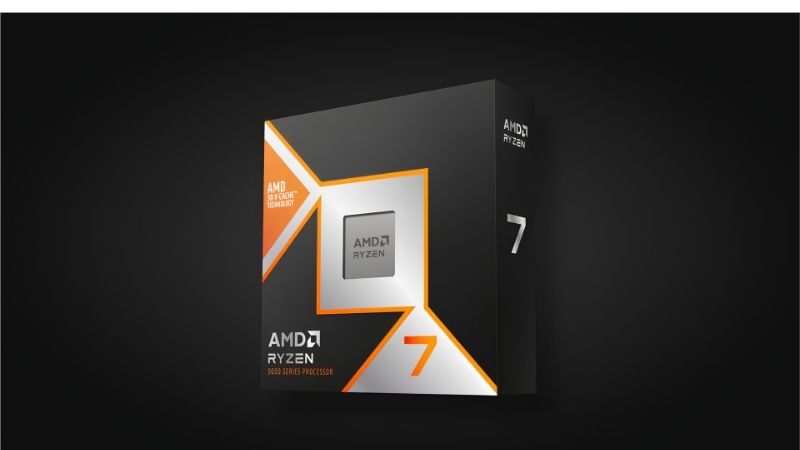
What the Stacked Cache Actually Does
AMD bonds an additional L3 die on top of the core complex, taking an eight-core chip from 32MB to 96MB. Games generate unpredictable memory access patterns, and a larger cache means more of that data is found without a slow trip to system memory.
The result is a gaming gain that frequently reaches double digits in cache-sensitive titles, particularly simulation and open-world games. Rendering, encoding and compression see almost nothing, because those workloads stream through data rather than revisiting it.
Single CCD Versus Dual CCD Matters More Here
The Ryzen 7 X3D parts put all eight cores and the stacked cache on one core complex, so every core benefits. Ryzen 9 X3D chips use two complexes, and on the earlier 7950X3D only one carried the extra cache.
That asymmetry meant Windows had to place game threads on the correct complex, and when it failed the result was noticeably lower performance. Drivers handle it far better now, but a single-CCD Ryzen 7 avoids the question entirely.
Clock Speed Is the Trade You Are Making
Stacking cache adds thermal resistance, so X3D parts historically boosted lower than their standard counterparts. The 7800X3D tops out at 5.0 GHz against 5.4 GHz for a comparable non-cache chip, and it still wins in games comfortably.
Outside games that lower clock is a real cost. Lightly threaded applications, and anything that does not reuse data, will run slower on an X3D part than on the standard version of the same chip.
Check Whether Your GPU Can Use the Gains
Cache advantages appear when the processor is the limiting component, which means high refresh rates at 1080p or 1440p with a strong graphics card. At native 4K with a mid-range card, the GPU sets the frame rate and the cache sits idle.
Run the numbers honestly. If your card is in the mid-range and your monitor is 60Hz, a Ryzen 5 will produce identical results and the money belongs in the graphics card instead.
What the 2026 Market Means for X3D Buyers
Three market conditions shape whether now is a sensible moment to buy the best X3D CPU for gaming rather than waiting, and they mostly argue in favour of buying.
Zen 6 Is Not Arriving Before CES 2027
AMD’s next architecture has moved to CES in January 2027, so no newer X3D generation is imminent. Anyone holding out for the next round is looking at six months to announcement and considerably longer to retail availability at reasonable prices.
That makes current parts a safe purchase rather than a mistimed one. Platform firmware is mature, the scheduling issues that affected early dual-CCD X3D chips have been resolved, and these processors will sit in the same socket as their successors.
AM5 Support Runs to 2029
AMD confirmed at Computex 2026 that AM5 keeps accepting new processors through the end of 2029. That matters here because it makes a staged plan viable: build now on a cheaper chip and drop in a future cache-equipped part later.
Anyone still on AM4 has the opposite situation. The 5700X3D is the last meaningful gaming upgrade that socket will receive, so it is a final step rather than the start of anything.
Memory Pricing Rewards the Cheaper X3D Chips
DRAM contract prices rose again through 2026 with no new capacity before late 2027. A DDR5-6000 kit takes a larger share of an AM5 build than it did two years ago, and the processor budget has to absorb some of that.
Practically, that argues for the Ryzen 7 X3D parts over the Ryzen 9 ones. The eight-core chips deliver effectively the same gaming result, and the saving covers most of the memory increase you cannot avoid.
Top Picks: Best X3D CPU for Gaming Options Ranked
These cover every cache-equipped part worth considering across both live AMD sockets, so the best X3D CPU for gaming is somewhere in this list. Pricing shifts constantly, so verify cost and availability before choosing a platform.
| Processor | Socket | Cores / Threads | CCDs | Boost Clock | L3 Cache |
|---|---|---|---|---|---|
| Ryzen 7 9800X3D | AM5 | 8 / 16 | 1 | 5.2 GHz | 96MB |
| Ryzen 7 7800X3D | AM5 | 8 / 16 | 1 | 5.0 GHz | 96MB |
| Ryzen 9 9950X3D | AM5 | 16 / 32 | 2 | 5.7 GHz | 128MB |
| Ryzen 9 9900X3D | AM5 | 12 / 24 | 2 | 5.5 GHz | 128MB |
| Ryzen 9 7950X3D | AM5 | 16 / 32 | 2 | 5.7 GHz | 128MB |
| Ryzen 7 5700X3D | AM4 | 8 / 16 | 1 | 4.1 GHz | 96MB |
Ryzen 7 9800X3D
This is the fastest gaming processor AMD sells, and the default recommendation. Eight Zen 5 cores with 96MB of L3 on a single complex boost to 5.2 GHz, which is higher than any previous cache-equipped part managed.
Its 120W TDP means the bundled-cooler era is over, so budget for a large air tower or a 240mm AIO. It also loses clearly to a Ryzen 9 in sustained rendering, and it commands a premium over the previous generation.
Ryzen 7 7800X3D
The 7800X3D remains outstanding value whenever its price sits well below the 9800X3D. The same 96MB of L3 on a single core complex delivers most of the gaming performance, with a lower 5.0 GHz boost accounting for the gap.
It is a Zen 4 design, so productivity performance trails the newer chip more than gaming does. At a similar price the 9800X3D is the better buy; at a meaningful discount this is the smarter one.
Ryzen 9 9950X3D
The flagship pairs sixteen cores with stacked cache, so it renders like a 9950X and games close to a 9800X3D. For anyone who genuinely needs both, it is the only chip that avoids choosing.
For pure gaming it is poor value, delivering a result the 9800X3D matches for considerably less. It also draws 170W and uses two core complexes, so it needs serious cooling and a board with strong power delivery.
Ryzen 9 9900X3D
Twelve cores with stacked cache place the 9900X3D between the Ryzen 7 and the flagship. It suits a machine that renders regularly but still leads with games, and it is easier to cool than the sixteen-core part.
It sits in an awkward position commercially. The 9800X3D games as well for less, and the 9950X3D renders substantially faster for more, so it only makes sense when its street price falls between them cleanly.
Ryzen 9 7950X3D
The previous flagship still performs well and often trades at a substantial discount. Sixteen cores and 128MB of total L3 handle both workloads capably, provided your chipset drivers are current.
This is the chip where the dual-complex scheduling issue was most visible, because only one complex carried the stacked cache. Modern drivers handle placement far better, but it remains a more finicky purchase than any single-CCD part.
Ryzen 7 5700X3D
For anyone already on AM4 with DDR4 memory, the 5700X3D is the last and best gaming upgrade the socket will receive. Eight cores with 96MB of L3 drop into most B450 and B550 boards after a BIOS update.
Its 4.1 GHz boost is low by current standards, so lightly threaded applications and productivity work lag well behind modern chips. It also ships without a cooler despite a 105W TDP, and the platform ends here.
Frequently Asked Questions
These questions come up whenever builders try to work out whether the best X3D CPU for gaming is worth its cache premium over a standard chip.
Is an X3D chip always faster in games?
In CPU-limited scenarios, almost always. At high refresh rates on 1080p or 1440p with a strong graphics card, the cache advantage is large. At native 4K with a mid-range card the GPU sets the frame rate and the difference largely disappears.
Does 3D V-Cache help productivity work?
Barely. Rendering, encoding and compression stream through data rather than revisiting it, so the extra cache goes unused. The lower boost clock that comes with stacking can even make an X3D part slightly slower than its standard counterpart in those tasks.
Can I overclock an X3D processor?
Not conventionally. The stacked cache limits voltage headroom, so AMD restricts traditional multiplier overclocking on these parts. Curve Optimizer undervolting and memory tuning are the productive routes, and both improve sustained clocks without raising voltage.
Is the 7800X3D still worth buying?
Yes, when it is meaningfully cheaper than the 9800X3D. It carries the same 96MB of L3 on a single complex and gives up only clock speed. If the two are similarly priced, take the newer chip for its higher boost and better productivity performance.
See More:
- Who makes the best motherboard
- Best budget AM5 CPU for gaming
- What is the best thermal paste pattern
- Best mini ITX computer case
- Best desktop RAM for gaming
Final Thoughts
The best X3D CPU for gaming is the 9800X3D for almost everyone, with the 7800X3D taking over whenever its price drops far enough. The Ryzen 9 cache parts only make sense when heavy rendering sits alongside gaming, and the 5700X3D is a final AM4 upgrade rather than a new build. If your graphics card is mid-range or your target is native 4K, a cheaper chip will match it. Figures reflect August 2026 and should be verified before purchase.


Write Your Review
No reviews yet. Be the first to share your experience!