
Best budget AM5 CPU for gaming decisions are really platform decisions, because the socket carries a DDR5 requirement and a guaranteed upgrade path to 2029. This guide ranks six chips from the cheapest sensible entry to the point where the value curve flattens, and explains what the whole platform costs.
As an Amazon Associate we earn from qualifying purchases at no extra cost to you. Product prices and availability are accurate as of the date shown and are subject to change.


As an Amazon Associate we earn from qualifying purchases at no extra cost to you. Product prices and availability are accurate as of the date shown and are subject to change.
By Ryan Cole
How to Choose the Best Budget AM5 CPU for Gaming
AM5 has no cheap entry in the way AM4 did, because DDR5 memory and a current board are both mandatory. That makes the platform total, not the chip price, the number that identifies the best budget AM5 CPU for gaming. Four factors decide where the value sits.
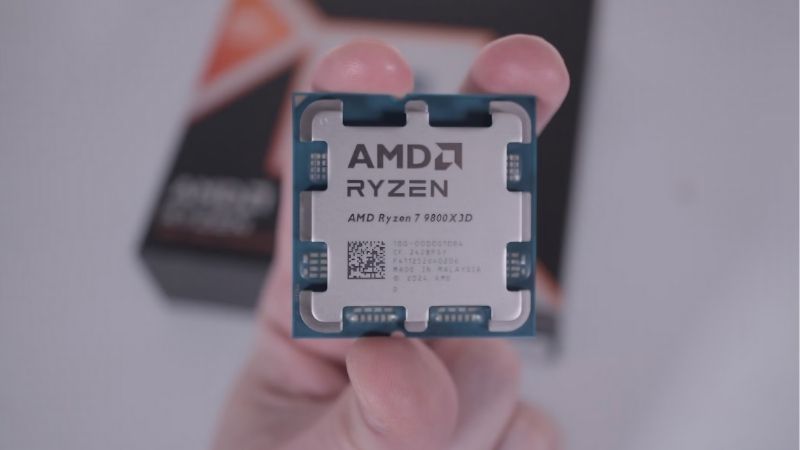
Six Cores Is Still Enough, With Caveats
A six-core, twelve-thread Zen 4 or Zen 5 chip handles current games comfortably at 1080p and 1440p. Frame rates in the vast majority of titles are set by the graphics card long before the processor becomes the limiting factor.
The exceptions are heavily simulated open-world titles and large strategy games, where eight cores produce noticeably steadier frame pacing. If you keep systems for five years or more, eight cores is the safer long-term choice at a modest premium.
Count the Platform, Not Just the Chip
An AM5 build needs a DDR5 kit and a B650 or B850 board, and neither has an inexpensive version. A cheap chip on an expensive platform is still an expensive machine, which is why the entry price to AM5 sits well above a comparable older build.
Budget boards start around $109 for a microATX B650, and DDR5-6000 CL30 is the sweet spot for Ryzen 7000 and 9000. Price the three parts together before deciding which processor you can afford, because the memory is the volatile component.
Zen 4 Versus Zen 5 at the Budget End
Zen 5 delivers a single-digit percentage IPC improvement over Zen 4 in most games, which is real but small. A Ryzen 5 7600 sits within a few percent of a 9600X in gaming while frequently costing meaningfully less on the street.
Both generations share the same 65W envelope, the same AM5 socket and the same DDR5 requirement. If the price gap is significant, Zen 4 is the sensible budget choice; if the two are close, take the newer architecture for its efficiency.
Decide Whether You Need the Integrated GPU
F-suffix chips like the Ryzen 5 7500F drop the integrated graphics and cost less as a result. With a discrete card installed, the iGPU sits idle and contributes nothing, so the saving is free money for most gaming builds.
Keep the iGPU if you want display output when a graphics card fails, if you plan to build before buying the GPU, or if the machine doubles as a media box. Otherwise the F variant is the better value every time.
What the 2026 Market Means for AM5 Budget Builds
Three market conditions change how much of a budget belongs on the processor this year, and two of them work in AM5’s favour despite the platform’s higher entry cost, which shifts where the best budget AM5 CPU for gaming actually sits.
The Socket Is Supported Through 2029
AMD confirmed at Computex 2026 that AM5 will keep receiving new processors until the end of 2029. That turns a cheap six-core chip into a starting point rather than a compromise, because the board and memory carry forward to a much stronger CPU later.
Buying a Ryzen 5 now and dropping in a Ryzen 7 X3D part in 2028 is a legitimate staged plan. Just make sure the board’s power delivery can feed the eventual chip, which in practice means avoiding the very cheapest 6+2 phase models.
DDR5 Pricing Is the Real Budget Pressure
TrendForce raised its DRAM forecast again for the second half of 2026, and no new fab capacity arrives before late 2027. Memory now takes a larger share of an AM5 build than it did two years ago, and that money has to come from somewhere.
The honest advice is to take it from the processor rather than the graphics card. A 7600 instead of a 9600X costs a few percent of frame rate; a weaker GPU costs considerably more, and the memory increase is not avoidable on this platform.
Nothing New Arrives Before CES 2027
Zen 6 has moved to CES in January 2027, alongside Intel’s Nova Lake and the RTX 50 Super refresh. Anyone waiting for a cheaper generation is looking at six months to announcement and longer before retail supply settles at sane prices.
For a build happening now, that is reassuring. AM5 firmware is mature, memory compatibility issues from the early Ryzen 7000 days are long resolved, and current chips will still be in the same socket when Zen 6 arrives.
Top Picks: Contenders for Best Budget AM5 CPU for Gaming
These six run from the cheapest credible AM5 entry to the point where the value curve flattens, so the best budget AM5 CPU for gaming is somewhere in this list. Street pricing moves constantly, so verify cost and availability before committing.
| Processor | Cores / Threads | Boost Clock | TDP | L3 Cache | iGPU |
|---|---|---|---|---|---|
| Ryzen 5 7500F | 6 / 12 | 5.0 GHz | 65W | 32MB | No |
| Ryzen 5 7600 | 6 / 12 | 5.1 GHz | 65W | 32MB | Yes |
| Ryzen 5 7600X | 6 / 12 | 5.3 GHz | 105W | 32MB | Yes |
| Ryzen 5 9600X | 6 / 12 | 5.4 GHz | 65W | 32MB | Yes |
| Ryzen 7 7700 | 8 / 16 | 5.3 GHz | 65W | 32MB | Yes |
| Ryzen 7 9700X | 8 / 16 | 5.5 GHz | 65W | 32MB | Yes |
Ryzen 5 7500F
The 7500F is the cheapest genuinely sensible way onto AM5. Six Zen 4 cores at up to 5.0 GHz in a 65W envelope handle 1080p and 1440p gaming without drama, and dropping the integrated graphics shaves the price for anyone installing a discrete card.
The absence of an iGPU is the obvious catch, so troubleshooting a dead graphics card means borrowing one. It also trails the Zen 5 parts by a few percent, though the gap is smaller than the price difference suggests.
Ryzen 5 7600
The plain 7600 is the value anchor of the AM5 range. It matches the 7500F’s six cores and 65W envelope, adds a slightly higher 5.1 GHz boost and keeps a basic integrated GPU for emergency display output or a pre-GPU build.
It ships with a bundled cooler that is adequate rather than good, and it sits a few percent behind the 9600X in games. Neither is a serious criticism at the price, and it remains the easiest recommendation for a first AM5 build.
Ryzen 5 7600X
The X variant pushes boost to 5.3 GHz, which yields a small but measurable gain in CPU-limited titles. Where street pricing has drifted close to the plain 7600, it is worth taking for the extra headroom in esports and simulation workloads.
The trade-off is a 105W TDP rather than 65W, so it runs hotter and no cooler is included in the box. Budget for a decent tower cooler, which erodes part of the saving that made it attractive.
Ryzen 5 9600X
The 9600X is the Zen 5 entry point, offering a 5.4 GHz boost and better efficiency within the same 65W envelope. It is the fastest six-core option here and the natural pick if the price gap to the 7600 has narrowed.
Its limitation is the same as every six-core chip: multithreaded work and heavily simulated games expose the core count. If you stream, render or run large strategy titles, the extra money is better spent on eight cores instead.
Ryzen 7 7700
Stepping to eight cores at 65W, the 7700 is the value choice for anyone who does more than game. Sixteen threads handle streaming, video editing and background workloads that make a six-core chip stutter, while gaming performance stays close to the 7600X.
You pay a clear premium over the six-core parts for gains most players will not see in a pure gaming session. Choose it only if the machine has a second job, otherwise the money belongs in the graphics card.
Ryzen 7 9700X
The 9700X is where the budget bracket ends. Eight Zen 5 cores boosting to 5.5 GHz in a 65W envelope make it the most efficient chip on this list, with enough headroom for 1440p high-refresh gaming alongside serious productivity work.
It costs substantially more than the six-core options and still trails the X3D parts in pure gaming, because it lacks the extra cache. Treat it as the ceiling of a budget build rather than as an obvious upgrade from a 7600.
Frequently Asked Questions
These questions come up repeatedly once builders start pricing a whole AM5 machine rather than hunting the best budget AM5 CPU for gaming in isolation.
Is AM5 worth it on a tight budget?
Yes, provided you value the upgrade path. The platform costs more up front because DDR5 and a current board are mandatory, but AMD supports the socket through 2029, so the board and memory carry forward to a much faster CPU without a rebuild.
Do I need DDR5-6000 specifically?
It is the practical sweet spot. DDR5-6000 with CL30 timings keeps the memory controller running at a 1:1 ratio on Ryzen 7000 and 9000, and faster kits usually force a divider that costs more latency than the extra bandwidth returns.
Should I buy a Ryzen 5 or save for an X3D chip?
Buy the Ryzen 5 now if the alternative is delaying the build. The X3D parts lead in games, but the socket runs to 2029, so a 7600 today and a 9800X3D in two years costs no more than waiting and leaves you gaming in the meantime.
Is the bundled cooler good enough?
For the 65W non-X chips, yes, at stock settings. It is louder than an aftermarket tower and offers no overclocking headroom. The X-suffix parts at 105W ship without a cooler and genuinely need a decent air tower to hold boost clocks.
See More:
- Who makes the best motherboard
- What is the best thermal paste pattern
- Best mini ITX computer case
- Best desktop RAM for gaming
Final Thoughts
The best budget AM5 CPU for gaming in 2026 is the Ryzen 5 7600 for most builders, with the 7500F undercutting it if you do not need an integrated GPU and the 9600X worth taking when the price gap narrows. Eight-core parts only earn their premium if the machine has work to do beyond games. Price the board and memory alongside the chip, because those decide the real budget. Figures reflect August 2026 and should be verified before purchase.

Write Your Review
No reviews yet. Be the first to share your experience!