
- Top Pick: CORSAIR Vengeance LPX DDR4 RAM 32GB (2x16GB) Up to 3200MHz CL16-20-20-38 1.35V Intel XMP AMD EXPO Computer Memory – Black (CMK32GX4M2E3200C16)
- Best Value: Corsair Vengeance RGB RS DDR5 16GB (2 x 8GB) Up to 6000MHz AMD Intel RAM
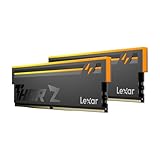
- Premium Choice: Lexar Thor Z RGB DDR5 RAM 32GB Kit (2x16GB) 6000MHz CL38 DRAM 288-Pin UDIMM
Best RAM brands for gaming is a question with an awkward answer: almost none of these companies manufacture memory. They buy dies from three suppliers, sort them by quality and package the results, which means brand reputation is really about binning, testing and support.
As an Amazon Associate we earn from qualifying purchases at no extra cost to you. Product prices and availability are accurate as of the date shown and are subject to change.




As an Amazon Associate we earn from qualifying purchases at no extra cost to you. Product prices and availability are accurate as of the date shown and are subject to change.
By Ryan Cole, PC hardware writer at NVIDIA Review.
How to Judge the Best RAM Brands for Gaming
Understanding what a memory brand actually does changes how you compare them. Four factors separate the best RAM brands for gaming from companies reselling whatever dies happened to be available that quarter.
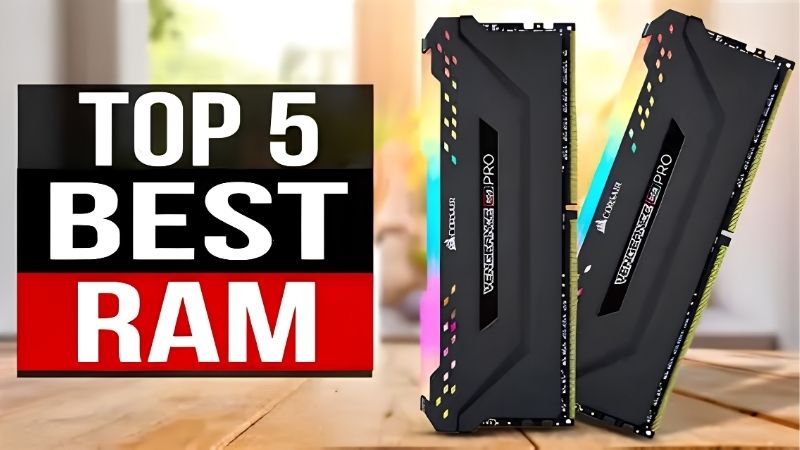
Three Companies Make the Dies
Samsung, SK hynix and Micron produce the memory chips that every consumer brand uses. A kit’s real performance ceiling is set by which dies it contains, not by the heat spreader design or the name printed on it.
Crucial is the exception worth knowing, since it is Micron’s own consumer brand. That vertical integration means consistent die sourcing, which is why Crucial kits rarely surprise you in either direction.
Binning Is What You Are Actually Buying
Brands buy dies in bulk and sort them by how well they run at given speeds and voltages. A premium kit contains dies that tested well, which is why two kits with identical printed specifications can behave differently when pushed.
This matters most above 6000 MT/s. At the standard speeds most gaming builds use, the difference between a good budget kit and a premium one is small, and both will usually post their rated profile without trouble.
EXPO and XMP Support Should Be Verified, Not Assumed
EXPO is AMD’s profile standard and XMP is Intel’s. Many kits carry both, but not all do, and buying an XMP-only kit for an AM5 build can mean manually entering timings rather than enabling one setting.
Motherboard compatibility lists are genuinely useful here. Manufacturers publish tested kits per board, and choosing from that list is the simplest way to avoid a machine that refuses to post at its advertised speed.
Warranty and Support Are Where Brands Diverge
Most reputable memory carries a lifetime warranty, which is meaningful given how long a kit stays in service. What varies is how straightforward the claim process is and whether replacement is quick or drawn out.
Heat spreader height is the other practical detail. Tall decorative spreaders look impressive but frequently collide with large air coolers, so check clearance against your cooler before choosing based on appearance.
Kit matching matters over time as well. Buying two separate kits rather than one four-module set risks mismatched dies that will not run the same profile together, which is a common cause of instability after an upgrade.
Top Picks: Best RAM Brands for Gaming in 2026
The best RAM brands for gaming differ mainly in binning consistency and support rather than raw capability. These six cover premium to value, with a representative gaming line for each; verify EXPO or XMP support on the exact kit.
| Brand | Representative Gaming Line | Typical Die Source | Profile Support | Best For |
|---|---|---|---|---|
| G.Skill | Trident Z5 Neo, Flare X5 | SK hynix, Samsung | EXPO and XMP | High-speed kits |
| Corsair | Vengeance, Dominator | Mixed suppliers | EXPO and XMP | Availability and support |
| Kingston Fury | Beast, Renegade | Mixed suppliers | EXPO and XMP | Reliability |
| Crucial | Crucial Pro | Micron in-house | Mostly XMP | Consistency and value |
| TeamGroup | T-Force Delta, Expert | Mixed suppliers | EXPO and XMP | Price per gigabyte |
| Patriot | Viper Venom, Viper Xtreme 5 | Mixed suppliers | EXPO and XMP | Budget enthusiast |
G.Skill
G.Skill built its reputation on aggressive binning, and its Trident Z5 Neo line is frequently the first choice for high-speed AM5 kits with EXPO profiles. The Flare X5 range targets the same platform at lower speeds and prices.
If you want a kit that posts reliably above 6000 MT/s, this is the safest starting point. The drawbacks are pricing at the top of the range and tall heat spreaders on the Trident line that can interfere with large air coolers.
Corsair
Corsair’s advantage is breadth and support rather than any single technical edge. Vengeance covers mainstream gaming kits while Dominator sits above it, and both are stocked widely enough that replacements are easy to source.
Software integration through iCUE appeals if the rest of your build uses it. The reservations are a price premium for the brand and RGB models whose lighting control depends on background software many builders would rather not run.
Kingston Fury
Kingston’s gaming division has a strong record for kits that simply work. Fury Beast covers mainstream speeds and Renegade targets enthusiasts, with both lines emphasising validated compatibility across a wide range of boards.
For a build where you want to enable a profile and move on, this is a dependable choice. The limitation is that Kingston rarely leads on the highest-speed bins, so extreme memory tuners generally look elsewhere.
Crucial
Crucial is Micron’s consumer brand, which makes it genuinely vertically integrated rather than a packager. That produces unusually consistent kits, since the dies come from the same company that sells the finished product.
It is often the value choice for a straightforward 32 GB gaming kit. The trade-offs are a plainer aesthetic with fewer RGB options and, on some kits, XMP support without a matching EXPO profile for AM5 boards.
TeamGroup
TeamGroup competes primarily on price per gigabyte, and its T-Force line covers gaming kits at speeds that suit most builds. The Expert series targets AM5 specifically with EXPO profiles at sensible frequencies.
For filling a build with 32 GB without overspending, it is a reasonable choice. The caveat is binning consistency, which is less predictable than G.Skill or Kingston, so stick to the speeds your board’s compatibility list confirms.
Patriot
Patriot’s Viper range has become a credible budget enthusiast option, with Venom covering mainstream speeds and Xtreme 5 targeting higher frequencies. Pricing typically undercuts the better-known brands at similar specifications.
It suits builders comfortable checking compatibility lists before ordering. The drawbacks are narrower retail availability in some regions and a support network that is less established than Corsair’s or Kingston’s if a kit fails.
Die sourcing is also less transparent than with Crucial. That is normal for a packager rather than a manufacturer, but it means two kits with the same model number can differ if bought months apart.
What the 2026 Memory Market Means for Buyers
Memory is the component whose pricing changed most this year, and that changes how you should approach a purchase.
Prices Are Still Climbing
Forecasts were revised upward for both the third and fourth quarters of 2026, with DRAM expected to rise 13 to 18 percent quarter on quarter and NAND 10 to 15 percent. The slowdown reflects buyer resistance rather than improved supply.
New manufacturing capacity is not expected before late 2027, and SK hynix has already sold its entire 2026 RAM output. That means the shortage is structural rather than a temporary imbalance that will correct itself shortly.
Understanding that changes how you should plan. Memory is now a fixed cost to budget around rather than a component to time, and delaying a build in the hope of a correction has no supporting evidence behind it.
Waiting for Seasonal Sales Will Not Help
The usual advice to hold out for Black Friday does not apply to memory this year. Stock sold in November was manufactured from dies purchased at elevated contract prices, so the discounts simply are not there to be had.
That does not mean buying in a panic. It means treating memory as a fixed cost rather than something to time, and buying the capacity you need rather than speculating on future prices moving either way.
Buy the Capacity You Actually Need
For gaming, 32 GB remains the sensible target and 16 GB is now genuinely tight once a browser and background applications are running. Beyond 32 GB, the benefit is confined to video editing and heavy multitasking.
At current prices, over-buying is harder to justify than it was. A 32 GB DDR5-6000 kit with a tight EXPO profile serves a gaming machine well and leaves budget for a better graphics card or storage.
Upgrading later is the fallback if budgets are tight now. Adding a second matched kit is possible, though buying the full capacity in one matched set from the outset remains the more reliable approach.
Frequently Asked Questions
These questions come up most often when people compare memory brands while planning a new build.
Do the best RAM brands for gaming actually perform differently?
At the same speed and timings, no. Differences come from binning quality, which affects how reliably a kit reaches higher speeds, and from support quality if something fails. Frame rates depend on the specification, not the badge.
Is faster memory worth paying for on AM5?
Up to around 6000 MT/s, yes. Beyond that the memory controller often shifts to a less favourable ratio, and the gains shrink while stability tuning becomes considerably more time-consuming for very little benefit.
Does RGB memory cost performance?
No, though it usually costs money and height. Tall lit heat spreaders frequently collide with large air coolers, so check clearance figures before choosing a kit based primarily on how it looks in the case.
Should I buy two sticks or four?
Two, wherever possible. Two populated slots make high-speed EXPO and XMP profiles considerably easier for the memory controller to run stably, which is why a matched 32 GB kit of two modules is the standard recommendation.
See More:
- Best MSI motherboard
- Best motherboard processor combo for gaming
- Best B550 motherboard
- Best CPU for streaming
- What is the best AM4 CPU for gaming
Final Thoughts
The best RAM brands for gaming differ in binning consistency and support rather than in the memory itself, since all of them buy dies from the same three manufacturers. G.Skill leads for high-speed kits, Crucial offers unusual consistency as Micron’s own brand, and at current prices buying 32 GB and moving on is the sensible approach.



Write Your Review
No reviews yet. Be the first to share your experience!