
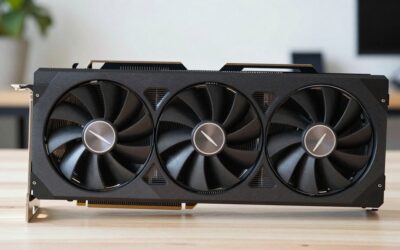
- Top Pick: GIGABYTE Radeon™ RX 9070 XT Gaming OC ICE 16G Graphics Card (16GB GDDR6, 256-bit, PCIe 5.0, HDMI/DP 2.1, 2.7 Slot, Hawk Fan, Server-Grade Thermal Gel, Reinforced Structure)
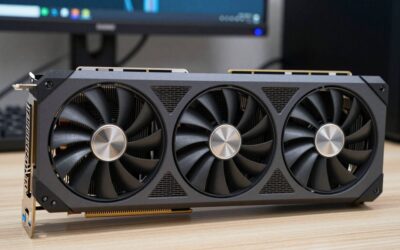
- Best Value: GIGABYTE Radeon RX 9070 XT Gaming OC 16G Graphics Card, PCIe 5.0, 16GB GDDR6, GV-R9070XTGAMING OC-16GD Video Card
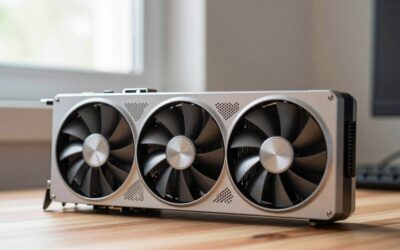
- Premium Choice: ASUS Prime Radeon RX 9070 XT 16GB GDDR6 OC Edition Gaming Graphics Card
RTX 5060 vs RX 9070 XT is an unusual matchup that pits an affordable entry-level Nvidia card against a much more powerful AMD upper-mid-range GPU — so the real question is whether the price jump is worth the performance leap. If you are deciding between saving money and buying serious power, you want the numbers and the value math laid out plainly, not a long video. This comparison shows exactly what each card delivers, the gulf between them, and which one makes sense for your budget and how you actually play.


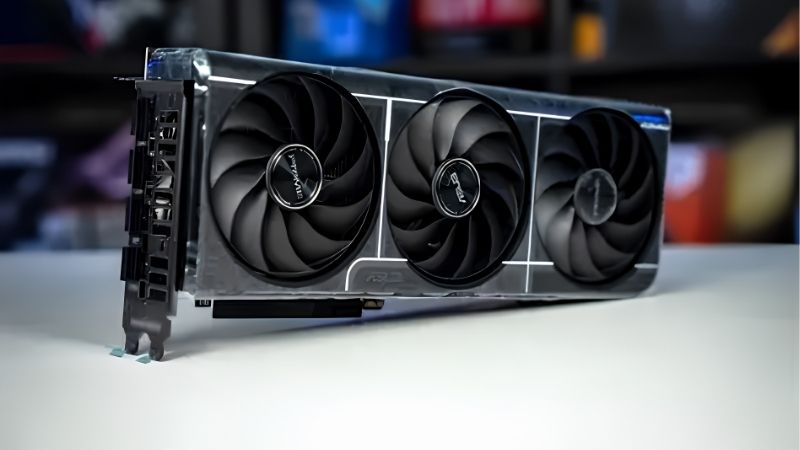
RTX 5060 vs RX 9070 XT — Quick Verdict and Specs
Most buyers weighing these two want the answer first, so here it is: these cards sit in different classes, so the RX 9070 XT is substantially more powerful, while the RTX 5060 wins purely on affordability. The decision is really about whether you need the extra performance or want to spend less. This section backs that with the full spec table and the context behind each card.
As an Amazon Associate we earn from qualifying purchases at no extra cost to you.


The Quick Verdict for Busy Buyers
Buy the RTX 5060 if your priority is an affordable card for solid 1080p gaming with modern features like DLSS 4, and you want to keep your budget tight. It is the value-focused entry-level pick.
Buy the RX 9070 XT if you want significantly more power for high-refresh 1440p and 4K gaming, more VRAM, and stronger rasterization, and your budget can absorb the higher price. It is the serious-performance choice.
Because these cards target different tiers, the RTX 5060 vs RX 9070 XT decision hinges on your resolution and budget. If 1080p on a budget is the goal, the 5060 wins; if you want high-refresh 1440p or 4K, the 9070 XT is worth the jump.
Head-to-Head Specs Comparison Table
The table below lays out the specs that reveal the gap between these two cards.
| Spec | RTX 5060 | RX 9070 XT (16GB) |
|---|---|---|
| Architecture | Blackwell | RDNA 4 |
| Class | Entry-level | Upper mid-range |
| Memory | 8GB GDDR7 | 16GB GDDR6 |
| Memory bus | 128-bit | 256-bit |
| Board power | ~145W | ~304W |
| Upscaling | DLSS 4 + Multi-Frame Gen | FSR 4 (AI) |
| Best resolution | 1080p | 1440p / 4K |
| Typical price | Lower cost | Higher, ~$599 MSRP |
The gap is stark. The RX 9070 XT has double the VRAM, a much wider memory bus, and far more raw power, but draws roughly twice the wattage and costs significantly more. The RTX 5060 is the efficient, affordable entry card by comparison.
If the spec sheet already tells you which class you need, it is worth checking each card’s live listing before pricing shifts again.
Two Different Classes of Card
The most important thing to understand is that these cards are not true rivals — they occupy different market tiers. The RTX 5060 is an entry-level card built for affordable 1080p gaming, while the RX 9070 XT is an upper-mid-range card built for high-refresh 1440p and 4K.
This means the comparison is less about which is better and more about which class fits your needs and budget. The 9070 XT will win almost every performance benchmark, as expected of a higher tier.
For buyers, the practical framing is to decide your target resolution and budget first. That decision effectively chooses your class, and therefore your card, before any benchmark enters the picture.
It is also worth being honest with yourself about how you play. If you mostly enjoy less demanding or older games at 1080p, the entry-level card is plenty; if you crave the latest AAA titles at high settings on a large high-refresh monitor, only the more powerful card will satisfy you long term.
Deep Dive Face-Off — Performance, Features, and Efficiency
Specs set expectations; real performance, features, and efficiency fill in the picture. This section compares the two on the criteria that matter: frame rates across resolutions, upscaling and features, and the efficiency and value trade-offs.
Performance at 1080p and 1440p
At 1080p, the RTX 5060 delivers solid frame rates in modern games at high settings, comfortably handling the resolution it was built for. The RX 9070 XT is far faster here too, but much of that power goes unused at 1080p, where both cards exceed typical refresh rates.
At 1440p and 4K, the gap becomes decisive. The RX 9070 XT delivers high-refresh 1440p and capable 4K performance that the entry-level RTX 5060 simply cannot match, thanks to its greater power and larger VRAM.
The practical conclusion is that at 1080p the RTX 5060 is genuinely enough, while at 1440p and above the RX 9070 XT justifies its class and price. Your resolution determines whether the extra power is necessary or wasted.
This is the key insight for anyone tempted by the more powerful card: extra performance only benefits you if your monitor and games can use it. Pairing an RX 9070 XT with a 1080p 60Hz display would waste much of its potential, whereas the RTX 5060 fully serves that same setup for far less.
DLSS 4 vs FSR 4 and Features
Both cards bring modern upscaling. The RTX 5060 supports DLSS 4 with multi-frame generation, Nvidia’s most advanced technology, which can boost its frame rates meaningfully in supported games — a strong feature for an affordable card.
The RX 9070 XT uses FSR 4, AMD’s competitive AI upscaler, paired with its already-strong raw performance. Both cards also handle ray tracing, with the more powerful 9070 XT delivering a better ray-traced experience overall.
The forward-looking angle is that DLSS 4 helps the RTX 5060 punch above its weight in supported titles, narrowing the experience gap somewhat, while the RX 9070 XT’s raw power gives it headroom that upscaling only extends further.
Efficiency, Power, and Value
Efficiency strongly favors the RTX 5060. At around 145W, it runs comfortably on a modest power supply and generates little heat, whereas the RX 9070 XT’s roughly 304W draw demands a stronger 750W-class PSU and better cooling.
This matters for total cost. The RTX 5060 can drop into a budget system without a PSU upgrade, while the RX 9070 XT may require investing in a stronger supply, widening the real price gap beyond the sticker difference.
The practical read is that the RTX 5060 is the far cheaper card to buy and run, while the RX 9070 XT asks more of your whole system in exchange for its much higher performance. Value depends entirely on whether you use that performance.
Over the life of the card, the RTX 5060’s efficiency also means lower running costs and less heat in your room, small but real ongoing benefits. The RX 9070 XT’s higher draw is a fair trade for its power, but only if that power is genuinely put to work.
Price, Timing, and the Final Recommendation
Performance is half the decision; price and timing are the other half, and the current market context genuinely rewards buying deliberately. This section covers the pricing climate, the honest pros and cons, and a clear who-buys-what verdict, plus a middle-ground alternative.
Is Now the Right Time to Buy?
Pricing context matters because these cards sit at very different price points. Component and laptop prices have been trending upward, with memory a major driver, and that pressure feeds straight into street prices — affecting both the affordable RTX 5060 and the pricier RX 9070 XT.
The positive news is real but weak and distant. Prices have stopped climbing as steeply as they did in late 2025, and the market has entered a period of relative stability, though analysts still warn of ongoing volatility. “Stable” here means plateaued, not falling — the sharp increases paused, but a broad price cut has not started.
New supply is opening the long-term relief valve: OEMs can source DDR5 from Chinese suppliers such as CXMT, and Micron is building two plants in Idaho. The catch is timing — those fabs are not expected online until 2027–2028. For a buyer today, the conclusion is blunt: meaningful relief is years away, so waiting for a dramatic 2026 discount is a weak plan. Buying a well-matched card during a stable window beats gambling on a drop the supply data says will not arrive soon. It is worth locking in a fair current price before the next swing.
Pros and Cons of the RTX 5060 and RX 9070 XT
RTX 5060 strengths: affordable price, excellent efficiency at around 145W, DLSS 4 multi-frame generation, solid 1080p performance, and easy compatibility with modest systems. Its trade-offs: only 8GB of VRAM, entry-level power, and limited headroom for 1440p and 4K.
RX 9070 XT strengths: powerful high-refresh 1440p and 4K performance, 16GB VRAM, a wide memory bus, and strong rasterization. Its trade-offs: a much higher price, a heavy 304W power draw needing a stronger PSU, and more heat to manage.
The pattern is clear: the RTX 5060 competes on affordability and efficiency, the RX 9070 XT on raw power and resolution capability. Your budget and target resolution decide which fits.
The Alternative Pick and Final Verdict — Who Buys What
If the RTX 5060 feels too limited but the RX 9070 XT is too expensive, the middle-ground answer is a card like the RTX 5060 Ti 16GB or RX 9060 XT 16GB, which offer stronger 1440p performance and more VRAM at a price between the two — the sensible compromise for many buyers.
For the final call: buy the RTX 5060 if you game at 1080p on a budget and value efficiency and low cost. Buy the RX 9070 XT if you want high-refresh 1440p or 4K power, more VRAM, and can afford both the card and a capable system to run it.
For most buyers in 2026, the choice comes down to class: the RTX 5060 is the smart budget 1080p pick, while the RX 9070 XT is the serious upgrade for higher resolutions. Neither is wrong — your resolution and budget decide. Ready to choose? Compare today’s live prices on both and grab the card that fits your needs.
See More:
- 3060 Ti vs 9060 XT
- Nvidia Shield TV Pro
- RTX 5070 vs RX 9060 XT
- RTX 3090 24GB
- Nvidia price prediction
Conclusion
The RTX 5060 vs RX 9070 XT decision is really a choice between two different classes of card. The RTX 5060 wins on affordability and efficiency, making it the smart pick for budget 1080p gamers who want modern features like DLSS 4 without overspending. The RX 9070 XT wins decisively on raw power, VRAM, and high-refresh 1440p and 4K capability, justifying its higher price for those who need it. With a middle-ground option available and pricing stable but real relief years away, buying a well-matched card now is the rational move. Check the current listings and secure the GPU that fits your resolution and budget today.
Frequently Asked Questions
How large is the performance gap between these two?
Very large, because they are not really competitors. The RX 9070 XT is an upper mid-range RDNA 4 card with 4096 stream processors and a 256-bit bus, while the RTX 5060 is an entry-level Blackwell part. Expect the AMD card to be roughly twice as fast at 1440p, with the gap widening at 4K.
Do they need different power supplies?
Substantially. The RTX 5060 is around 145W and runs on a good 500W unit with one eight-pin connector. The RX 9070 XT is rated near 304W, typically uses two or three eight-pin connectors depending on the partner design, and calls for a 750W supply with headroom for transient spikes.
How do ray tracing and upscaling compare?
RDNA 4 dramatically improved AMD ray tracing, and FSR 4 uses a machine learning model that closes most of the image quality gap to DLSS, so the 9070 XT is strong on both counts. The 5060 still holds the broader ecosystem advantage, since DLSS is supported in more titles and multi frame generation is a Blackwell feature.
Does the VRAM difference matter that much?
Yes. Eight gigabytes on the RTX 5060 is already limiting in some 1440p titles with high textures and ray tracing, whereas 16GB on the 9070 XT removes that concern entirely for years. If you intend to run maxed textures, heavy mods or local AI models, the memory difference is arguably more important than the raw speed difference.
Which should I buy for my resolution?
Pick the RTX 5060 for a tight budget 1080p build with a modest power supply and a small case, where it is genuinely efficient and quiet. Choose the RX 9070 XT if you have 750W available and want high refresh 1440p or entry-level 4K gaming with settings turned up and long-term headroom.

Write Your Review
No reviews yet. Be the first to share your experience!