
Top Rtx 5070 4080 Cheaper Gpu Picks for 2026
Here are our current top rtx 5070 4080 cheaper gpu picks, compared on real Amazon owner reviews, price, and features. Live prices update below.

Prime
Best Seller
ASUS SFF-Ready Prime NVIDIA GeForce RTX 5070 Graphics Card (PCIe 5.0, 12GB GDDR7, HDMI/DP 2.1, 2.5-Slot, Axial-tech Fans, Dual BIOS), 3 Year Warranty


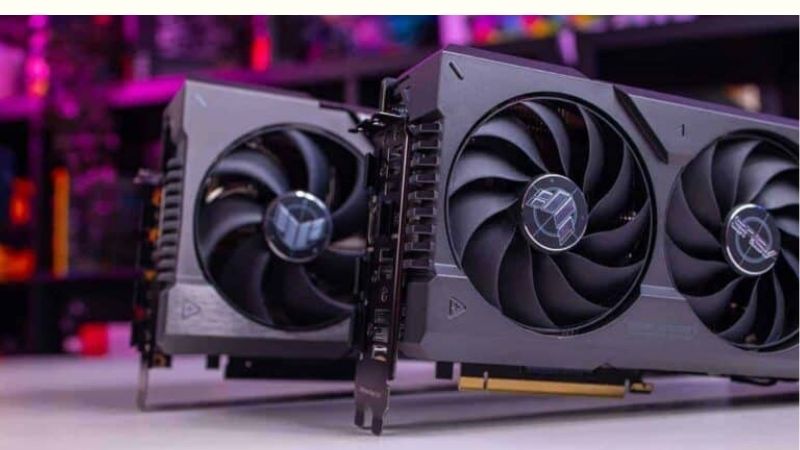
5070 vs 4080 is a cross-generation question with a twist: these cards sit in different tiers, yet shoppers compare them constantly because the cheaper new card promises modern features while the older flagship promises raw muscle. The RTX 5070 brings Blackwell efficiency, GDDR7, and DLSS 4 at a low price, while the RTX 4080 still delivers a clear step up in native power and carries 16GB of VRAM. This comparison lays out specs, gaming performance, power, and price so you can judge whether the cheaper 5070 is genuinely enough, or whether the 4080’s extra horsepower justifies the gap.
The Quick Verdict: RTX 5070 vs 4080 at a Glance
Here is the fast answer: for sharp 1440p gaming on a sensible budget, the RTX 5070 is enough for most players, and DLSS 4 stretches it further. For native 4K, VRAM-heavy games, or creative work, the RTX 4080 remains the stronger card thanks to more cores and 16GB of memory. The 5070 wins on price and efficiency; the 4080 wins on raw power. Check live pricing for both, because in 2026 the gap between MSRP and street price changes the math.
The 30-Second Answer
The 4080 is meaningfully faster, often 25 to 35% ahead in native rasterization, and it holds 4GB more VRAM.
The 5070 answers with a far lower MSRP, much lower power draw, and DLSS 4 Multi Frame Generation. If your target is 1440p, the 5070 is plenty; if it is 4K, the 4080 earns its keep.
The key word is “enough.” Plenty of buyers chase the biggest number when a cheaper card already clears their actual needs. If you game on a 1440p monitor at high refresh, the 5070 hits that target comfortably, and the money saved versus a 4080 could go toward a better monitor, CPU, or storage. The 4080 only becomes the right answer when your display or workload genuinely demands its extra muscle.
That framing keeps the budget honest. The 4080 is the stronger card in absolute terms, but performance you never use is wasted money. If your monitor tops out at 1440p, the 5070 already delivers the full experience that display can show, and much of the 4080 horsepower goes unspent. Buy for the screen and the games you actually run, not for a spec-sheet bragging right.
Spec Comparison Table
The numbers make the tier difference clear:
| Spec | RTX 5070 | RTX 4080 |
|---|---|---|
| Architecture | Blackwell (GB205) | Ada Lovelace (AD103) |
| CUDA cores | 6,144 | 9,728 |
| VRAM | 12GB GDDR7 | 16GB GDDR6X |
| Memory bus | 192-bit | 256-bit |
| Bandwidth | 672 GB/s | 717 GB/s |
| Boost clock | 2.51 GHz | 2.51 GHz |
| Power (TGP) | 250W | 320W |
| DLSS 4 MFG | Yes | No |
| Launch MSRP | $549 | $1,199 |
Key Differences That Matter
The 4080 carries about 58% more CUDA cores and a wider 256-bit bus, which is why it pulls clearly ahead in native performance and handles 4K with room to spare. Its 16GB of VRAM also gives it longer legs in modern, texture-heavy titles.
The 5070 counters where it counts for budget buyers: a $549 MSRP less than half the 4080’s launch price, a 250W power draw that suits modest power supplies, and DLSS 4 Multi Frame Generation that the older card cannot run.
Deep Dive Face-Off: Performance, Design, and Power
The spec sheet sets expectations, but resolution and feature support decide whether the cheaper card is actually enough. This section compares the two by architecture and design, gaming and ray tracing, and efficiency, with a clear pros and cons summary.
Architecture and Design
The 5070 uses the modern Blackwell GB205 die, with full FP32 and INT32 cores, FP4 tensor support, and the newest encoder. It is a compact, efficient card and is one of the few 50-series models with a Founders Edition option, giving buyers a known cooler design.
The 4080 is a large, mature AD103 card with two years of driver refinement and excellent cooling on most partner models. It is physically bigger and draws more power, but its build quality and stability are well proven. In tight or quiet builds, the smaller 5070 is easier to accommodate.
The die choice tells a story about positioning. Nvidia built the 5070 on the smaller GB205 chip rather than the larger die used by the 5070 Ti and 5080, which is why its core count sits well below the 4080’s. That keeps the card affordable and efficient, but it also caps its ceiling: the 5070 is engineered as a clean 1440p card, not a 4K monster, and its specs reflect that deliberate design choice.
The 12GB of VRAM deserves a closer look, because it is the single spec most likely to age the 5070. Twelve gigabytes is comfortable for 1440p today and handles the vast majority of games without issue, but a handful of the most demanding titles already flirt with that ceiling at maxed settings. The 4080’s 16GB gives it a clear buffer for the future, which is part of why it stays relevant at 4K. For a 1440p buyer the 5070’s memory is enough; for anyone eyeing 4K or planning to keep the card through many future releases, that 4GB difference is a genuine consideration rather than a footnote.
Gaming Performance and Ray Tracing
At 1440p, the 5070 is a strong performer, comfortably clearing high refresh rates in most games and roughly trading blows with the previous-gen 4070 Ti. At 4K, however, the 4080’s extra cores and VRAM pull it well ahead, and the 5070’s 12GB can feel tight in the most demanding titles.
Ray tracing again brings DLSS 4 into play. The 5070’s Multi Frame Generation can produce extra frames the 4080 cannot, lifting perceived smoothness in supported games and partly offsetting the raw deficit. Whether that closes the gap depends entirely on your games: in DLSS 4 titles the 5070 punches above its weight, while in native-heavy or 4K scenarios the 4080 stays in front.
It is worth being clear-eyed about what frame generation does and does not do. It boosts smoothness and fluidity, which feels great in fast action games, but it does not reduce input latency the way real frames do, and it works best when the base frame rate is already decent. So in lighter and mid-weight 1440p games the 5070 feels excellent, while in the most punishing native 4K workloads the 4080’s raw output still provides a more solid foundation.
Power, Efficiency, and Pros and Cons
Efficiency clearly favors the 5070. At 250W it runs cool on a 650W power supply, while the 320W 4080 needs more headroom, more cooling, and adds more heat to the room over long sessions.
That 70W gap matters more than it looks on paper. Over a year of regular gaming it translates into measurably lower electricity use, a cooler room, and quieter fans, and it means the 5070 can run safely on a more modest power supply that many existing builds already have. Choosing the 5070 can therefore save money twice: once on the card itself, and again on the supporting hardware and running costs. For anyone upgrading an older mid-range system, that lower barrier to entry is a real practical advantage the 4080 cannot offer.
Weighing the 5070 vs 4080 decision on the cards themselves:
- 5070 pros: low MSRP, DLSS 4 MFG, efficient 250W draw, GDDR7, Founders Edition available.
- 5070 cons: only 12GB VRAM, narrower bus, weaker at native 4K.
- 4080 pros: much stronger raw performance, 16GB VRAM, proven 4K capability.
- 4080 cons: discontinued new, far pricier, higher power, no DLSS 4 MFG.
Price, the 2026 Market, and the Final Verdict
Because these cards sit in different tiers, price and availability matter even more than usual, and 2026 has thrown the market into turmoil. Two forces in particular are keeping GPU prices high, and they directly affect this choice.
Current Pricing, the Memory Shortage, and the H200 Effect
The 5070’s $549 MSRP is under pressure as a serious GDDR7 and DRAM shortage raises costs across the entire RTX 50 line, the flagship RTX 5090 now sells far above its $1,999 MSRP. The 4080, discontinued in favor of the 4080 Super and then the 50-series, exists only on the used market, where limited supply of new high-end cards keeps secondhand prices stubbornly high. In short, neither card is getting cheaper.
The pressure starts at the top of Nvidia’s stack. In January 2026 the US approved H200 AI chip sales to China, where firms reportedly ordered more than two million units at roughly $27,000 each, dwarfing available inventory. Nvidia channels wafers and high-bandwidth memory toward that lucrative AI demand, leaving less capacity for consumer GeForce production. With laptop and component prices climbing too, the practical conclusion is the same across every comparison: GPU prices are trending up and a near-term drop is unlikely. If you spot a 5070 near MSRP or a fairly priced used 4080, buying then beats holding out for relief the supply data does not promise.
The Alternative That Bridges Them
If the 5070 feels too light but a used 4080 feels too pricey or risky, the RTX 5070 Ti is the card that bridges the gap. It matches 4080-class performance, adds 16GB of GDDR7, and keeps DLSS 4, all as a current card with warranty support.
Value hunters might also weigh a used RTX 4070 Ti Super, which slots just below the 5070 Ti. Compare all three before you decide.
Final Verdict: Who Should Buy Which
Buy the RTX 5070 if you game at 1080p or 1440p, want strong efficiency and DLSS 4, and prefer a new card with a warranty at a friendly price. For the majority of mainstream gamers, it is genuinely enough.
Choose the RTX 4080 only if you specifically need its native 4K muscle or 16GB VRAM and can find one at a fair used price. If you want that performance tier as a new card instead, step up to the 5070 Ti.
For a large share of buyers the honest recommendation is the 5070, simply because most people game at 1440p and do not need 4K-class power. The card clears that bar with room to spare, costs far less, and runs cooler and quieter, while DLSS 4 keeps adding value through driver updates. Spend the difference on the rest of your system or pocket it. The 4080 remains a fine card, but in a year of inflated prices it makes the most sense only when a specific 4K or VRAM need justifies hunting one down secondhand.
See more:
- What graphics card do I have?
- How to tell what graphics card I have
- 5070 Ti vs 4080
- 5060 vs 3080
- RTX 2060 graphics card
Recommended Products

PowerColor
PowerColor Twin Fan AMD Radeon RX 7800 XT 16GB GDDR6
GIGABYTE
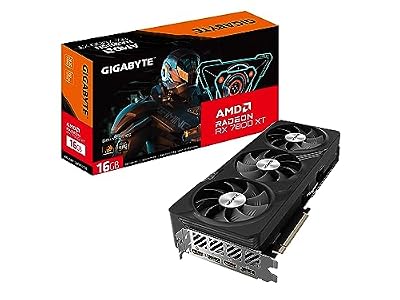
Gigabyte Radeon RX 7800 XT Gaming OC 16G Graphics Card, 3X WINDFORCE Fans 16GB 256-bit GDDR6, GV-R78XTGAMING OC-16GD Video Card

ASUS
ASUS Dual Radeon RX 7600 EVO OC Edition 8GB GDDR6 Gaming Graphics Card
As an Amazon Associate we earn from qualifying purchases. Product prices and availability are accurate as of the date/time indicated.
Conclusion
The 5070 vs 4080 verdict depends on your resolution: the 5070 is plenty for 1440p and brings DLSS 4 and excellent efficiency at half the price, while the 4080 still rules native 4K with more cores and VRAM but survives only on the used market. With 2026’s memory shortage and AI-chip demand keeping prices high, acting on a fair deal beats waiting for a drop. Compare the latest RTX 5070 and 4080 options, check real-time pricing and availability on Amazon, and pick the card that fits your target resolution and budget.
Frequently Asked Questions
What is the best 5070 4080 in 2026?
The best 5070 4080 depends on your budget and how you plan to use it. The options compared above are our top-rated picks based on real customer ratings, build quality, and overall value — start with the highest-rated model that fits your budget.
How much should I expect to spend on a 5070 4080?
Prices vary by brand and features. Budget options cover the essentials, while mid-range and premium models add durability, performance, and extra features. Compare the prices in the list above to find the best value for your needs.
What should I look for when buying a 5070 4080?
Focus on what matters most for your use case — build quality, compatibility, performance, warranty, and verified customer reviews. Every pick above is selected to balance these factors.
Are budget 5070 4080 options worth it?
Yes. For most people a well-reviewed budget or mid-range 5070 4080 delivers excellent value. You only need to spend more if you specifically require premium materials or top-tier performance.
How did we choose these 5070 4080 picks?
We compare current Amazon ratings, review counts, key features, and price to surface the options with the best real-world value. The list is refreshed as ratings and availability change.

Write Your Review
No reviews yet. Be the first to share your experience!